Press release: Government consults on ending live animal exports for slaughter
Environment Secretary unveils plans to end excessively long journeys for animals exported for slaughter and fattening.
Environment Secretary unveils plans to end excessively long journeys for animals exported for slaughter and fattening.
Press release
Ofsted’s return to inspection in 2021 will happen in phases, with no graded inspections for education or social care providers planned before the summer term.

Following the Secretary of State’s announcement today, Ofsted is able to set out plans for its return to inspection in schools and further education providers – as well as plans for inspections and regulatory work in early years and social care.
Her Majesty’s Chief Inspector, Amanda Spielman, said:
The usual level of scrutiny within the education and care system has been absent since last March, so it’s important that it returns next year as we all hope for a greater level of normality. But we understand the pressure that everyone in education and social care is working under and we want to return to our usual work in a measured, sensitive and practical way.
We will not re-introduce graded inspections to schools and colleges before April. During the spring term, we will use supportive monitoring inspections to help those that most need it, focused on how well pupils and students are learning. Routine inspections in early years and social care are also planned for the summer term, but regulatory work will continue in the interim.
Our role is to offer the greatest assurance we can to parents and the public about the quality of education and care arrangements for children and learners. These plans will help us support the providers who are facing the greatest challenges during these difficult times. They will ensure that inspection is fair, safe and valuable, while remaining true to our core purpose and principles.
Over the coming months, Ofsted will discuss the approach to routine inspection in 2021 with sector representatives and test it through a series of pilot visits, where necessary.
From January, we will resume monitoring inspections of schools judged inadequate at their previous inspection and some schools graded as requires improvement. These will not result in a grade.
Emergency inspections of schools will continue as they have done throughout the pandemic, in response to any serious concerns raised with Ofsted.
Routine inspections, which result in a school being awarded a new grade or being confirmed in its current grade, will resume in the summer term.
Throughout the spring term, all inspections will be at the request of the Department for Education (DfE).
Routine inspections will resume in the summer term.
From January, we will resume monitoring visits to providers that would be monitored in normal times, in particular those graded requires improvement and inadequate, and new providers.
Colleges that do not receive a monitoring visit may receive support and assurance visits. Safeguarding visits will continue in response to concerns raised about providers.
Full graded inspections will resume in the summer term.
Interim education visits to prisons will start in January, to support and challenge prisons to return to full programmes of education and skills activities following COVID-19 restrictions.
We will carry out a programme of assurance inspections from the start of the spring term. These inspections will confirm whether or not a provider is meeting the early years foundation stage (EYFS) requirements.
Assurance inspections will be proportionate and risk-based. Providers will be prioritised based on the length of time since their last inspection, and any other relevant information.
Routine graded inspections will resume in the summer term of 2021.
From January, we will resume focused visits to local authority children’s services. These visits will not result in a graded judgement.
Routine inspection under the inspection of local authority children’s services (ILACS) framework will begin from April. We will prioritise inadequate local authorities that are ready for re-inspection, and authorities where there are concerns.
We will continue with assurance visits under the social care common inspection framework (SCCIF) until April, when routine inspections will resume.
Published 3 December 2020
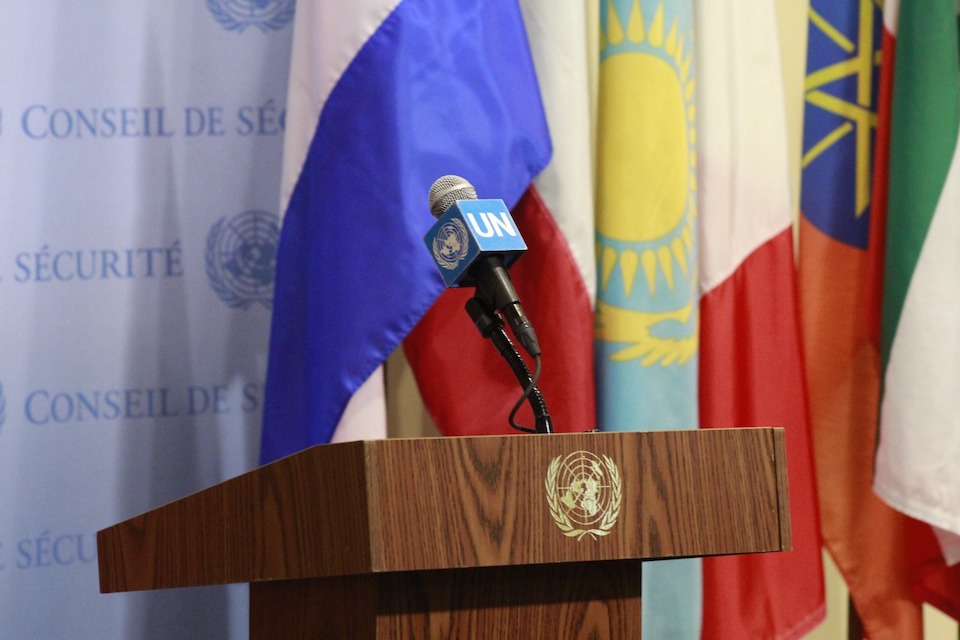
Russia held a meeting at the UN today on what Russia claims is the status of the implementation of the Minsk agreements. This meeting was a transparent attempt to present a false and misleading narrative regarding the conflict in eastern Ukraine. We strongly reject Russia’s premise that it is acting as a mediator within an internal conflict. Russia is an active participant that trains, arms, and leads armed formations in areas outside of Ukrainian government control, supplementing these proxy forces with military personnel and equipment. It instigated and continues to fuel a conflict which has resulted in approximately 13,000 deaths, appalling human rights abuses, and a deteriorating humanitarian situation for the civilian population.
We reiterate our support for the Minsk agreements and our firm commitment to see the peaceful resolution of the conflict with full respect of Ukraine’s sovereignty and territorial integrity. We welcome the steps taken by the Ukrainian government to make progress in resolving the conflict and call on Russia to act likewise.
We will continue to engage with all initiatives at the UN that support constructive ends. This event, designed purely to distort the realities of the conflict in eastern Ukraine, served Russian interests alone.
Published 2 December 2020
The Foreign Secretary has underlined his support for NATO this week, as he spoke to Allies across Europe and North America.
He also expressed strong support for the work of NATO’s ‘Reflection Process’ Group whose report proposed concrete ways the Alliance could continue to adapt to face future challenges.
The Secretary General will now develop these recommendations into a package of proposals for leaders of NATO countries to consider at their next Summit in 2021.
The Foreign Secretary also used the Foreign Ministers’ meeting to call for the Alliance to continue to take a collective voice against malicious state action, citing NATO’s swift collective response on the Navalny poisoning as a leading example.
This meeting follows the announcement that the UK will increase defence spending by £24.1 billion over the next four years – the biggest single investment in UK defence capabilities since the Cold War. The budget cements the UK’s position as the biggest European contributor to NATO, and the second biggest in the alliance. It will also allow the UK to maintain the wide spectrum of capabilities it offers to NATO, including the Carrier Strike Group.
Foreign Secretary Dominic Raab said:
NATO is the most successful alliance in history and at a time when our adversaries are operating in the space between peace and war – launching cyber-attacks and spreading disinformation – it is more important than ever.
The UK supports NATO’s work to continually adapt to face new threats and challenges. This includes responding to technological innovations, the threats from cyber and hybrid warfare and the need to combine our political and military tools to have the greatest impact.
NATO Allies also discussed Russia’s military build-up, the importance of effective arms control, China, NATO’s training mission in Afghanistan and Black Sea security.
Allies were joined in some of these session by NATO Partners, including Australia, Japan, South Korea, Ukraine, Georgia, Sweden, Finland and the EU. The NATO 2030 report has now been published, outlining proposals for further reform of the alliance to address new and emerging security threats.