An Inspection Report Published: Inspection of Country of Origin Information Thematic Report on Sexual Orientation and Gender Identity or Expression

News story

This report covers a thematic review of CPIT products that deal with claims based on sexual orientation and gender identity or expression.

Inspection reports

Publishing the report, David Bolt said:

The Independent Advisory Group on Country Information (IAGCI) and I are grateful to Dr Chelvan for his painstaking thematic review of the Home Office’s Country of Origin (COI) products dealing with sexual orientation and gender identity or expression covering 30 countries.

CPIT responded relatively quickly (within three months) to update most of the products identified as requiring “Urgent” or “Priority Action”. The last of these (Malawi) was updated in October 2020.

I made three recommendations, in addition to those made by Dr Chelvan. While my recommendations flow directly from this latest review, they also reflect concerns that I have raised repeatedly with the Home Office during my tenure as Independent Chief Inspector regarding the resourcing of the production of COI and the attention paid to this important area of the department’s work.

It is therefore disappointing that the Home Office has rejected two of my three recommendations, while the sub-text of its “acceptance” of the third is that no specific action is required. The latter is particularly obtuse, given that my report criticises exactly this practice.

Overall, I believe that the Home Office needs to invest more resources in COI production and more oversight of its use. I understand that its resources are finite and that it has to prioritise, and I have some sympathy for the argument that the demand for COI is potentially limitless, but the department needs to look carefully at whether it is satisfying Paragraph 339JA (Asylum) of the Immigration Rules with regard to providing decision makers with country information that is reliable and up-to-date for countries of origin and transit. Of the 200 COI products published on GOV.UK, roughly a third (71) were issued/updated in 2020. The rest date from 2016-19.

The Home Secretary has referred to fixing the “broken” asylum system. While the production and use of COI is not broken, any review of the system must ensure that it is as good as it can be in supporting efficient and effective decision making.

David Bolt
Independent Chief Inspector of Borders and Immigration

Published 8 December 2020


Appeal to catch Devon asbestos dumpers

Press release

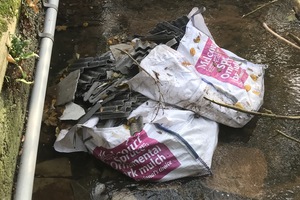
The Environment Agency has launched an appeal to catch the people who dumped asbestos in a Devon watercourse.

Two white builders' bags overflowing with corrugated strips of asbestos in a shallow stream

The asbestos was left in a Mill Leat in Sowton Village, Devon

Two builders’ bags full of asbestos sheets were found in the Mill Leat, on the River Clyst, near Sowton Village, East Devon. It is thought the illegal dumping happened on or near 20 November 2020.

Fly-tipping is not a victimless crime. The cost of clearing up falls on the landowner. But in limited circumstances the Environment Agency can step in. The asbestos is now being removed and disposed of safely.

Dave Brogden of the Environment Agency said:

The burden of investigating and clearing waste from fly-tipping often falls on local councils and we get involved if the amount and type of waste is so bad it can only be classified as illegal dumping.

On this occasion we have stepped in to sort out this problem, the result of someone showing a complete disregard to the safety of the public and the environment and for the time and resources of local services such as ours, which are already under extreme pressure.

Everyone who produces waste has a duty of care to make sure it does not cause harm to human health or pollute the environment and that it goes to the right place for disposal. On this occasion there were at least three sites within a few miles of the location permitted to accept this sort of hazardous waste.

If the cost of any work being carried out is unusually low, the contractor may not have a permit to carry waste nor any intention of paying for its proper disposal. You can check their waste-carrying credentials at https://environment.data.gov.uk/public-register/view/search-waste-carriers-brokers.

Dave Brogden said:

If you use someone to take away waste, we want you to take 3 steps: check if they if they have a permit, ask where the rubbish will end up, then record the details of the vehicle used to take the rubbish away. Never pay cash and insist upon a receipt.

If you have any information about who is responsible for this waste crime, contact the Environment Agency’s 24/7 hotline 0800 807060 or Crimestoppers on 0800 555111 or www.crimestoppers-uk.org.

Published 8 December 2020


Appeal to catch Devon asbestos dumpers

The Environment Agency has launched an appeal to catch the people who dumped asbestos in a Devon watercourse.


UK and Kenya sign trade agreement

The UK has today (Tuesday 8 December) signed an Economic Partnership Agreement with Kenya. The deal was signed in London by International Trade Minister Ranil Jayawardena and Kenya’s Cabinet Secretary for Trade, Minister Betty Maina.

This trade agreement will ensure that all companies operating in Kenya, including British businesses, can continue to benefit from duty-free access to the UK market.

It will support jobs and economic development in Kenya, as well as avoid possible disruption to UK businesses such as florists who will be able to maintain tariff-free supply routes for Kenya’s high-quality flowers.

Top goods imports to the UK from Kenya last year were in tea, coffee and spices (£121 million); vegetables (£79 million); and live trees and plants, mostly flowers (£54 million). 

The UK market accounts for 43% of total exports of vegetables from Kenya as well as at least 9% of cut flowers, and this agreement will support Kenyans working in these sectors by maintaining tariff-free market access to the UK.

It will also benefit many of the approximately 2,500 UK businesses exporting goods to Kenya each year, including many UK suppliers of machinery, electronics and technical equipment, where continued tariff-free access will be guaranteed.

As one of the largest economies in East Africa, Kenya is an important trading partner for the UK.

This deal also recognises the importance of the wider region, and the agreement is open for other members of the East African Community to join.

International Trade Minister Ranil Jayawardena said:

I am delighted that today we have signed a trade agreement with Kenya. This deal makes sure businesses have the certainty they need to continue trading as they do now, supporting jobs and livelihoods in both our countries.

Today’s agreement is also a first step towards a regional agreement with the East African Community, and I look forward to working with other members to secure an agreement to forge ever-closer trading ties.

Minister for Africa James Duddridge said:

This agreement will provide the strongest possible platform for the United Kingdom, Kenya and, ultimately, the whole EAC, to expand our trade relationship in future.

We will use this agreement as the catalyst to deepen our mutual prosperity alongside the other areas of cooperation in our Strategic Partnership with Kenya that includes security, sustainable development, climate change, and cultural pillars.

Notes to Editors

  • The deal is a translation of the terms previously agreed between the EU and the East African Community (EAC) and includes clauses to allow other East African Community states to join in the future.
  • The provisions of the Economic Partnership Agreement will apply from 1 January 2021
  • In under two years, the UK government has signed or agreed in principle trade agreements with 55 countries. Total UK trade with these countries was worth £170 billion in 2019.
  • This agreement is the sixth we have secured in Africa, covering 14 countries. Source of trade statistics: ONS UK total trade: all countries, non-seasonally adjusted April to June 2020; HMRC Overseas Trade in Goods Statistics, September 2020.


June Raine: How we backed a COVID-19 vaccine before rest of the West

The year 2020 has been a difficult one for us all. As COVID-19 has affected almost every aspect of our lives, it has at times been hard to foresee an end. But last week, we reached an important milestone in our fight against the disease. On Wednesday, my Agency the MHRA announced the authorisation of the Pfizer/BioNTech COVID-19 vaccine for supply here, making the UK the first country in the Western hemisphere to issue an approval.

Before some 30 years at the MHRA and its predecessor, working on keeping medicines safe for the public, I was a general practitioner for 5 years. Patient safety has always been at the heart of my work. It has been no different for this vaccine, nor will it be for the others to come.

People rightly ask me how we achieved this outcome before others.

While the first batch of data from Pfizer was not submitted to the MHRA until early October, we began preparing our safety surveillance systems months before.

In early June, we set up an independent Expert Working Group to take some of the important safety work forward. In August, a second Working Group was formed with different expertise – this time to advise the MHRA on the benefits and risks of the COVID-19 vaccines in development. Formed from 48 experts from outside of the MHRA, these groups include virologists, epidemiologists, immunologists and toxicologists. It also includes lay membership.

In September, we started preparing our laboratories for ‘independent batch testing’ of this vaccine. Although the vaccine manufacturers carry out their own comprehensive testing regimes on the batches of vaccine they produce, it’s of vital importance that tests focusing on safety and quality are conducted independently, too.

In the UK, this independent testing is performed by the National Institute for Biological Standards and Control (NIBSC), which is part of the MHRA. Before any batch can reach the public, the NIBSC will conduct a rigorous assessment to check that it is consistent with characteristics derived from results for batches previously shown to be safe and effective in clinical trials, or routine clinical use. This work began in November.

COVID-19 vaccines, including this one, are being developed in a coordinated way that allows some stages of the assessment process to happen in parallel, allowing us to condense the time needed. The expected high standards of safety, quality and effectiveness are not compromised in any way. This ‘rolling review’ – a regulatory tool that allows us to review the data as they become available from ongoing studies, rather than waiting for it to be submitted as a full package– has been key.

There have been several submissions of data sent us to us by Pfizer/BioNTech since October. This means that we had already made good progress on our review by the time the final clinical submission was sent to us on the 23 November. This is why I like to think of it as climbing a mountain – months of careful planning and preparation; ready at the base camp when the interim data arrive; and when the final package arrives, we are ready to scale the peak.

As the data came in, our scientific and clinical experts robustly and thoroughly reviewed it with great scientific rigour. We pored over pages of information and data, looking at all aspects – from the laboratory studies to the clinical trials, and more. We looked at how the vaccine protects people from COVID-19, the level of protection it provides and how long for. We analysed the data on safety, its stability and how it needs to be stored. The list goes on. Our assessors have worked around the clock, reviewing hundreds of pages of data.

On top of this, we also have a range of experts inspecting the sites used across the whole lifecycle of the vaccine, from its initial development in a lab to its manufacture and distribution, once approved. Our inspectors work to legislation that incorporates internationally recognised quality standards.

Of course, no stone should be left unturned. And that’s why it’s important that we don’t just rely on our own analysis. So, once we have reviewed the data, we seek advice from the Government’s independent advisory body, the Commission on Human Medicines. They critically assess the data too before advising the UK government on the safety, quality and effectiveness of any vaccine.

On 1 December we received a letter from the Department of Health and Social Care asking us to authorise the Pfizer/BioNTech vaccine under Regulation 174, an EU provision introduced in national law that allows for the authorisation of a medicine in response to a public health need.

This means that, instead of having to go through the centralised licensing route of the European Medicines Agency (as most vaccines do until the end of the transition period), we were able to authorise the supply of the vaccine based on public health need, provided the batches meet specific conditions laid out by us. For those concerned about this, I can assure you without reservation that the standards we have worked to are equivalent to those around the world – no corners have been cut.

But our work doesn’t end there. As with any medicine, COVID-19 vaccines require continuous safety monitoring to ensure the benefits in protecting people outweigh any side effects or potential risks. The MHRA has responsibility in law to continuously evaluate all medicinal products on the UK market and this vaccine is no exception.

While this battle is in no way over, I hope that this decision, underpinned by months of scientific rigour and analysis, will bring hope to those who have seen some of their darker days during this pandemic. I also owe a huge debt of thanks to all those whose expertise, dedication and inspiring work have brought us this far on our journey.

The original article can be found on The Times’ website.