Twenty-four persons arrested during anti-illegal worker operations

     The Immigration Department (ImmD) mounted territory-wide anti-illegal worker operations codenamed "Twilight" and "Rally" from June 8 to yesterday (June 11). A total of 17 suspected illegal workers and seven suspected employers were arrested.
 
     During the operations, ImmD Task Force officers raided 763 target locations including a company, construction sites, factories, recycling sites, restaurants, a shopping mall and warehouses. The suspected illegal workers comprised eight men and nine women, aged 25 to 58. Among them, one man and two women were holders of recognisance forms, which prohibit them from taking any employment. In addition, one man and one woman were suspected of using and being in possession of forged Hong Kong identity cards. Meanwhile, four men and three women, aged 29 to 61, were suspected of employing the suspected illegal workers.
 
     "Any person who contravenes a condition of stay in force in respect of him shall be guilty of an offence. Also, visitors are not allowed to take employment in Hong Kong, whether paid or unpaid, without the permission of the Director of Immigration. Offenders are liable to prosecution and upon conviction face a maximum fine of $50,000 and up to two years' imprisonment. Aiders and abettors are also liable to prosecution and penalties," an ImmD spokesman said.
 
     The spokesman warned that, as stipulated in section 38AA of the Immigration Ordinance, illegal immigrants or people who are the subject of a removal order or a deportation order are prohibited from taking any employment, whether paid or unpaid, or establishing or joining in any business. Offenders are liable upon conviction to a maximum fine of $50,000 and up to three years' imprisonment. The Court of Appeal has issued a guideline ruling that a sentence of 15 months' imprisonment should be applied in such cases. It is an offence to use or possess a forged Hong Kong identity card or a Hong Kong identity card related to another person. Offenders are liable to prosecution and a maximum penalty of a $100,000 fine and up to 10 years' imprisonment.
 
     The spokesman reiterated that it is a serious offence to employ people who are not lawfully employable. The maximum penalty is imprisonment for three years and a fine of $350,000. The High Court has laid down sentencing guidelines that the employer of an illegal worker should be given an immediate custodial sentence. According to the court sentencing, employers must take all practicable steps to determine whether a person is lawfully employable prior to employment. Apart from inspecting a prospective employee's identity card, the employer has the explicit duty to make enquiries regarding the person and ensure that the answers would not cast any reasonable doubt concerning the lawful employability of the person. The court will not accept failure to do so as a defence in proceedings. It is also an offence if an employer fails to inspect the job seeker's valid travel document if the job seeker does not have a Hong Kong permanent identity card. The maximum penalty for failing to inspect such a document is imprisonment for one year and a fine of $150,000.
 
     Under the existing mechanism, the ImmD will, as a standard procedure, conduct initial screening of vulnerable persons, including illegal workers, illegal immigrants, sex workers and foreign domestic helpers, who are arrested during any operation with a view to ascertaining whether they are trafficking in persons (TIP) victims. When any TIP indicator is revealed in the initial screening, the officers will conduct a full debriefing and identification by using a standardised checklist to ascertain the presence of TIP elements, such as threats and coercion in the recruitment phase and the nature of exploitation. Identified TIP victims will be provided with various forms of support and assistance, including urgent intervention, medical services, counselling, shelter, temporary accommodation and other supporting services. The ImmD calls on TIP victims to report crimes to the relevant departments.


Illegal worker jailed

     A Nepali illegal worker holding a recognisance form was jailed by Shatin Magistrates' Courts yesterday (June 11).

     During an anti-illegal worker operation conducted on May 12, Immigration Department (ImmD) investigators raided a restaurant in Yau Ma Tei. A female Nepali, aged 24, was arrested while working as a waitress. Upon identity checking, she produced for inspection a recognisance form issued by the ImmD, which prohibits her from taking employment. Further investigation revealed that she was a non-refoulement claimant. An employer suspected of employing the illegal worker was also arrested and the investigation is ongoing.

     The illegal worker was charged at Shatin Magistrates' Courts yesterday with taking employment after landing in Hong Kong unlawfully and remaining in Hong Kong without the authority of the Director of Immigration or while being a person in respect of whom a removal order or deportation order was in force. She pleaded guilty to the charge and was sentenced to 15 months' imprisonment.

     The ImmD spokesman warned that, as stipulated in section 38AA of the Immigration Ordinance, illegal immigrants or people who are the subject of a removal order or a deportation order are prohibited from taking any employment, whether paid or unpaid, or establishing or joining in any business. Offenders are liable upon conviction to a maximum fine of $50,000 and up to three years' imprisonment. The Court of Appeal has issued a guideline ruling that a sentence of 15 months' imprisonment should be applied in such cases.

     The spokesman reiterated that it is a serious offence to employ people who are not lawfully employable. The maximum penalty is imprisonment for three years and a fine of $350,000. The High Court has laid down sentencing guidelines that the employer of an illegal worker should be given an immediate custodial sentence. According to the court sentencing, employers must take all practicable steps to determine whether a person is lawfully employable prior to employment. Apart from inspecting a prospective employee's identity card, the employer has the explicit duty to make enquiries regarding the person and ensure that the answers would not cast any reasonable doubt concerning the lawful employability of the person. The court will not accept failure to do so as a defence in proceedings. It is also an offence if an employer fails to inspect the job seeker's valid travel document if the job seeker does not have a Hong Kong permanent identity card. The maximum penalty for failing to inspect such a document is imprisonment for one year and a fine of $150,000.

     Under the existing mechanism, the ImmD will, as a standard procedure, conduct initial screening of vulnerable persons, including illegal workers, illegal immigrants, sex workers and foreign domestic helpers, who are arrested during any operation with a view to ascertaining whether they are trafficking in persons (TIP) victims. When any TIP indicator is revealed in the initial screening, the officers will conduct a full debriefing and identification by using a standardised checklist to ascertain the presence of TIP elements, such as threats and coercion in the recruitment phase and the nature of exploitation. Identified TIP victims will be provided with various forms of support and assistance, including urgent intervention, medical services, counselling, shelter, temporary accommodation and other supporting services. The ImmD calls on TIP victims to report crimes to the relevant departments.


Two approved outline zoning plans referred back for amendment

     The Town Planning Board announced today (June 12) that the Chief Executive in Council has referred the approved Cheung Chau Outline Zoning Plan (OZP) and the approved Fanling/Sheung Shui OZP to the Board for amendment to reflect the latest land use proposals.

     Each OZP incorporating the respective amendments will be exhibited for public inspection under the provisions of the Town Planning Ordinance.

     The Cheung Chau and Fanling/Sheung Shui OZPs were last approved by the Chief Executive in Council in January 2015 and January 2020 respectively.


Draft Hebe Haven Outline Zoning Plan approved

     The Chief Executive in Council has approved the draft Hebe Haven Outline Zoning Plan (OZP).

     "The approved OZP provides a statutory land use planning framework to guide development and redevelopment in the Hebe Haven area," a spokesman for the Town Planning Board said today (June 12).

     The planning scheme area, covering about 370 hectares, comprises the entire coastal area of Hebe Haven and the surrounding hillslopes. The planning intention of the area is primarily to conserve the natural landscape features and the rural character of the area, and to promote marine-related recreational uses along the coastal front of Hebe Haven.

     About 113.67 hectares of land is zoned "Conservation Area" covering areas of steep terrain or hillslopes with natural vegetation and undisturbed woodland of high landscape value, which is intended to protect and retain the existing natural landscape, ecological or topographical features of the area and to separate sensitive natural environments from the adverse effects of development.

     About 36.69 hectares of land is zoned "Coastal Protection Area", which is intended to conserve, protect and retain the natural coastlines and the sensitive coastal natural environment, with a minimum of built development.

     To define the limits of urban and sub-urban development areas by natural features, and to contain urban sprawl as well as to provide passive recreational outlets, about 21.15 hectares of land is zoned "Green Belt". Furthermore, about 127.53 hectares of land in Ma On Shan Country Park is zoned "Country Park".

     Some 4.9 hectares of land is zoned "Recreation" for recreational developments to promote marine-related recreational uses.

     About 25.68 hectares of land is zoned "Other Specified Uses" ("OU"), including the existing Marina Cove, which is zoned "OU(Residential cum Marina Development)" and the existing public pier at Pak Sha Wan, which is zoned "OU(Pier)".

     About 23.73 hectares of land is zoned "Village Type Development" for the existing villages and areas suitable for village expansion while 6.46 hectares and 0.92 hectares of land are zoned "Residential (Group C)" for low-rise and low-density residential developments and "Residential (Group D)" for improvement and upgrading of existing temporary structures to permanent buildings respectively.

     To serve the population in the area, the existing commercial cluster near Pak Sha Wan Public Pier of about 0.34 hectares is zoned "Commercial". Moreover, some 2.39 hectares of land is zoned "Government, Institution or Community" for provision of government, institution and community facilities and 0.27 hectares of land is zoned "Open Space" for outdoor open-air public space for active and/or passive recreational uses.

     The approved Hebe Haven OZP No. S/SK-HH/8 is now available for public inspection during office hours at the Secretariat of the Town Planning Board, the Planning Enquiry Counters of the Planning Department in North Point and Sha Tin, the Sai Kung and Islands District Planning Office, the Sai Kung District Office and the Sai Kung Rural Committee.

     Copies of the approved OZP are available for sale at the Map Publications Centres in North Point and Yau Ma Tei. The electronic version of the plan can be viewed at the Town Planning Board's website (www.info.gov.hk/tpb).


“Folk Festivals in Those Days …” exhibition showcases Hong Kong’s intangible cultural heritage (with photos)

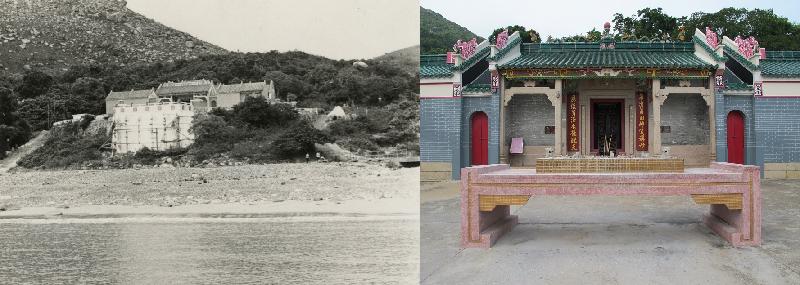
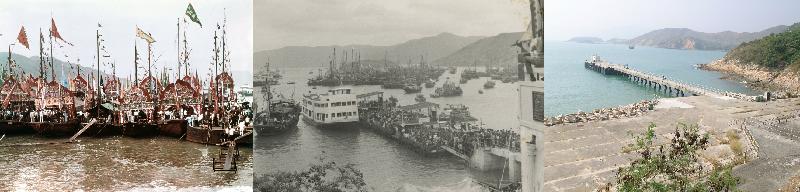
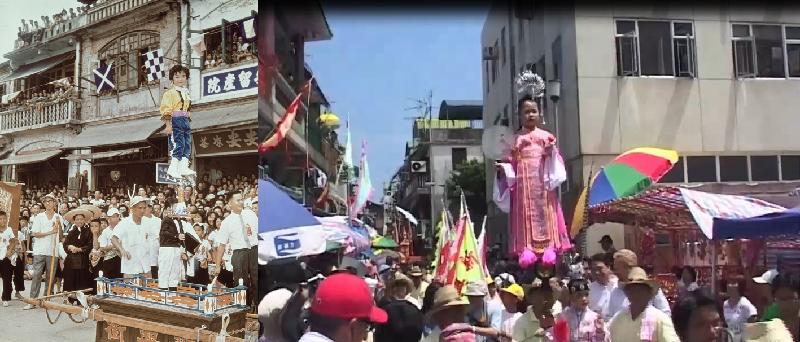
     How was the history of the oldest Tin Hau temple in Hong Kong revealed? When did "ping on buns" of the Cheung Chau Jiao Festival first come into existence? How were the event venues of the Yu Lan Ghost Festival of the Hong Kong Chiu Chow community set up? Answers can be found in this year's annual exhibition of the Public Records Office titled "Folk Festivals in Those Days …".
 
     The Cheung Chau Jiao Festival, the Yu Lan Ghost Festival of the Hong Kong Chiu Chow community and the Tin Hau Festival in Hong Kong are part of Hong Kong's intangible cultural heritage. These festivals have been carrying their rituals and traditions through generations, evolving over time and people, to become how they are so accustomed today.
 
     The exhibition will showcase a mix of archival holdings and exhibits on loan from the community, which is an interesting juxtaposition of the past and present celebration of the three festivals. It also presents the outcome of interactive collaborations between the event organisers and government departments.
 
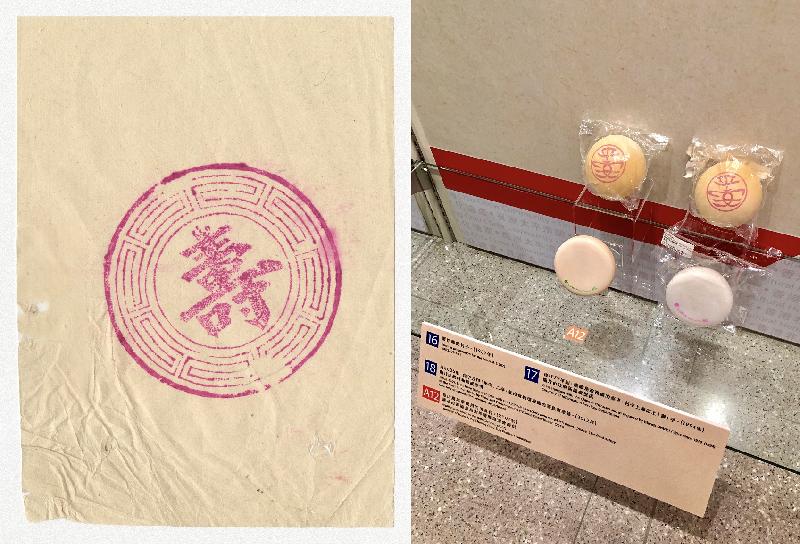
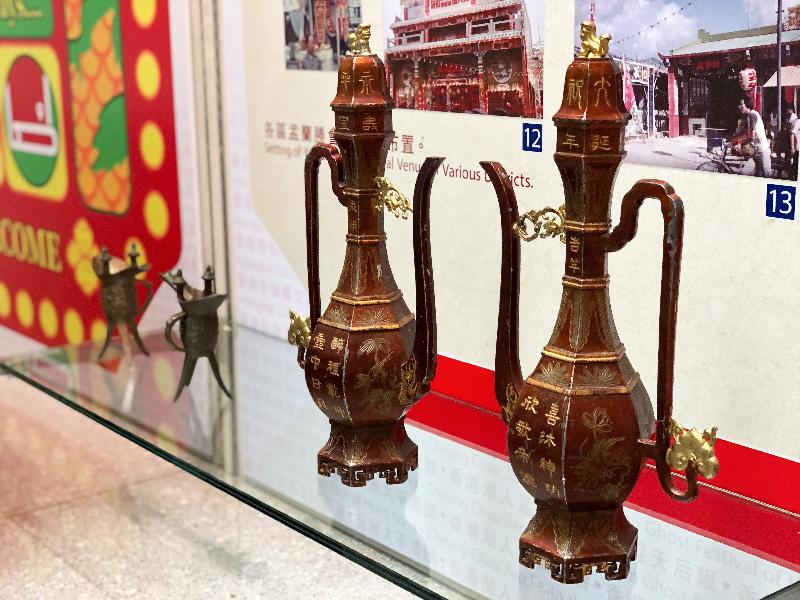
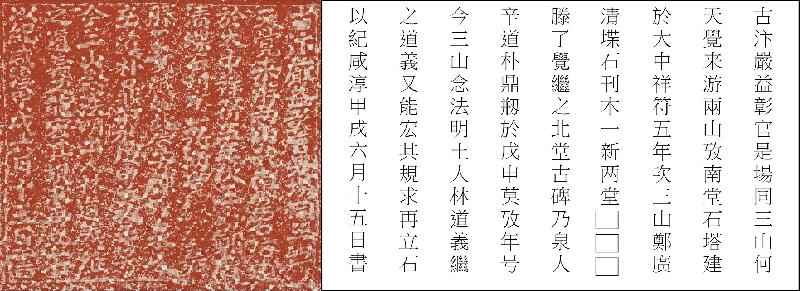
     Among some 80 archival records, photographs and publications on display, the most historically significant is a batch of records relating to Tai Miu, the Tin Hau Temple located at Joss House Bay in Sai Kung. Tai Miu, a Grade 1 historic building, is believed to be the oldest and largest temple for worshipping Tin Hau in Hong Kong. Records show that during a government expedition in 1959 to inspect a rock inscription at Joss House Bay dating back to the Southern Song Dynasty, the historical origin of Tai Miu was established and Tai Miu has since been developed into a cultural and tourist site. Another archival record reveals that the Chinese character "sau" (meaning "longevity"), was once printed on buns distributed during the Cheung Chau Jiao Festival. The characters "ping on" (meaning "peace") on the buns today appeared only in 2005 when the Bun Scrambling Competition resumed in the same year. The Public Records Office, through a multimedia presentation of the venue setting and items contributed from the community, will bring the old days of the Yu Lan Ghost Festival of the Hong Kong Chiu Chow community back to life. This is a highlight of the exhibition which should not be missed.
 
     If a more laid-back tour is preferred, please visit the online exhibition at www.grs.gov.hk/ws/online/festival/en/index.html where over 100 precious historical photographs, lists of archival records as well as library holdings on traditional festivals of Hong Kong are available for easy searching and access. The Public Records Office has also launched a Facebook page (fb.com/grs.publicrecordsoffice) to introduce its holdings and events to visitors, facilitating interactions with the wider community.
 
     A joy that is shared is a joy made double. If members of the public have photographs related to the three festivals, please take part in the public engagement activity titled "Festival@Community" and contribute these items to the Public Records Office. The Public Records Office will select suitable items for uploading to the online exhibition and posting at the Search Room for sharing with other visitors. For details, please refer to the online exhibition.
 
     The "Folk Festivals in Those Days …" exhibition is open from today (June 12) onwards from Monday through Friday, from 9am to 5.45pm (except for public holidays) at the Exhibition Hall on the second floor of the Hong Kong Public Records Building at 13 Tsui Ping Road, Kwun Tong. Admission is free. The Public Records Office will also hold roving exhibitions, debuting on June 19 at Sam Tung Uk Museum in Tsuen Wan. For details, please visit the Government Records Service website (www.grs.gov.hk) or call the Public Records Office at 2195 7700.
 
     In light of the COVID-19 epidemic, cleaning and disinfection measures will be stepped up at the Exhibition Hall. Visitors must undergo temperature checks before entering the Hong Kong Public Records Building. They are recommended to wear their own face masks. Those with body temperatures above the prescribed level or those who refuse to take temperature checks will not be allowed to enter the Building.

Photo  Photo  Photo  Photo  Photo  Photo  Photo  Photo