“The Practice of Everyday Life” exhibition showcases concepts of sustainability (with photos)

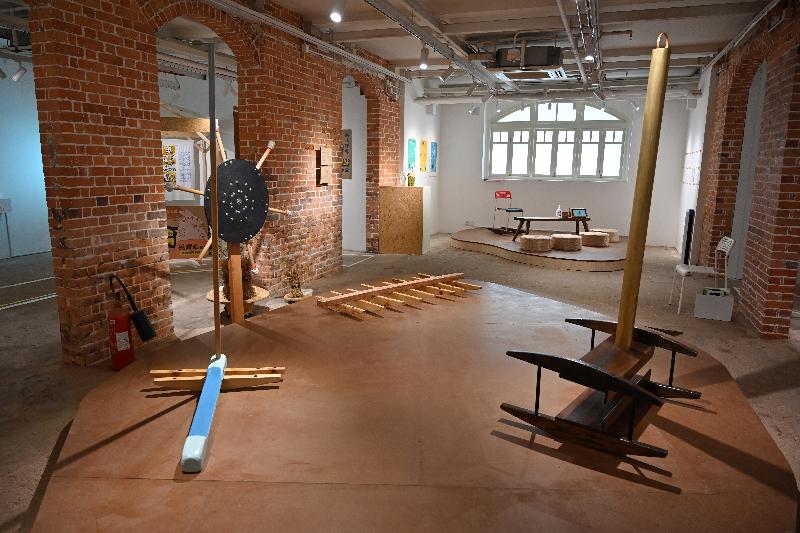
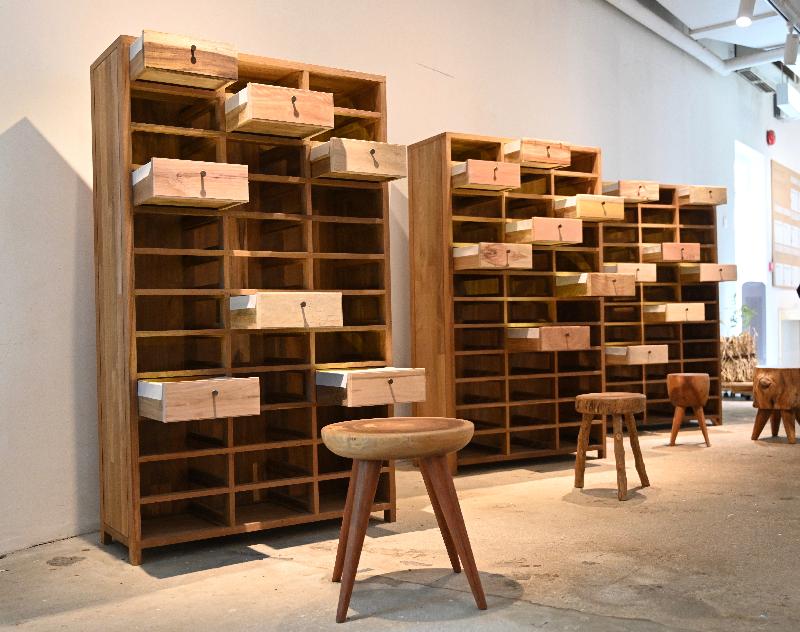
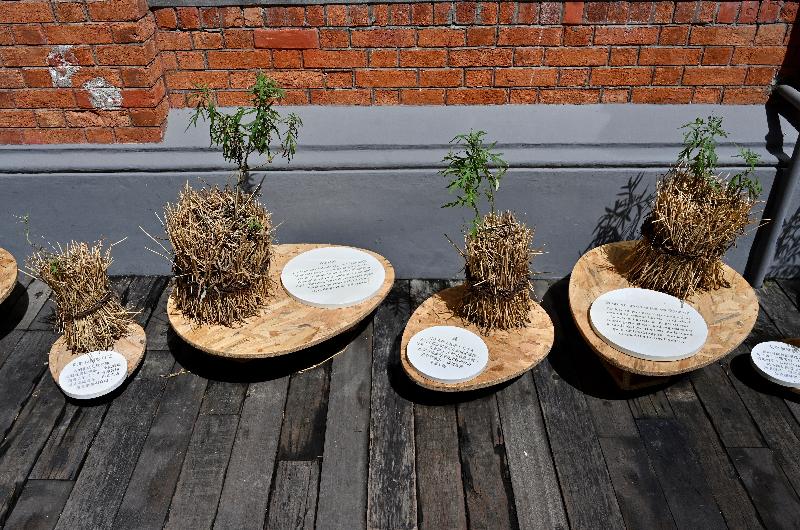
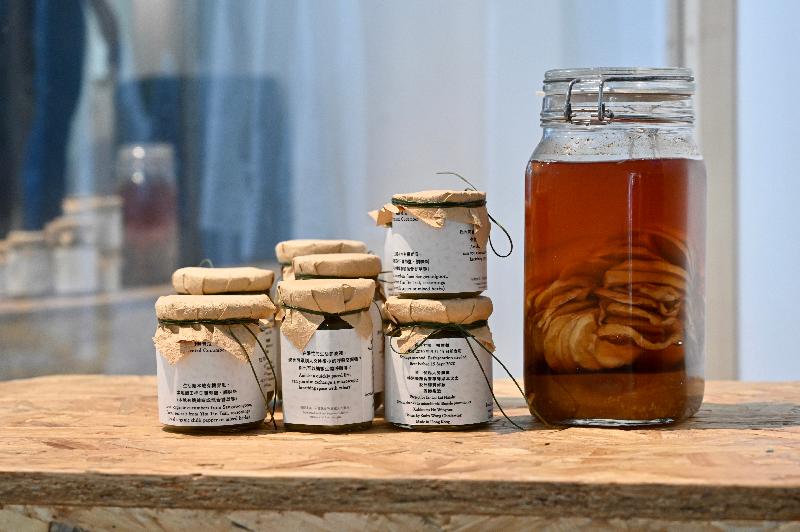
     "The Practice of Everyday Life" exhibition was launched today (June 27) at Oi! in North Point. The exhibition aims to inspire the concept of green living and explore the feasibility of embedding environmental-friendliness into our daily practices through different exhibits and interactions with visitors.
 
     Seven groups of creative practitioners as well as their research and creative partners, each working within their own creative aspects, were invited to look for sustainable alternatives developed from research, experiments and artistic displays. The exhibits encourage visitors to adopt sustainable practices through their imaginations and actions to reshape the future by means of creativity in fashion, transport, recycling, upcycling and planting etc.
 
     The exhibition is presented by the Leisure and Cultural Services Department and organised by Oi! with curation partners Stephanie Cheung, Vangi Fong and Nicky Liang.
 
     Creative Practitioners include Coutou Woodworking Studio, Toby Crispy@Fashion Clinic, MUDWORK, Kevin Cheung, Monti Lai, Lo Lai-lai and Yat Ching.
 
     Research Partners include Ichi Chan, Lam Che, Kishimoto Ho Wing-yee, Angie Ng, Little Green Feet, Tin Kwong Ride and Waste No Mall.
 
     Creative Partners include Cho Wing-ki, Eddy Hui, Lam Kin-choi, Ivy Wong, Kathy Wong, Phoebe Wong and Human Ip.
 
     The exhibition will run until October 11. For details of the exhibition, please visit www.lcsd.gov.hk/CE/Museum/APO/en_US/web/apo/the_practice_of_everyday_life.html, or call 2512 3000.
 
     In view of the COVID-19 epidemic, special arrangements and precautionary measures will be implemented to help ensure public safety. Visitors to Oi! will need to use hand sanitiser and will be subject to temperature checks before admission. They are also advised to wear their own masks. Children aged under 12 must be accompanied by an adult. For details, please visit www.lcsd.gov.hk/CE/Museum/APO/en_US/web/apo/oi_visit.html.
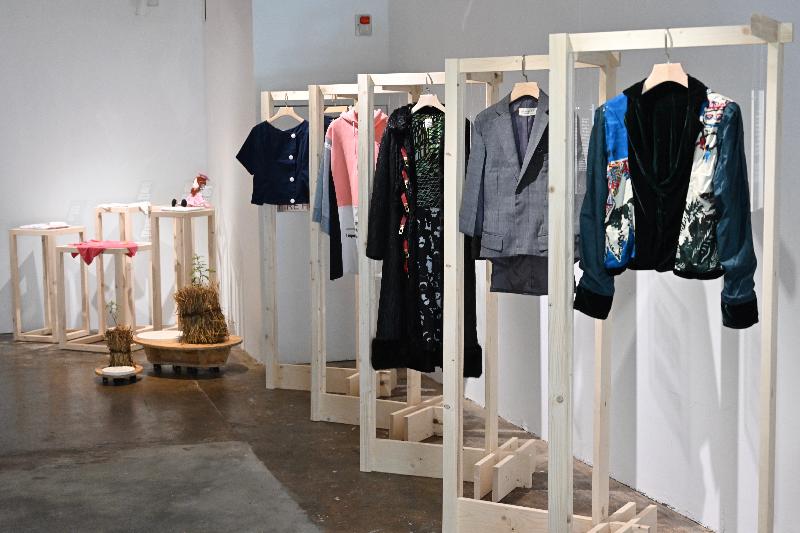
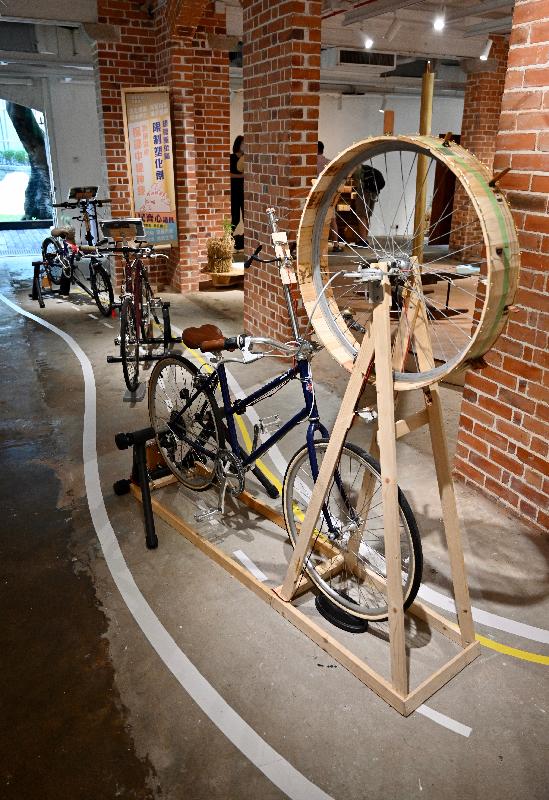
Photo  Photo  Photo  Photo  Photo  Photo  Photo  


Labour Department investigates fatal work accident in Kai Tak

     The Labour Department (LD) is investigating a fatal work accident in Kai Tak this afternoon (June 27) in which a man died.      

     The LD immediately deployed staff to the scene upon receiving a report of the accident, and is now conducting an investigation to look into its cause.


CHP investigates additional confirmed case of COVID-19

     The Centre for Health Protection (CHP) of the Department of Health has announced that as of 4pm today (June 27), the CHP was investigating an additional confirmed case of coronavirus disease 2019 (COVID-19), taking the number of cases to 1 198 in Hong Kong so far (comprising 1 197 confirmed cases and one probable case).
      
     The newly reported case announced today involve a 39-year-old female who had a travel history during the incubation period. The CHP's epidemiological investigations and relevant contact tracing on the confirmed case are ongoing. For case details and contact tracing information, please see the Annex.
 
     The CHP again urged members of the public to maintain an appropriate social distance with other people as far as possible in their daily lives to minimise the risk of infection. In particular, they should go out less and avoid social activities such as meal gatherings or other gatherings to reduce the chance of contacting infected persons who may not present any symptoms, and minimise the risk of outbreak clusters emerging in the community.
      
     A spokesman for the CHP said, "Given that the situation of COVID-19 infection remains severe and that there is a continuous increase in the number of cases reported around the world, members of the public are strongly urged to avoid all non-essential travel outside Hong Kong.
 
     "The CHP also strongly urges the public to maintain at all times strict personal and environmental hygiene, which is key to personal protection against infection and prevention of the spread of the disease in the community. On a personal level, members of the public should wear a surgical mask when having respiratory symptoms, taking public transport or staying in crowded places. They should also perform hand hygiene frequently, especially before touching the mouth, nose or eyes.
 
     "As for household environmental hygiene, members of the public are advised to maintain drainage pipes properly, regularly pour water into drain outlets (U-traps) and cover all floor drain outlets when they are not in use. After using the toilet, they should put the toilet lid down before flushing to avoid spreading germs."
 
     Moreover, the Government has launched the website "COVID-19 Thematic Website" (www.coronavirus.gov.hk) for announcing the latest updates on various news on COVID-19 infection and health advice to help the public understand the latest updates. Members of the public may also gain access to information via the COVID-19 WhatsApp Helpline launched by the Office of the Government Chief Information Officer. Simply by saving 9617 1823 in their phone contacts or clicking the link wa.me/85296171823?text=hi, they will be able to obtain information on COVID-19 as well as the "StayHomeSafe" mobile app and wristband via WhatsApp.
 
     To prevent pneumonia and respiratory tract infection, members of the public should always maintain good personal and environmental hygiene. They are advised to:
 
• Wear a surgical mask when taking public transport or staying in crowded places. It is important to wear a mask properly, including performing hand hygiene before wearing and after removing a mask;
• Perform hand hygiene frequently, especially before touching the mouth, nose or eyes, after touching public installations such as handrails or doorknobs, or when hands are contaminated by respiratory secretions after coughing or sneezing;
• Maintain drainage pipes properly and regularly (about once a week) pour about half a litre of water into each drain outlet (U-trap) to ensure environmental hygiene;
• Cover all floor drain outlets when they are not in use;
• After using the toilet, put the toilet lid down before flushing to avoid spreading germs;
• Wash hands with liquid soap and water, and rub for at least 20 seconds. Then rinse with water and dry with a disposable paper towel. If hand washing facilities are not available, or when hands are not visibly soiled, performing hand hygiene with 70 to 80 per cent alcohol-based handrub is an effective alternative;
• Cover your mouth and nose with tissue paper when sneezing or coughing. Dispose of soiled tissues into a lidded rubbish bin, then wash hands thoroughly; and
• When having respiratory symptoms, wear a surgical mask, refrain from work or attending class at school, avoid going to crowded places and seek medical advice promptly.


Transcript of remarks by SLW on quarantine arrangement for foreign domestic helpers

     Following is the transcript of remarks by the Secretary for Labour and Welfare, Dr Law Chi-kwong, on quarantine arrangement for foreign domestic helpers after attending a radio programme this morning (June 27):

Reporter: Why is the Government against the idea of subsidising the employers of foreign domestic helpers and also offering them quarantine facilities in Hong Kong?

Secretary for Labour and Welfare: I can say that we really want to help, but any way which would encourage directly or indirectly the movement of domestic helpers from Hong Kong to their homeland or from their homeland back to Hong Kong is not consistent with our policy to restrict such movement to reduce the risk of spread of the virus.

     Our current policy is to try to minimise such movement, including allowing extension of contracts; extending the stay of those who have ended their contract so that they can find a new employer here in Hong Kong; and also for those who are between contracts – they can stay in Hong Kong without the need of requiring them to go back to their homeland. These are the policy strategies that try to restrict the movement of domestic helpers from Hong Kong to and from their homeland. Any other measures, although we would like to help, if that would encourage such movement, that would be inconsistent with our anti-epidemic measures.

     I have to plead to employers and employment agencies that the existing policy is to facilitate domestic helpers here now in Hong Kong to continue to stay either by way of extending their contract or finding a new employer. That is our basic objective.

Reporter: How many domestic helpers will arrive in Hong Kong in the next month?

Secretary for Labour and Welfare: We do not have very accurate information in recent months, because we do not actually differentiate their status – whether they are domestic helpers or not. If they are having a valid visa or a working permit, then they would be treated as Hong Kong residents. So we do not have up-to-date figures.

     As you know, we have around 400 000 foreign domestic helpers here in Hong Kong. Every contract is about two years. On average we would have around 500 foreign domestic helpers coming in Hong Kong every day in a normal period. Because of the measures we have taken so far, the number of people who have actually come back from the Philippines to Hong Kong in the past one month is only around 1 700, which is a very small number. But if we provide such facilitation that directly or indirectly encourages them to come, that number will jump up very quickly. Every day we will have about two to three flights from Manila. We would expect 500 of them every day. Within 14 days, we would have 7 000. That is a very large number. We would not have sufficient quarantine facilities to house this group of people just from the Philippines. This is the concern. The primary consideration is our anti-epidemic strategies to help or protect our citizens in Hong Kong.

(Please also refer to the Chinese portion of the transcript.)


Hong Kong greenhouse gas inventory for 2018 released

    The Environmental Protection Department (EPD) released today (June 27) the 2018 greenhouse gas (GHG) inventory for Hong Kong.

     Hong Kong's total GHG emissions in 2018 amounted to 40.6 million tonnes of carbon dioxide equivalent (CO2-e). Compared with 2017, the total population increased by about 0.8 per cent, while the total GHG emissions showed a smaller increase of about 0.5 per cent.  

     The per capita GHG emissions amounted to about 5.4 tonnes, which was about 0.1 tonne lower than that in 2017. When compared with the peak of about 6.2 tonnes in 2014, there has been a reduction of about 0.8 tonne.

     The carbon intensity was 0.015 kilogram CO2-e per Hong Kong Dollar GDP, which was comparable to the level in 2017. When compared with the 2005 base year figure, it has been reduced by 35.7 per cent.

     Electricity generation continued to be the major source of emissions, amounting to 65.6 per cent of the total emissions. Other major emission sources were the transport sector (18.1 per cent) and waste management (7.4 per cent).

    Details of the 2018 GHG inventory can be found on the EPD website (www.climateready.gov.hk/page.php?id=23&lang=1).