Speech by CE at reception in celebration of 23rd anniversary of establishment of HKSAR

     Following is the translation of the speech by the Chief Executive, Mrs Carrie Lam, at the reception in celebration of the 23rd anniversary of the establishment of the Hong Kong Special Administrative Region at the Hong Kong Convention and Exhibition Centre this morning (July 1):

Distinguished guests, fellow citizens,

     Today marks the 23rd anniversary of the establishment of the Hong Kong Special Administrative Region (HKSAR) of the People's Republic of China (PRC). It is a day of great historical significance and it gives me much pleasure to celebrate the occasion with you together.

     First of all, the national anthem of the PRC that we played and sang at the flag-raising ceremony this morning and at the beginning of this reception is protected by the National Anthem Ordinance of the HKSAR. Like the national flag and the national emblem, the national anthem is the symbol and sign of the nation. As an inalienable part of our country, the HKSAR is duty-bound to preserve the dignity of the national anthem through legislation. The HKSAR Government introduced the National Anthem Bill into the Legislative Council (LegCo) in January 2019. After 18 months of deliberation, the Bill was eventually passed by the LegCo on June 4 this year. It came into effect upon publication in the Gazette on June 12.

     The National Anthem Ordinance provides for the playing and singing, protection and promotion of the national anthem to preserve the dignity of the country, enhance the sense of national identity among citizens and promote patriotism. The offences stipulated in the Ordinance only concern the misuse of the national anthem, or public and intentional acts with an intent to insult the national anthem.

     While it is important for us to respect and protect the national anthem, safeguarding national security is of even greater importance as this concerns the unity, territorial integrity and development interests of our country and is closely related to the livelihood of our people. Yesterday, the Standing Committee of the National People's Congress passed the Law on Safeguarding National Security in the Hong Kong Special Administrative Region of the People’s Republic of China (the National Security Law in Hong Kong). The national law was added to Annex III to the Basic Law and started to be applied in Hong Kong by way of promulgation by the HKSAR Government on the same day.

     The enactment of the national law is regarded as the most significant development in the relationship between the Central Authorities and the HKSAR since Hong Kong's return to the Motherland. It is a historical step to improve the system for Hong Kong to safeguard our country's sovereignty, territorial integrity and security. It is also an essential and timely decision for restoring stability in Hong Kong.  The significance of this decision is multifaceted. It shows that the Central Government is determined to restore stability in Hong Kong, after a year of escalating violence and riots since last June.  It shows that the Central Government is determined to protect the vast majority of law-abiding citizens in Hong Kong from the minority who attempted to undermine national security.  It also shows that the Central Government is determined to preserve and better "One Country, Two Systems", a principle underlying Hong Kong’s stability and prosperity since the HKSAR was established 23 years ago.

     Over the past month or so, in the face of all sorts of smearing and malicious attacks by foreign and local bodies and individuals against the enactment of the National Security Law in Hong Kong at the state level, government officials and legal experts in the Mainland, my governing team and I, local business and political leaders as well as various sectors in the community have explained from various perspectives that it is constitutional, lawful, reasonable and rational for the Central Government to introduce the National Security Law in Hong Kong. The Law will neither undermine the high degree of autonomy, the judicial independence and the rule of law in Hong Kong, nor will it affect the legitimate rights and interests of Hong Kong people. It targets an extremely small minority of people who commit four types of crimes that seriously threaten national security as provided in the Law, namely secession, subversion of state power, organisation and carrying out of terrorist activities, and collusion with foreign or external forces to endanger national security. It serves to protect the life and property, basic rights and freedoms of the overwhelming majority of our citizens. I would like to take this opportunity to extend my sincere gratitude to all those who have spoken openly for the National Security Law in Hong Kong and the some three million people who have signed in support of the Law online and on the street. 

     The enactment of the National Security Law in Hong Kong is a turning point to take Hong Kong out of the current impasse and to restore stability and order from the chaos. The HKSAR Government will do its utmost and remain steadfast in its duties to fulfil the primary responsibility of implementing the National Security Law in Hong Kong. I will soon set up a committee on safeguarding national security in the HKSAR which will fully collaborate with the Central Government’s office for safeguarding national security in Hong Kong to ensure that the legislative objectives of the National Security Law in Hong Kong are achieved and that the mechanism for safeguarding national security will be established and improved to guarantee the continued success of “One Country, Two Systems” in Hong Kong and the long-term prosperity and stability of our city.

     The implementation of the National Anthem Ordinance and the National Security Law in Hong Kong signifies the fulfilment of the constitutional responsibility of the HKSAR to better the institution of "One Country, Two Systems" and to bring the relationship between "One Country" and "Two Systems" back on the right track.  However, to ensure that members of the public respect the national anthem of their own volition and safeguard national security wholeheartedly, public promotion and school education are of utmost importance.  The relevant departments of the HKSAR Government will collaborate with different sectors of society and provide them with the necessary resources in order to carry out the related work properly.

     As I said at my Inaugural Ceremony three years ago, "hope propels a society forward, and confidence is the foundation of hope." The past year has been the toughest challenge in my forty years of public service. Not only have I faced unprecedented personal attacks, but I was also worried about the future of Hong Kong. I am extremely grateful to the Central Government for its trust in me, to my family and close friends for their unreserved love and to colleagues at all levels for their staunch support.  Their care and concern has given me strength amidst difficult times and faith that better days will prevail. Similarly, after one whole year of social and political unrest, we should be confident that Hong Kong will emerge stronger after stability is restored.  

     In the coming two years, leading the HKSAR Government out of the current political predicament, overcoming the post-epidemic challenges, reviving the economy, restoring Hong Kong’s international reputation, rebuilding the relationship between the Government and our young people, and re-establishing social order are no easy tasks.  However, as long as we all make Hong Kong our home, and are willing to put aside our differences and move on, I believe that there are always more solutions than problems and that Hong Kong can definitely build a better future. 

     May all of you have a happy festive day!


CHP reminds public on precautions against heat stroke during very hot weather

     The Centre for Health Protection (CHP) of the Department of Health (DH) today (July 1) reminded members of the public, particularly those undertaking outdoor activities, to take heed of necessary measures against heat stroke and sunburn in very hot weather.

     "The public should carry and drink plenty of water to prevent dehydration while engaging in outdoor activities," a spokesman for the CHP said.

     "Those engaged in strenuous outdoor activities should avoid beverages containing caffeine, such as coffee and tea, as well as alcohol, as they speed up water loss through the urinary system," the spokesman explained.

     "The obese, the sick, including those with heart disease or high blood pressure, the old and the young are more vulnerable to heat-related illnesses. They should pay special attention," the spokesman added.

     The public should adopt the following precautions:
 

  • Wear loose and light-coloured clothing to reduce heat absorption and facilitate sweat evaporation and heat dissipation;
  • Avoid vigorous exercise and prolonged activities like hiking or trekking as heat, sweating and exhaustion can place additional demands on the physique;
  • Perform outdoor activities in the morning or late afternoon;
  • For indoor activities, open all windows, use a fan or use air-conditioning to maintain good ventilation; and
  • Reschedule work to cooler times of the day.

     If working in a hot environment is inevitable, introduce shade in the workplace where practicable. Start work slowly and pick up the pace gradually. Move to a cool area for rest at regular intervals to allow the body to recuperate.

     The public should also note the latest and the forecast Ultraviolet (UV) Index released by the Hong Kong Observatory (HKO). When the UV Index is high (6 or above):
 

  • Minimise direct exposure of the skin and the eyes to sunlight;
  • Wear long-sleeved and loose-fitting clothes;
  • Wear a wide-brimmed hat or use an umbrella;
  • Seek a shaded area or put on UV-blocking sunglasses;
  • Apply a broad-spectrum sunscreen lotion with a Sun Protection Factor (SPF) of 15 or above. Apply liberally and reapply after swimming, sweating or toweling off; and
  • While using DEET-containing insect repellents for personal protection against mosquito-borne diseases, apply sunscreen first, then insect repellent.

     If symptoms develop, such as dizziness, headache, nausea, shortness of breath or confusion, rest and seek help immediately, and seek medical advice as soon as possible.

     The public may obtain more information from the DH's Health Education Infoline (2833 0111), heat stroke page and UV radiation page; the HKO's Dial-a-Weather (1878 200), latest weather and forecastUV Index and weather information for hiking and mountaineering; and press releases of the Labour Department on precautions against heat stroke for outdoor workers and their employers when the Very Hot Weather Warning is in force.


Assess the risk of heat stroke to employees

Attention duty announcers, radio and TV stations:
 
     Please broadcast the following special announcement immediately, and repeat it at frequent intervals when the Very Hot Weather Warning is in force:
 
     The Labour Department reminds employers that as the Very Hot Weather Warning is in force, they should assess the risk of heat stroke to their employees and adopt effective preventive measures such as providing cool drinking water, setting up temporary sunshade and providing mechanical aids to reduce physical exertion of employees. Employees should drink water regularly and be mindful of their physical condition. If early heat stroke symptoms such as headache and thirst appear, they should rest in a cool or shady place and drink water immediately. They should also inform their supervisors to take appropriate actions.


Very Hot Weather Warning issued

Attention TV/radio announcers:

Please broadcast the following as soon as possible:

     The Hong Kong Observatory has issued the Very Hot Weather Warning.

     To prevent heat stroke, avoid prolonged activities outdoors.

     If engaged in outdoor work or activities, wear a wide-brimmed hat and light-coloured, loose-fitting clothes. Stay in shaded areas as much as possible.

     Drink plenty of water, and avoid beverages containing caffeine or alcohol.

     If you feel sick, consult a doctor right away.


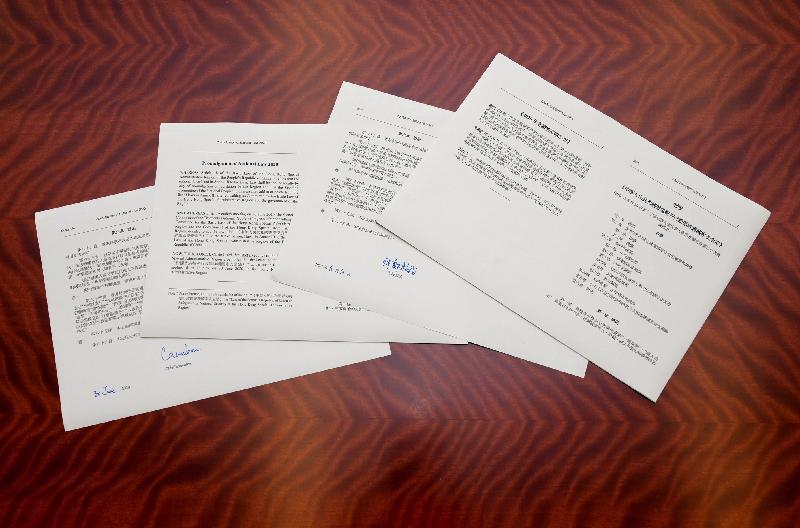
The Law of the People’s Republic of China on Safeguarding National Security in the Hong Kong Special Administrative Region gazetted and takes immediate effect (with photos)

     The Law of the People's Republic of China on Safeguarding National Security in the Hong Kong Special Administrative Region (the National Security Law) was gazetted for promulgation today (June 30) and took effect at 11pm the same day.

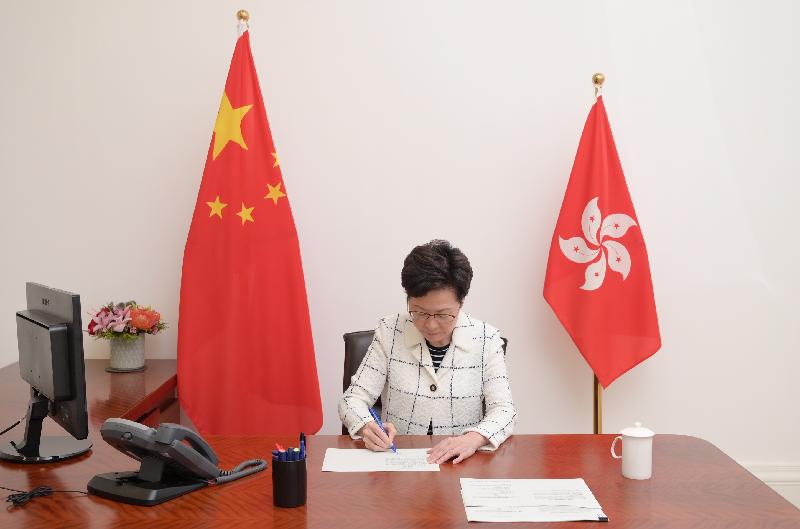
     The Standing Committee of the National People's Congress (NPCSC) today passed the National Security Law and listed the legislation in Annex III to the Basic Law after consulting the NPCSC's Committee for the Basic Law of the Hong Kong Special Administrative Region (HKSAR) and the HKSAR Government as required under Article 18 of the Basic Law. The National Security Law was enacted according to the Constitution of the People's Republic of China, the Basic Law and the "Decision of the National People's Congress on Establishing and Improving the Legal System and Enforcement Mechanisms for Safeguarding National Security in the Hong Kong Special Administrative Region" (the Decision). The National Security Law would be applied by promulgation in the HKSAR in accordance with the Decision. The Chief Executive, Mrs Carrie Lam, signed the promulgation and the National Security Law took effect upon gazettal tonight (June 30).

     With 66 articles, the National Security Law has six chapters, namely the general principles; the duties and the Government Bodies of the HKSAR for safeguarding national security; offences and penalties; jurisdiction, applicable law and procedure; Office for Safeguarding National Security of the Central People's Government (CPG) in the HKSAR; and supplementary provisions. As stated in the summary of the explanatory statement of the draft law submitted to a session of the NPCSC released earlier, the provisions of the National Security Law fully reflect the following principles:

     (1) the CPG has an overarching responsibility for national security affairs relating to the HKSAR, while the HKSAR bears the constitutional duty of safeguarding national security;

     (2) in safeguarding national security, the HKSAR shall uphold the principle of the rule of law;

     (3) the HKSAR shall establish and improve relevant institutions and their duties in safeguarding national security;

     (4) stipulations are made on what constitutes four categories of crimes that endanger national security and their corresponding penalties; 

     (5) stipulations are made in relation to jurisdiction of cases, application of laws and procedures; and

     (6) the CPG shall establish an office for safeguarding national security in the HKSAR.

     The purposes of the National Security Law are to prevent, curb and punish crimes, namely acts of secession, subversion of state power, terrorist activities, and collusion with foreign or external forces to endanger national security; maintain prosperity and stability of the HKSAR; and protect the lawful rights and interests of HKSAR residents.

     In discharging its duty in safeguarding national security, the HKSAR shall:

  • fully enforce the National Security Law and the laws in force in the HKSAR concerning the prevention of, suppression of, and imposition of punishments for acts and activities endangering national security;
  • strengthen its work on safeguarding national security and prevention of terrorist activitiesï¼›
  • take necessary measures to strengthen public communication, guidance, supervision and regulation over matters concerning national security, including those relating to schools, social organisations, the media and the internetï¼›and
  • complete as early as possible legislation for safeguarding national security as stipulated in the Basic Law and shall refine relevant laws.

     The Chief Executive shall submit an annual report to the CPG on the performance of duties of the HKSAR in safeguarding national security.
     ã€€
     The National Security Law clearly stipulates that the principle of the rule of law shall be adhered to, including that conviction and sentencing of crimes should be well defined in the law, presumption of innocence, no one shall be liable to be tried again for an offence for which he or she has already been convicted or acquitted in judicial proceedings, and protection of the rights of the suspect, etc. It has no retrospective effect and the stipulated offences are only applicable to acts after the commencement of the law.

     In addition, the National Security Law clearly stipulates that the HKSAR shall protect Hong Kong people's rights and freedoms under the Basic Law as well as the provisions of the International Covenant on Civil and Political Rights and the International Covenant on Economic, Social and Cultural Rights as applied to Hong Kong, including the freedoms of speech, of the press, of publication, of association, of assembly, of procession and of demonstration.

     It is stipulated in the National Security Law that a Committee for Safeguarding National Security of the HKSAR chaired by the Chief Executive will be established to take up national security affairs and bear the major responsibility for safeguarding national security. It will be under the supervision of and be accountable to the CPG. Members of the Committee include: the Chief Secretary for Administration, Financial Secretary, Secretary for Justice, Secretary for Security, Commissioner of Police, the head of the department for safeguarding national security of the Hong Kong Police Force established under Article 16 of the National Security Law, Director of Immigration, Commissioner of Customs and Excise, and the Director of the Chief Executive's Office. The Secretariat under the Committee is to be headed by the Secretary General, who shall be appointed by the CPG upon nomination by the Chief Executive.

     The duties of the Committee for Safeguarding National Security of the HKSAR are to analyse and assess developments in relation to safeguarding national security in HKSAR, make work plans and formulate policies, advance the development of the legal system and enforcement mechanisms, and co-ordinate major work and significant operations. The Committee shall be free from any interference in performing its duties and information relating to its work shall not be disclosed to the public. Decisions made by the Committee shall not be amenable to judicial review.

     The Committee for Safeguarding National Security of the HKSAR shall have a National Security Advisor, who shall be designated by the CPG. The National Security Adviser shall sit in on meetings of the Committee and provide advice on relevant matters.

     As the principal enforcement authorities of the National Security Law, the Hong Kong Police Force and the Department of Justice of the HKSAR Government will set up dedicated divisions to handle national security affairs. The Financial Secretary shall, upon approval of the Chief Executive, appropriate from the general revenue a special fund to meet the expenditure for safeguarding national security and approve the establishment of relevant posts, which are not subject to any restrictions in the relevant provisions of existing laws. The Financial Secretary shall submit an annual report on the control and management of the fund for this purpose to the Legislative Council.

     Except under circumstances specified, the HKSAR shall have jurisdiction over cases under the National Security Law. The National Security Law and the laws of the HKSAR shall apply to procedural matters, including those related to criminal investigation, prosecution, trial and execution of penalty.

     In handling national security cases, the department responsible for safeguarding national security under the Hong Kong Police Force may take measures that it is allowed to take in investigating serious crimes under the laws in force in the HKSAR or other stipulated measures under the National Security Law, including to carry out interception of communication and covert surveillance upon approval of the Chief Executive on a person who is suspected, on reasonable grounds, of having involved in the commission of an offence endangering national security, search of premises, requiring relevant organisations or individuals to answer questions and provide or delete information, etc. Under the National Security Law, the Committee for Safeguarding National Security of the HKSAR shall be authorised to make relevant implementation rules for the purpose of applying the above measures.

     A dedicated department under the Department of Justice is responsible for the prosecution of national security offences. Without the written consent of the Secretary for Justice, prosecution of a national security case shall not be instituted. The Secretary for Justice may, for such reasons as protecting national secrets, issue certification to direct that the relevant case shall be tried without a jury. Where a case is to be tried in the Court of First Instance without a jury, a Court consisting of three judges should be constituted.

     Judges designated from courts at all levels are responsible for hearing cases involving offences endangering national security. Unless national secrets are involved, the trial shall be held in open court and all judgements be announced to the public. The "designated judges" are to be designated from judges of courts at all levels by the Chief Executive after consultation with the Committee for Safeguarding National Security of the HKSAR and the Chief Justice.

     Specified circumstances refer to any one of the following three kinds of situations that has been reported by the HKSAR Government or the Office for Safeguarding National Security of the CPG in the HKSAR to the CPG for approval:

     (1) the case is complex due to the involvement of a foreign country or external elements, thus making it difficult for the HKSAR to exercise jurisdiction over the case;
     (2) a serious situation occurs where the HKSAR Government is unable to effectively enforce the National Security Law; or
     (3) a major and imminent threat to national security has occurred.

     In the above situations, the Office for Safeguarding National Security of the CPG in the HKSAR shall exercise jurisdiction over cases under the National Security Law.  

     Apart from handling cases concerning offence endangering national security in accordance with the law in extremely limited situations, the Office for Safeguarding National Security of the CPG in the HKSAR shall be responsible for overseeing, guiding, coordinating with and providing support to the HKSAR in the performance of its duties for safeguarding national security, including analyzing and assessing developments and sharing of intelligence. The National Security Law clearly stipulates that the staff of the Office shall abide by national laws as well as the laws of the HKSAR, and shall be subject to the supervision of the national supervisory authorities. The Office shall be funded by the CPG.

     A Government spokesman said, "the purpose of the legislation is to effectively prevent, curb and punish crimes, namely acts of secession, subversion of state power, terrorist activities, and collusion with foreign or external forces to endanger national security. It only targets an extremely small minority of offenders while the life and property as well as various legitimate basic rights and freedoms enjoyed by the overwhelming majority of citizens will be protected. There is nothing for Hong Kong citizens to worry about in exercising these legitimate rights.

      "In order for the HKSAR Government to effectively discharge its duty in safeguarding national security, the Police and the Department of Justice have earlier made preparations for the establishment of dedicated units. As the National Security Law has come into effect, the Police will establish a dedicated National Security Department on July 1 to handle the relevant work," the spokesman added.
     ã€€
     The Committee for Safeguarding National Security of the HKSAR chaired by the Chief Executive will be set up as soon as possible to take up the major responsibility of safeguarding national security.

Photo  Photo