CHP investigates 38 additional confirmed cases of COVID-19

      The Centre for Health Protection (CHP) of the Department of Health has announced that as of 4pm today (July 10), the CHP was investigating 38 additional confirmed cases of coronavirus disease 2019 (COVID-19), taking the number of cases to 1 404 in Hong Kong so far (comprising 1 403 confirmed cases and one probable case).
   
      The newly reported cases announced today involve 18 males and 20 females aged between seven and 89 years. Among them, six had a travel history during the incubation period.
 
      For the local cases announced today, the CHP will distribute deep throat saliva specimen bottles to residents of buildings where the patients live, as well as to those whom they might have had contact with during the infectious period. People are also urged to seek medical attention early if symptoms develop.
 
      The CHP's epidemiological investigations and relevant contact tracing on the confirmed cases are ongoing. For case details and contact tracing information, please see the Annex.
 
      The CHP again urged members of the public to maintain an appropriate social distance with other people as far as possible in their daily lives to minimise the risk of infection. In particular, they should go out less and avoid social activities such as meal gatherings or other gatherings to reduce the chance of contacting infected persons who may not present any symptoms, and minimise the risk of outbreak clusters emerging in the community.
            
      A spokesman for the CHP said, "Given that the situation of COVID-19 infection remains severe and that there is a continuous increase in the number of cases reported around the world, members of the public are strongly urged to avoid all non-essential travel outside Hong Kong.
   
      "The CHP also strongly urges the public to maintain at all times strict personal and environmental hygiene, which is key to personal protection against infection and prevention of the spread of the disease in the community. On a personal level, members of the public should wear a surgical mask when having respiratory symptoms, taking public transport or staying in crowded places. They should also perform hand hygiene frequently, especially before touching the mouth, nose or eyes.
       
      "As for household environmental hygiene, members of the public are advised to maintain drainage pipes properly, regularly pour water into drain outlets (U-traps) and cover all floor drain outlets when they are not in use. After using the toilet, they should put the toilet lid down before flushing to avoid spreading germs."
   
      Moreover, the Government has launched the website "COVID-19 Thematic Website" (www.coronavirus.gov.hk) for announcing the latest updates on various news on COVID-19 infection and health advice to help the public understand the latest updates. Members of the public may also gain access to information via the COVID-19 WhatsApp Helpline launched by the Office of the Government Chief Information Officer. Simply by saving 9617 1823 in their phone contacts or clicking the link wa.me/85296171823?text=hi, they will be able to obtain information on COVID-19 as well as the "StayHomeSafe" mobile app and wristband via WhatsApp.
   
      To prevent pneumonia and respiratory tract infection, members of the public should always maintain good personal and environmental hygiene. They are advised to:
   
• Wear a surgical mask when taking public transport or staying in crowded places. It is important to wear a mask properly, including performing hand hygiene before wearing and after removing a mask;
• Perform hand hygiene frequently, especially before touching the mouth, nose or eyes, after touching public installations such as handrails or doorknobs, or when hands are contaminated by respiratory secretions after coughing or sneezing;
• Maintain drainage pipes properly and regularly (about once a week) pour about half a litre of water into each drain outlet (U-trap) to ensure environmental hygiene;
• Cover all floor drain outlets when they are not in use;
• After using the toilet, put the toilet lid down before flushing to avoid spreading germs;
• Wash hands with liquid soap and water, and rub for at least 20 seconds. Then rinse with water and dry with a disposable paper towel. If hand washing facilities are not available, or when hands are not visibly soiled, performing hand hygiene with 70 to 80 per cent alcohol-based handrub is an effective alternative;
• Cover your mouth and nose with tissue paper when sneezing or coughing. Dispose of soiled tissues into a lidded rubbish bin, then wash hands thoroughly; and
• When having respiratory symptoms, wear a surgical mask, refrain from work or attending class at school, avoid going to crowded places and seek medical advice promptly.
FEHD reminds food business operators and food handlers again to continue adopting anti-epidemic precautionary measures

     In view of the latest development of COVID-19, and that food handlers were involved in local confirmed cases, food business operators and food handlers should attach importance to personal, food and environmental hygiene, so as to reduce the risk of spreading diseases.  The Food and Environmental Hygiene Department (FEHD) today (July 10) reminded food business operators and food handlers again to strictly comply with the directions under the Prevention and Control of Disease (Requirements and Directions) (Business and Premises) Regulation (Cap. 599F) (the Regulation). The FEHD will step up inspections at food premises and take stringent enforcement actions against offenders.
      
     A spokesman for the FEHD said, "To minimise the risk of transmission of COVID-19 in food premises, the food business operators and food handlers must comply with relevant regulations on prevention and control of disease and to take further appropriate measures as recommended by the FEHD, with a view to maintaining high standards of hygiene and cleanliness. The FEHD has facilitated the trade to master the relevant information through advisory letters, and will step up inspections and enforcement actions to ensure compliance with the Regulation. "
      
     In view of the development of the epidemic situation, the Secretary for Food and Health has issued the latest directions in relation to catering business premises. Starting from tomorrow (July 11), the number of customers at any catering premises at any one time must not exceed 60% of the normal seating capacity of the premises; no more than eight persons should be seated together at one table; while no more than four persons should be seated together at one table in bars and pubs.
      
     Further to issuing the recommendations to food business operators and food handlers in writing on July 6, the FEHD today sent letters to them again and reminded them to comply with the relevant regulations and adopt anti-epidemic precautionary measures. Emphasis was put on following measures in those letters:
 
(1) Table sharing should be avoided in food premises;
(2) Food handlers shall wear face masks when working;
(3) Trays, in particular the rim of trays, must be thoroughly cleaned and disinfected every time after used by customers. If tray lining is used, it shall also be replaced every time after use;
(4) Equipment for serving food or drink should not be used for collecting used eating utensils and food residues.  Equipment in different colours or attached with labels should be considered for the purpose of signifying the different purposes involved;
(5) Door knobs, tabletops and seats shall be cleansed and disinfected regularly. After each batch of customers left, tabletop area including partitions should be cleansed and disinfected before the next batch of customers are seated;
(6) Food handlers should suspend from engaging in any food handling work and seek medical advice promptly, when suffering or suspected to be suffering from an infectious disease or having symptoms of illness;
(7) Food handlers should practise good personal hygiene (e.g. washing hands before or after handling food, after clean-up is carried out, after handling refuse or other dirty items, and after visiting the toilet).  Food handlers should wash hands with liquid soap and water, and rub for at least 20 seconds;
(8) Food handling and scullery shall be carried out in food rooms (including kitchens and scullery rooms) but not at any open space; and
(9) Refuse and food residues shall be stored at refuse bins with close-fitting lids and properly disposed.
 
     The directions currently in force include: tables must be arranged in a way to ensure there is a distance of at least 1.5 m or some form of partition which could serve as effective buffer between one table and another table; a person must wear a face mask except when eating or drinking; body temperature screening must be conducted before the person is allowed to enter the catering premises; and hand sanitisers must be provided for any person at the premises, etc.
      
     The spokesman strongly appealed to food business operators and food handlers to comply with the requirements and directions under the Regulation. It will be a criminal offence for contravening the abovementioned requirements. Offenders are subject to a maximum fine of $50,000 and imprisonment for six months.  Food business operators and food handlers are also required to keep environmental hygiene continuously to ensure cleanliness of the premises and food safety.


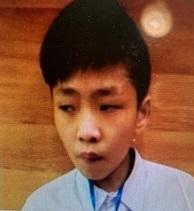
Appeal for information on missing boy in Wong Tai Sin (with photo)

          Police today (July 10) appealed to the public for information on a boy who went missing in Wong Tai Sin.

          Tam Kin-lok, aged 13, went missing after he was last seen at Choi Wan Market yesterday afternoon (July 9). His family made a report to Police today.
         
          He is about 1.5 metres tall, 35 kilograms in weight and of thin build. He has a long face with yellow complexion and short black hair. He was last seen wearing a white school polo shirt, dark blue sports trousers and black shoes.

          Anyone who knows the whereabouts of the missing boy or may have seen him is urged to contact the Regional Missing Person Unit of Kowloon East on 3661 0335 or 9347 2596 or email to rmpu-ke-2@police.gov.hk, or contact any police station.


Photo  


Customs Canine Force officers complete Canine Breeding Training Programme (with photos)

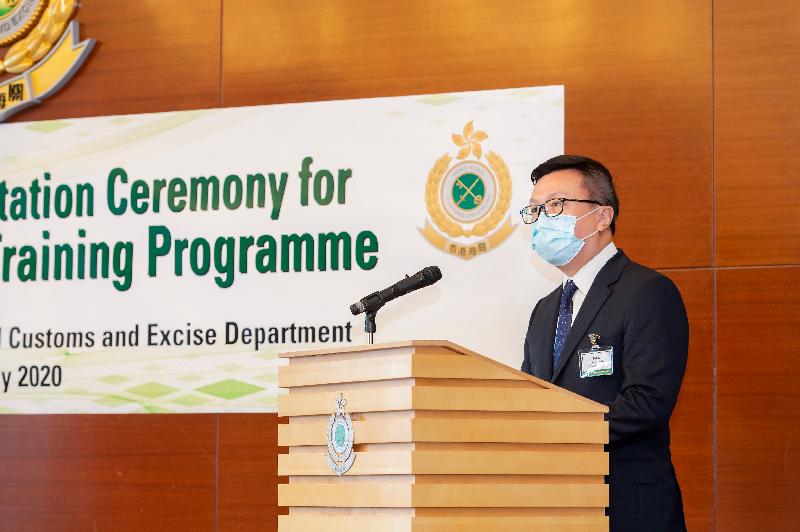
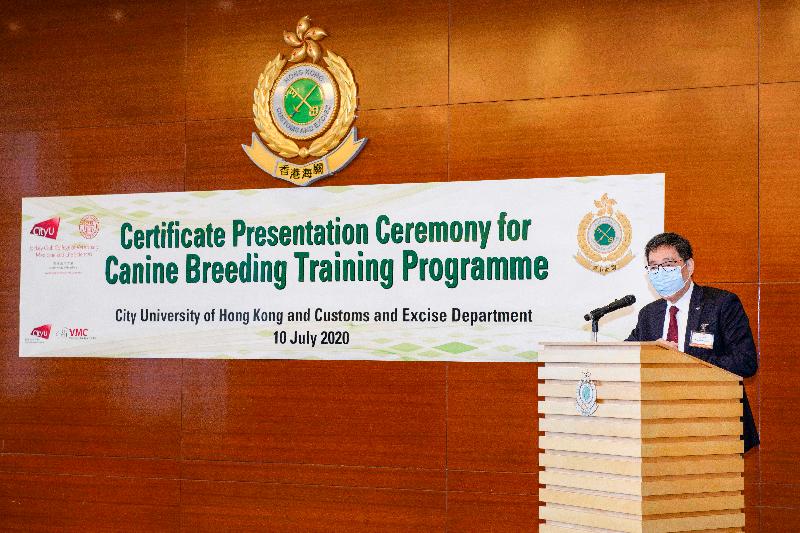
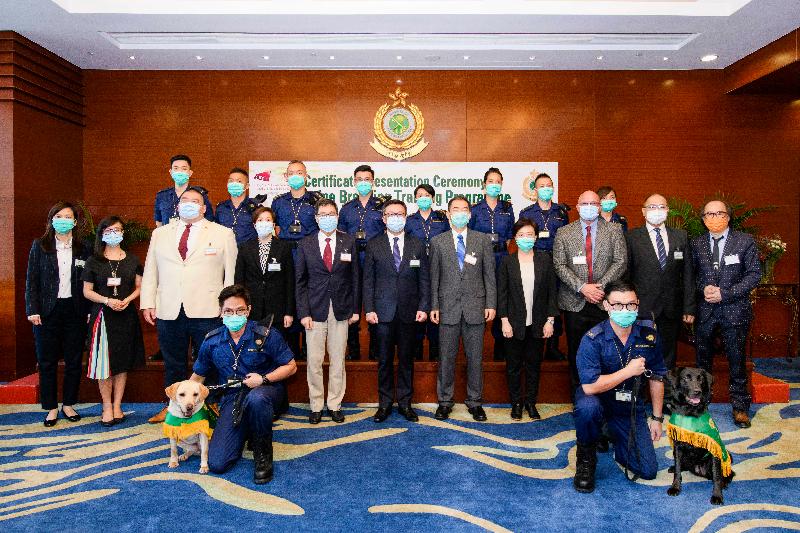
     â€‹The Commissioner of Customs and Excise, Mr Hermes Tang, today (July 10) officiated at the certificate presentation ceremony of the Canine Breeding Training Programme at the Customs Headquarters Building where 10 officers from the Customs Canine Force were awarded certificates at the ceremony upon successful completion of the programme.

     Jointly organised by the City University of Hong Kong (CityU) Veterinary Medical Centre and the Jockey Club College of Veterinary Medicine and Life Sciences of CityU, the training programme was CityU's first pilot canine breeding course tailor-made for local law enforcement agencies. Ten officers from the Customs Canine Force attended a one-week training programme early this month to acquire knowledge in various areas including advanced breeding techniques, selection of breeding methods, dog pregnancy, dog midwifery, nutrition as well as puppy care.

     Mr Tang said at the ceremony that the Customs Detector Dog Division was officially upgraded to the Customs Canine Force last year and Customs' in-house breeding of the first batch of working dogs will be finished within this year. He said the co-operation with CityU this time served as a good chance to equip Customs officers with comprehensive canine breeding skills and to get prepared for receiving the first batch of working dogs bred in-house.

     Mr Tang added that this training programme focusing on canine breeding is another iconic co-operation project with CityU, following the signing of a Memorandum of Understanding on credits transfer arrangement with the School of Continuing and Professional Education of CityU last month. He said joining with local universities to organise courses could promote continuous learning among Customs officers and enhance the department's staff training. It could also help to establish a good partnership between the two sides.

     Other guests attending today's certificate presentation ceremony included the President of CityU, Professor Way Kuo; the Deputy Commissioner of Customs and Excise, Ms Louise Ho; and representatives from the working dog units of various law enforcement agencies. The representatives also took this opportunity to exchange experiences on canine handling and training, which can in turn help to foster future inter-departmental breeding programme and enforcement co-operation.

Photo  Photo  Photo  


CFS finds trace of malachite green in grass carp sample

     The Centre for Food Safety (CFS) of the Food and Environmental Hygiene Department today (July 10) announced that a trace amount of malachite green was found in a grass carp sample. Follow-up is in progress.

     A CFS spokesman said, "Subsequent to announcing earlier that a grass carp sample taken from a stall in Aberdeen Market was found to contain a trace amount of malachite green, the CFS detected a similar irregularity in another grass carp sample taken from the same stall for testing during follow-up investigations. The test result showed that it contained malachite green at a level of 2.2 parts per billion."

     The CFS has informed the vendor concerned of the irregularity and instructed it to stop sale of all the affected product from the same supplier. The CFS will also trace the source and distribution of the affected product. Should there be sufficient evidence, prosecution will be instituted.

     Malachite green is a type of industrial dye and has been used for treating infections in fish. Currently, malachite green has been prohibited for use in food-producing animals in many countries. According to the Harmful Substances in Food Regulations (Cap 132AF), no food sold in Hong Kong is allowed to contain malachite green. Offenders will be prosecuted and will be liable to a fine of $50,000 and to imprisonment for six months upon conviction.

     The CFS will continue to follow up on the incident and take appropriate action. Investigation is ongoing.