Correctional officer stops assault on person in custody

     A correctional officer stopped two remand persons in custody from assaulting another remand person in custody at Lo Wu Correctional Institution yesterday (August 5).

​     At 6.10pm yesterday, two female remand persons in custody, aged 32 and 38, attacked a 28-year-old female remand person in custody inside the shower room. The officer at the scene immediately stopped the assailants and called for reinforcement.

     The victim sustained injuries to her head and elbow. After an examination and treatment in the institution hospital, she was referred to a public hospital for further treatment. The two assailants did not sustain any injuries.

     The case has been reported to the Police for investigation.

     The 32- and 38-year-old persons in custody were remanded for trafficking in a dangerous drug, while the 28-year-old person in custody was remanded for obtaining property by deception.


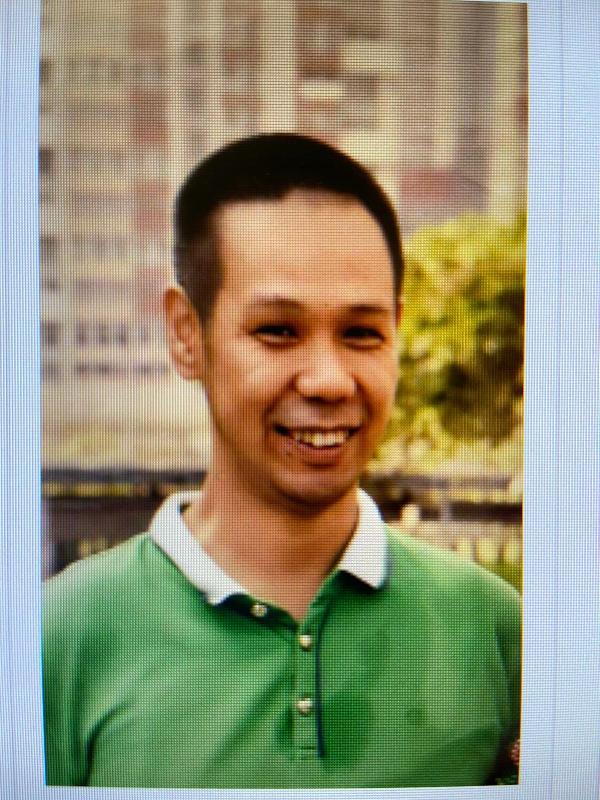
Appeal for information on missing man in Chai Wan (with photo)

     Police today (August 6) appealed to the public for information on a man who went missing in Chai Wan.   

     Sze Ho-yin, aged 47, went missing after he left his residence on Chai Wan Road on August 4 afternoon. His family made a report to Police on the same day.

     He is about 1.7 metres tall, 70 kilograms in weight and of fat build. He has a long face with yellow complexion and short black hair. He was last seen wearing a purple short-sleeved shirt, dark-coloured trousers, grey sport shoes and carrying a black and grey backpack.

     Anyone who knows the whereabouts of the missing man or may have seen him is urged to contact the Regional Missing Person Unit of Hong Kong Island on 2860 1040 or 9886 0034 or email to rmpu-hki@police.gov.hk, or contact any police station.


Photo  


Government explains COVID-19 testing arrangements for target groups

     In response to press enquiries on the Government's COVID-19 testing arrangements for target groups, a Government spokesman said the following on August 5:
                
     Since early July, the third wave of the epidemic situation of COVID-19 in Hong Kong has remained severe. The number of confirmed cases has increased sharply and there are numerous local cases of unknown infection source. The risk of large-scale community outbreaks poses a serious health threat to the society and members of the public.
                
     In this connection and with a view to targeting clusters of infection in various premises and sectors in the community, relevant Government departments have made use of the Anti-epidemic Fund (AEF) since mid-July to help groups with higher-risks to undergo voluntary and one-off virus tests. Currently, the schemes cover staff members of residential care homes for the elderly, residential care homes for persons with disabilities and nursing homes, staff of boarding section of special schools, taxi and public light bus drivers, restaurant staff, market tenants and workers, as well as frontline staff of the property management sector. The estimated number of individuals involved is around 500 000.
                
     As of August 4, the three private testing service providers that provide testing services for the Government (i.e. Sunrise Diagnostic Centre (SDC) established by BGI, China Inspection Company Limited's subsidiary China Dragon Inspection and Certification (Hong Kong) Limited (CDIC) and Prenetics) had carried out more than 90 000 tests for the aforementioned groups and 31 preliminary positive samples were found.
                
     In view of the large number of people in the higher-risk groups and that the public testing system would not be able to provide the required testing volume within a short period of time, there was a need for the Government to resort to the private testing services. Before the launch of the schemes, the Government had contacted various local major private testing service providers and found that only SDC, CDIC and Prenetics would be able to provide testing services at a massive scale up to tens of thousands within a relatively short period of time.
                
     As there was an urgent need to roll out large-scale testing as soon as possible to safeguard public health, after considering whether the suitability of the testing service models for the actual operation of the relevant sectors provided by the relevant laboratories, the Government decided to procure testing services from the three providers by direct procurement with funding from the AEF. With the worsening epidemic situation, a service provider decided to partner with another private laboratory with a view to launching its testing service early so as to meet the service volume required by the Government in advance.
                
     Such services provide a one-stop solution to cover procedures from specimen-taking to testing. The testing arrangements for different sectors vary. For instance, on-site specimen collection is more suitable for staff of residential homes, and the relevant logistics costs will be higher. Hence, the testing costs would vary across services for different sectors. The Government will examine the relevant testing costs so as to ensure that procurement price is reasonable, and will announce the details of use of funding in accordance with the requirements of the AEF later. Depending on whether door-to-door sample collection is required and the logistic work involved, the charge for each test starts from about $300. In view of the unstable epidemic situation, the Government will need to procure more private testing services. As the Government is still in discussion with different service providers, it is inappropriate to make public the fee details of individual service providers at this stage to avoid affecting further discussion and procurement.
      
Statutory requirements of medical laboratories and relevant professionals as well as quality of COVID-19 tests
———————————————————————————————————————–

     All local laboratories, including the private laboratories providing COVID-19 tests for the Government, must abide by the relevant local legislation, especially the statutory requirements for medical laboratories and the related professionals. In addition, all participating private laboratories must subscribe to and pass the External Quality Assessment Programme of the Department of Health (DH) to ensure they meet the required technical standards before commencing the testing service. All laboratories used by the service providers which provide testing services for the Government must meet the above requirements ahead of commencement of testing. DH has also provided safety guidelines on transporting clinical samples and contagious matters to the laboratories, which provide testing services to the higher-risk groups for the Government, for their reference.
      
Importing Mainland technical staff by laboratories and compulsory quarantine exemption arrangement
——————————————————————————————————————
      
     As there is a lack of local testing staff with suitable training and experience in COVID-19 tests, individual private testing service providers have applied to introduce suitable technical staff from the Mainland for supporting their work in COVID-19 testing. As mentioned above, the relevant private laboratories must abide by the relevant local legislation, including the statutory requirements for medical laboratories and the related professions. Any imported staff must meet the registration or exemption requirements under the applicable legislation if they want to provide service in the relevant professional capacity of medical laboratory technologists (MLTs). However, other technical staff members who provide operational support in the medical laboratories are not so required if they do not work as MLTs as statutorily regulated. The medical laboratories and relevant professionals must abide by the professional code of conduct and ensure the laboratory operation is in compliance with the requirements under the code.
           
     Under section 4(1) of the Compulsory Quarantine of Certain Persons Arriving at Hong Kong Regulation (Cap. 599C), the Chief Secretary for Administration may designate any person or category of persons fulfilling certain criteria for exemption of compulsory quarantine. Personnel of the companies or organisations for the supply of COVID-19 testing services in Hong Kong is one of such categories. As of August 4, a total of 215 persons had been exempted under this category. During their stay in Hong Kong, these persons are put under medical surveillance. They have to wear a surgical mask and take body temperature daily. If they feel unwell, they have to report to DH. The seven advance members of the Mainland nucleic acid testing support team who arrived at Hong Kong on August 2 had obtained negative result from a nucleic acid test done within 72 hours prior to arrival.
      
Handling of personal data
—————————-
      
     Any collection and use of personal data for carrying out voluntary COVID-19 tests must meet the requirements under the Personal Data (Privacy) Ordinance (Cap. 486). Government departments or testing service providers may provide the data to DH or other relevant departments for anti-epidemic needs as necessary. The workflow does not involve the provision of any personal data to organisations or persons outside Hong Kong. The Government has also taken measures to minimise the personal data that need to be collected and streamline the work that need to come into contact with such data.


Government condemns disruptive acts against Mainland nucleic acid test support team

     Some district council members from non-establishment camp and  some individuals held demonstrations outside the hotel where the Mainland nucleic acid test support team stayed and at the sites where the team made inspection visits for consecutive days and made disturbances to the team members. A spokesman for the Hong Kong Special Administrative Region (HKSAR) Government today (August 5) strongly condemns their abhorrent acts and reiterates that the Government are grateful to the Central Government for supporting the anti-epidemic work of Hong Kong and sending an advance team to make preparatory work. 

     "In view of the seriousness of the epidemic, the community as a whole should get united in fighting against this virus. However, some people disregarded the public interest, health and safety, behaved in a confrontational way in an attempt to smear and damage the Central Government's support to Hong Kong’s anti-epidemic work. We must strongly condemn such behaviours," the spokesman said.

     The spokesman reiterated that the Central Government made proactive response to the request of the HKSAR Government made in the face of the severe epidemic in Hong Kong and sent the team to Hong Kong to support the anti-epidemic work. Arranging series of site visits for the team aimed at facilitating both sides to set the virus testing capacity, with a view to getting prepared for enhancing the capacity of community testing for COVID-19. Arrangements for the support team to Hong Kong are completely complied with the requirements of the law and there can be no question of the so-called 'political consideration'. 

     The spokesman once again expressed heartfelt gratitude to the Central Government for its proactive response to the request of the HKSAR Government made in the face of the severe epidemic in Hong Kong and being supportive of the anti-epidemic work of the HKSAR. With the support of the Central Government, the HKSAR Government will formulate feasible scheme and announce the details as soon as possible.

     The HKSAR Government calls on all members of the public to be aware of the political conspiracies of the small group of people who have made 'anti-Mainland' remarks continuously in recent years. These group of people disregarded the seriousness of the epidemic and public health, made use of the support from the Central Government to stir up social confrontations. 


CHP investigates 85 additional confirmed cases of COVID-19

     The Centre for Health Protection (CHP) of the Department of Health (DH) has announced that as of 0.00am, August 5, the CHP was investigating 85 additional confirmed cases of coronavirus disease 2019 (COVID-19), taking the number of cases to 3 755 in Hong Kong so far (comprising 3 754 confirmed cases and one probable case).
     
     Among the newly reported cases announced, three had travel history during the incubation period.

     The CHP's epidemiological investigations and relevant contact tracing on the confirmed cases are ongoing. For case details and contact tracing information, please see the Annex or the list of buildings with confirmed cases of COVID-19 in the past 14 days and the latest local situation of COVID-19 available on the website "COVID-19 Thematic Website" (www.coronavirus.gov.hk).
 
     In view of the latest epidemic development in the Mainland, starting tomorrow (August 6), inbound travellers who have been to Xinjiang or Liaoning in the past 14 days (applies to all inbound travellers including exempted persons) arriving via land boundary control points (Shenzhen Bay Port and the Hong Kong-Zhuhai-Macao Bridge Hong Kong Port) will be provided with specimen collection containers. They are required to collect their deep throat saliva sample by themselves in accordance with the instructions and return the sample for conducting COVID-19 testing. Separately, the current testing arrangements required for relevant inbound travellers who have been to Hubei or Beijing in the past 14 days will be cancelled but those arrivals who are not exempted persons are still subject to compulsory quarantine for 14 day at a designated place (home or other accommodation) while exempted persons are subject to medical surveillance upon arrival at Hong Kong.

     In view of the severe epidemic situation, the CHP called on members of the public to avoid going out, having social contact and dining out. They should put on a surgical mask and maintain stringent hand hygiene when they need to go out. As a number of recent cases involve elderly people, the CHP strongly urged the elderly to stay home as far as possible and avoid going out. They should consider asking their family and friends to help with every day tasks such as shopping for basic necessities.
 
     A spokesman for the CHP said, "Given that the situation of COVID-19 infection remains severe and that there is a continuous increase in the number of cases reported around the world, members of the public are strongly urged to avoid all non-essential travel outside Hong Kong.
 
     "The CHP also strongly urges the public to maintain at all times strict personal and environmental hygiene, which is key to personal protection against infection and prevention of the spread of the disease in the community. On a personal level, members of the public should wear a surgical mask when having respiratory symptoms, taking public transport or staying in crowded places. They should also perform hand hygiene frequently, especially before touching the mouth, nose or eyes.
 
     "As for household environmental hygiene, members of the public are advised to maintain drainage pipes properly, regularly pour water into drain outlets (U-traps) and cover all floor drain outlets when they are not in use. After using the toilet, they should put the toilet lid down before flushing to avoid spreading germs."
 
     Moreover, the Government has launched the website "COVID-19 Thematic Website" (www.coronavirus.gov.hk) for announcing the latest updates on various news on COVID-19 infection and health advice to help the public understand the latest updates. Members of the public may also gain access to information via the COVID-19 WhatsApp Helpline launched by the Office of the Government Chief Information Officer. Simply by saving 9617 1823 in their phone contacts or clicking the link wa.me/85296171823?text=hi, they will be able to obtain information on COVID-19 as well as the "StayHomeSafe" mobile app and wristband via WhatsApp.
 
     To prevent pneumonia and respiratory tract infection, members of the public should always maintain good personal and environmental hygiene. They are advised to:
 
     • Wear a surgical mask when taking public transport or staying in crowded places. It is important to wear a mask properly, including performing hand hygiene before wearing and after removing a mask;
     • Perform hand hygiene frequently, especially before touching the mouth, nose or eyes, after touching public installations such as handrails or doorknobs, or when hands are contaminated by respiratory secretions after coughing or sneezing;
     • Maintain drainage pipes properly and regularly (about once a week) pour about half a litre of water into each drain outlet (U-trap) to ensure environmental hygiene;
     • Cover all floor drain outlets when they are not in use;
     • After using the toilet, put the toilet lid down before flushing to avoid spreading germs;
     • Wash hands with liquid soap and water, and rub for at least 20 seconds. Then rinse with water and dry with a disposable paper towel. If hand washing facilities are not available, or when hands are not visibly soiled, performing hand hygiene with 70 to 80 per cent alcohol-based handrub is an effective alternative;
     • Cover your mouth and nose with tissue paper when sneezing or coughing. Dispose of soiled tissues into a lidded rubbish bin, then wash hands thoroughly; and
     • When having respiratory symptoms, wear a surgical mask, refrain from work or attending class at school, avoid going to crowded places and seek medical advice promptly.