Pet dog tests positive for COVID-19 virus

     A spokesman for the Agriculture, Fisheries and Conservation Department (AFCD) said today (August 10) that samples from a pet dog sent to the AFCD have tested positive for the COVID-19 virus.

     The case involves a Siberian Husky dog that lived in Wan Chai. When the owner was found to be a close contact of confirmed COVID-19 case, the dog was sent to the AFCD for quarantine on August 5. Samples collected from the dog by the department tested positive for the COVID-19 virus. However, the dog has not shown any symptoms at present. The AFCD will continue to closely monitor the dog and conduct repeated testing.

     The spokesman reminded pet owners to adopt good hygiene practices (including hand washing before and after being around or handling animals, their food or supplies, as well as avoiding kissing them) and to maintain a clean and hygienic household environment. People who are sick should restrict contact with animals. If any changes in the health condition of pets are spotted, advice from a veterinarian should be sought as soon as possible.

     The spokesman emphasised that currently there is no evidence to show that pets are playing a role in the spread of human infection with the COVID-19 virus. Pet owners should always maintain good hygiene practices and under no circumstances should they abandon their pets.


HKSAR Government resents double standards and hypocrisy in joint statement by five foreign ministers

     A spokesman for the Hong Kong Special Administrative Region (HKSAR) Government today (August 10) firmly opposes the joint statement by the foreign ministers of Australia, Canada, New Zealand, the United Kingdom and the United States in which they made deliberate misrepresentation and told falsehoods marked by brazen contempt for facts regarding the postponement of the Legislation Council General Election (LCGE) due to the severe epidemic, the Returning Officers' decisions on the validity of the nominations for the Legislative Council (LegCo) election made in accordance with the law, and the enactment of the Law of the People's Republic of China on Safeguarding National Security in the Hong Kong Special Administrative Region (National Security Law). Above all, these official comments were blatant interference in Hong Kong matters which are internal affairs of the People's Republic of China.
 
Postponement of LCGE due to severe epidemic
 
     The health and wellbeing of the people is the overriding concern of any responsible government. The HKSAR Government has repeatedly stressed that the postponement of the LCGE in 2020 is entirely based on public health grounds amidst a new wave of the COVID-19 epidemic which has seen an alarming surge in confirmed cases and deaths. 
 
     In order to combat the spread of the virus, the Government has put in place the most stringent social distancing measures ever adopted since January. With these measures in place, no meaningful electioneering activities could be conducted. The strict boundary control measures make it virtually impossible for voters from the Mainland and overseas to return to cast their vote. In addition, legal, practical and time constraints mean it is not feasible to introduce measures such as extra polling days, postal voting or e-voting.
     
     The decision to postpone the election is therefore to protect public health and to protect the voting rights of all registered voters.
 
     As the current wave of infections would likely last for at least several weeks or longer and there may also be a winter surge later in the year, postponing the election for a year is therefore not "disproportionate" as claimed by the five foreign ministers.
 
    In fact, many countries also postponed their elections due to the severe epidemic. Among them, the United Kingdom has postponed the local council and the metro-mayoral elections for a year from May 7, 2020 to May 6, 2021 by the emergency legislation on March 25 (42 days away from the elections); New South Wales of Australia also decided in March to postpone the Local Government elections to be held in September 2020 for a year (decision made six months away from the elections); moreover, New Brunswick of Canada decided in mid-March this year to postpone the municipal elections that were planned for May this year to not later than May 2021 (decision made two months prior to the elections); many states of the United States, including Maryland, Indiana, Georgia, and Louisiana had also postponed their presidential primary elections. In comparison, the HKSAR Government keeps monitoring the development of the epidemic and announced at no choice the postponement the LCGE in 2020 as close as possible to the election on July 31 (36 days before the election).         
 
     It is utterly regretful that the five foreign ministers in their joint statement have criticised the decision made by the HKSAR Government for safeguarding public health and wellbeing of the people, when ironically their own governments were making similar decisions to postpone scheduled elections on similar grounds. This is yet another case of these governments adopting double standards and displaying hypocrisy.
 
Returning Officers' decisions on the validity of nominations for the LegCo election in accordance with the law
 
     The HKSAR Government completely agrees with and supports Returning Officers (ROs) to exercise their statutory duties in accordance with the law in deciding the validity of the nominations of candidates for the LegCo election. The ROs have clearly stated that, in determining the validity of nominations, they have thoroughly considered whether the nominee has complied with the requirement under section 40(1)(b)(i) of the Legislative Council Ordinance (Cap.542), i.e. to uphold the Basic Law and pledge allegiance to the HKSAR of the People's Republic of China (PRC), a fundamental constitutional duty of every LegCo Member.
 
     The HKSAR Government reiterates that people advocating or promoting Hong Kong independence, self-determination or changing the system of the HKSAR by supporting Hong Kong independence as an option for self-determination; soliciting intervention by foreign governments or political authorities in relation to the HKSAR's affairs, etc. could not genuinely uphold the Basic Law and could not therefore perform the duties of a LegCo Member.
    
     The HKSAR Government respects and safeguards the lawful rights of Hong Kong people, including the right to vote and the right to stand for elections. It also has a duty to implement and uphold the Basic Law and ensure that all elections will be conducted in accordance with the Basic Law and relevant electoral laws. The ROs' decisions completely comply with the legal provisions above, and have nothing to do with political censorship or restriction of the freedom of speech as alleged by some members of the community; or undermining the democratic process or eroding the rights and freedoms of the people as falsely claimed by the five foreign ministers.
 
Enactment of the National Security Law
 
     Safeguarding national security through legislation is in line with international practice. Every country has an abundance of laws, and a duty to safeguard its national security and sovereignty. Australia, Canada, New Zealand, the United Kingdom and the United States have all enacted laws to safeguard national security and sovereignty, and formed relevant decision-making and enforcement bodies. The inappropriate comments by the five foreign ministers on the National Security Law smack of political manipulation and double standards. It is a gross interference in China's internal affairs and a grave violation of basic norms governing international relations. The HKSAR Government strongly opposes the comments.
    
     The National Security Law also clearly stipulates that the HKSAR shall protect the rights and freedoms enjoyed by residents under the Basic Law and the provisions of the International Covenant on Civil and Political Rights and the International Covenant on Economic, Social and Cultural Rights as applied to Hong Kong in accordance with the law.
 
     The HKSAR Government yet again solemnly reminded the international community that the HKSAR is an inalienable part of the PRC and a local administrative region which enjoys a high degree of autonomy and comes directly under the Central People's Government. Foreign governments should stop their scaremongering and interfering in any form in the internal affairs of the HKSAR. They should respect the importance attached to peace, stability and prosperity by the Hong Kong people under the principle of "One Country, Two Systems" and refrain from pretending to support the people of Hong Kong.


Update on Candida auris cases at Kowloon West Cluster

The following is issued on behalf of the Hospital Authority:

     Regarding an earlier announcement on Candida auris carrier cases in Princess Margaret Hospital (PMH), the spokesperson for Kowloon West Cluster (KWC) made the following update today (August 10):

     According to the contact tracing result, three more female patients (aged 48 to 70) are confirmed as Candida auris carriers while not having signs of infection. One patient has been transferred to the Medical and Geriatric Ward of Caritas Medical Centre and is under isolation with stable condition; while the other two patients are treated in PMH under isolation with stable condition. In accordance with prevailing guideline, the following enhanced infection control measures have already been adopted in both hospitals:
 

  1. Thorough cleaning and disinfection of the wards concerned
  2. Enhance patient and environmental screening procedures
  3. Apply stringent contact precautions and enhance hand hygiene of staff and patients

 
     KWC will continue to closely monitor the situation of the patients. The cases have been reported to the Hospital Authority Head Office and the Centre for Health Protection for necessary follow-up.


CHP closely monitors plague case in Bayannaoer City

     The Centre for Health Protection (CHP) of the Department of Health is today (August 10) closely monitoring a plague case in Bayannaoer, Inner Mongolia Autonomous Region.
 
     According to the Health Commission in Bayannaoer, the patient was diagnosed to have bubonic plague and had passed away. Close contacts of the patient have remained asymptomatic so far.
 
     A spokesman for the CHP said, "Plague is transmitted from an infected animal (mainly rodents) to humans through the bite of its fleas. Plague can also be contracted when cuts or other breaks in the skin come into contact with the body fluid or tissue of infected animals. Consumption of infected animal tissues and inhalation of infected respiratory droplets are also a possible mode of transmission."
 
     The spokesman explained that bubonic plague is a kind of plague which is not usually transmitted directly from person to person unless there is contact with pus from suppurating buboes. Patients infected with bubonic plague usually present with fever, headache and painful swelling of the regional lymph nodes, especially around the groin. The infection can progress to septicaemic plague when the bacteria invade the blood stream.
 
     The spokesman reminded travellers to avoid visiting plague-endemic areas. They should also heighten vigilance on rodents and prevent flea bites. Insect repellents against mosquitoes may equally prevent flea bites and deter blood-sucking insects. Formulations in lotions or sprays should contain DEET, IR3535 or icaridin (also known as picaridin) as active ingredients. The public should refer to the CHP's tips for using insect repellents.
 
     "Travellers returning from affected areas with a sudden onset of fever, shaking chills, body pains or chest discomfort should seek medical advice as soon as possible and reveal their travel history for prompt investigation and management. Plague is a statutorily notifiable disease and doctors should report suspected or confirmed cases to the CHP for investigations and control," the spokesman added.
 
     Travellers should take heed of the health advice below during travel:
 

  • Prevent flea bites by wearing long-sleeved shirts and trousers, and applying insect repellent/insecticide. DEET-containing insect repellent can be applied to exposed skin and clothing, while insecticide containing permethrin can be applied to clothing, not the skin;
  • Avoid going to rural areas, camping or hunting;
  • Never eat or touch rodents, dead animals and their tissues or contaminated materials;
  • Avoid close contact with patients, especially those with cough or chest infection;
  • Avoid going to crowded areas;
  • Seek medical care immediately in case of a sudden onset of fever, chills, painful lymph nodes, difficulty in breathing with coughing and/or blood-tainted sputum; and
  • Consult a doctor immediately after contact or exposure to pneumonic plague patients or high-risk exposures, such as bites from fleas or direct contact with body fluids or tissues of potentially infected animals, for prompt assessment of the need for preventive medication.

 
     Travellers may visit the CHP's plague pageTravel Health News and the Food and Environmental Hygiene Department's advice on rodent control for details. 


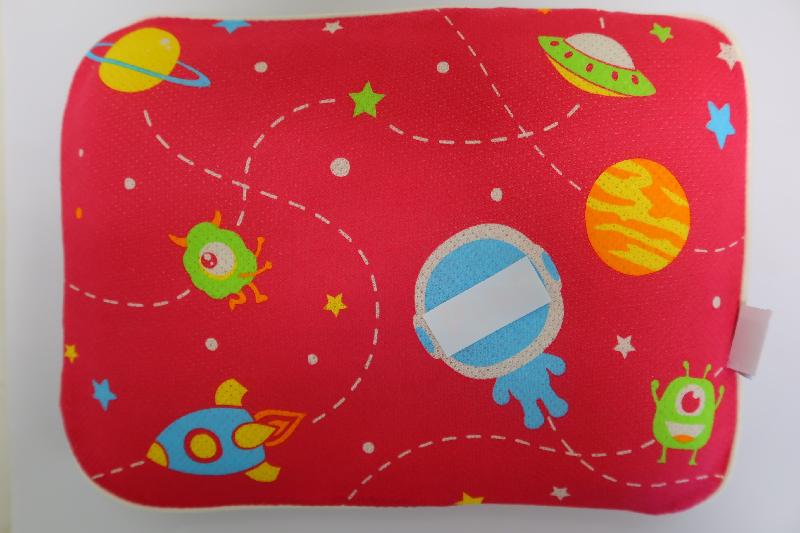
Hong Kong Customs alerts public on baby pillow found to contain excessive plasticiser (with photo)

     â€‹Hong Kong Customs today (August 10) announced the results of safety tests on baby pillows, in which one model of baby pillow was found to contain a plasticiser exceeding the limit stipulated in the Toys and Children's Products Safety Ordinance (TCPSO) and its subsidiary legislation by more than four times. Members of the public are urged to stop using this type of baby pillow and traders should remove the product from their shelves.

     Customs officers earlier conducted a test-buy operation on six models of baby pillows from retailers in different districts for safety testing. Results from the Government Laboratory revealed that one model of baby pillow contained phthalates (a type of plasticiser) exceeding the limit stipulated in the TCPSO and its subsidiary legislation by 4.3 times. It is believed that the baby pillow came from Taiwan according to initial investigation.

     Customs officers then conducted an operation last week and seized three baby pillows of the same model from a retail shop.

     Investigation is ongoing.

     Customs reminds members of the public that chronic exposure to plasticisers may harm children's health, and cause liver, kidney, reproductive and development system toxicity. Parents should be alert and prevent their children from having prolonged exposure to toys and children's products with excessive plasticiser.

     Customs advises members of the public to observe the following safety tips when purchasing and using children's products:

  • Pay attention to age recommendations indicated on labels;
  • Pay attention to and follow all instructions associated with the products;
  • Avoid letting children have prolonged exposure to or lick plastic products;
  • Throw away plastic packaging bags of the products to avoid children being suffocated; and
  • Stop children using the products immediately if any damage is observed.

     Customs is committed to the protection of consumer interests and regularly conducts spot checks and safety tests on toys and children's products to ensure that they are reasonably safe for use by consumers.

     Under the TCPSO, it is an offence to supply, manufacture or import unsafe toys or children's products. The maximum penalty upon conviction is a fine of $100,000 and imprisonment for one year on first conviction, and a fine of $500,000 and imprisonment for two years on a subsequent conviction.

     Members of the public may report information relating to suspected unsafe toys or children's products via Customs' 24-hour hotline 2545 6182 or its dedicated crime-reporting email account (crimereport@customs.gov.hk).

Photo