Two property co-owners fined over $10,000 for not complying with mandatory window inspection statutory notice

     Two property co-owners of a premises in To Kwa Wan were fined over $10,000 at the Kowloon City Magistrates' Courts in mid-August for failing to comply with a statutory notice issued under the Mandatory Window Inspection Scheme of the Buildings Ordinance (BO) (Cap. 123).

     The case related to a premises in a 48-year-old 16-storey composite building located at Chi Kiang Street. A statutory notice was issued under section 30C(4) of the BO, requiring the co-owners of the premises to appoint a qualified person to carry out an inspection and, if necessary, repairs of the windows in their premises.

     Since the two property co-owners failed to comply with the statutory notice, they were prosecuted by the Buildings Department (BD) and were convicted and fined on August 13.

     "Failing to comply with a statutory notice without reasonable excuse is a serious offence under the BO. The BD may instigate prosecution proceedings against the owner", a spokesman of the BD said today (August 20).

     Pursuant to section 40(1BD) of the BO, any person who, without reasonable excuse, fails to comply with a statutory notice served on him or her, commits an offence and is liable on conviction to a fine at level 4 ($25,000 at present) and to imprisonment for three months, as well as a further fine of $2,000 for each day that the offence has continued.


Ombudsman probes Government’s mechanism for monitoring vaccines provided by private healthcare facilities

The following is issued on behalf of the Office of The Ombudsman:

     The Ombudsman, Ms Winnie Chiu, today (August 20) announced a direct investigation into the Government's current mechanism for monitoring the vaccines provided by private healthcare facilities in Hong Kong, with a view to identifying any room for improvement.
 
     During joint operations conducted in July 2019, the Department of Health (DH) and the Customs and Excise Department (C&ED) uncovered suspected counterfeit nine-valent human papillomavirus (HPV) vaccines provided by medical centres. Results of analysis revealed that samples of the seized products contained no active ingredients of an HPV vaccine, but only sodium and chloride, which are commonly found in saline solution. It was also found that the samples might have been contaminated by microbes and could pose a risk to those who were administered the products. At the same time, the Office of The Ombudsman had received complaints about parallel imported or counterfeit nine-valent HPV vaccines and taken note of wide media coverage of the incident.
 
     As pharmaceutical products defined under the Pharmacy and Poisons Ordinance (PPO), all vaccines must satisfy the criteria of safety and quality prescribed by the Pharmacy and Poisons Regulations. Registration with the Pharmacy and Poisons Board of Hong Kong is required for the sale or distribution of vaccines in the territory. The Board has also formulated the Code of Practice for Holder of Wholesale Dealer Licence under the PPO for compliance by licensed wholesale dealers in procuring, importing or selling vaccines. The import and export of vaccines is regulated by the Import and Export Ordinance (IEO), under which wholesale dealers are required to apply for an import licence from the DH for each importation. At present, the DH's Drug Office and the C&ED are responsible for taking enforcement action under the PPO and IEO respectively.
 
     The Office's preliminary inquiry revealed that the local emergence of parallel imported/counterfeit products in 2019 was mainly due to the fact that the demand for nine-valent HPV vaccine far exceeded the limited supply, prompting unscrupulous dealers to provide private healthcare facilities with parallel imported or counterfeit products. Upon realising the situation, the authorities took follow-up action under the established mechanism and stepped up monitoring measures. This direct investigation aims at evaluating whether the current monitoring mechanism is effective and identifying any room for improvement. The Office's investigation covers the Food and Health Bureau, the DH and the C&ED.
 
     Ms Chiu said, "Vaccines are pharmaceutical products administered directly into the human body, so it is essential to ensure their quality and safety. To prevent substandard or even counterfeit vaccine products from circulating in the market and posing a threat to public health, the Government must properly play the role of gatekeeper. Through this direct investigation, I hope to explore ways for further improving the current monitoring mechanism and enhance public awareness of the Government's monitoring efforts."
 
     The Ombudsman is inviting views from members of the public on this topic. Written submissions should reach the Office by September 21, 2020:
 
Address: 30/F, China Merchants Tower, Shun Tak Centre
              168-200 Connaught Road Central, Hong Kong
Fax: 2882 8149
Email: complaints@ombudsman.hk


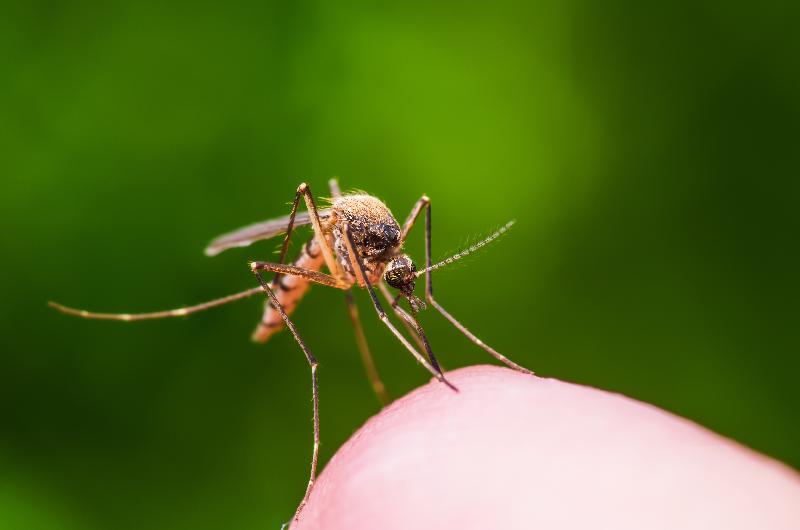
Ombudsman probes effectiveness of mosquito prevention and control by Food and Environmental Hygiene Department (with photo)

The following is issued on behalf of the Office of The Ombudsman:

     The Ombudsman, Ms Winnie Chiu, today (August 20) announced the launch of a direct investigation to examine the effectiveness of mosquito prevention and control by the Food and Environmental Hygiene Department (FEHD). 
 
     Currently, the Pest Control Teams (PCTs) (Note) of the FEHD are responsible for mosquito prevention and control in public places, such as streets, slopes, villages and vacant government land throughout the territory. Their duties include setting up ovitraps to monitor the breeding of mosquitoes, clearing stagnant water and spraying pesticides to kill mosquitoes. The FEHD also provides technical support and training for other government departments, such as the Leisure and Cultural Services Department and the Housing Department, to assist in their mosquito prevention and control work at venues and premises under their management.
 
     There are public views that the FEHD's selected locations for setting up ovitraps have been far from comprehensive, thereby producing inaccurate survey results. Moreover, the time lag in the FEHD's release of ovitrap indices makes it difficult for the public to understand the latest situation. There are also media reports on relatively high ovitrap indices recorded for some districts in certain months, which translate to serious mosquito infestations. The FEHD's management effectiveness over the PCTs is also subject to queries.
 
     Ms Chiu noted, "Mosquito prevention and control has been a matter of public concern. The humid and rainy weather during spring and summer in Hong Kong provides an ideal breeding environment for mosquitoes. Mosquito infestations can cause a nuisance to the daily life of the general public as well as spread serious diseases such as Dengue fever and Japanese encephalitis, among others. According to information from the Centre for Health Protection, the number of Dengue fever cases in Hong Kong has been rising, from 124 cases in 2016 to 198 cases in 2019. Such a rising trend should not be taken lightly. The FEHD's mosquito prevention and control work is, therefore, of paramount importance. We are initiating this direct investigation to examine how the FEHD handles the problem of mosquito infestations, which includes the Department's management of the PCTs, its assessment of mosquito infestations and the preventive and control measures taken in order to analyse its work effectiveness and make recommendations for improvement where necessary."
 
     The Ombudsman now invites members of the public to provide information and views on this topic. Written submissions should reach the Office of The Ombudsman by September 20, 2020:
 
Address: 30/F, China Merchants Tower, Shun Tak Centre
              168-200 Connaught Road Central, Hong Kong
Fax: 2882 8149
Email: complaints@ombudsman.hk
 
Note: As at January 2020, there were 2 721 members in the FEHD's PCTs, with 729 team members from the Department and 1 992 from its contractors.

Photo  


Chai Wan Public Fill Barging Point to reopen

Attention TV/radio announcers:

Please broadcast the following as soon as possible:

      As Hong Kong Observatory has cancelled all the typhoon warning signals, the Civil Engineering and Development Department today (August 20) announced that the Chai Wan Public Fill Barging Point will be reopened at 8.45am.


A detainee detained at Castle Peak Bay Immigration Centre tested positive for COVID-19

     Immigration Department (ImmD) spokesman today (August 19) responds to media enquiries that ImmD was notified by the Centre for Protection (CHP) last night, a Thai detained at the Castle Peak Bay Immigration Centre (CIC) was tested positive for COVID-19.
      
     In view of the latest development of the COVID-19 epidemic, all persons newly admitted to CIC will be put under isolation and will undergo deep throat saliva testing.
      
     The Thai overstayer concerned was arrested by Police on August 16 and was sent to CIC for detention pending prosecution on the same day. The Thai and other three persons newly admitted to CIC were immediately put under isolation and were required to undergo deep throat saliva testing. The four persons concerned had not been in contact with any other detainees in CIC or any members of the public while waiting for the test result. The Thai was confirmed tested positive for COVID-19 on August 18 and was admitted to hospital for treatments.
      
     The three detainees being isolated with the Thai concerned in the same confinement and the five Immigration staff members who had close contact with the Thai had already been arranged to stay in quarantine centres for quarantine and medical surveillance. The ImmD will proactively co-operate with the CHP's measures of disease prevention and control including arranging COVID-19 testings for all detainees and Immigration staff members at CIC. The ImmD had carried out thorough cleaning and disinfection works for the detention facilities concerned.
      
     In view of the latest development of the COVID-19 outbreak, ImmD has stepped up various disease prevention measures, including thorough and regular cleaning and disinfection measures at all detention facilities; all ImmD staff members must wear masks when performing duties; requiring all detainees to wear masks when engaging activities; measuring the body temperature of all detainees on a daily basis. In case of any detainee found to have symptoms of fever, medical professionals of the CIC would conduct medical examination immediately. Medical officer on duty will arrange detainees to receive further medical treatments at public hospitals if deemed necessary. CIC will review and update the infection control measures in place regularly to prevent the outbreak of communicable disease and continue to provide a safe environment for all detainees, staff members and visitors.