Flag-lowering ceremony cancelled

     Owing to the thunderstorm warning, the flag-lowering ceremony to be conducted at Golden Bauhinia Square, Wan Chai at 6pm today (June 11) will be cancelled.

      If the thunderstorm warning is cancelled and weather conditions permit by then, the flag-lowering ceremony may be resumed without further notice.


Guangdong, Hong Kong and Macao joint maritime search and rescue exercise conducted smoothly (with photos)

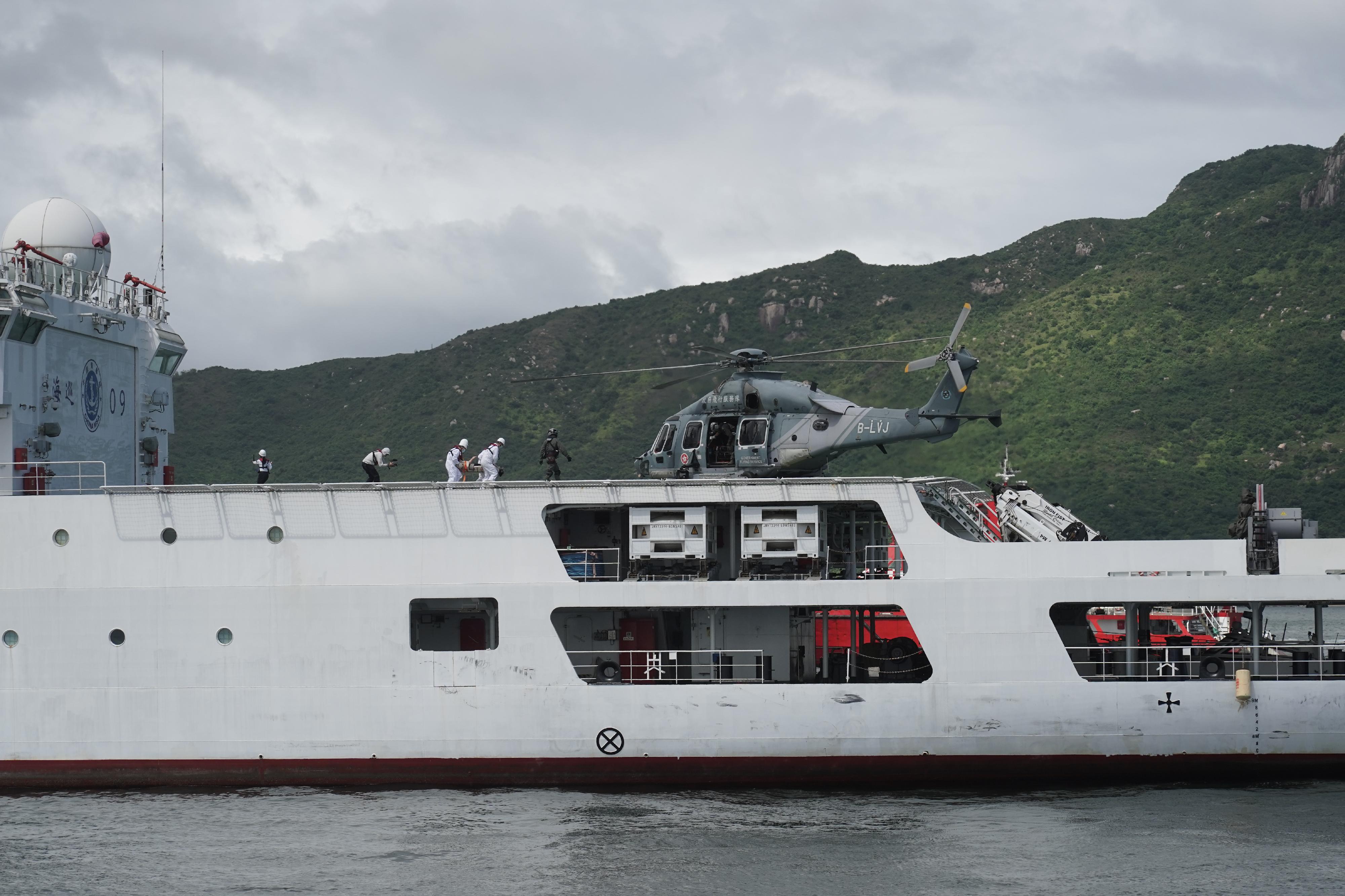
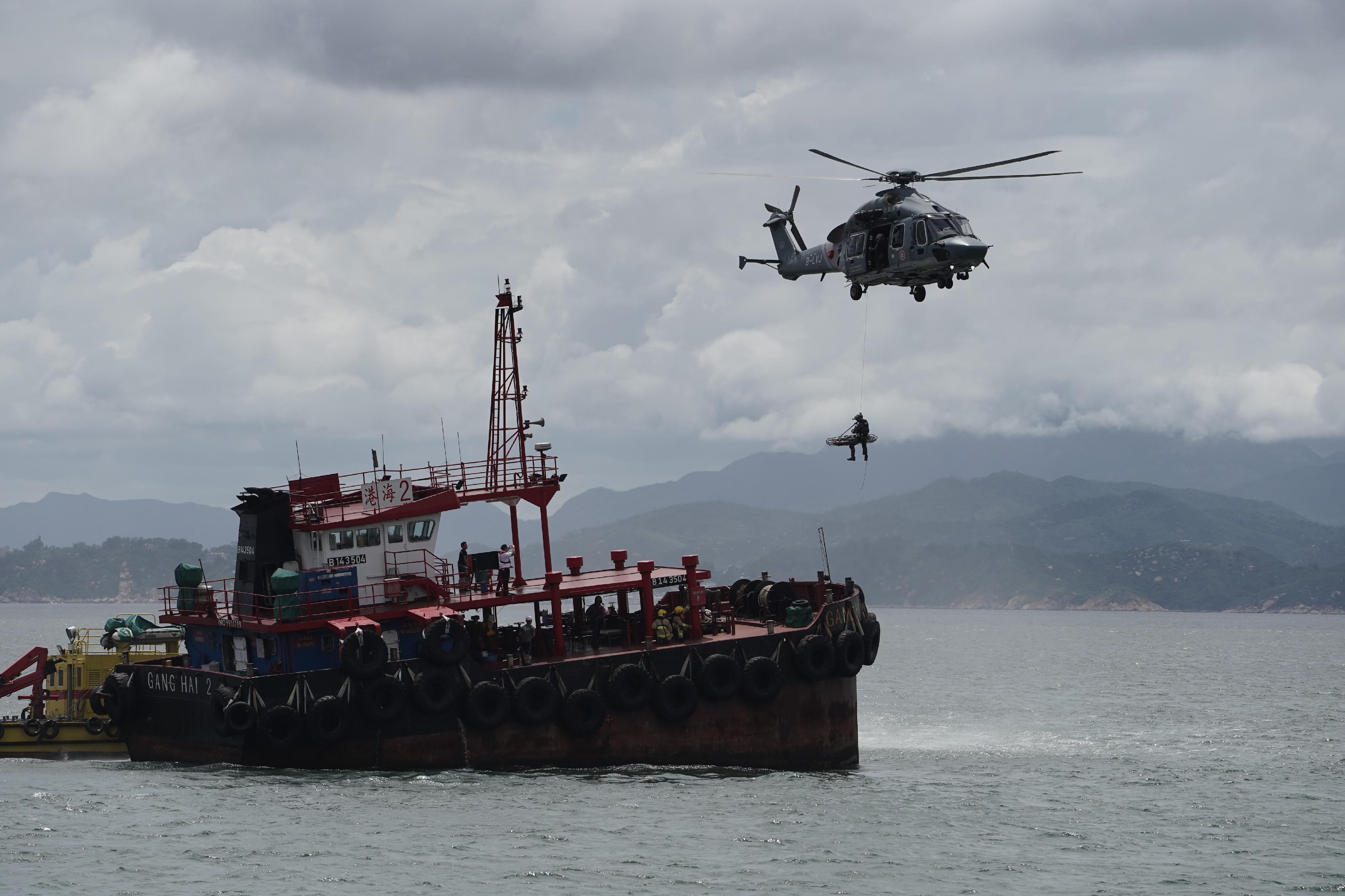
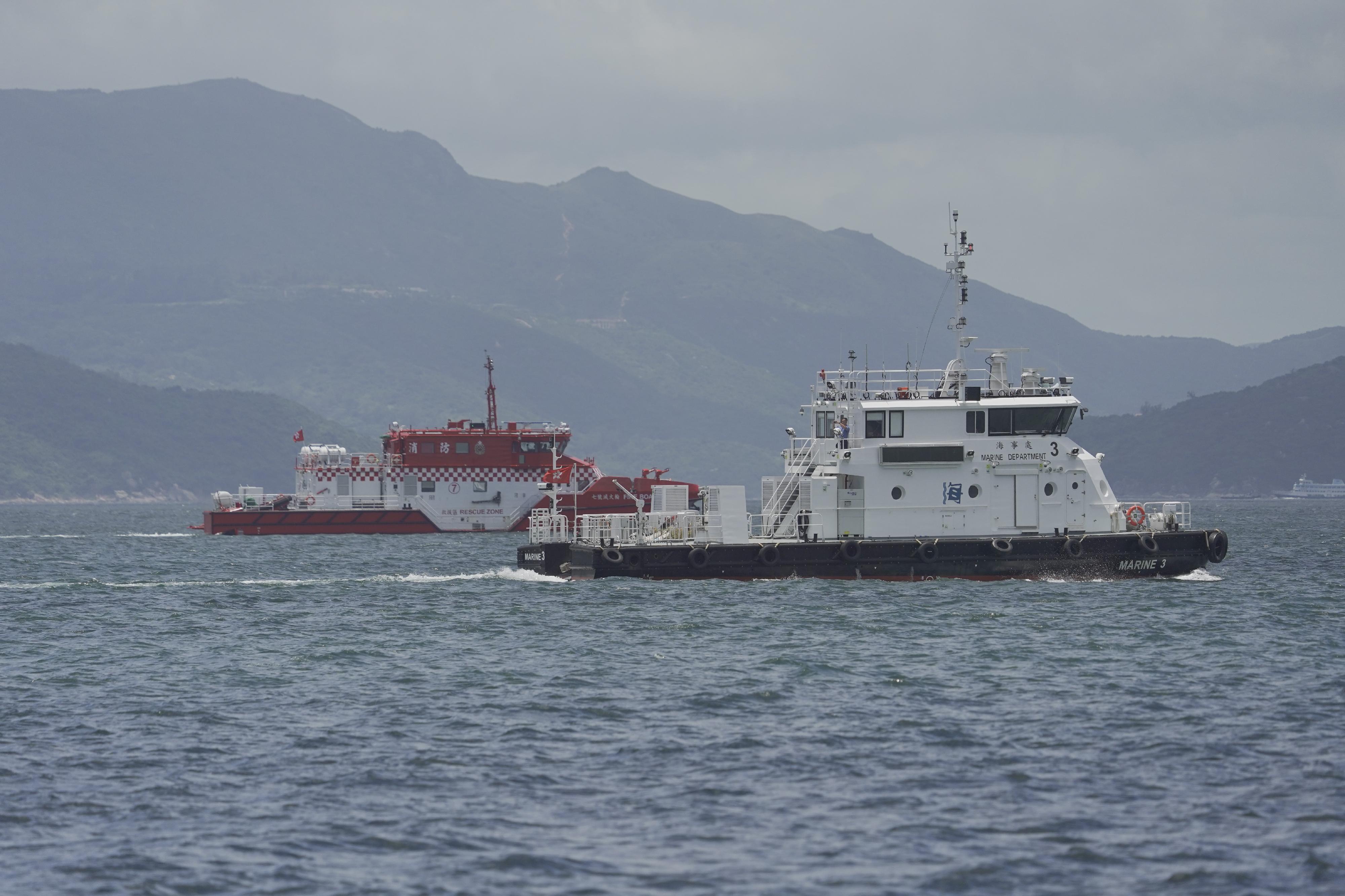
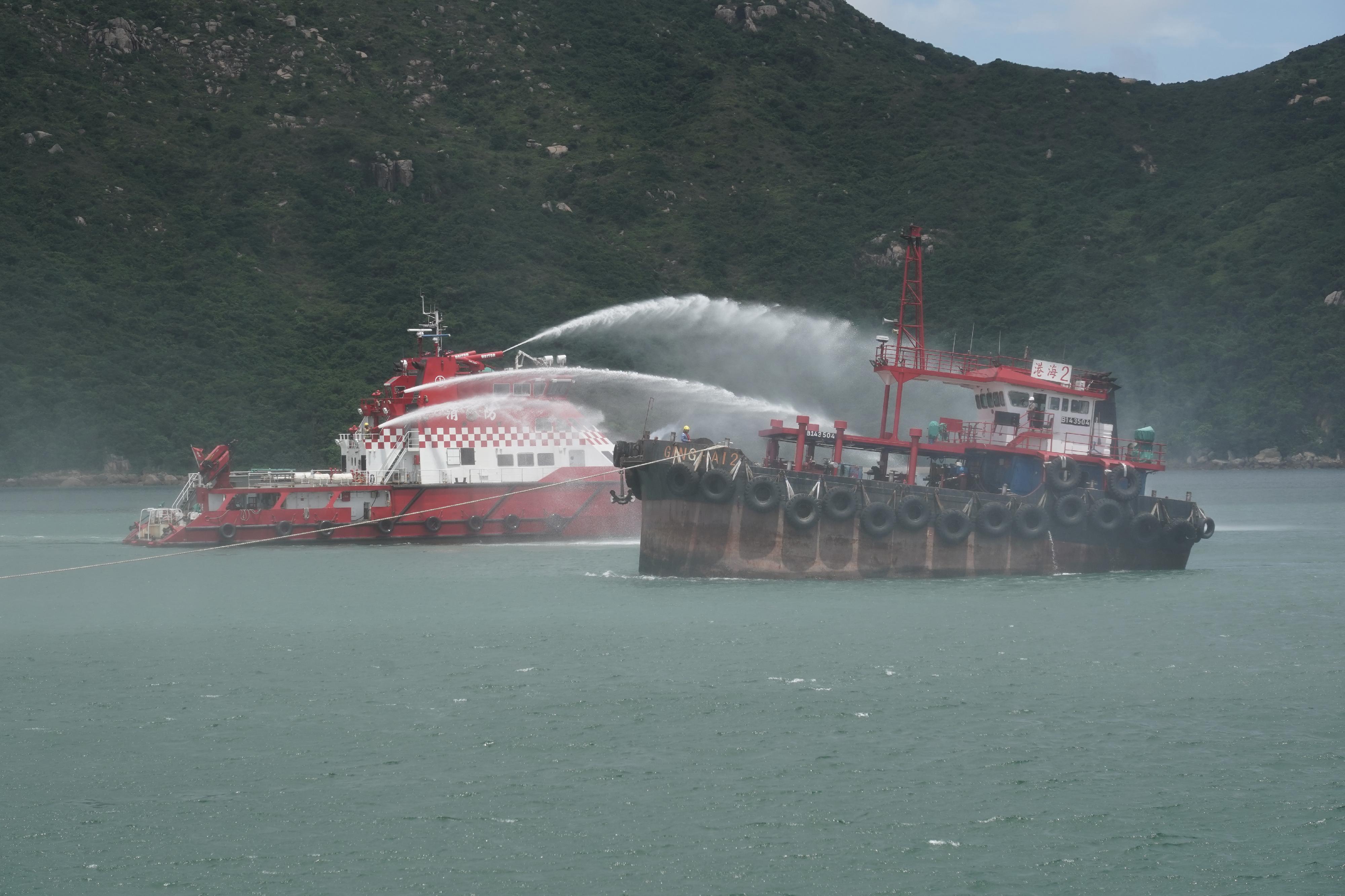
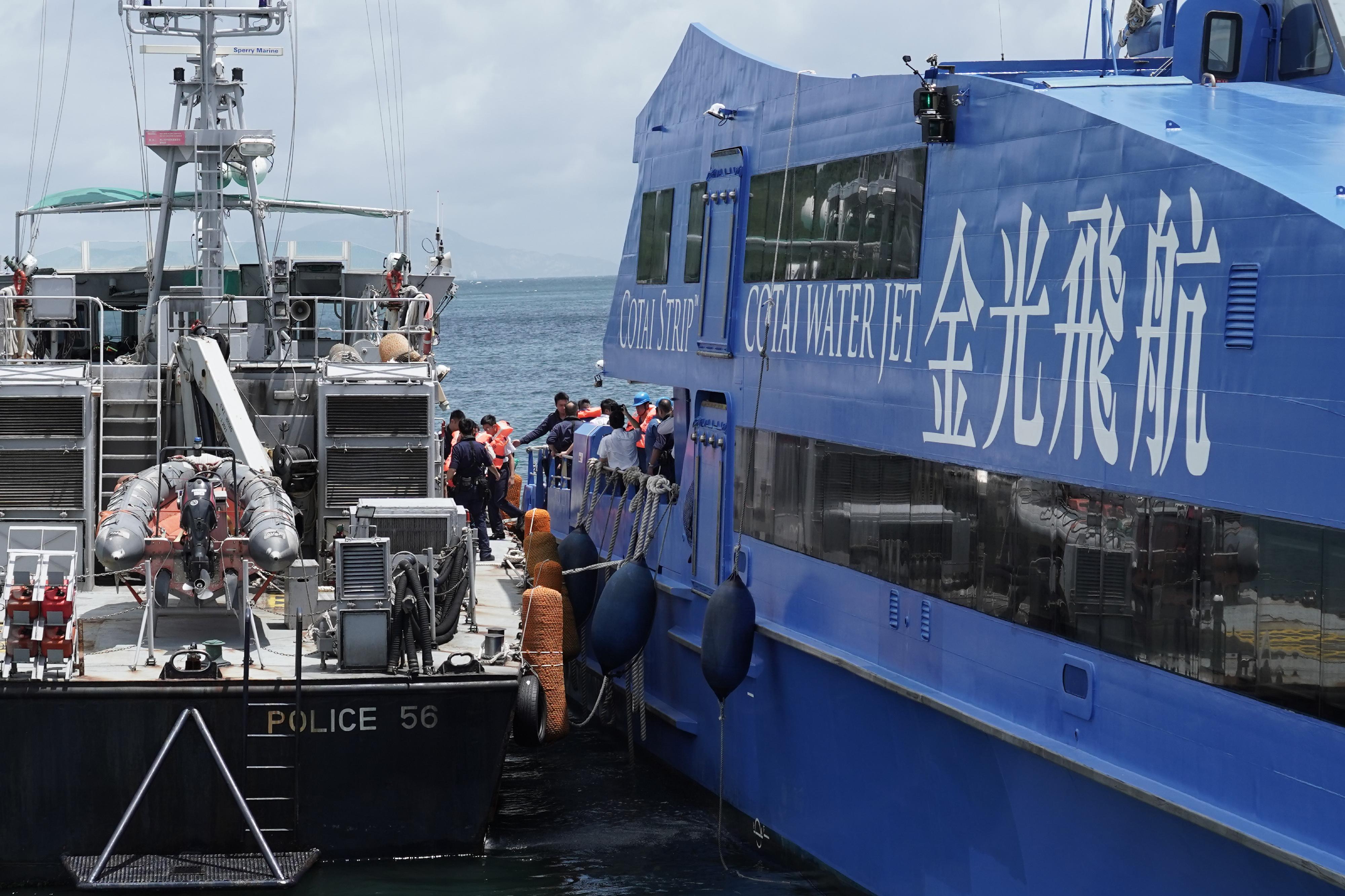
     The Marine Department (MD), in collaboration with the search and rescue (SAR) agencies in Guangdong and Macao as well as several Hong Kong government departments, including the Guangdong Rescue Co-ordination Centre, the Macao Marine and Water Bureau, the Macao Customs, the Hong Kong Police Force, the Government Flying Service, the Fire Services Department and the Civil Aid Service, smoothly conducted a joint maritime SAR exercise in the waters off Ha Mei Wan, Lamma Island, today (June 11).
 
     A spokesman for the MD said, "The objective of the SAR exercise is to test the communication efficiency, co-ordination capabilities and resource deployment among the SAR agencies in Guangdong, Hong Kong and Macao. The exercise also aims to strengthen co-operation between Hong Kong and neighbouring regional SAR centres to enhance their response capabilities in the event of future major maritime emergency incidents."
 
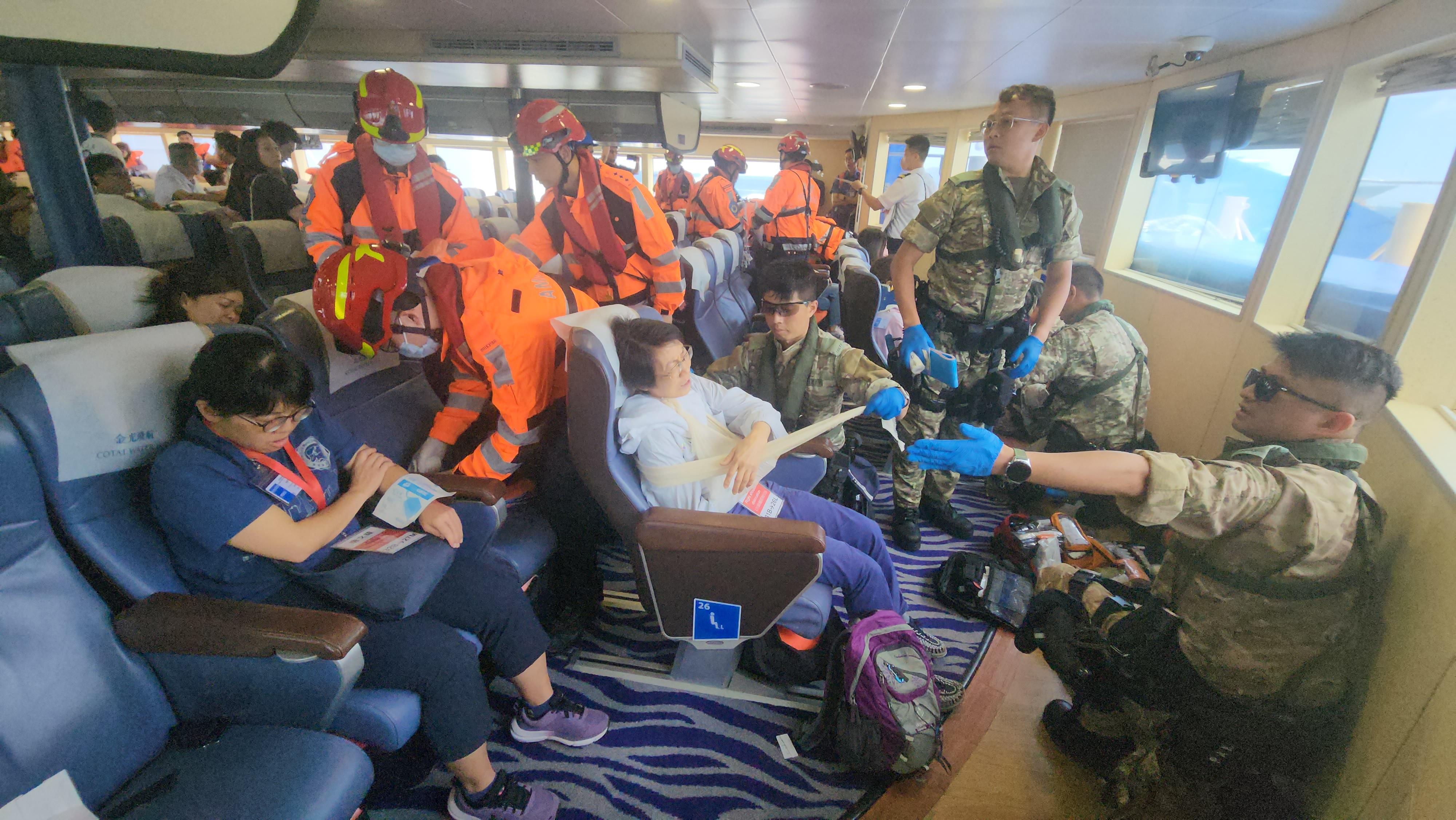
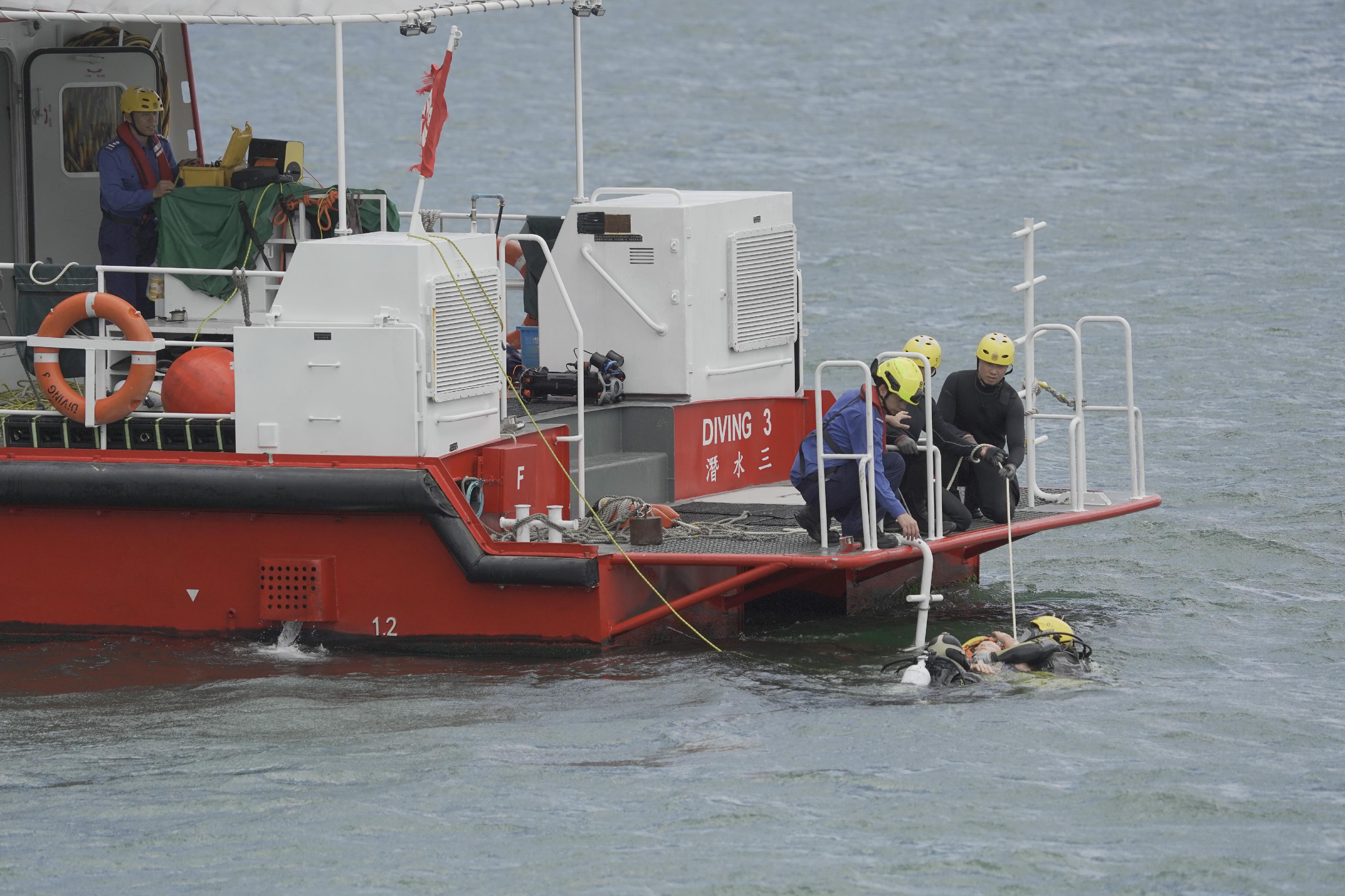
     The exercise simulated a collision between a cross-boundary high-speed passenger ferry carrying around 70 passengers from Macao to Hong Kong and a local oil tanker in the waters north of Shek Kwu Chau. The accident caused damage to the ferry's hull; two passengers on board went missing after falling overboard, and many passengers were injured. Following the collision accident, the local oil tanker caught fire, trapping a seriously injured crew member in the engine room.
 
     Under the co-ordination of the MD's Maritime Rescue Coordination Centre, the participating SAR units took various contingency measures to carry out SAR operations. These operations included traffic regulation in the surrounding area to ensure safety at the scene to search for and rescue the missing persons who had fallen into the sea, extinguishing the fire on board the oil tanker, providing on-the-spot first aid to the injured, and deploying a helicopter to transfer the seriously injured to hospital for treatment. The exercise lasted about three hours, mobilising 17 SAR vessels, a helicopter and a total of more than 230 people.
 
     The MD regularly conducts exercises with various SAR units and maritime stakeholders to strengthen co-operation with SAR centres in neighbouring areas and provide effective and rapid SAR services.

Photo  Photo  Photo  Photo  Photo  Photo  Photo  


Inspection of aquatic products imported from Japan

     In response to the Japanese Government's plan to discharge nuclear-contaminated water at the Fukushima Nuclear Power Station, the Director of Food and Environmental Hygiene issued a Food Safety Order which prohibits all aquatic products, sea salt and seaweeds originating from the 10 metropolis/prefectures, namely Tokyo, Fukushima, Ibaraki, Miyagi, Chiba, Gunma, Tochigi, Niigata, Nagano and Saitama, from being imported into and supplied in Hong Kong.
 
     For other Japanese aquatic products, sea salt and seaweeds that are not prohibited from being imported into Hong Kong, the Centre for Food Safety (CFS) of the Food and Environmental Hygiene Department is conducting comprehensive radiological tests to verify that the radiation levels of these products do not exceed the guideline levels before they are allowed to be supplied in the market.
 
     From noon on June 10 to noon today (June 11), the CFS conducted tests on the radiological levels of 190 food samples imported from Japan, which were of the "aquatic and related products, seaweeds and sea salt" category. No sample was found to have exceeded the safety limit. Details can be found on the CFS's thematic website titled "Control Measures on Foods Imported from Japan" (www.cfs.gov.hk/english/programme/programme_rafs/programme_rafs_fc_01_30_Nuclear_Event_and_Food_Safety.html).
 
     In parallel, the Agriculture, Fisheries and Conservation Department (AFCD) has also tested 50 samples of local catch for radiological levels. All the samples passed the tests. Details can be found on the AFCD's website (www.afcd.gov.hk/english/fisheries/Radiological_testing/Radiological_Test.html).
 
     The Hong Kong Observatory (HKO) has also enhanced the environmental monitoring of the local waters. No anomaly has been detected so far. For details, please refer to the HKO's website (www.hko.gov.hk/en/radiation/monitoring/seawater.html).
 
     From August 24, 2023, to noon today, the CFS and the AFCD have conducted tests on the radiological levels of 142 751 samples of food imported from Japan (including 93 902 samples of aquatic and related products, seaweeds and sea salt) and 32 690 samples of local catch respectively. All the samples passed the tests.


Public urged to strengthen anti-mosquito efforts

     â€‹The Food and Environmental Hygiene Department (FEHD) today (June 11) announced that the monthly gravidtrap index for Aedes albopictus mosquitoes in May was 8.6 per cent, at Level 2, indicating that the distribution of Aedes albopictus mosquitoes in the survey areas was fairly extensive. Relevant government departments have stepped up mosquito prevention and control actions. 

     In May, among the 64 survey areas, the area gravidtrap index in six areas exceeded the alert level of 20 per cent. The gravidtraps were mostly located in the vicinity of private residential areas, public housing estates, schools, recreational and sports facilities and public places. The FEHD has collaborated with relevant government departments by taking immediate action to strengthen mosquito prevention and control work in the area concerned. 

     Moreover, the monthly density index for Aedes albopictus in May was 1.3, which represented that an average of 1.3 Aedes albopictus adults were found in the Aedes-positive gravidtraps, indicating that the number of adult Aedes albopictus was not abundant in the survey areas. The gravidtrap and density indices for Aedes albopictus in different survey areas as well as information on mosquito prevention and control measures are available on the department website at www.fehd.gov.hk.

     A spokesman for the FEHD said, "There is a significant relationship between local mosquito infestation and seasonal changes. The gravidtrap indices in various survey areas would be relatively higher during hot and rainy spring and summer months (i.e. from May to September) as mosquitoes breed quickly. Members of the public are reminded to continue the routine mosquito prevention and control work, especially the repair and maintenance of structures. Cracks and dents that may accumulate water and become potential breeding grounds should be filled and levelled to reduce the chance of mosquito breeding."

     "The Government is concerned about the mosquito infestation in May. The increase in the monthly gravidtrap index for Aedes albopictus for May might be related to the continuously hot and rainy days in the month. The FEHD has continued to intensify the mosquito prevention and control work with relevant government departments in areas under their purview, including eliminating mosquito breeding places, applying larvicides, conducting fogging operations to eradicate adult mosquitoes, and placing mosquito trapping devices at suitable locations. The FEHD has also conducted site inspections with relevant departments, and provided them with professional advice and technical support to assist them in formulating and implementing effective anti-mosquito measures swiftly. At the same time, the FEHD has strengthened publicity and education. The FEHD will continue to monitor the mosquito infestation in all districts, and will conduct prompt and effective mosquito prevention and control work," the spokesman continued.

     The FEHD will conduct a three-phase Anti-mosquito Campaign this year. The second phase of the territory-wide campaign was launched on April 14 and will run until June 13. During the period, the district offices of the FEHD will target areas that have drawn particular concern, such as public markets, cooked food centres and hawker bazaars, single-block buildings, streets and back lanes, common parts of buildings, village houses, construction sites, vacant sites and road works sites, to remove accumulated water and carry out mosquito prevention and control work. To further enhance the effectiveness of mosquito control, the FEHD and relevant government departments have carried out phase two of the All-out Anti-mosquito Operations from May 7. In addition to the work of phase one, including eliminating potential mosquito breeding places, the FEHD called on property management entities to arrange for necessary repairs to their premises to minimise mosquito breeding places and commence adult mosquito control measures by means of regular ultra-low volume fogging operations.

     The FEHD appeals to members of the public to continue to stay alert and work together to carry out mosquito prevention and control measures early, including inspecting their homes and surroundings to remove potential breeding grounds, changing water in vases and scrubbing their inner surfaces, removing water in saucers under potted plants at least once a week, properly disposing of containers such as soft drink cans and lunch boxes, and drilling large holes in unused tyres. The FEHD also advises members of the public and estate management bodies to keep drains free of blockage and level all defective ground surfaces to prevent the accumulation of water. They should also scrub all drains and surface sewers with an alkaline detergent at least once a week to remove any mosquito eggs.

     Aedes albopictus is a kind of mosquito that can transmit dengue fever (DF). DF is commonly found in tropical and subtropical regions of the world, and has become endemic in many countries in Southeast Asia. In 2024, the World Health Organization recorded over 14 million DF cases, which was a record number. The dengue activity in neighbouring areas has remained high. Members of the public should stay vigilant and continue to carry out effective mosquito prevention and control measures.
Hong Kong Customs seizes suspected cocaine worth about $1 million (with photo)

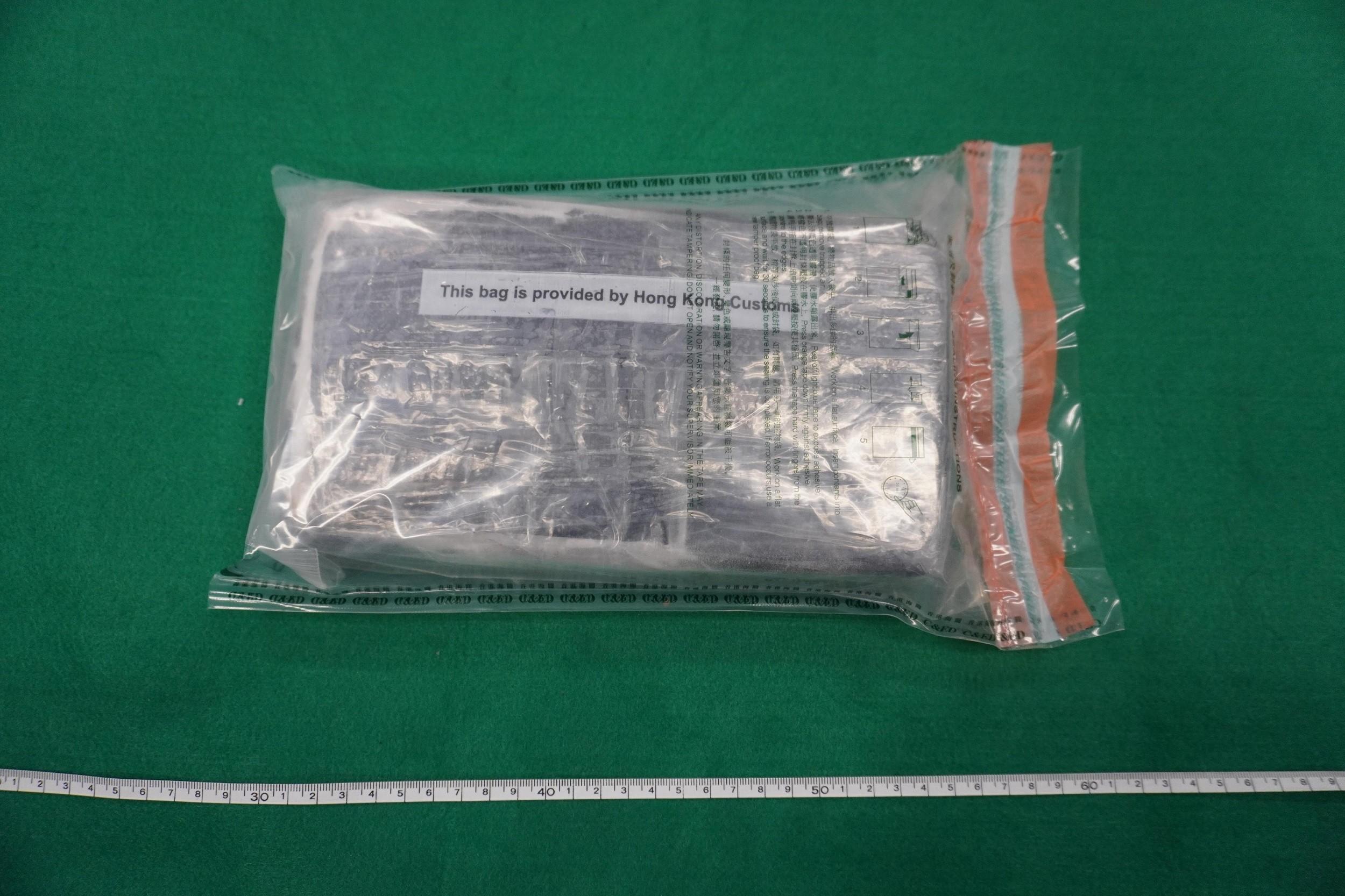
     Hong Kong Customs yesterday (June 10) seized about 1.3 kilograms of suspected cocaine with an estimated market value of about $1 million in Hung Hom. A 33-year-old man suspected to be connected with the case was arrested. 

     During an anti-narcotics operation conducted in Hung Hom yesterday afternoon, Customs officers intercepted a suspicious man and seized about 1.3kg of suspected cocaine inside a rucksack carried by him. The man was subsequently arrested. Customs officers later escorted him to a residential premises nearby for a search and further seized a batch of suspected drug packaging paraphernalia. 

     The arrestee has been charged with one count of trafficking in a dangerous drug and will appear at the Kowloon City Magistrates' Courts tomorrow (June 12).

     Under the Dangerous Drugs Ordinance, trafficking in a dangerous drug is a serious offence. The maximum penalty upon conviction is a fine of $5 million and life imprisonment.

     Members of the public may report any suspected drug trafficking activities to Customs' 24-hour hotline 182 8080 or its dedicated crime-reporting email account (crimereport@customs.gov.hk) or online form (eform.cefs.gov.hk/form/ced002).

Photo