Speech by DSJ at Sports Law Conference luncheon (English only) (with photo)

     Following is the speech by the Deputy Secretary for Justice, Dr Cheung Kwok-kwan, at the Sports Law Conference luncheon organised by the Law Society of Hong Kong today (February 21):
 
President Roden Tong (President of the Law Society of Hong Kong), distinguished guests, ladies and gentlemen,
 
     Good afternoon. It is a great pleasure for me to speak at this lunch conference.
 
     This morning, you heard from esteemed experts on the relationship between sports and law, highlighting how it supports the ever-expanding sports industry – locally, regionally and globally. As the sports market continues to grow, there is an increasing demand for dispute resolution services tailored to address a wide range of sports-related issues, including competition-related disputes, contractual disputes, and governance matters. In the next few minutes, I would like to share with you the Government's latest initiatives aimed at fostering the growth of sports dispute resolution in Hong Kong.
 
     Over the past two years, the Government, specifically the Department of Justice (DoJ) and the Culture, Sports and Tourism Bureau, has been actively engaging with key stakeholders in order to better understand the needs of our sports sector.
 
     In the Chief Executive's Policy Address last year, the Government announced the initiative to explore establishing a sports dispute resolution mechanism and promote sports arbitration, leveraging the institutional advantages of Hong Kong in dispute resolution. Specifically, the Government supports the industry in launching a pilot scheme on sports dispute resolution in Hong Kong within 2025.
 
     To this end, we have met with the two legal professional bodies in Hong Kong, the Law Society of Hong Kong and the Hong Kong Bar Association, as well as the Sports Federation & Olympic Committee of Hong Kong, China (SF&OC), to explore Hong Kong's potential for establishing a sports dispute resolution mechanism. Through these dialogues, it has become clear that the industry seeks a neutral, fair, and efficient system for resolving sports disputes.
 
     Furthermore, during a meeting of the Legislative Council (LegCo) Panel on Administration of Justice and Legal Services last May, the DoJ briefed Members on Hong Kong's potential for the development of sports dispute resolution, and sought their views on its future direction. Members of the Legislative Council and the two legal professional bodies expressed unanimous support for advancing sports dispute resolution in Hong Kong and exploring the establishment of a dedicated dispute resolution mechanism.
 
     To effectively implement the initiative, the DoJ has established the Advisory Committee on Sports Dispute Resolution, which I have the privilege to chair. The Advisory Committee comprises representatives from the Culture, Sports and Tourism Bureau, the Law Society of Hong Kong and the Hong Kong Bar Association. Their role is to advise the Government on the design, establishment and implementation of the pilot scheme. We held our first meeting last month to kick-start the preparatory work for the pilot scheme.
 
     We are actively gathering input from stakeholders on the design and implementation mechanism of the pilot scheme. Just this week, we met with the SF&OC, and we will meet with LegCo Members next week. Preparatory work is in full swing, and our goal is to launch the pilot scheme in the second half of this year.
 
     We will finalise the details of the pilot scheme and announce it after further deliberation with the Advisory Committee. Nonetheless, I would like to share a few preliminary thoughts with you today.
 
     In the coming months, we will invite interested dispute resolution institution or institutions to submit proposals for the operation of the pilot scheme. We plan to appoint a suitable administering body to oversee the pilot scheme and provide institutional support for the conduct of arbitration and mediation under the pilot scheme, including compiling specific rules, recruiting and appointing mediators and arbitrators, devising fee structures, and administering the dispute resolution proceedings. In addition, to promote a wider use of lawtech and online dispute resolution, a technology provider will be engaged to provide the necessary technological infrastructure and support.
 
     One of the primary objectives of the pilot scheme is to facilitate local athletes and sports associations in utilising alternative dispute resolution services. By doing so, we aim to promote a more accessible and efficient means of resolving disputes, ultimately supporting the development of the sports community.
 
     The pilot scheme is set to run for an initial period of about three years, allowing us to test the market, gather insights, and evaluate the need for refinement, extension or regularisation. We invite all of you here with us today – many of whom are dispute resolution experts – to support and actively participate in this initiative.
 
     Last but not least, I would like to extend my gratitude to the Law Society of Hong Kong for organising the Sports Law Conference 2025, which provides an excellent platform for these important discussions. I am also very pleased to see various organisations hosting events and training in sports dispute resolution. Industry participation, capacity building, promotion and public education are crucial as we strive to advance the sports industry and strengthen the sports dispute resolution framework.
 
     May we all embrace today's theme: "Be Just! Be a Good Sport!" And let's take a step further: let us cultivate a culture of effective sports dispute resolution, and build a good sports community that promotes growth and excellence. Thank you.

Photo  


Red tides sighted

     â€‹Two red tides were sighted during the past week, the Inter-departmental Red Tide Working Group reported today (February 21).

     On February 15, staff of the Marine Department spotted a red tide at Sha Tin Hoi to Pak Shek Kok. Another red tide was spotted at Shing Mun River Channel on February 18 by staff of the Environmental Protection Department. Both red tides still persist and no associated fish deaths have been reported as of today.

     A spokesman for the working group said, "The red tide was formed by Asterionellopsis glacialis, which is commonly found in Hong Kong waters and non-toxic."

     Red tide is a natural phenomenon. The Agriculture, Fisheries and Conservation Department's proactive phytoplankton monitoring programme will continue to monitor red tide occurrences to minimise the impact on the mariculture industry and the public.


Toddler and paediatric formulation of JN.1 COVID-19 vaccines to be provided end of month

     The Centre for Health Protection (CHP) of the Department of Health (DH) announced today (February 21) that starting from February 25, the JN.1 vaccine will be provided to infants and children aged 6 months to 11 years, replacing the XBB mRNA vaccine (XBB vaccine) currently in use. The CHP also urges those who have not received the initial dose of the COVID-19 vaccine (including infants and children) to get vaccinated as soon as possible. Those at high risk (particularly the elderly and persons with underlying comorbidities) should receive a booster dose as soon as possible for effective prevention against COVID-19.
 
Vaccine supply
———————
     Given that the predominant strains circulating in Hong Kong are JN.1 and its descendant lineages, the World Health Organization (WHO), and the Scientific Committee on Vaccine Preventable Diseases and the Scientific Committee on Emerging and Zoonotic Diseases under the CHP have recommended the use of JN.1 lineage COVID-19 vaccines earlier.

     In light of the above, the Government has been offering the JN.1 vaccine to persons aged 12 years or above under the COVID-19 Vaccination Programme since November 19 last year and has actively procured the toddler and paediatric JN.1 formulation for infants and children aged 6 months to 11 years. 
     â€‹
     About 6 000 doses of Comirnaty JN.1 toddler and paediatric formulation (around 3 000 doses each) have recently arrived in Hong Kong. After stringent checks and inspections to ensure that the vaccine complies with product specifications and relevant cold-chain standards, Government staff have properly stored the vaccines in validated ultra-low temperature freezers at the temperature specified by the drug manufacturer. The Government will, taking into account future vaccine demand, procure COVID-19 vaccines from suppliers in a timely manner.
 
Booking and vaccination arrangements
——————————————
     Under the Government COVID-19 Vaccination Programme, persons aged 6 months or above can receive free initial dose(s). High-risk priority groups can receive booster doses for free at least six months after the last dose or COVID-19 infection (whichever is later), regardless of the number of doses received previously.

     â€‹High-risk priority groups include:

  • older adults aged 50 or above, including those living in residential care homes;
  • persons aged 18 to 49 years with underlying comorbidities;
  • persons with immunocompromising conditions aged 6 months and above;
  • pregnant women; and
  • healthcare workers.

 
     Eligible persons may schedule a COVID-19 vaccine appointment via the COVID-19 Vaccination Programme booking system.  Infants and children aged 6 months to 11 years who schedule COVID-19 vaccine appointments on or after February 25 will receive the JN.1 vaccine. Infants and children may receive the COVID-19 vaccine at Hong Kong Children's Hospital, designated Maternal and Child Health Centres, designated Student Health Service Centres under the DH and designated Private Clinic COVID-19 Community Vaccination Stations. For details of vaccination venues, please refer to the webpage. As mentioned above, the Government has been offering the JN.1 vaccine to persons aged 12 years or above participating in the COVID-19 Vaccination Programme since November 19 last year.
 
     As persons who contract influenza and COVID-19 at the same time would be at a higher risk of severe complications and death, the CHP strongly recommends that high-risk individuals receive seasonal influenza vaccination (SIV) and COVID-19 vaccination booster to reduce risks of serious illness and death. The WHO has also pointed out that high-risk persons should receive booster doses at appropriate times to lower risks of serious illness and death.
 
     For citizens who have not yet received SIV while receiving a COVID-19 vaccine, they can check with vaccination venues for arrangements for influenza vaccination. According to scientific evidence, COVID-19 vaccines and seasonal influenza vaccines can be administered at the same time to provide dual protection.

     Members of the public may visit the CHP's COVID-19 Vaccination Programme and seasonal influenza webpage for more details.


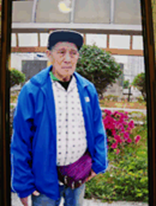
Appeal for information on missing man in Tsuen Wan (with photo)

     Police today (February 21) appealed to the public for information on a man who went missing in Tsuen Wan.

     Lam Ngan-sang, aged 78, went missing after he left a hospital on Yan Chai Street on February 19 afternoon. His family made a report to Police yesterday (February 20).
                   
     He is about 1.65 metres tall, 45 kilograms in weight and of thin build. He has a pointed face with yellow complexion and short white hair. He was last seen wearing a brown jacket, brown trousers, brown shoes and a brown cap.

     Anyone who knows the whereabouts of the missing man or may have seen him is urged to contact the Regional Missing Persons Unit of New Territories South on 3661 1174 or 9689 6212, or email to rmpu-nts-2@police.gov.hk, or contact any police station.

Photo  


Appeal for information on missing man in Tsuen Wan (with photo)

     Police today (February 21) appealed to the public for information on a man who went missing in Tsuen Wan.

     Lam Ngan-sang, aged 78, went missing after he left a hospital on Yan Chai Street on February 19 afternoon. His family made a report to Police yesterday (February 20).
                   
     He is about 1.65 metres tall, 45 kilograms in weight and of thin build. He has a pointed face with yellow complexion and short white hair. He was last seen wearing a brown jacket, brown trousers, brown shoes and a brown cap.

     Anyone who knows the whereabouts of the missing man or may have seen him is urged to contact the Regional Missing Persons Unit of New Territories South on 3661 1174 or 9689 6212, or email to rmpu-nts-2@police.gov.hk, or contact any police station.

Photo