SCS visits Environmental Protection Department (with photos)

     The Secretary for the Civil Service, Mrs Ingrid Yeung, visited the Environmental Protection Department (EPD) this afternoon (March 7) to learn more about the department's work in monitoring environmental quality and the application of innovative technologies in its work. She also exchanged views with staff representatives from various grades in the department.

     Accompanied by the Permanent Secretary for the Civil Service, Mr Clement Leung, Mrs Yeung first met with the Director of Environmental Protection, Dr Samuel Chui, and the directorate staff to receive an update on the department's latest developments in various areas of work.

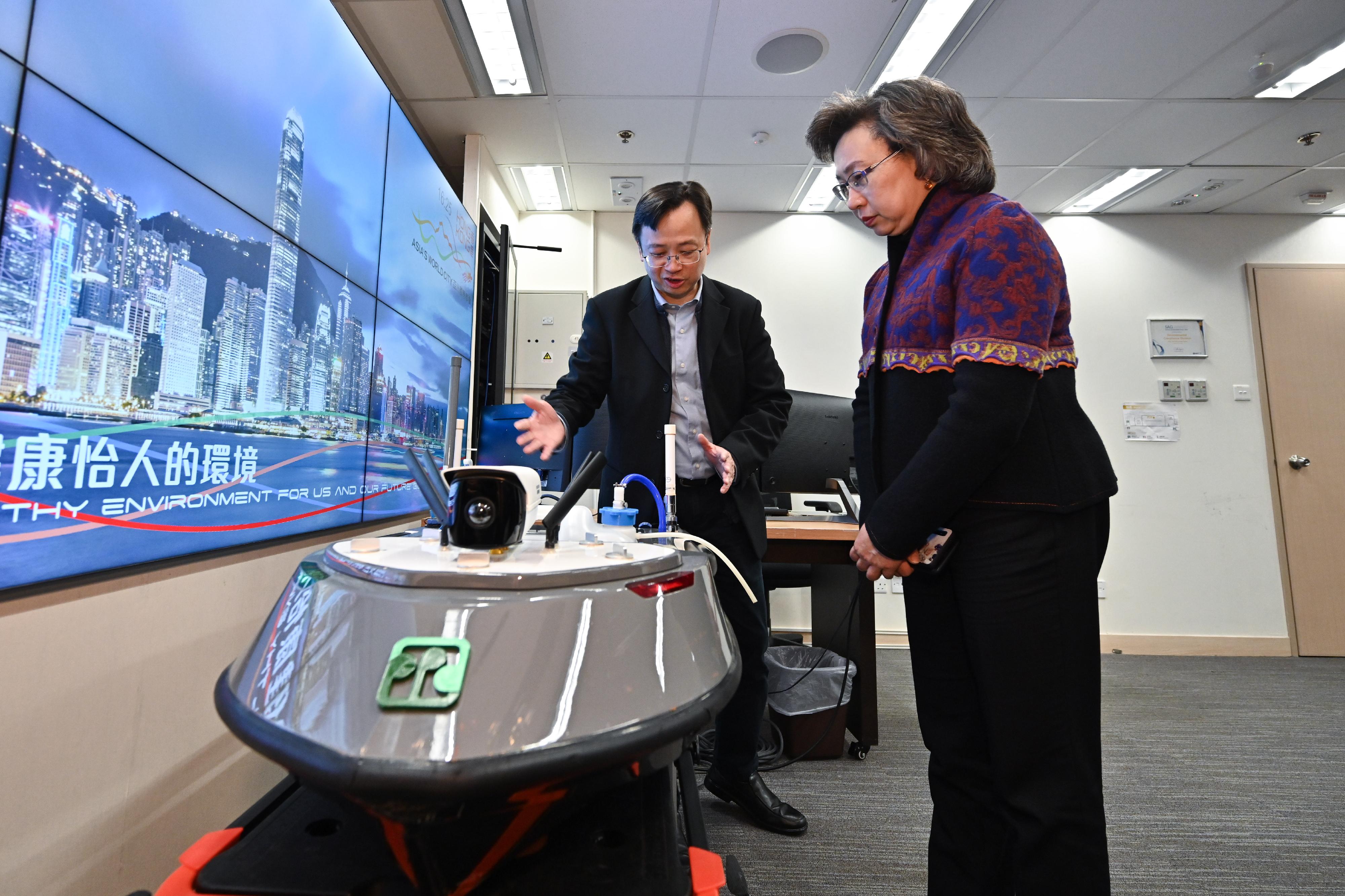
     In recent years, the EPD has introduced or developed innovative technological devices to meet its operational needs, one of which is the Artificial Intelligence (AI) Environmental Air Nuisance Investigation Robot Dog (AI Dog). Unlike traditional investigative methods that rely on the sense of smell and experience of the investigators, the AI Dog enhances its accuracy and efficiency through continuous AI machine learning. It effectively identifies and locates sources of pollution by connecting with the Internet of Things to search the big data of the Hong Kong Air Pollutant Emission Inventory, and is now on trial in various districts. The Ground Penetrating Radar enables the EPD to track the routes and leakage of underground sewage pipes without road openings.

     The EPD staff gave Mrs Yeung a demonstration of the use of the AI Dog to identify and locate sources of pollution. They also demonstrated the operation of the Ground Penetrating Radar.

     At the Smart Command and Control Centre, Mrs Yeung received a briefing from the EPD staff on the use of the Unmanned Submarine instead of divers to conduct monitoring and sampling in the Shing Mun River through remote control and real-time images. In addition, EPD staff also introduced the use of the Mesh Network Sampling Robot Squad for water-quality sampling and investigations in remote or dangerous areas in a more efficient manner.

     Mrs Yeung said that the department's AI Dog and AI Unmanned Submarine are similar to AI civil servants. They improve work efficiency and enable better follow-up proposals for pollution problems that were difficult to handle in the past. By resolving the problems in a shorter time, it gives the public a greater sense of fulfilment and serves as an example of making good use of technology.

     Mrs Yeung said that the 2025-26 Budget reinforced the fiscal consolidation programme. Bureaux and departments are required to further review their resource allocation and work priorities, and provide public services in a more cost-effective manner through streamlining procedures. She encouraged the departments to step up their efforts to apply technology in their work to enhance efficiency and manpower utilisation in the civil service.

     Before concluding her visit, Mrs Yeung met with staff representatives of various grades in the department to exchange views on matters that concerned them.

Photo  Photo  Photo  Photo  Photo  Photo  


Drug abuse and drug situation in Hong Kong in 2024 (with photos)

     The Action Committee Against Narcotics (ACAN) noted at its meeting today (March 7) the figures of the Central Registry of Drug Abuse (CRDA) and other drug-related figures for 2024. ACAN noticed that the total number of reported drug abusers in 2024 was lower than that in 2023.
      
     Figures from the CRDA revealed that the total number of reported drug abusers in 2024 decreased by 9 per cent (from 5 540 to 5 068) compared with that in 2023. The three most common types of drugs abused in 2024 were heroin, cocaine and methamphetamine (commonly known as "Ice"). Nevertheless, the number of reported young drug abusers aged under 21 in 2024 increased by 8 per cent (from 664 to 720), of which 226 vaped the "space oil drug". In this group, the most common type of drugs abused was cannabis, followed by cocaine and the "space oil drug". Since the first half of 2024, the "space oil drug" has continued to be the third most common type of drugs abused by this group.
      
     To step up the control of the "space oil drug", the Government has listed etomidate, the main ingredient of the "space oil drug", and its three analogues, (metomidate, propoxate and isopropoxate) as dangerous drugs.
      
     A spokesman for the Security Bureau (SB) said, "Etomidate, the main ingredient of the 'space oil drug', has been listed as a dangerous drug, which has significantly enhanced deterrence against 'space oil drug'-related crimes. The move has also facilitated the law enforcement agencies to take more stringent enforcement actions against 'space oil drug'-related crimes."
      
     Recently, Hong Kong Customs arrested a 20-year-old man who carried a vape stick containing the suspected "space oil drug". In addition, the Police have arrested an 18-year-old man, a 16-year-old male and a 16-year-old female on suspicion of "outraging public decency". Police later seized "space oil drug" electronic cigarette cartridges suspected to contain etomidate from the residences of two of the arrested persons. The Police arrested the three persons on suspicion of "possession of dangerous drugs" and other offences.
      
     The Chairman of ACAN, Dr Donald Li, said, "I am glad to see that the Government has adopted the suggestions from ACAN and promptly listed the main ingredient of the 'space oil drug' as a dangerous drug. I suggest that the Government continues to step up anti-drug publicity on all fronts. I also hope that primary and secondary schools can take the initiative to continuously inculcate in their students the proper knowledge and values of resisting drugs." He added, "The wickedness of the 'space oil drug' has been laid bare in recent controversial incidents. Teenagers who have mistaken vaping the 'space oil drug' as just a trivial matter should come to realise the drug harm of the 'space oil drug' from the cases in which young people have been arrested. I urge everyone to stay away from the 'space oil drug'."
      
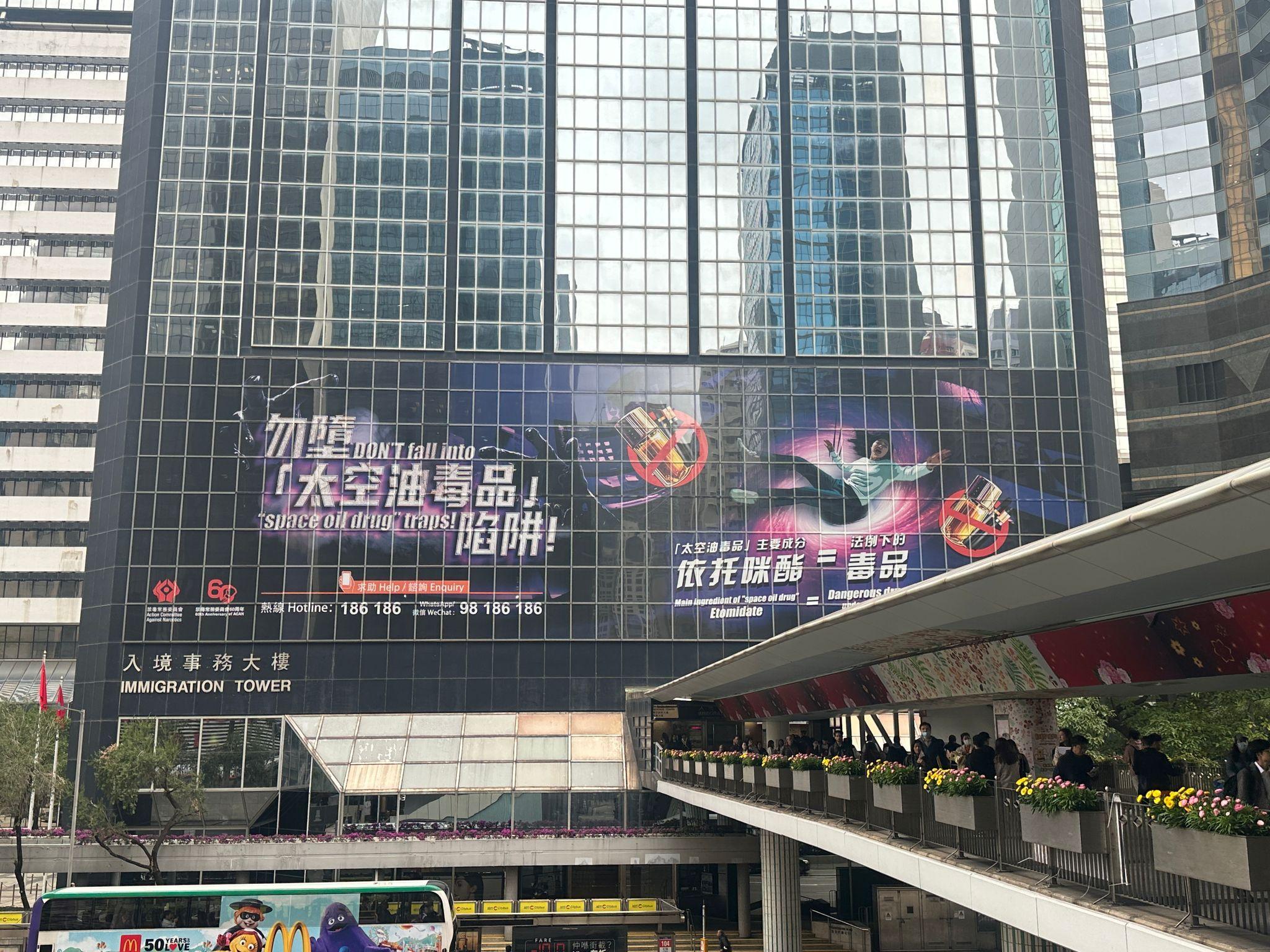
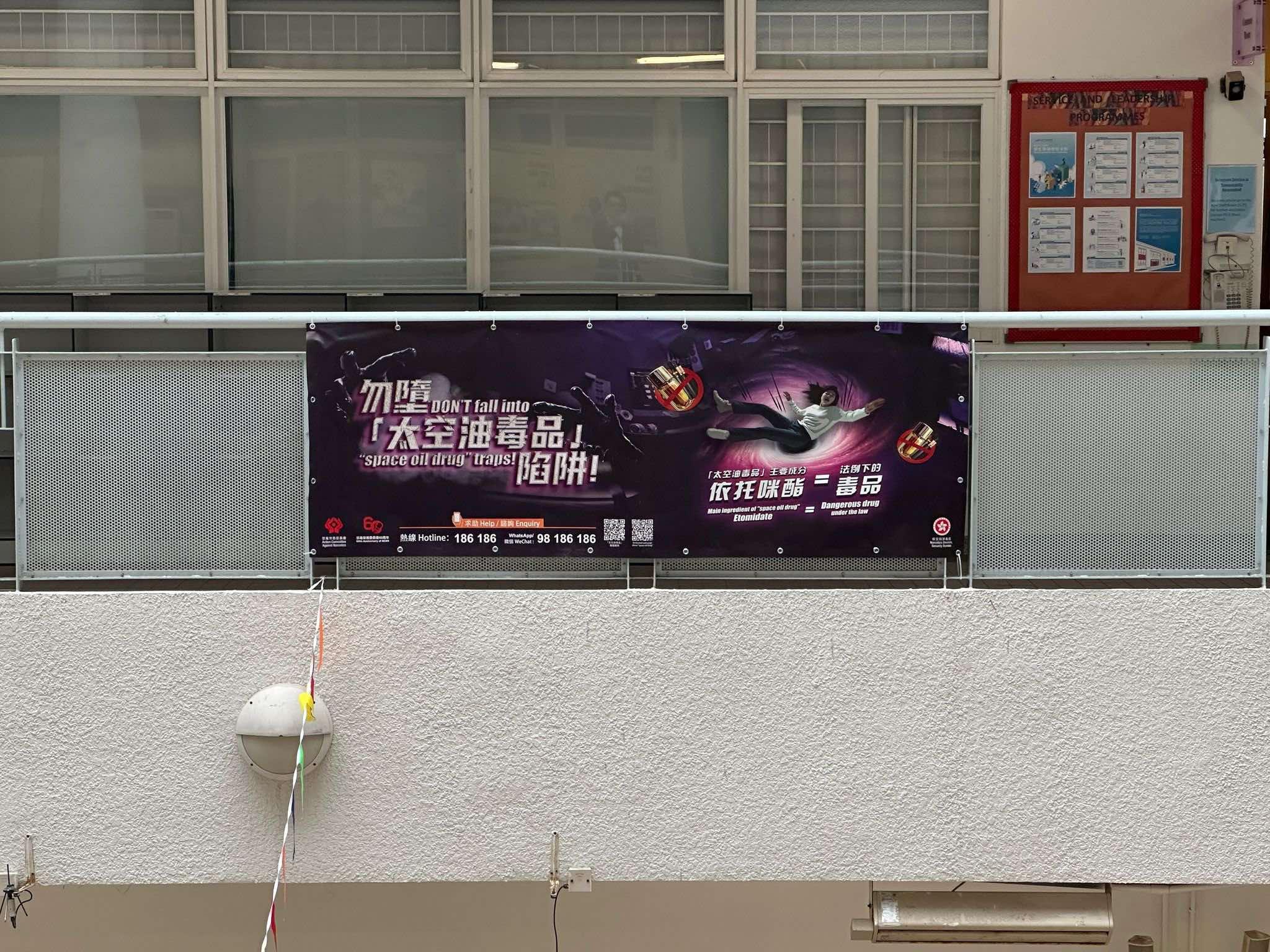
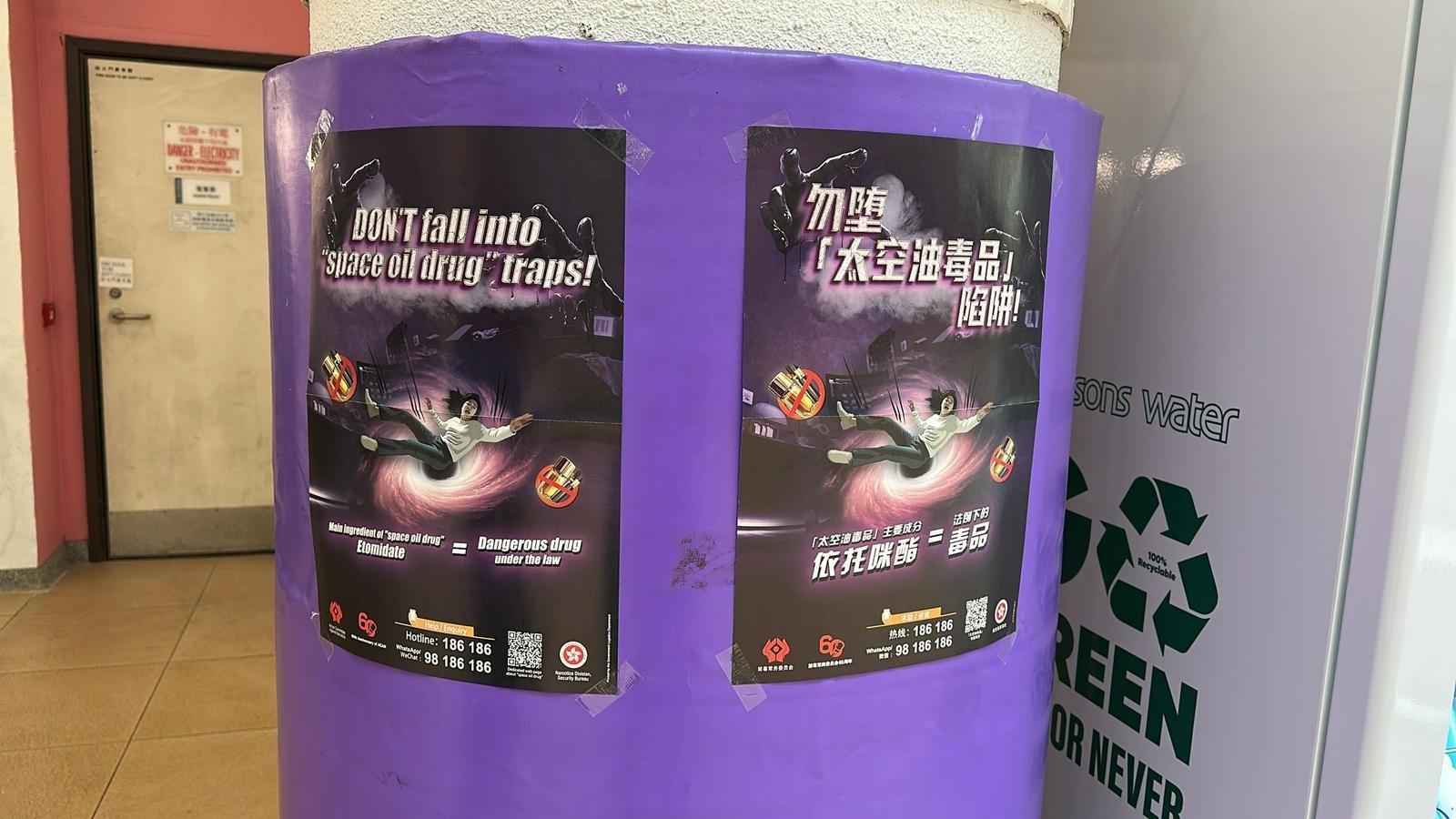
     The Government's new TV Announcement in the Public Interest (API), "Don't fall into 'space oil drug' traps!", has been launched on various television and radio channels. In addition, relevant advertisements and publicity materials have been displayed on public transport networks, large outdoor advertising spaces, cinemas, public housing estates, private housing estates, Community Living Rooms and villages in the New Territories, etc. The advertisements will also be pushed to mobile phone users on popular mobile application websites. Information and videos about the 'space oil drug' have been uploaded onto the dedicated webpage of the Narcotics Division (ND) of the SB (www.nd.gov.hk/en/space_oil_drug.html) for reference by the public.
      
     The Anti-"Space Oil Drug" Week has just been co-organised by the ND and the Education Bureau, which was held in all schools in Hong Kong. At the time, teachers and students participated together in a number of interactive activities, which included game booths and interactive drama shows, to enable students to understand the harm of the "space oil drug" and the severity of committing "space oil drug" crimes. Anti-drug education activities in schools will not stop after the Anti-"Space Oil Drug" Week. The Government will continue to spread anti-"space oil drug" messages through different activities in schools, with a view to cultivating proper values among students and building a stronger anti-drug barrier for them.
      
     As regards drug treatment and rehabilitation services, the Government will continue to foster cross-sectoral collaboration, including the social welfare, healthcare and education sectors, to enhance the awareness and handling capability of social workers, healthcare professionals and teaching staff in relation to the "space oil drug" to facilitate early identification of and assistance to "space oil drug" abusers.
      
     According to statistical figures from law enforcement agencies, the number of persons arrested for drug offences in 2024 dropped by 5 per cent (from 3 407 to 3 243) when compared with 2023. The number of young arrestees aged under 21 decreased by 7 per cent (from 323 to 301). Cannabis, cocaine and "Ice" were the main drugs involved in these arrests. According to court cases concluded for the same period, the conviction rate of persons being prosecuted for drug offences was as high as nearly 90 per cent. As for young offenders aged under 21 who were sentenced to imprisonment for drug trafficking, more than half of them were sentenced to over five years in prison, and the longest period of imprisonment was 22 years.
      
     This year marks ACAN's 60th anniversary. ACAN and the ND are taking the opportunity to co-organise a series of commemorative events, including an interactive roving exhibition in education institutions and the community, community engagement activities and competitions, with a view to consolidating anti-drug awareness in the community. In addition, the roving exhibition features a theme zone dedicated to the 60th anniversary of ACAN, where a number of precious historical posters, photos, anti-drug videos and TV APIs are displayed. The roving exhibition is divided into different theme zones with interactive games and digital exhibition panels etc. By incorporating the old and the new, visitors will be able to learn from the past and have a better understanding of the harm caused by drugs. The next stop of the roving exhibition will take place at City University of Hong Kong from March 11 to 14. For more details of the roving exhibition, please visit the dedicated webpage on the ND's website (www.nd.gov.hk/en/ACAN60A_exhibition.html).
      
     The statistical figures of the CRDA for 2024 are available on the ND website (www.nd.gov.hk/en/crda_main_charts_and_tables.html). The ND's website (www.nd.gov.hk) as well as its official accounts (narcotics.divisionhk) on Facebook and Instagram also contain detailed information about drugs including the "space oil drug" for the public's reference.

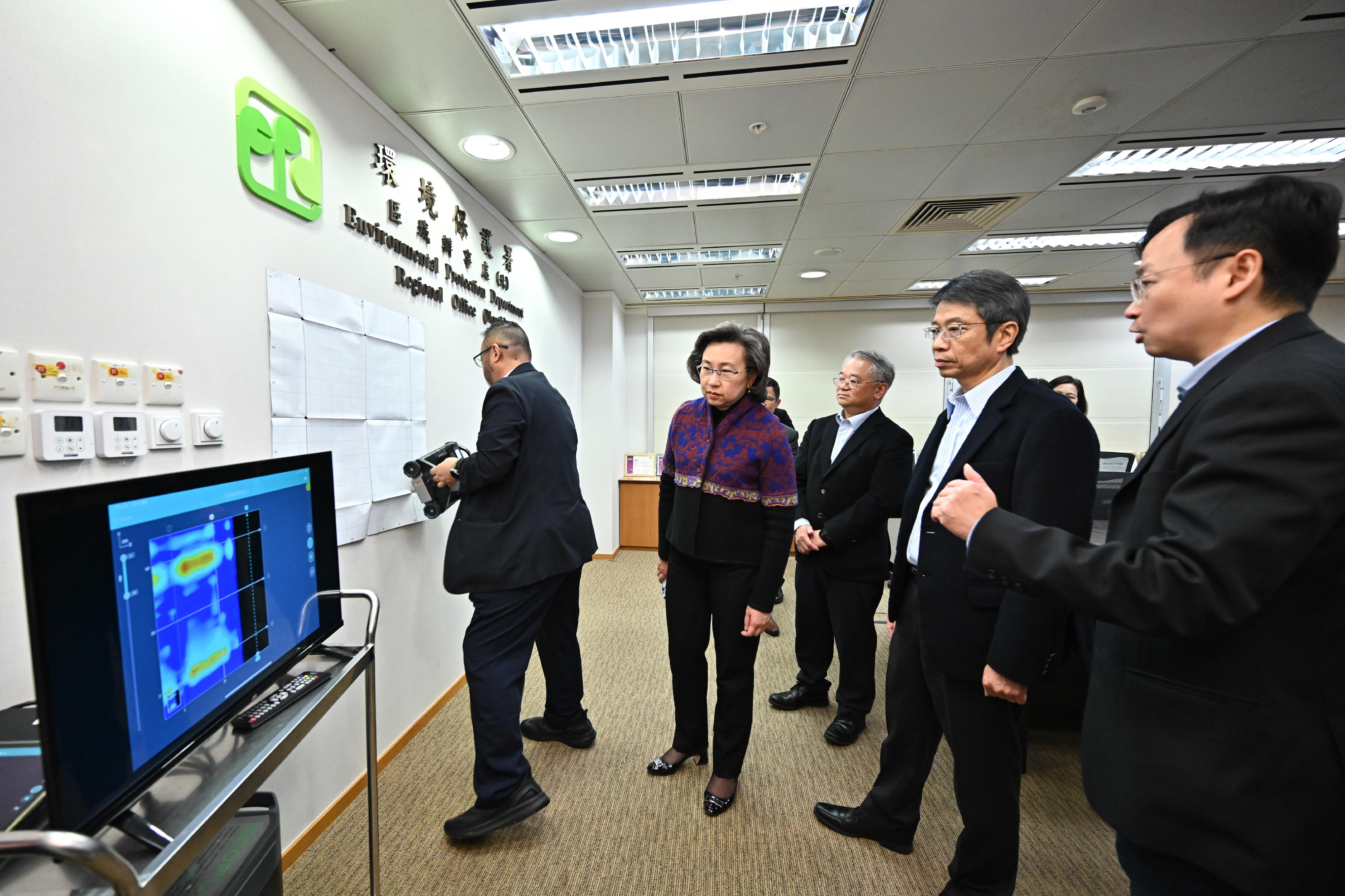
Photo  Photo  Photo  


Government gazettes Road Traffic (Amendment) Bill 2025

     The Government gazetted today (March 7) the Road Traffic (Amendment) Bill 2025 for the implementation of an electronic driving licence (eDL).
      
     The Bill aims to amend the Road Traffic Ordinance (Cap. 374) and related legislation to provide holders of a driving licence (including a driving instructors' licence) an alternative to fulfil the relevant statutory requirements of carrying or producing a driving licence for examination or inspection by displaying their electronic licences on a specified electronic platform with smart phones. The eDL will not be a substitute for a physical driving licence, as driving licence holders will still be issued with a physical driving licence, but they may use an eDL at their preference.
      
     A Government spokesperson said, "The implementation of an eDL can bring greater convenience to some 2.5 million driving licence holders, especially commercial vehicle drivers whose physical driving licences are more susceptible to damage due to frequent use. Those who choose to use an eDL can display it by logging on to a specified eDL mobile application on their smart phones via iAM Smart or the Transport Department (TD)'s e-Licensing Portal. To prevent a forgery of an eDL, the relevant application will be equipped with security features, including identity authentication and disabling the screen capture function, etc. Meanwhile, the TD will continue to issue a physical driving licence to meet the needs of different parties.
      
     "The TD has long been striving for innovations in licence management through streamlining procedures and implementing e-initiatives. In recent years, the TD has also recorded a significant increase in the use of online services. For example, in 2024, the proportion of online applications for renewal of full driving licences and International Driving Permits reached 40 per cent. The TD will continue to implement various e-licensing initiatives, bringing greater convenience to the public," the spokesperson supplemented.
      
     The Bill will be introduced into the Legislative Council for first reading on March 19.


Incoming passenger convicted and jailed for dealing with duty-not-paid cigarettes (with photo)

     An incoming female passenger was sentenced to two months' imprisonment and fined $2,000 at the Fanling Magistrates' Courts today (March 7) for possession of duty-not-paid cigarettes and failing to declare to Customs Officers, in contravention of the Dutiable Commodities Ordinance (DCO).

     Customs intercepted an incoming 49-year-old female passenger at the Heung Yuen Wai Boundary Control Point yesterday (March 6) for Customs clearance. There were 141 sticks and 240 sticks of duty-not-paid cigarettes uncovered inside the front pocket of a hoodie carried by the female passenger and in a tailor-made jacket she was wearing respectively. Later, another 320 sticks of duty-not-paid cigarettes were found wrapped around her waist, and 480 sticks of duty-not-paid cigarettes were seized underneath the leggings she was wearing. A total of 1 181 duty-not-paid cigarettes, with an estimated market value of about $5,300 and a duty potential of about $3,900, were seized in the case. The female passenger was subsequently arrested.

     Customs welcomes the sentence. The custodial sentence has imposed a considerable deterrent effect and reflects the seriousness of the offences. Customs reminds members of the public that under the DCO, tobacco products are dutiable goods to which the DCO applies. Any person who deals with, possesses, sells or buys illicit cigarettes commits an offence. The maximum penalty upon conviction is a fine of $1 million and imprisonment for two years.

     Members of the public may report any suspected illicit cigarette activities to Customs' 24-hour hotline 182 8080 or its dedicated crime-reporting email account (crimereport@customs.gov.hk) or online form (eform.cefs.gov.hk/form/ced002).

Photo  


Cluster of Human Metapneumovirus in United Christian Hospital

The following is issued on behalf of the Hospital Authority:

     The spokesperson for United Christian Hospital made the following announcement today (March 7):

     Mild respiratory symptoms appeared in patients in a female psychiatric ward starting on February 25. Appropriate tests had been arranged for the patients, among which three patients (aged 61 to 70) tested positive for Human Metapneumovirus and met the case definition. Patients are being treated in isolation and are in stable condition.

     A full investigation and thorough cleaning and disinfection have been conducted in the ward. Stringent droplet and contact precautions and enhancement of hand hygiene will be carried out.

     The hospital will continue to closely monitor the conditions of the patients in the ward. The cases have been reported to the Hospital Authority Head Office and the Centre for Health Protection for necessary follow-up.