Man arrested on suspicion of illegally selling topical eczema product with undeclared controlled drug ingredients

     The Department of Health (DH) today (March 26) carried out an enforcement operation with the Police against the suspected illegal sale of a topical product containing undeclared controlled medicines on the Internet, claiming that the product could be used to treat eczema. During the operation, a 42-year-old man was arrested on suspicion of the illegal sale of Part 1 poison and an unregistered pharmaceutical product.
      
     Acting upon a complaint, a sample of the product was purchased from an eczema group on a social media platform for analysis. Test results from the Government Laboratory revealed that the sample contained clobetasol propionate, ketoconazole and miconazole, which are Part 1 poisons under the Pharmacy and Poisons Ordinance (Cap. 138). The product, unlabeled, is also suspected to be an unregistered pharmaceutical product. The DH's investigation is still in progress.
      
     Clobetasol propionate is a steroid substance for treating inflammation. Inappropriate application of steroids could cause skin problems and systemic side effects such as moon face, high blood pressure, high blood sugar, adrenal insufficiency and osteoporosis. Ketoconazole and miconazole are antifungal substance used to treat fungal infections with side effects including local irritation and sensitivity reactions.
      
     Topical products containing ketoconazole and miconazole should be supplied in the premises of an Authorized Seller of Poisons (i.e. a pharmacy) under the supervision of a registered pharmacist, while products containing clobetasol propionate are prescription medicines that should be used under a doctor's directions and be supplied in a pharmacy under the supervision of a registered pharmacist upon a doctor's prescription.
      
     According to the Ordinance, all pharmaceutical products must be registered with the Pharmacy and Poisons Board of Hong Kong before they can be sold in the market. Illegal sale or possession of unregistered pharmaceutical products or Part 1 poisons are criminal offences. The maximum penalty on conviction of each offence is a fine of $100,000 and two years' imprisonment.
      
     The DH strongly urged members of the public not to buy or use products of doubtful composition or from unknown sources. All registered pharmaceutical products should carry a Hong Kong registration number on the package in the format of "HK-XXXXX". The safety, quality and efficacy of unregistered pharmaceutical products are not guaranteed.
      
     People who suspect that they have purchased the product concerned should stop using it immediately and consult healthcare professionals if in doubt or feeling unwell after use. They may submit the product to the Drug Office of the DH at Room 1804-06, 18/F, Wing On Kowloon Centre, 345 Nathan Road, Kowloon, during office hours for disposal.


SFST’s remarks at Wealth for Good in Hong Kong Summit (English only) (with photo/video)

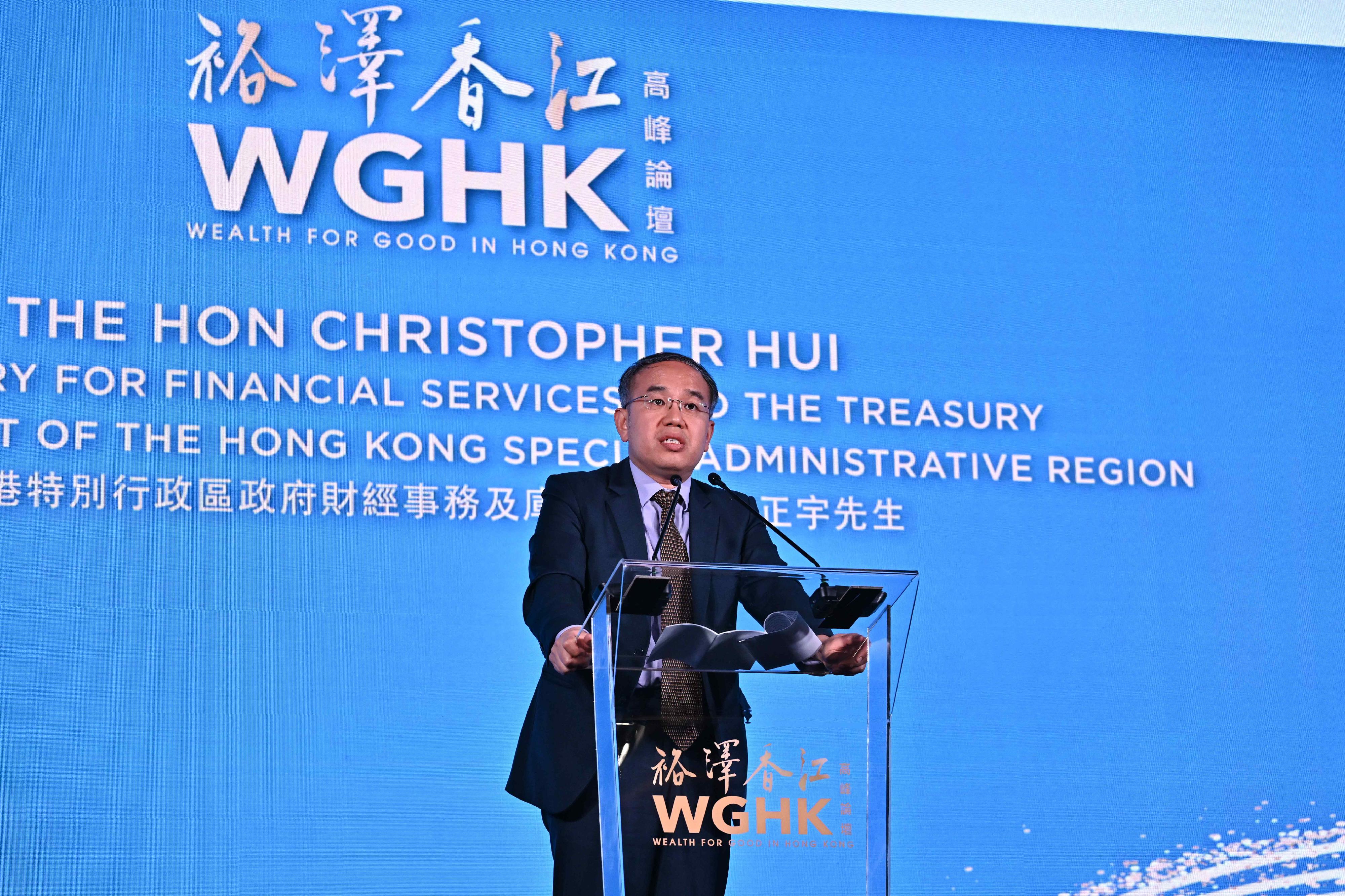
     Following are the remarks by the Secretary for Financial Services and the Treasury, Mr Christopher Hui, at the Wealth for Good in Hong Kong Summit today (March 26):
 
Distinguished global family office principals, and guests from around the world,
 
     It is with immense pride and excitement of mine that I welcome all of you to the third edition of the Wealth for Good in Hong Kong Summit, themed "Hong Kong of the World, for the World". As highlighted, this is the third time that we organised this event. I must say that I feel like now we are more like a family, in a sense that we can share insights, share aspirations, and at the same time come together on how we can make our families, our societies, and the world around us better. And in that regard, we will try to see what our families will do. Normally, the family or members of it will try to build, learn, and also give together.
 
     And exactly these three pillars will define our collaboration between the Government and your family offices. In a sense, we want you to build with us, to learn with us, and also to give with us, and also at the same time, inspiring all of you to leverage Hong Kong's unique ecosystem to create lasting impact. And now, let me share with all of you how we can work hand in hand along these three dimensions to make this vision a reality.
 
To build: a robust ecosystem for wealth and innovation
 
     First of all is how we build, which is to build a robust ecosystem for wealth and innovation. Hong Kong has long been a world-class financial hub, managing nearly US$4 trillion in asset and wealth management, alongside a private banking sector serving family offices and trusts worth over US$185 billion. Our commitment to you is clear: we have built an ecosystem that empowers your ambitions. In March 2023, we issued the Policy Statement on Developing Family Office Businesses in Hong Kong, and I am very proud to say all measures, including profits tax exemptions for single family offices, have been fully implemented. Our dedicated FamilyOfficeHK team under Invest Hong Kong led by Alpha (Director-General of Investment Promotion at Invest Hong Kong, Ms Alpha Lau) has already assisted 160 family offices, many of whom are past summit participants, to establish or expand here.
 
     But we are not stopping here. We are building a comprehensive ecosystem for asset allocation, with bold new initiatives. Take gold and precious metals for example. We aim to transform Hong Kong into a global gold trading centre by attracting physical gold storage, driving trading, settlement, and delivery activities, and scaling up support services like insurance, testing, certification, and logistics. We're promoting world-class gold storage facilities and expanding related financial services, including collateral, loans, hedging, and derivatives, creating a progressive, interconnected market for asset owners, including all of you.
 
     Complementing this, we are enhancing our position as a leading international art hub, as covered by the panel just now. The Airport Authority is crafting an ambitious art ecosystem at Hong Kong International Airport – our first one-stop project uniting art creation, appreciation, and trade. This will feature an art community with galleries and studios, plus a purpose-built, large-scale storage facility bespoke for artwork, the first of its kind here. Linked with exhibitions at AsiaWorld-Expo, this will propel Hong Kong into a world-class art marketplace. Together, we will build an ecosystem where your wealth thrives and, at the same time, diversifies.
 
To learn: a legacy of knowledge and growth
 
     Secondly, apart from building, it's about learning. What we try to learn is about a legacy of knowledge and growth. The Hong Kong Academy for Wealth Legacy, chaired by Adrian (Dr Adrian Cheng, Chairman of the Board, the Hong Kong Academy for Wealth Legacy) who is a participant in the panel just now, is our partner in nurturing the new generation of wealth stewards. We are taking this further by collaborating with world-class academic institutions to curate a one-stop platform for training and knowledge exchange. This will equip family offices with the resources to build legacies that endure, whether through mastering innovative investment strategies, exploring technology like artificial intelligence to solve global challenges, or preserving the arts and culture that define our humanity.
 
     This summit itself is a testament to that spirit of learning. Look at the distinguished speakers joining our panel discussions – each brings a wealth of experience to inspire us. Also, through the Hong Kong Family Office Nexus, in collaboration between Bloomberg and the Government, we are also sharing global best practices, ensuring you remain at the forefront of wealth management innovation. Together, we will definitely learn, adapt, and also lead. And for those who are staying here in Hong Kong tomorrow, in fact, we have an event (Bloomberg Family Office Summit) with Bloomberg, trying to announce the further initiatives that we are working together with Bloomberg in taking Hong Kong as a family office hub. So I encourage all of you who are here tomorrow to also attend that event.
 
To give: a culture of impact and compassion
 
     Finally, apart from building and also learning, what is it about? It's about giving – to give, a culture of impact and compassion. We will give together, harnessing wealth for transformative good. Philanthropy is at the very heart of Hong Kong's evolution into a global hub for giving. Last year, we launched Impact Link under the Academy for Wealth Legacy – a pioneering platform connecting family offices with charity projects. More than a database, it is a bridge to meaningful impact, empowering you to make informed, high-impact contributions.
 
     Looking ahead, we are exploring new frontiers. We are considering if a platform can be established for charities to co-fund philanthropic projects through a prize initiative in Hong Kong, inviting charities and family offices to partner with us in creating transformative impact. I warmly welcome your ideas and inputs on this – let us all co-create a future where giving knows no boundaries. With our financial muscle and entrepreneurial energy, we are cultivating a culture where your wealth can support groundbreaking research, preserve cultural heritage, or tackle pressing global challenges. Together, we will give with purpose, leaving a legacy that echoes worldwide.
 
A call to dream big
 
     As we prepare for today's panel on philanthropy, I invite all of you to dream big. How can your family office leverage Hong Kong's ecosystem – our talent, our platforms like Impact Link, and our Government's unwavering support – to address the world's greatest needs? Whether it's investing in technology, championing the arts, or driving social impact, Hong Kong, as always, stands ready to be your partner.
 
     Bring your vision, your capital, and your passion for good. Together, we will build an ecosystem of opportunity, learn from each other to shape the future, and give in ways that uplift lives across the globe. Let us define legacy today, in Hong Kong, for the world.
 
     Thank you, and I very much look forward to the inspiring discussions ahead, especially the coming panels and the dinner tonight. Thank you.
Photo  


Hong Kong Customs conducts interdepartmental anti-illicit cigarette publicity activities in Sha Tin District (with photos)

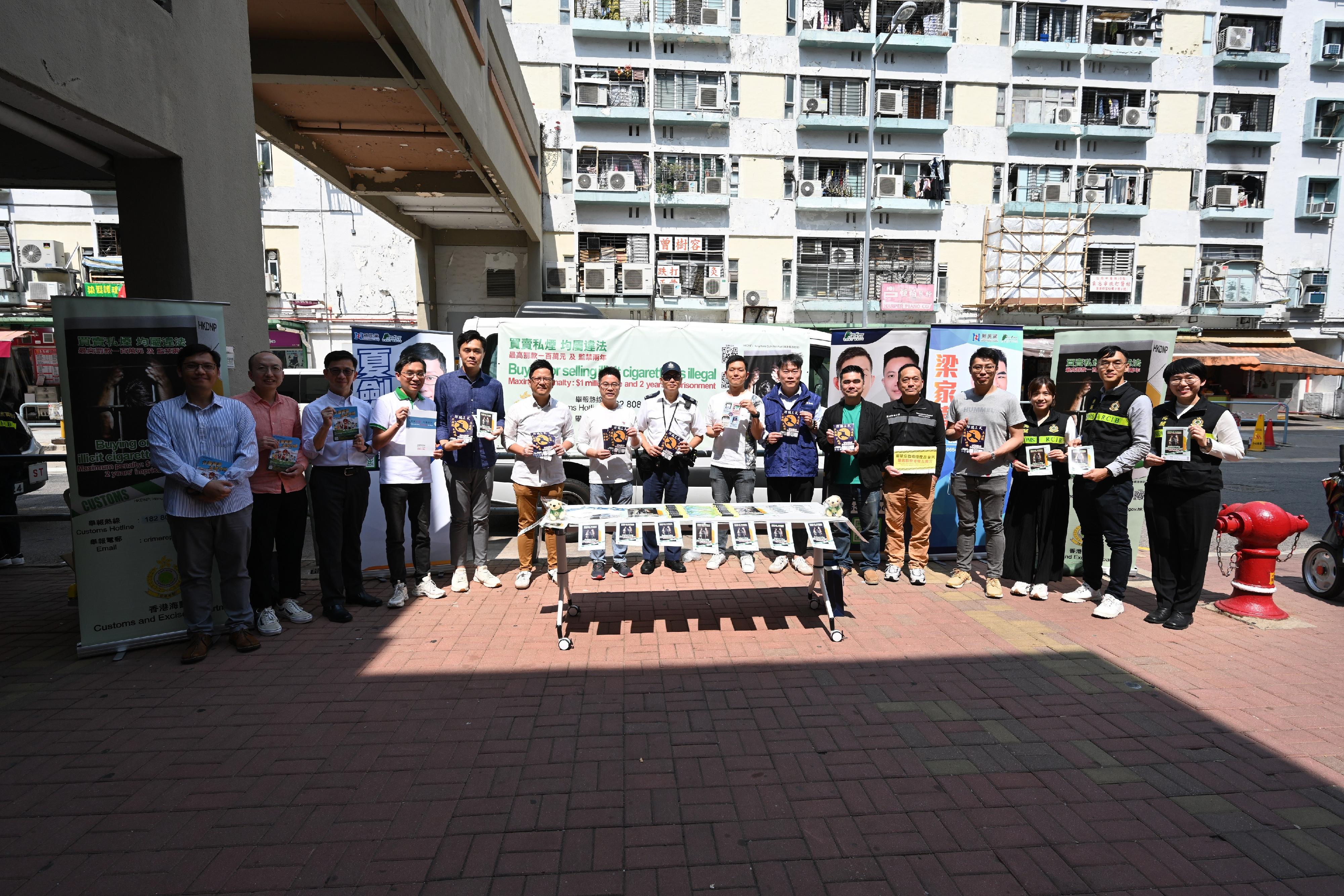
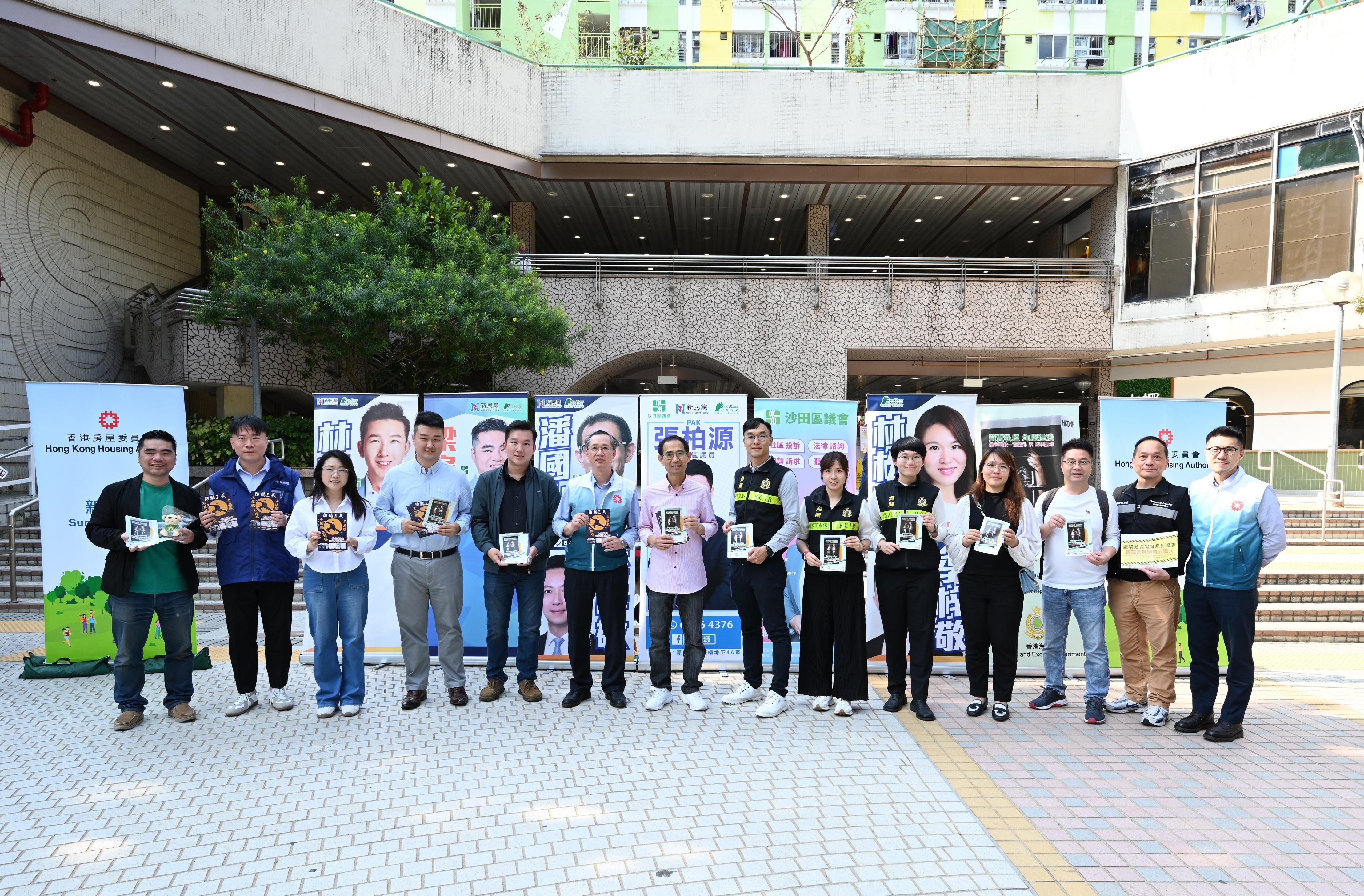
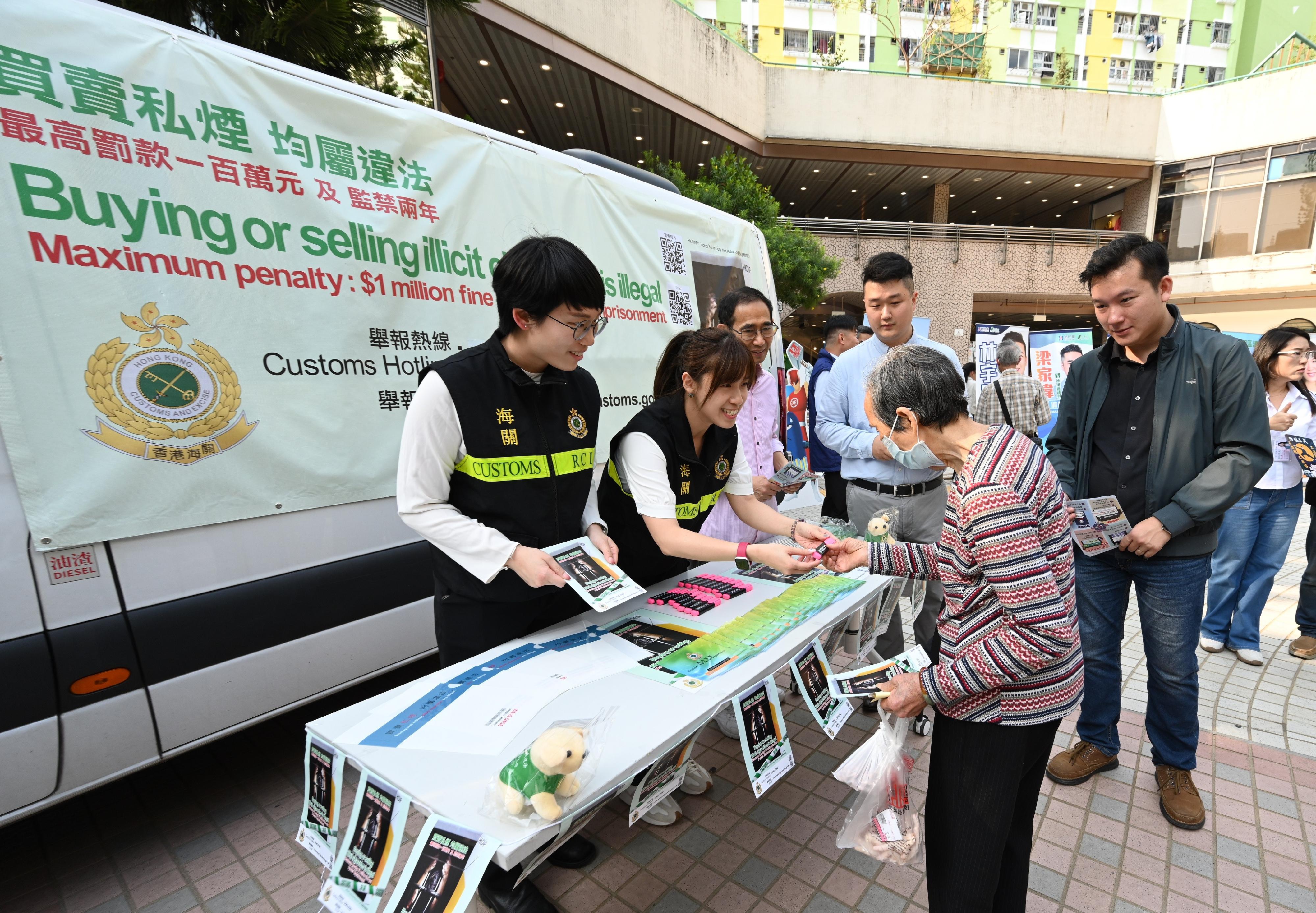
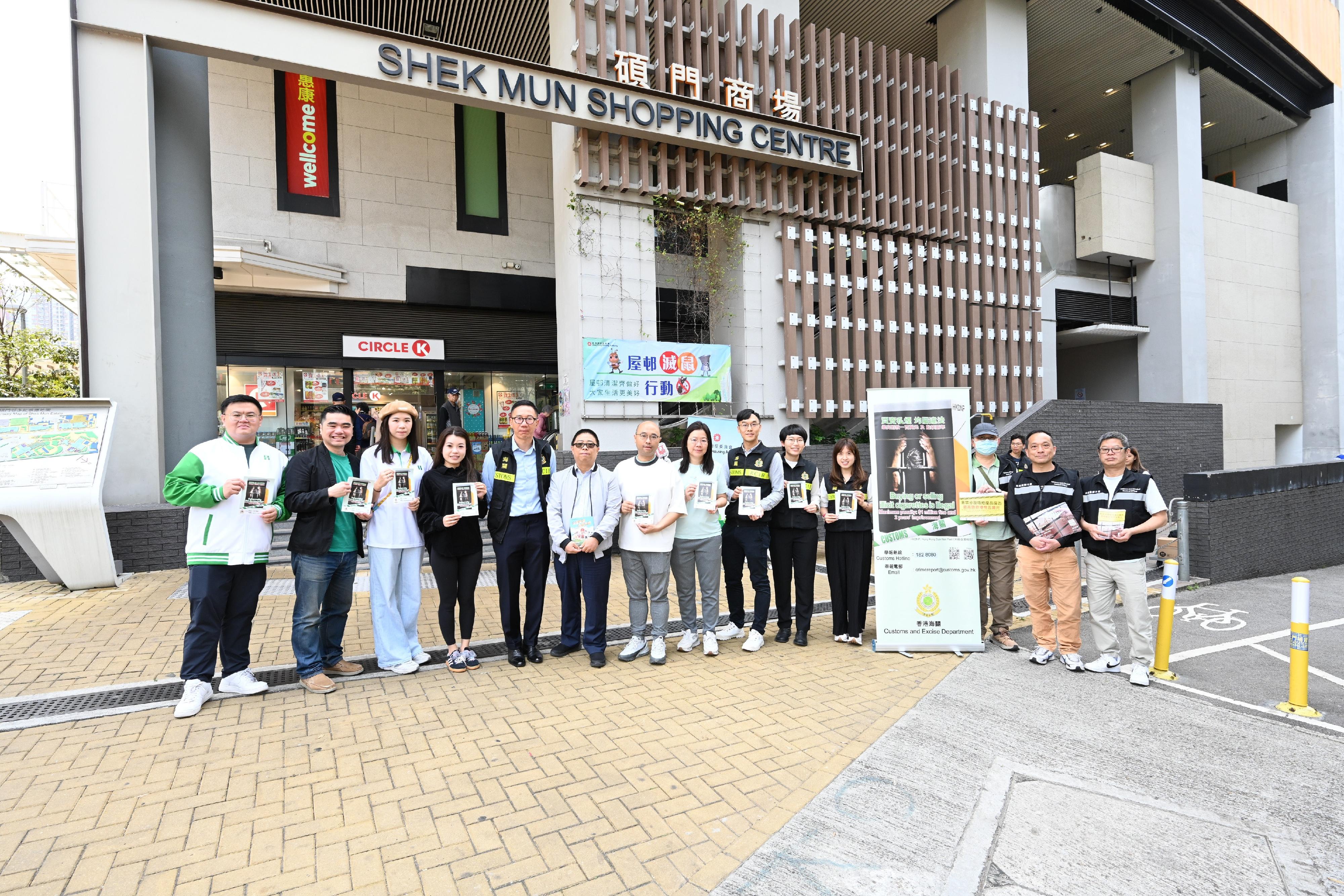
     Hong Kong Customs conducted a joint anti-illicit cigarette publicity campaign with members of the Sha Tin District Council, the Tobacco and Alcohol Control Office (TACO) of the Department of Health, the Police and the Housing Department (HD) at three public housing estates in Sha Tin District today (March 26).

     Customs officers set up a promotional booth to distribute leaflets to residents at Shek Mun Estate, Lek Yuen Estate and Sun Chui Estate to raise their awareness of anti-illicit cigarettes, and encouraged them to report suspected illicit cigarette trading activities to Customs.
      
     If public rental housing units are found to be involved in illicit cigarette crimes, Customs will notify the HD for follow-up action after the conclusion of court proceedings. Moreover, Customs will continue to closely monitor the situation of illicit cigarette activities at control points and in the city, and flexibly deploy its resources to clamp down on the crime. 

     Customs stresses that it is an offence to buy or sell illicit cigarettes. Under the Dutiable Commodities Ordinance, anyone involved in dealing with, possession of, selling or buying illicit cigarettes commits an offence. The maximum penalty upon conviction is a fine of $1 million and imprisonment for two years. Members of the public may report any suspected illicit cigarette activities to Customs' 24-hour hotline 182 8080 or its dedicated crime-reporting email account (crimereport@customs.gov.hk) or online form (eform.cefs.gov.hk/form/ced002/).

     In accordance with the Smoking (Public Health) Ordinance (Cap. 371), no person shall distribute any smoking product advertisement (including any promotion leaflets). Any person who contravenes the regulation is liable to a maximum fine of $50,000. Members of the public may report any suspected activities of illicit cigarette leaflets distribution to TACO's hotline 2961 8823.

Photo  Photo  Photo  Photo  


Hainan and Hong Kong sign Memorandum of Cooperation in Boao, Hainan (with photos/video)

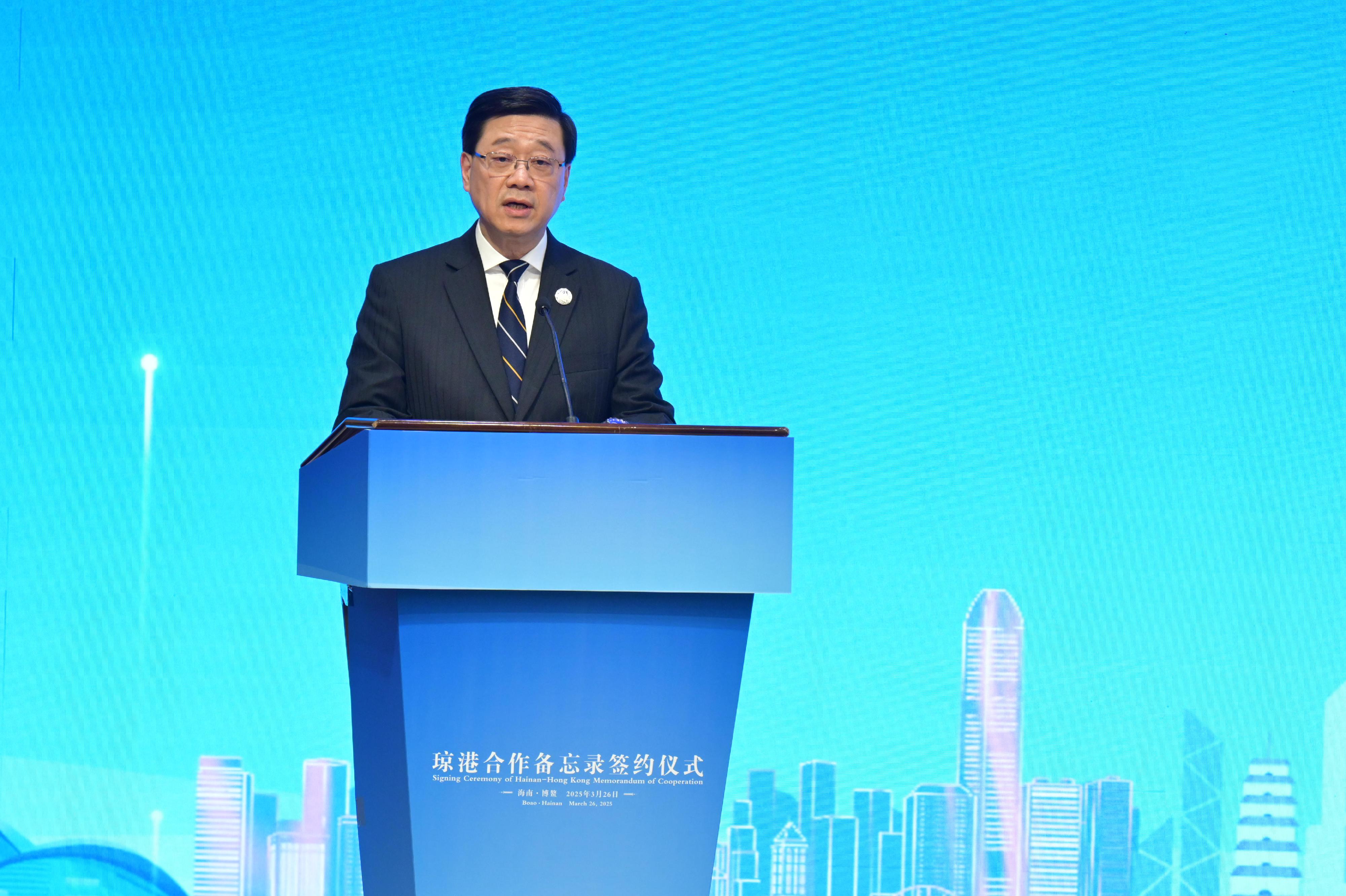
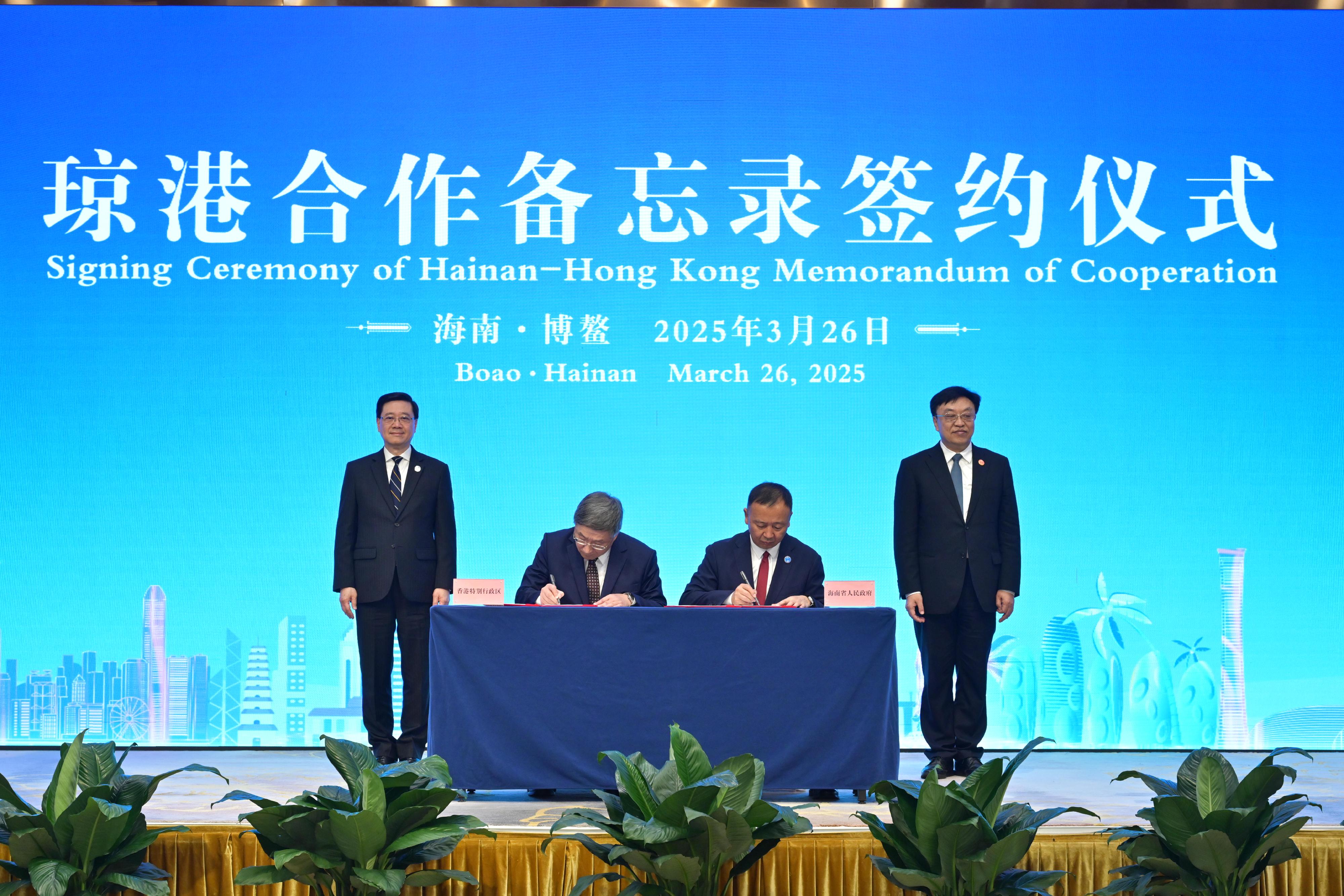
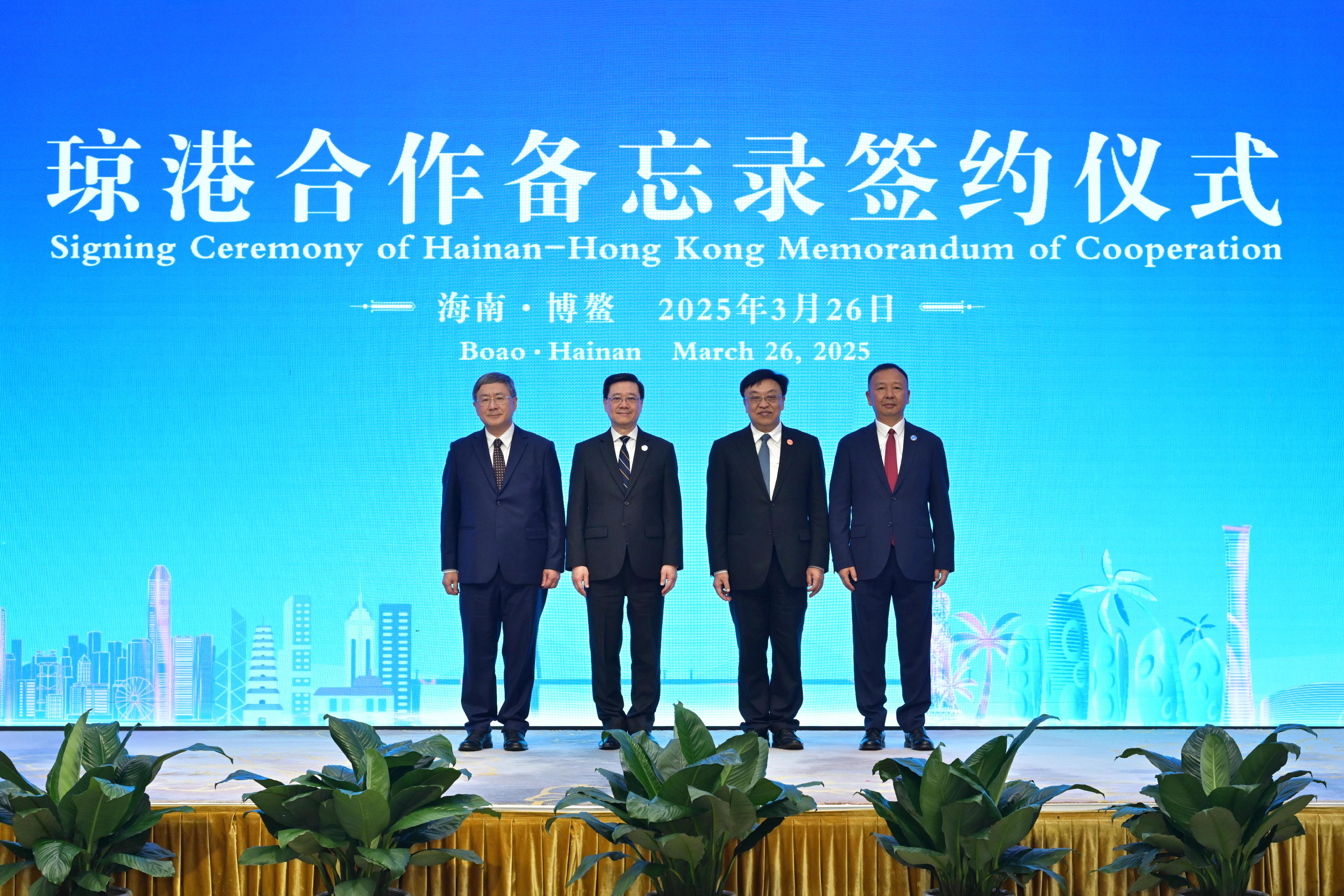
     The Chief Executive, Mr John Lee, attended the Signing Ceremony of Hainan Hong Kong Memorandum of Cooperation in Boao, Hainan, today (March 26) and, together with the Secretary of the CPC Hainan Provincial Committee, Mr Feng Fei, witnessed the signing of the Hainan Provincial People's Government and Hong Kong Special Administrative Region Government (HKSAR) Memorandum of Cooperation by the Deputy Chief Secretary for Administration, Mr Cheuk Wing-hing, and Vice Governor of Hainan Provincial People's Government Mr Bateer.

     Deputy Director of the Liaison Office of the Central People's Government in the HKSAR Mr Qi Bin also attended the signing ceremony. Officials of the HKSAR Government who also attended the conference included the Deputy Chief Secretary for Administration, Mr Cheuk Wing-hing; the Secretary for Innovation, Technology and Industry, Professor Sun Dong; the Director of the Chief Executive's Office, Ms Carol Yip; and the Under Secretary for Constitutional and Mainland Affairs, Mr Clement Woo.

     Hong Kong and Hainan reached consensus on the following five co-operation areas:

Trade and Investment

     Actively explore the expansion of in-depth co-operation in the areas of medicine, finance, commerce and trade, tourism and culture, and data services industries.

     Leverage the role of the Hainan Free Trade Port in expanding the room for Hong Kong's development. Promote Hong Kong's better integration into the overall development of the country and leverage Hong Kong's distinctive advantages as a "super-connector".

     Support Hong Kong enterprises in participating in the China International Consumer Products Expo and encourage Hainan enterprises and associations to organise and participate in trade fairs in Hong Kong.

Finance

     Encourage enterprises from the Hainan Free Trade Port to issue bonds in Hong Kong and support high-quality enterprises from the Hainan Free Trade Port in listing in Hong Kong.

Safe and Orderly Flow of Data

     Promote the safe and orderly flow of data between Hainan and Hong Kong, and jointly promote co-operation in data services between the two sides.

Tourism

     Support the tourism industry of Hainan in commencing joint international marketing and develop products for multi-destination tourism with the travel trade and aviation sector of Hong Kong.

Talent Exchange

     Pursue further opening up of more sectors of Hainan's services market to Hong Kong, including finance, legal services, accounting, consulting, convention and exhibition, architectural and planning, under the framework of the Agreement on Trade in Services of Mainland and Hong Kong Closer Economic Partnership Arrangement (CEPA), with a view to expanding the scope for practice by Hong Kong's professional services sector while lifting the standard of internationalisation of Hainan's professional services sector.

     Based on their Hong Kong professional qualifications, allow Hong Kong professionals with qualifications listed in the recognised Hong Kong professional qualifications directory to provide relevant professional services to enterprises and residents in the Hainan Free Trade Port, upon approval by the relevant authorities of the professional industries.

     The document (Chinese only) is in the Annex.

Photo  Photo  Photo  


LCQ6: Land grant policy

     Following is a question by Dr the Hon Wendy Hong and a reply by the Secretary for Development, Ms Bernadette Linn, in the Legislative Council today (March 26):
 
Question:
 
     Regarding the land grant policy, will the Government inform this Council:
 
(1) of the current number of sites granted by the Government under short-term tenancies (STTs), the area of the sites involved and their utilisation (including their uses and actual tenancy periods);
 
(2) as it is learnt that the Government will resume and re-tender sites with expired STTs, or renew such tenancies with the same tenants on a quarterly basis, and that about 40 per cent of the STT tenants have rented the relevant sites for over 20 years after repeated renewals of tenancies, with the longest period being 55 years, and there are views pointing out that the continuous renewal of tenancies with the same tenants has turned STTs into long-term tenancies, whether the Government will rationalise the current STT policy to reduce instances of constantly re-tendering existing sites or continuously renewing their tenancies on a quarterly basis, and provide medium to long-term land tenancies of, for example, 10 to 20 years for industries with demand, large investments and long payback periods, so as to facilitate enterprises' long-term planning and investments, and increase the Government rent revenue and potential tax revenue for the Government; and
 
(3) given that the Government will grant land by way of private treaty for specified use for a longer term in justified circumstances to meet Hong Kong's economic, social and community needs, and in the light of the current objective of promoting the diversification of industries and re-industrialisation, whether the Government will grant more land by such way, so as to provide operating sites with more certainty for the development of the industries concerned?
 
Reply:
 
President,
 
     The Government grants land in different ways to support economic development.
      
     In particular, the Government will normally grant leases with a 50-year tenure for commercial or industrial sites which are suitable for long-term development by way of open tender. Another way is private treaty grant (PTG) whereby, under the premise of facilitating implementation of individual policy and social development, land is directly granted to designated enterprises or institutions without tender for specified use with policy support. PTGs are mostly for special purpose leases and, subject to policy consideration, the lease tenure may be shorter than 50 years. Whether the land is granted by way of tender or PTG, both methods involve granting land in the form of land lease, which bring greater certainty for leaseholders and is conducive to long-term planning and investment. With the benefit of lease certainty, leaseholders are required to make a one-off upfront payment for land premium before execution of the leases.
      
     On the other hand, the Government also grants short term tendencies (STTs) by way of tender or direct grant. STTs support various social and economic activities and bring regular rental revenue for the Government. According to the land policy implemented for years, the fixed term of STT normally does not exceed seven years, and the tenancy may continue subject to the circumstances upon expiry of the fixed term. While the fixed term of STT is normally shorter than the tenure of a land lease, it provides greater flexibility for the Government in terms of land use and is particularly suitable for Government land not yet needed for long-term development or in respect of which the long-term planned use has yet to be determined. Tenants are also not required to pay an upfront lump sum of land premium, but only need to make regular rent payment and accept periodic market rental adjustment by the Government within the tenancy period, which is also a merit to tenants.
 
     My reply to the various parts of the question raised by Dr the Hon Hong is as follows:
 
(1) As of end-February 2025, the Lands Department (LandsD) managed over 5 800 STTs (involving a total of around 3 000 hectares of land), covering many different uses. STTs for uses related to people's daily lives take up around 60 per cent, which include public fee-paying carparks, education, social welfare, religion, leisure and recreation, etc.; while STTs for commercial and economic activities take up around 40 per cent, which include shops, workshops, cargo container handling, open or indoor storage, shipyards, etc.
 
(2) Upon expiry of the STT fixed term, if the site is still not needed for long-term development in the coming few years, the LandsD will normally re-tender the site so as to give other interested operators in the market fair opportunities of bidding the site and maintain healthy competition. That said, many direct grant STTs related to commercial or economic activities may, with policy support or owing to special historical reasons, continue quarterly for a relatively long period upon expiry of the fixed term. According to the statistics of LandsD, among the direct grant STTs, there are some 1 600 cases with cumulative tenancy period exceeding 10 years after multiple renewals. Each of these cases has its specific reasons, with the majority of which (over 1 400 cases) belong to a few major categories, including STTs granted for relocation of businesses affected by public works (such as shipyards in earlier years); STTs gradually converted from Government land licences in the early years (usually for shops or workshops); and some sites for public utilities or franchise operation (such as franchised bus depots). 
 
     Currently, the main options under our land grant policy are land leases with tenure as long as 50 years or STTs with a fixed term of at most seven years. We agree that there is room to review whether STTs with a fixed term longer than seven years could be granted to encourage long-term planning and investment by industries and to meet the diversified demand for economic land. In this regard, the Development Bureau (DEVB) will approach different policy bureaux to understand the nature and needs of various industries and economic activities, and study whether there may be a more flexible arrangement in terms of granting STTs. As mentioned above, while tenants of STTs do not need to pay an upfront land premium under tenancies, they will need to face the uncertainty during the longer tenancy period arising from periodic rental adjustment due to the longer tenure. Therefore, different operators may have different views on this issue. On the other hand, if the Government grants land via tenancies with longer period without adopting the mode of land lease that charges an upfront land premium, we will also need to consider the financial implications to the Government. Nevertheless, we are willing to tap the views of Members and the trade during the review.
 
(3) To tie in with the policy goal of developing innovation and technology and other emerging industries, as well as the "industry-driven" land planning approach emphasised in the Northern Metropolis, the DEVB will, from the perspective of land administration policy, support the relevant bureaux in exploring and adopting different modes of land grant, including considering the granting of sites for industries by way of open tender, restricted tender, or PTG so as to attract leading Mainland and overseas enterprises to come to Hong Kong for bringing in new capital and technology and generating job opportunities as well as creating new growth areas for our economy. We believe that the relevant bureaux will make announcement at suitable juncture on the appropriate arrangement for the industries under their policy purview.