Company and its director fined $50,000 for contravening Employment Ordinance

     GeneHarbor (Hong Kong) Biotechnologies Limited and its director were prosecuted by the Labour Department (LD) for violating the requirements under the Employment Ordinance (EO). The company and its director pleaded guilty at the Shatin Magistrates' Courts today (March 28) and were fined a total sum of $50,000.
      
     The company wilfully and without reasonable excuse contravened the requirements of the EO, failing to pay four employees' wages within seven days after the expiry of the wage periods, totalling about $312,000. The director concerned was prosecuted and convicted for his consent, connivance or neglect in the above offences.

     "The ruling will disseminate a strong message to all employers, directors and responsible officers of companies that they have to pay wages to employees within the statutory time limit stipulated in the EO," a spokesman for the LD said.

     "The LD will not tolerate these offences and will spare no effort in enforcing the law and safeguarding employees' statutory rights," the spokesman added.


Appointments to new-term Hong Kong Film Development Council announced

     The Government announced today (March 28) the reappointment of Dr Wilfred Wong Ying-wai and Ms Mabel Cheung Yuen-ting as the Chairman and the Vice-Chairman of the Hong Kong Film Development Council (HKFDC) respectively. The Government also announced the reappointments and new appointments of members to the HKFDC for a two-year term from April 1, 2025, to March 31, 2027.

    The Secretary for Culture, Sports and Tourism, Miss Rosanna Law, welcomed the appointments. She said, "The newly appointed and reappointed members have rich experience in the film industry and community services. I trust that they will provide valuable advice to the Government in fostering the long-term development of Hong Kong's film industry."
 
     Miss Law also thanked the four outgoing members, Ms Sylvia Chang Ai-chia, Mr Gordon Lam Ka-tung, Mr Mathew Tang Hon-keung and Ms Cora Yim Ka-nim, for their contributions to the HKFDC.
 
     The membership of the HKFDC in its new term is as follows:
 
Chairman
——–
Dr Wilfred Wong Ying-wai
 
Vice-Chairman
——–
Ms Mabel Cheung Yuen-ting
 
Ex-officio Vice-Chairman
———————
Permanent Secretary for Culture, Sports and Tourism
 
Members
——-
Mr Angus Chan Lo-chiu
Ms Anne Chan On-yee*
Mr Soi Cheang Pou-soi*
Mr David Ding Kai*
Ms Elizabeth Fung Hoi-yung
Ms Ivy Ho Wan-ming*
Ms Debbie Lam Suk-yin
Mr Lau Ho-leung
Mr Ken Lau Kin-lok
Mr Paulo Pong Kin-yee
Mr Tang Wai-but
Mr Eric Tsang Hing-weng
Mr Frederick Tsui Foon
Mr Terence Wong Pui-tat
Mr Victor Wong Wang-tat
Mr Paul Yeung Kwok-leung
Dr Frankie Yeung Wai-shing
Mr Timothy Yuen Yin-man
 
Ex-officio Member
——————
Executive Director of Hong Kong Trade Development Council or his/her representative
 
(*new appointee)
 
     The above appointments are published in the Government Gazette today.
      
     The HKFDC advises the Secretary for Culture, Sports and Tourism on policies and measures relating to the development of the film industry, including enhancing local film production, nurturing talent, expanding markets and building audiences.


Speech by FS at One Earth Summit (English only) (with photos)

     Following is the speech by the Financial Secretary, Mr Paul Chan, at the One Earth Summit today (March 28):
 
Poman (Founder of the Institute of Sustainability and Technology, Professor Poman Lo), Rob (Senior Special Adviser to the Managing Board of the World Economic Forum, Mr Rob Van Riet), Amy (Chairman of UBS Global Wealth Management Asia, Head and Chief Executive of UBS Hong Kong, Ms Amy Lo), distinguished guests, ladies and gentlemen,
 
     Good morning. It is a pleasure to join you all at the second edition of the One Earth Summit. First, allow me to thank the IST, (Institute of Sustainability and Technology), GAEA (Giving to Amplify Earth Action) under the World Economic Forum, and the One Earth Alliance for organising this meaningful event.
 
     Today, we gather to address a fundamental issue: how we can drive systematic change, by connecting capital and technology, to empower climate and energy innovation for a sustainable future.
 
Climate change: progress and challenges
 
     Last year, at this event, I spoke of 2023 being the hottest year ever. A year on, we have witnessed a new record. Extreme weather events are increasing in both frequency and intensity. A United Nations report, released last week, indicated a record number of individuals displaced by climate-related disasters in 2024.
 
     This alarming trend serves as a clarion call for unified global action, and it requires our commitment to change.
 
    The global response to climate change has created a thriving market for green products and services, unlocking new business opportunities. Bloomberg has estimated that global investments in the low-carbon energy transition grew by 11 per cent in 2024, hitting a record of US$2.1 trillion. Notably, China's "new three" industries, namely, new energy vehicles, lithium batteries and solar panels, have harnessed this momentum.
 
     This notwithstanding, the world still faces a staggering shortfall in climate investments, especially in developing countries. The IMF has estimated that climate investments in emerging and developing Asia still fall short of 70 per cent of what is needed. Bridging the funding gap cannot rest on governments alone. It requires strong partnerships across the public and private sectors, both domestically and globally.
 
     Here in Hong Kong, we are committed to achieving carbon neutrality by 2050, focusing on four key strategies: net-zero electricity generation, green buildings, green transport and waste reduction.
 
     To guide funding into green projects, reliable data about companies and their projects is key. To enhance sustainable disclosures, as a first step, the Hong Kong Stock Exchange now requires all listed companies to disclose absolute gross greenhouse gas emissions annually, starting January 1, 2025.
 
     We have also formulated a clear pathway for entities, including listed companies, banks and insurance companies, to fully adopt the disclosure standards issued by the ISSB, (International Sustainability Standards Board) by 2028.
 
     Beyond domestic ambitions, Hong Kong is in a well position to make significant contributions to regional and global decarbonisation efforts in a number of ways.
 
Bridging the funding gap
 
     First, we can help bridge the funding gap. As Asia's premier international financial centre and a leader in green finance, Hong Kong possesses deep capital markets and a broad investor base. Governments and businesses worldwide are turning to Hong Kong to issue green bonds in multiple currencies and tenors. For seven consecutive years, we have ranked first in the Asian market in terms of green bond issuance, capturing 45 per cent of the market last year.
 
     To enhance funding support for green projects and drive broader participation in this worthy cause, we are committed to expanding our investor base. This is why Hong Kong is pursuing innovative financing solutions, such as tokenised green bonds and securitised infrastructure loans, to diversify our product offerings and attract new investors.
 
     And we are also moving into the space of transition finance, enabling us to support not only green projects but also assist heavy-emitting sectors in their decarbonisation journeys. To this end, the Hong Kong Monetary Authority is working to include transition finance in the Hong Kong Taxonomy for Sustainable Finance, laying the groundwork for a more inclusive approach to sustainability.
 
Bridging the technology gap
 
     Second, we can help bridge the technology gap. Hong Kong boasts a vibrant ecosystem of over 300 green tech start-ups based in our Science Park and Cyberport. Many of their innovative solutions, ranging from energy-efficient materials to carbon capture, EV infrastructure and others, are already capturing interest in overseas markets. In this year's Budget, we announced the establishment of a Green Tech Hub. Launched just earlier this month, it is set to house 200 green enterprises and serve as a nexus for public-private partnerships and international collaboration.
 
     What's more, we want to mobilise more private capital to fuel green-tech development and build a thriving ecosystem. The Hong Kong Investment Corporation is pivotal in this mission, steering and leveraging private investments into the sector by co-investing with private and public funds in companies with cutting-edge green technologies at their early stages.
 
     Now, artificial intelligence (AI) stands as a powerful tool to help industries to achieve sustainability goals, offering a wide range of application scenarios. For instance, it can enhance energy consumption, accelerate the development of new materials, and enhance climate forecasting. It can help monitor sustainability reporting, guard against green washing, and optimise capital allocation for sustainable projects.
 
     We envision AI be a core industry in Hong Kong's economic landscape. By adopting the Al+ strategy, we will foster the deep integration of Al with other technologies, exploring diverse use cases across different industries. We recognise the immense potential of integrating Al into our green ecosystem. This will position us at the forefront of sustainable innovation.
 
Bridging the action gap

     Finally, we can help bridge the action gap. Despite setbacks in climate initiatives elsewhere in the world, Hong Kong remains steadfast in its commitment to regional and international collaboration for concrete and credible climate action. We are dedicated to sharing best practices, technologies and resources with our partners. By taking part in global climate initiatives, and hosting fora like this one, we are determined to help shape the thought leadership necessary for advancing innovative solutions to our shared challenges.
 
     Ladies and gentlemen, I am heartened that this Summit is part of that action. For that, my sincere gratitude to the organisers again, and I wish you all a successful Summit, and the best of health and businesses in the time ahead. Thank you very much.
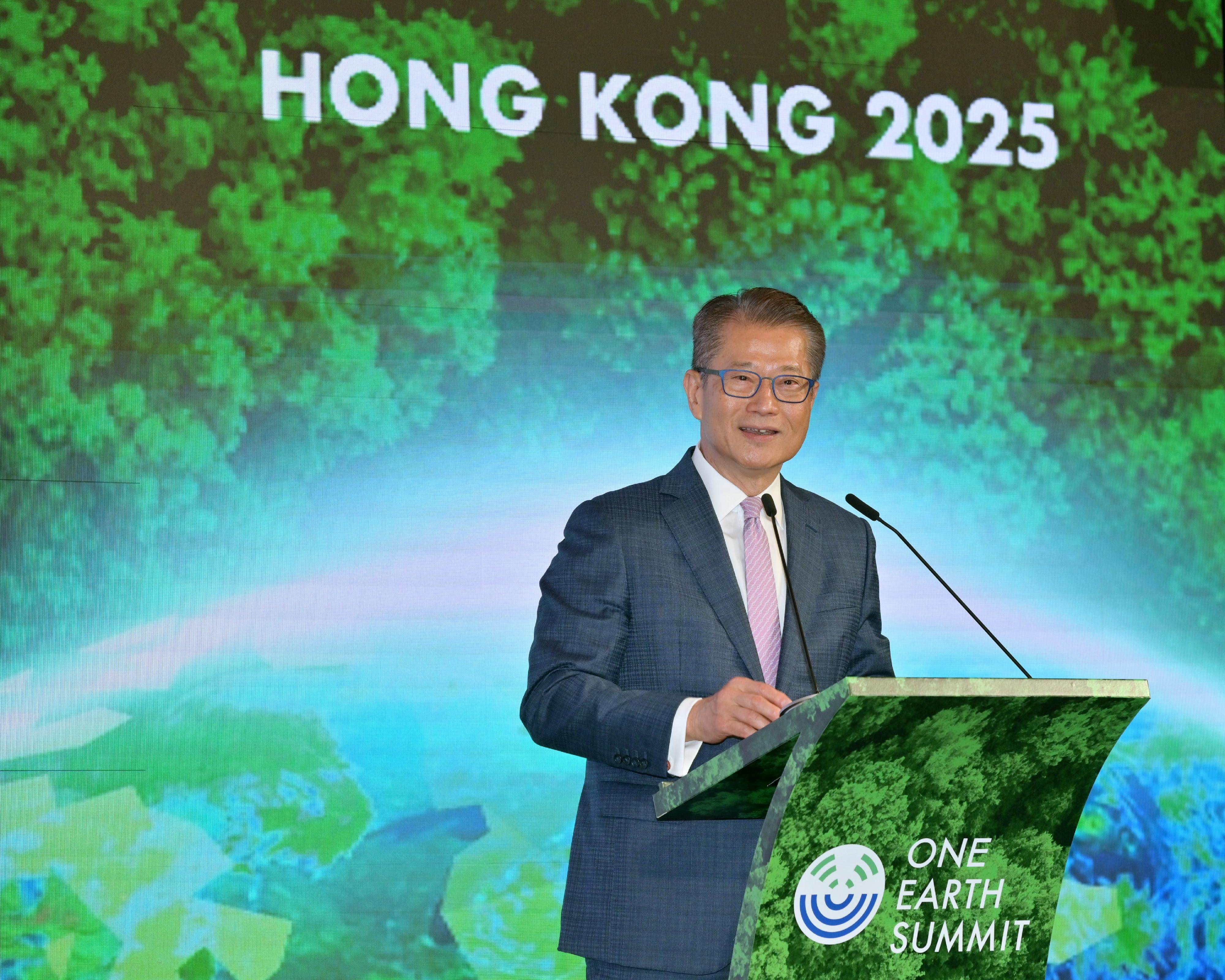
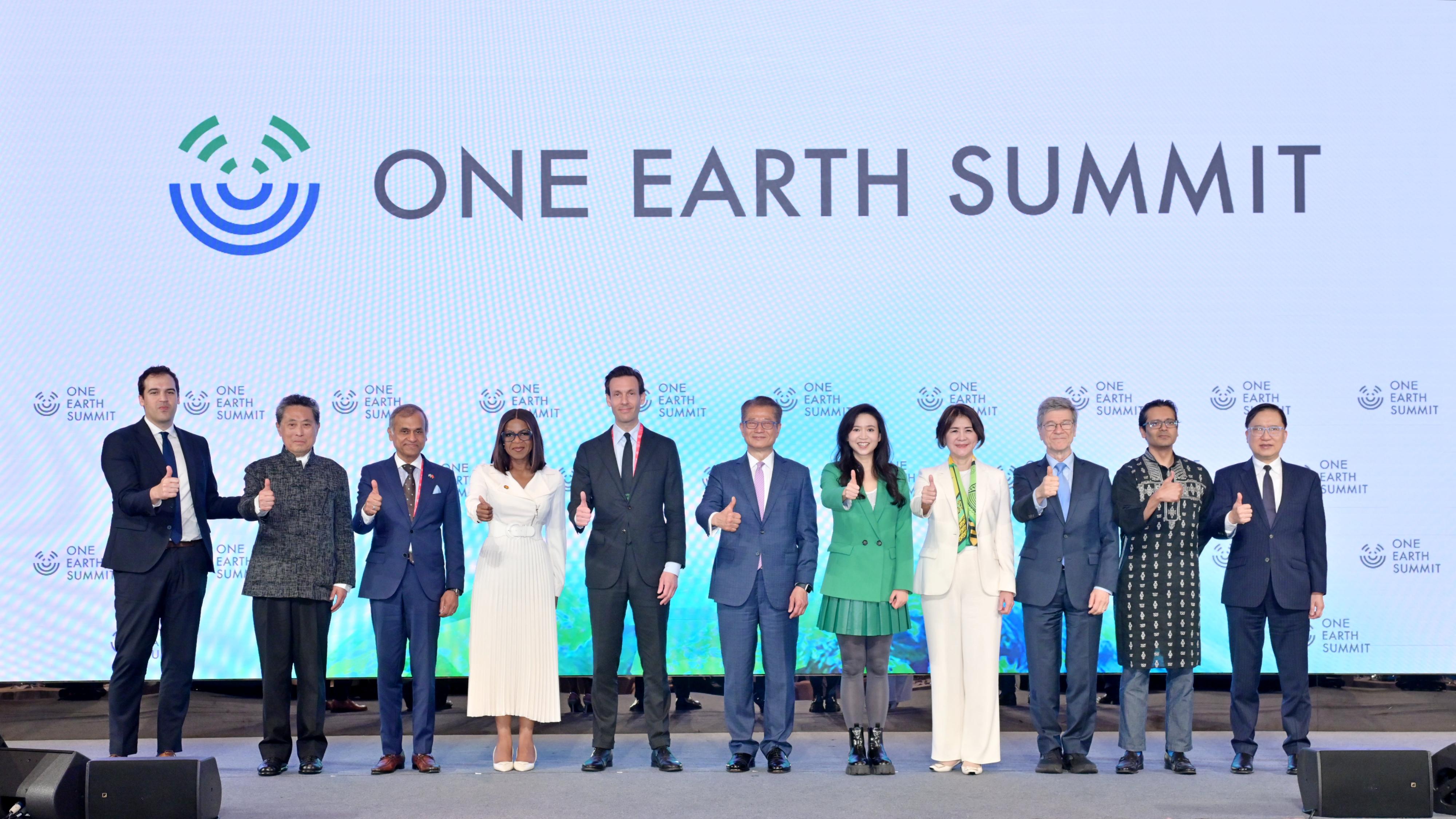
Photo  Photo  


Appointments to Employees Retraining Board announced

  The Government announced today (March 28) the appointment of Professor Simon Wong Kit-lung and Professor Chetwyn Chan Che-hin as the new Chairman and Vice-Chairman respectively of the Employees Retraining Board (ERB), the appointment of four new members, as well as the reappointment of seven incumbent members, for a term of two years with effect from April 1, 2025.
  
  The four new members are Dr Wong Chung-kiu, Mr So Pak-tsan, Mr Lawrence Hung Yu-yun and Ms Ngan Ming-sau.
 
  Professor Wong has been serving the ERB since 2018 and was appointed as Vice-Chairman in 2019. Professor Wong is an outstanding business leader with extensive experience in advisory and statutory bodies.
 
  The seven reappointed members are Ms Lam Kwan, Ms Alice Wong Nga-lai, Mr Harold Wong Tsu-hing, Mr Lam Tin-fu, Ms Lui Kit-han, Mr Tam Chi-chung and Ms Jenny Chiu Wai-han.
 
  The Secretary for Labour and Welfare, Mr Chris Sun, welcomed the appointments. "The ERB is undertaking comprehensive reforms. I am fully confident that under the exemplary leadership of Professor Wong and with the dedicated support of the Vice-Chairman and all members, the ERB will be capable of implementing reforms to enhance the training, upskilling and re-skilling of the local labour force, promote lifelong learning for all, with a view to addressing the manpower needs arising from future economic and industry development," Mr Sun said.
 
  Mr Sun also thanked the outgoing Chairman, Mr Yu Pang-chun, and members, Dr Johnny Ng Kit-chong, Mr Li Wing-foo and Ms Margaret Cheng Wai-ching, for their contribution to the ERB during their tenure of service. He paid special tribute to Mr Yu. "Mr Yu has been serving the ERB since 2009 and was appointed as Chairman in 2019. Under his exemplary leadership, the ERB implemented various new measures and programmes in response to the emerging economy and market needs, enhanced the competitiveness of the local labour force and completed a comprehensive review last year. These actions have laid a strong foundation for the reforms and long-term development of the ERB. I would like to extend my gratitude for his dedicated service to the ERB for over a decade," he said.
 
  The ERB is a statutory body established in 1992 under the Employees Retraining Ordinance (Cap. 423) to provide comprehensive and diversified training and retraining services for the local labour force. The composition of its membership, comprising representatives of employers and employees, and persons connected with vocational training and retraining or manpower planning, is specified in the law.
 
  The membership list of the ERB in the new term is as follows:
 
Chairman
———-
Professor Simon Wong Kit-lung
 
Vice-Chairman
—————-
Professor Chetwyn Chan Che-hin
 
Representatives of employers
——————————–
Ms Lam Kwan
Ms Alice Wong Nga-lai
Mr Harold Wong Tsu-hing
Dr Wong Chung-kiu
 
Representatives of employees
———————————
Mr Lam Tin-fu
Ms Lui Kit-han
Mr Tam Chi-chung
Mr So Pak-tsan
 
Persons connected with vocational training and retraining or manpower planning
——————————————————————————————
Ms Jenny Chiu Wai-han
Mr Lawrence Hung Yu-yun
Ms Ngan Ming-sau
Executive Director of Vocational Training Council
 
Public officers
—————-
Permanent Secretary for Labour and Welfare
Commissioner for Labour


Cases of making ex gratia payments from Protection of Wages on Insolvency Fund gazetted

     â€‹The Commissioner for Labour today (March 28) gave notices in the Gazette under section 16(1A) and/or section 18(2) of the Protection of Wages on Insolvency Ordinance (Chapter 380) for cases with ex gratia payments from the Protection of Wages on Insolvency Fund made to employees. 
      
     For details of the notices, please refer to Government Notice Numbers from 1862 to 1904 on the website of the eGazette of the Government Logistics Department.