Continued decline in new HIV cases in 2024 reflects success of prevention and control efforts in Hong Kong (with photo)
The Department of Health (DH) today (April 3) summarised the situation of Human Immunodeficiency Virus (HIV) infection and released the findings of a survey on HIV and sexually transmitted infections (STIs) among female sex workers (FSWs) in Hong Kong in 2024. The decline in the number of new cases of HIV infection in Hong Kong for the ninth consecutive year and a prevalence rate well below the global average reflected the success of Hong Kong's prevention and control efforts. However, due to the high proportion of late presentation, the DH encouraged the public to undergo HIV antibody testing, and to use condoms regularly and correctly to minimise the risk of HIV infection.
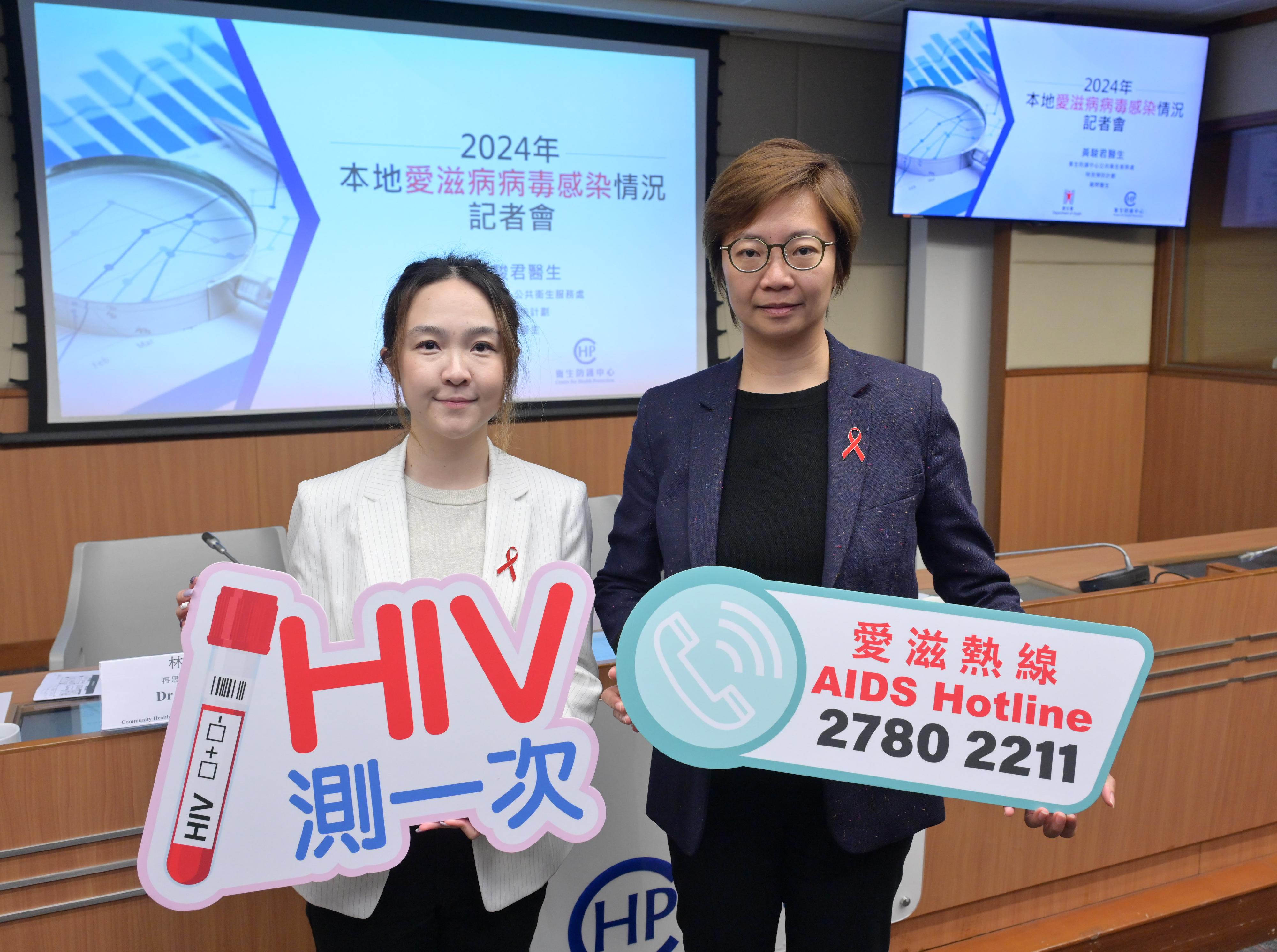
"In the year of 2024, the DH received 365 new HIV cases, including 297 males and 68 females aged between 14 and 89. Among the cases with a reported route of transmission, 312 cases (99 per cent) acquired the infection through sexual contact, including 216 through homosexual or bisexual contact and 96 through heterosexual contact. Almost half of the cases (44 per cent) were reported by public hospitals, clinics, and laboratories, followed by Acquired Immuodeficiency Syndrome (AIDS) service organisations. The cumulative total of locally reported HIV infections since 1984 is 12 403. The prevalence of HIV infection among the general public in Hong Kong remained at 0.1 per cent, well below the global average, demonstrating the effectiveness of AIDS control and prevention in Hong Kong," said the Consultant (Special Preventive Programme) of the Public Health Services Branch of the Centre for Health Protection of the DH, Dr Bonnie Wong.
"A total of 74 new AIDS cases, including 63 males and 11 females, were reported during the same period. Since 1985, a cumulative total of 2 557 confirmed AIDS cases has been reported in Hong Kong. The most common AIDS-defining illness was Pneumocystis pneumonia," she added.
Although the number of new HIV infection has declined for nine consecutive years since 2015, the proportion of late presenters among newly reported cases in Hong Kong has been as high as 40 to 50 per cent, with a higher proportion of late presenters among those not belonging to high-risk populations, such as men who have sex with men, people who inject drugs and sex workers.
Late presenters refer to individuals with a very low CD4 cells (one kind of immune cell) count (less than 200 cells/mm3) or those who have already progressed to AIDS at the time of HIV diagnosis. Late presentation indicates that these individuals were not diagnosed and put on treatment in a timely manner at an earlier stage of infection, resulting in a weakened immune system. Late presentation can lead to an increased risk of opportunistic infections and malignancies, leading to a higher mortality rate. In addition, as a result of an unsuppressed viral load, late presenters contribute to an increased risk of HIV transmission in the community.
In addition, the DH has recently completed a community survey related to transmission risk of HIV and STIs, titled "HIV/AIDS Response Indicator Survey 2024 for Female Sex Workers" (HARiS 2024 for FSWs).
"The survey is a public health surveillance programme conducted by the DH to regularly monitor the situation of HIV infection and the related risk behaviours among female sex workers to guide the implementation of the Recommended HIV/AIDS Strategies for Hong Kong (2022-2027). The survey revealed that the proportion of respondents who had their last HIV test in the preceding year increased from 37 per cent in a similar survey in 2022 to 55 per cent, reflecting the effectiveness of HIV prevention interventions. Since the Strategies' target of 80 per cent has not been achieved, prevention efforts should continue. The survey also revealed that condom use among respondents was generally satisfactory, with 99 per cent of respondents using condoms when having sex with non-regular clients. However, condom use when having sex with regular clients was less consistent among some respondents, indicating the need to strengthen the condom promotion programme," Dr Wong said.
She reminded members of the public to use condoms consistently and properly to reduce the risk of acquiring HIV and STIs. In addition, vulnerable populations at higher risk of contracting HIV and STIs (including men who have sex with men, FSWs and their clients and injecting drug users) should undergo HIV and STI testing regularly, at least once a year. People with HIV should seek specialist care and HIV treatment as soon as possible for viral suppression and health restoration. The DH will continue to collaborate with various non-governmental organisations (NGOs) to raise awareness and knowledge among FSWs on HIV and STI prevention.
There are community resources available that enable members of the public to undergo HIV antibody testing. Members of the public can reserve a free, anonymous and confidential HIV antibody test by visiting the HIV Testing Service website or calling the AIDS Hotline (2780 2211). They can also order HIV self-test kits (oral fluid-based and blood-based (finger prick) testing kits) on the HIV Testing Service website, and collect the self-test kits at various pick-up locations in Hong Kong.
​Dr Wong stressed that HIV infection is a manageable chronic disease. Early HIV treatment with antiretroviral drugs can effectively prevent the progression to AIDS and other complications. Lifelong antiretroviral treatment is indicated for all people with HIV, and the treatment remarkably improves their health and possibility of survival. Moreover, those who achieve sustained viral suppression to an undetectable level with treatment will not transmit the virus through sex, i.e. Undetectable = Untransmittable (U=U).
The public may visit the following pages for more information on HIV/AIDS: the Virtual AIDS Office, the Red Ribbon Centre, the HIV Testing Service website and the Gay Men HIV Information website.