CHP investigates two cases of severe paediatric COVID-19 infection

     The Centre for Health Protection (CHP) of the Department of Health today (May 12) received reports of two cases of severe paediatric COVID-19 infection and reminded the public the overall activity of COVID-19 in the local community has continued to rise. High-risk individuals should receive a COVID-19 vaccination as soon as possible and receive booster doses at appropriate times to minimise the risk of serious complications and death after infection.

     The first case involves a 17-month-old girl with good past health, who developed fever and cough since May 9. She attended Queen Mary Hospital yesterday (May 11) and was admitted to the paediatric intensive care unit for treatment. Her respiratory specimen tested positive for the SARS-CoV-2 virus, adenovirus and rhinovirus upon laboratory testing. The clinical diagnosis was COVID-19, adenovirus and rhinovirus co-infection complicated with croup. She remains hospitalised and is in critical condition.

     A preliminary investigation revealed that the 17-month-old patient had not received COVID-19 vaccine and had no travel history during the incubation period. Two of her household contacts were symptomatic and tested positive for COVID-19 by rapid antigen tests. Both of them had recovered.

     The second case involves a 13-year-old girl with underlying illness, who developed shortness of breath on May 9. She attended Queen Mary Hospital on the same day and was admitted to the paediatric intensive care unit for treatment. Her respiratory specimen tested positive for the SARS-CoV-2 virus upon laboratory testing. The clinical diagnosis was COVID-19 infection complicated with pneumonia. She remains hospitalised and is in serious condition.

     A preliminary investigation revealed that the 13-year-old patient had completed the initial doses of the COVID-19 vaccine and had no travel history during the incubation period. Two of her household contacts had presented with respiratory symptoms and tested positive for COVID-19 by rapid antigen tests.

     The overall activity of COVID-19 in the local community has continued to rise since mid-March of this year. According to the latest surveillance data as of the week ending May 3, the viral load of the SARS-CoV-2 virus from sewage surveillance, the test positivity rate and the average consultation rate of COVID-19 cases in general out-patient clinics have continued to rise over the past four weeks. In particular, the percentage of respiratory samples testing positive for the SARS-CoV-2 virus increased to 11.42 per cent from 5.09 per cent four weeks ago (the week of March 30 to April 5), a record high in the past year. The viral load per capita of the SARS-CoV-2 virus was around 690,000 copy/litre, significantly increased from 370,000 copy/litre four weeks ago. Furthermore, sewage surveillance data showed an increasing trend in the local prevalence of XDV. As XDV is a JN.1-related variant, the COVID-19 vaccines currently used in Hong Kong are still effective in preventing it. Latest information does not suggest XDV will cause a more severe disease than JN.1.

    The CHP reminded the public who have not received the initial dose of the COVID-19 vaccine (including infants and children) that they should get vaccinated as soon as possible. Those at high risk (particularly the elderly and persons with underlying comorbidities) should receive a booster dose as soon as possible for effective prevention against COVID-19 to minimise the risk of serious complications and death after infection.

     Apart from vaccination, in order to prevent COVID-19, influenza, and other respiratory illnesses as well as transmission in the community, the public should maintain strict personal and environmental hygiene at all times and note the following:
      

  • Patients can wear surgical masks to prevent transmission of respiratory viruses. Therefore, it is essential for persons who are symptomatic (even if having mild symptoms) to wear a surgical mask;
  • High-risk persons (e.g. persons with underlying medical conditions or persons who are immunocompromised) should wear surgical masks when visiting public places. The general public should also wear a surgical mask when taking public transport or staying in crowded places. It is important to wear a mask properly, including performing hand hygiene before wearing and after removing a mask;
  • Avoid touching one's eyes, mouth and nose;
  • Practise hand hygiene frequently, wash hands with liquid soap and water properly whenever possibly contaminated;
  • When hands are not visibly soiled, clean them with 70 to 80 per cent alcohol-based handrub;
  • Cover the mouth and nose with tissue paper when sneezing or coughing. Dispose of soiled tissue paper properly into a lidded rubbish bin, and wash hands thoroughly afterwards;
  • Maintain good indoor ventilation;
  • Avoid sharing personal items;
  • When having respiratory symptoms, wear a surgical mask, consider refraining from going to work or school, avoid going to crowded places and seek medical advice promptly; and
  • Maintain a balanced diet, perform physical activity regularly, take adequate rest, do not smoke and avoid overstress.

     For more information on the COVID-19 Vaccination Programme and the latest recommendations on vaccine use, please refer to the CHP's website.


CFS and Department of Food Safety Sampling and Monitoring of State Administration for Market Regulation sign MOU on food safety co-operation (with photo)

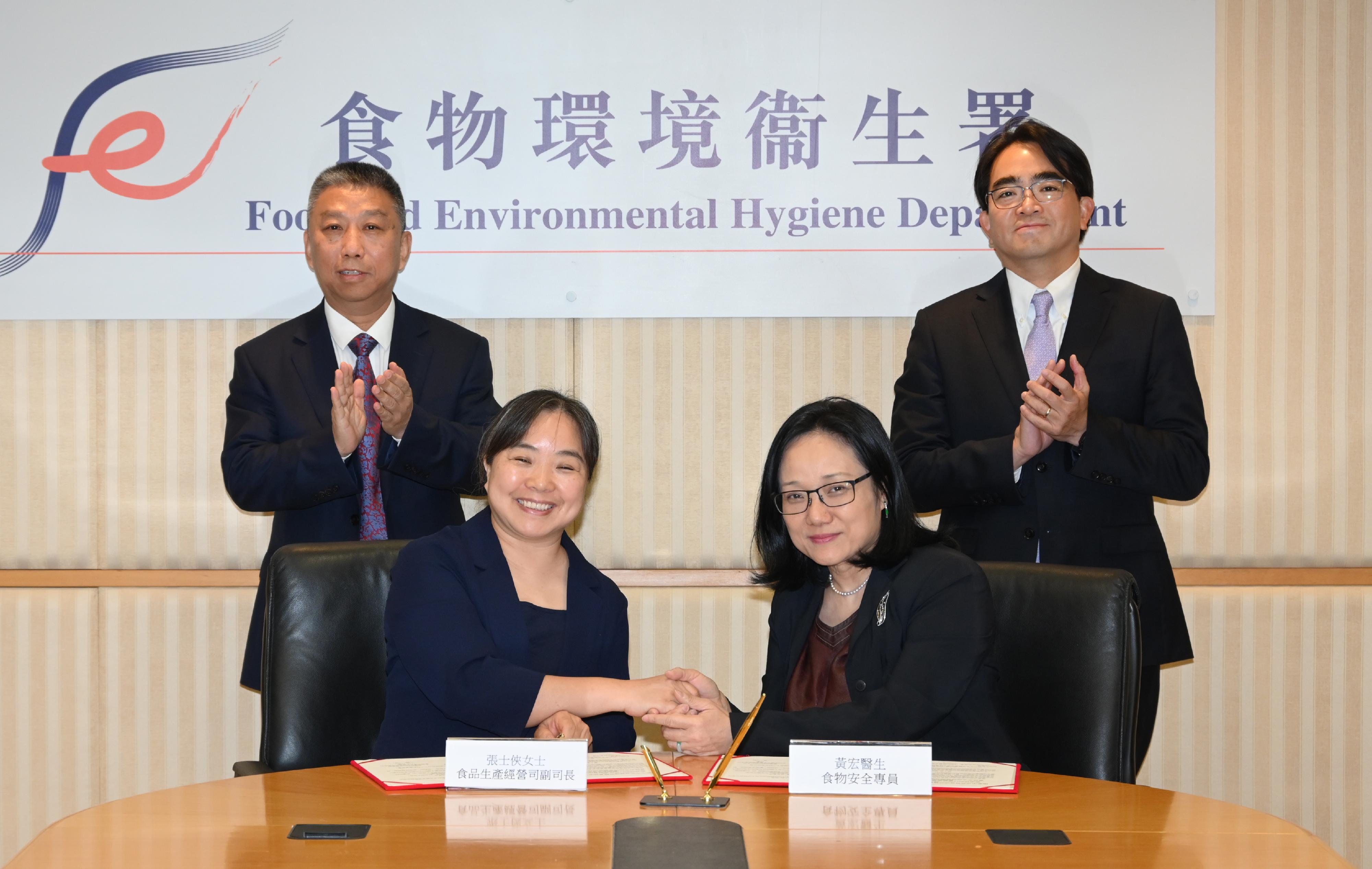
     The Centre for Food Safety (CFS) of the Food and Environmental Hygiene Department of the Government of the Hong Kong Special Administrative Region and the Department of Food Safety Sampling and Monitoring of the State Administration for Market Regulation (SAMR) signed a Memorandum of Understanding (MOU) on food safety co-operation today (May 12). The MOU aims to strengthen the exchanges on food sampling and surveillance, and enhance the co-operation in the field of food safety between the Mainland and Hong Kong.

     The MOU was signed by the Controller of the CFS, Dr Christine Wong, and the Deputy Director General of the Department of Food Production and Operation Safety Regulation of the SAMR, Ms Zhang Shixia. It was witnessed by the Director of Food and Environmental Hygiene, Mr Donald Ng, and the Chief Inspector of Food Safety of the SAMR, Mr Sun Huichuan.

     The MOU seeks to deepen the exchanges and co-operation between the Mainland and Hong Kong on food safety. Specifically, the MOU covers enhancing the exchanges of information related to food safety sampling and monitoring; discussing co-operation in the fields of food safety risk alert and risk communication; and establishing a mechanism to exchange views on important issues of common concern.

     â€‹A spokesman for the CFS said, "We expect that the signing of the MOU can enhance communication on food safety between the Mainland and Hong Kong to better ensure public food safety."

Photo  


SLW attends Seventh APEC HRDMM in Jeju, Korea

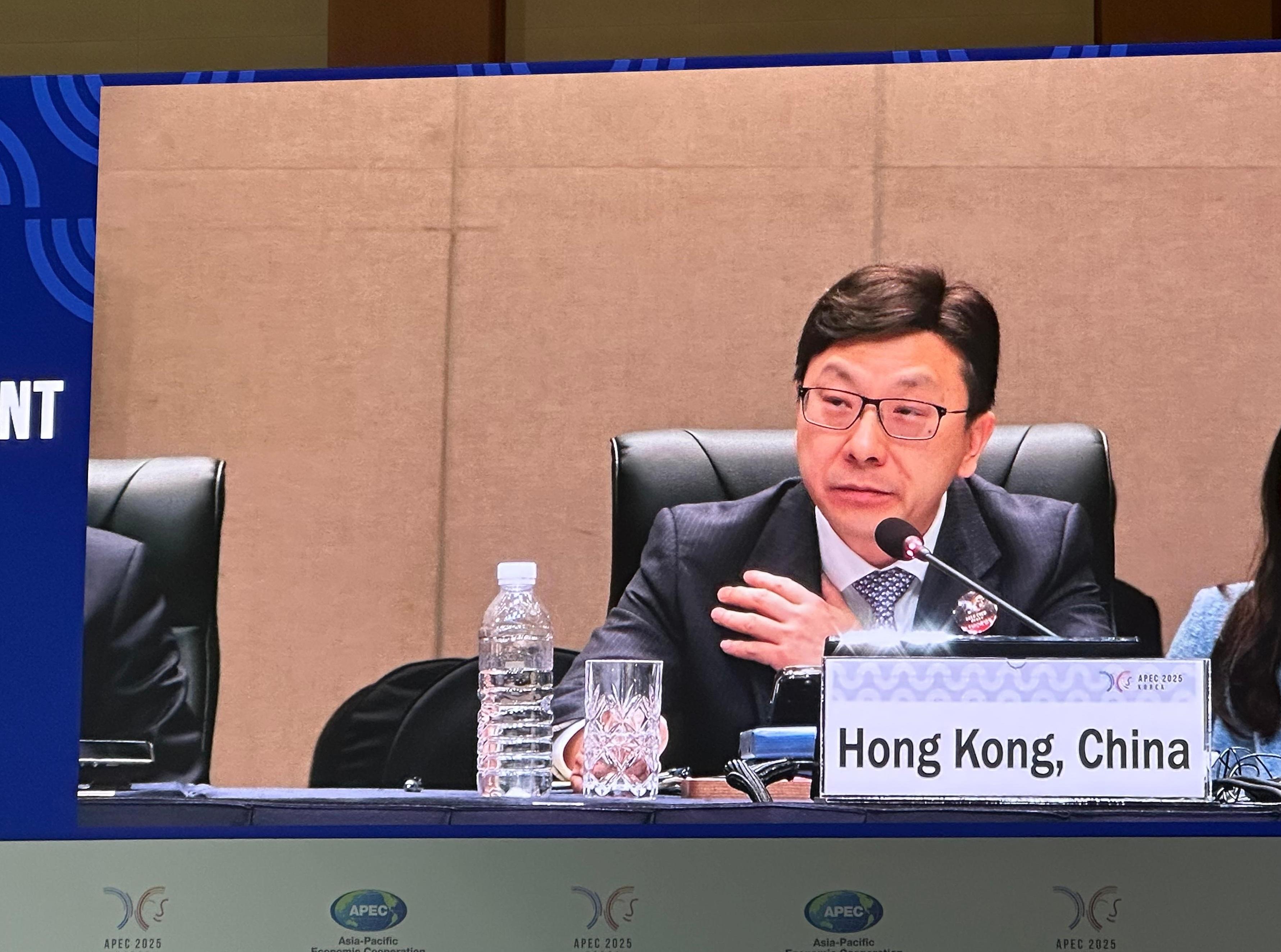
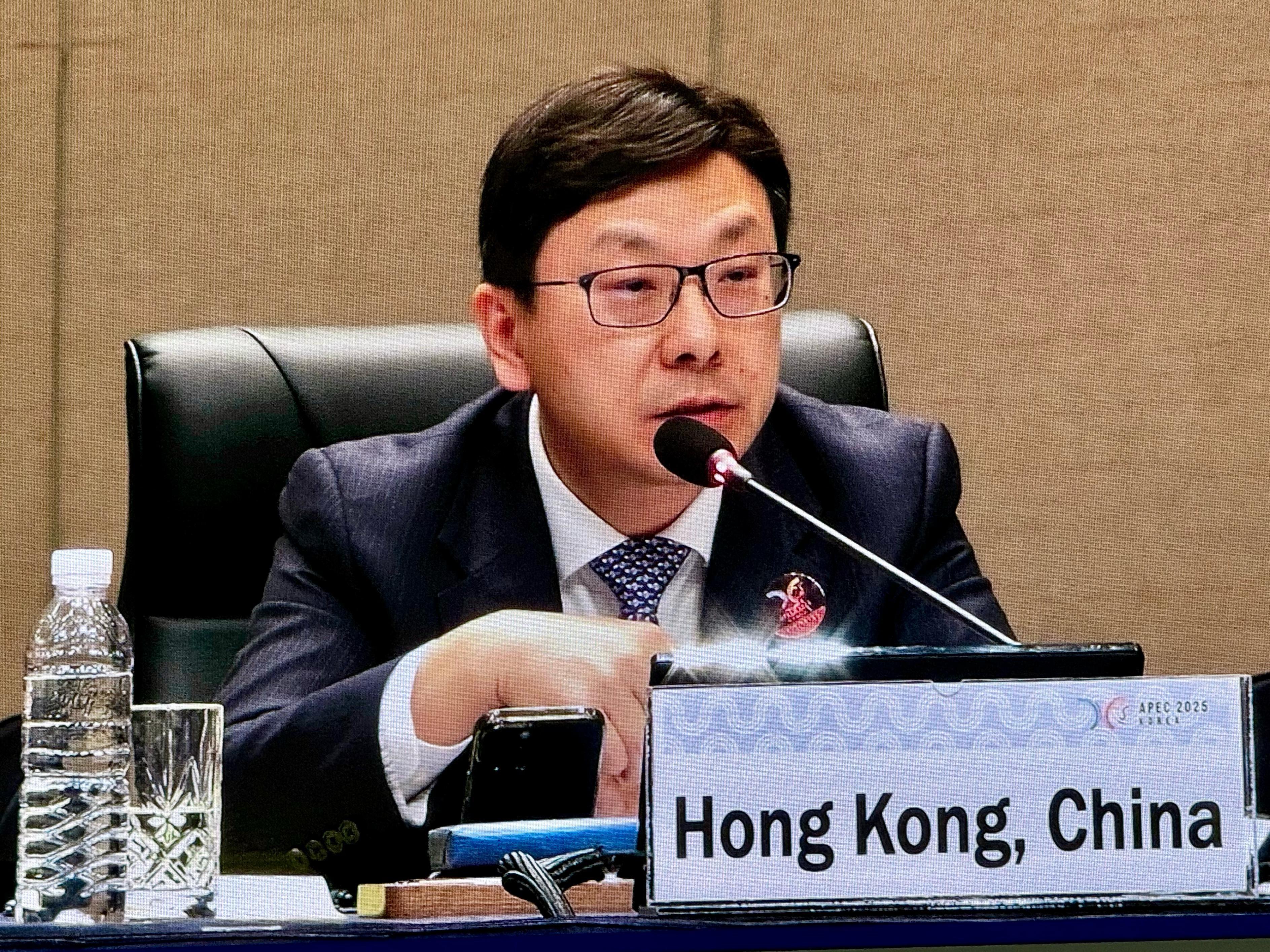
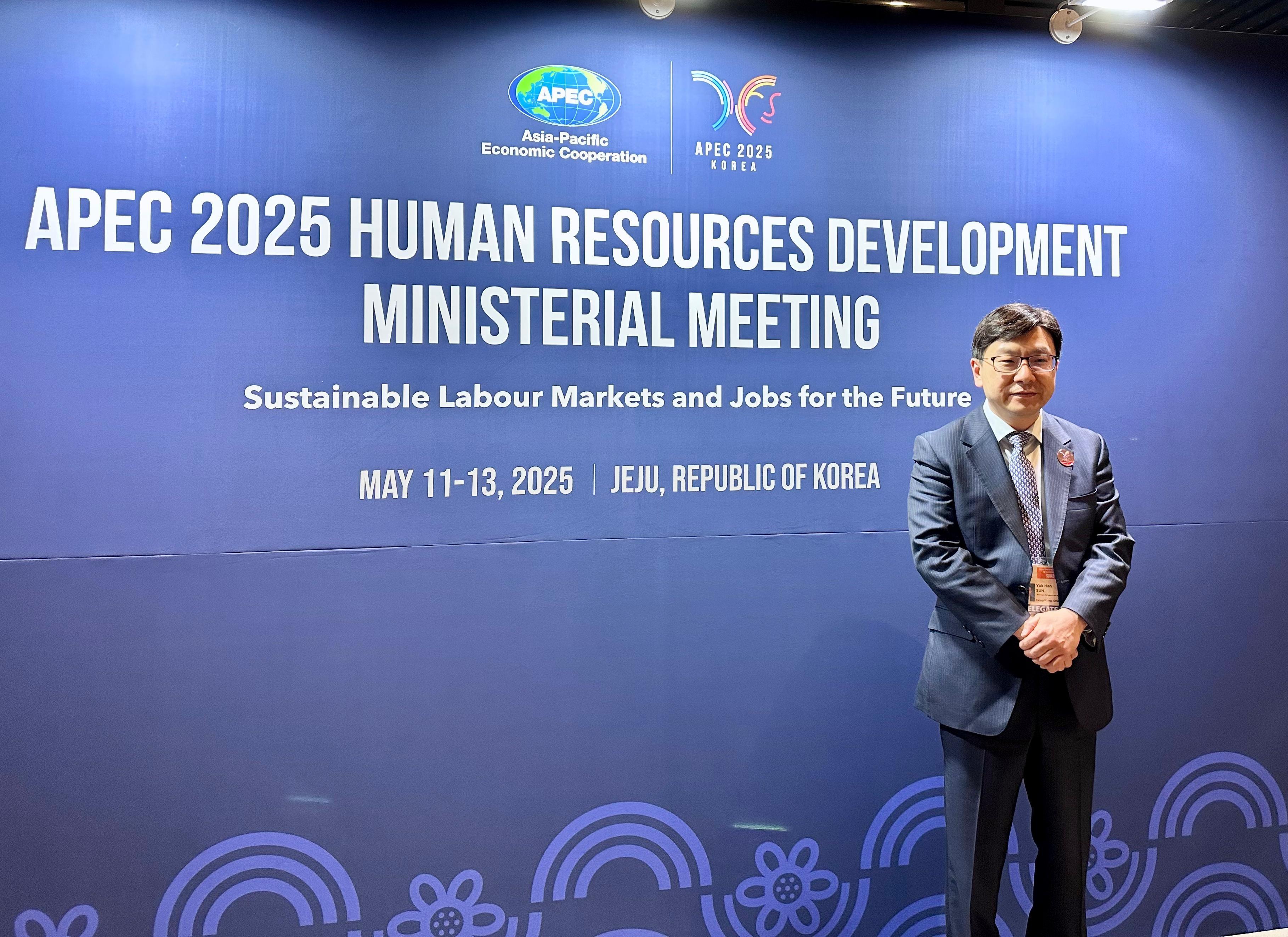
     The Secretary for Labour and Welfare, Mr Chris Sun, attended the Seventh Asia-Pacific Economic Cooperation Human Resources Development Ministerial Meeting (HRDMM) in Jeju, Korea, today (May 12), during which he delivered speeches at two plenaries.
 
     With the theme "Sustainable Labour Markets and Jobs for the Future", the HRDMM aimed to promote a flexible, inclusive, and resilient labour market to further the collective commitment to labour market reforms that support today's workforce. It consisted of two plenaries with the morning plenary themed "Flexible and Vibrant Labour Market". Delivering his keynote speech, Mr Sun said that to address the challenges posed by the emergence of the platform economy, the Hong Kong Special Administrative Region (SAR) Government has long been committed to protecting platform workers, including the exploration of feasible measures for strengthening the protection for platform workers through a liaison group comprising representatives of the Government, platform companies and labour organisations. According to the Thematic Household Survey conducted by the SAR Government, platform workers are most concerned about work injury compensation. The SAR Government will introduce a proposal within this year on ways to further enhance the rights and benefits of platform workers and will initiate relevant legislative exercises when necessary. Furthermore, he also introduced to participants the various initiatives implemented by the SAR Government to unleash the potential of the labour force amid the evolving landscape of employment, including the well-received Re-employment Allowance Pilot Scheme launched last year and the enhanced Employment Programme for the Elderly and Middle-aged.
 
     In the afternoon plenary themed "Responding to Future Jobs and Active Labour Market Policies", Mr Sun gave a presentation on the manpower policies and talent attraction measures of the SAR Government. He stressed that the main thrust of the SAR Government's manpower policy is to nurture local talent, complemented by the attraction of outside talent, to enrich the local talent pool for meeting the needs in social and economic developments. Mr Sun introduced the multipronged strategy of training and retraining, including the establishment of two universities of applied sciences, as well as enhancing employees' professional skills through the Vocational Training Council. Mr Sun also briefed the attendees on the array of measures rolled out by the SAR Government to attract talent proactively and aggressively. He also gave an account of how Hong Kong could leverage its unique advantages of enjoying the strong support of the motherland and being closely connected to the world, in order to better realise its role as an international hub for high-calibre talent.
 
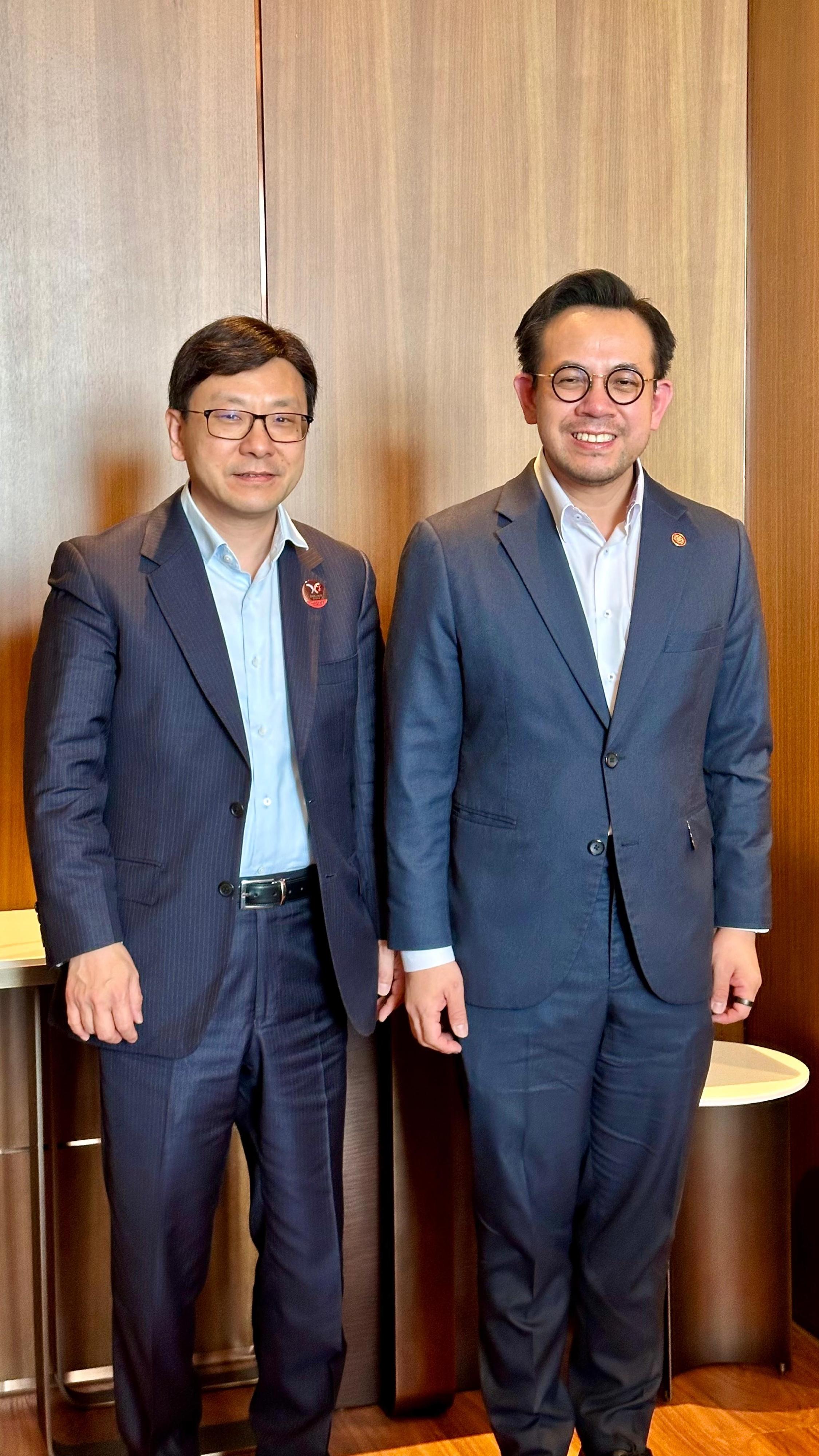
     Upon his arrival in Jeju yesterday (May 11), Mr Sun first called on the Minister of Human Resources of Malaysia, Mr Steven Sim, who was attending the HRDMM. Mr Sun said he is delighted to meet Mr Sim again after his visit to Kuala Lumpur in mid-April. During the meeting, the two sides exchanged views on issues including unleashing local workforce, enhancing occupational safety and health, improving the rights of platform workers, and ways to enhance vocational training and employee retraining with a view to alleviating manpower shortages.
 
     Afterwards, Mr Sun held a bilateral meeting with the Acting Minister of Employment and Labor, Republic of Korea, Mr Kim Min Seok, during which they had an in-depth discussion on matters including foreign domestic helpers and the importation of labour. At the meeting, Mr Sun briefed Mr Kim on the manpower shortage encountered by the SAR Government due to an ageing population, resulting in the need for Hong Kong to continue attracting outside talent and labour as appropriate in the future to fill the manpower and skills gaps.
 
     Mr Sun will conclude his visit tomorrow morning (May 13) and depart for Hong Kong.

Photo  Photo  Photo  Photo  


HB organises Construction Robots for Housing – RoboPaint Master Competition x Arena of Construction Robots to advance applications of construction technologies (with photos)

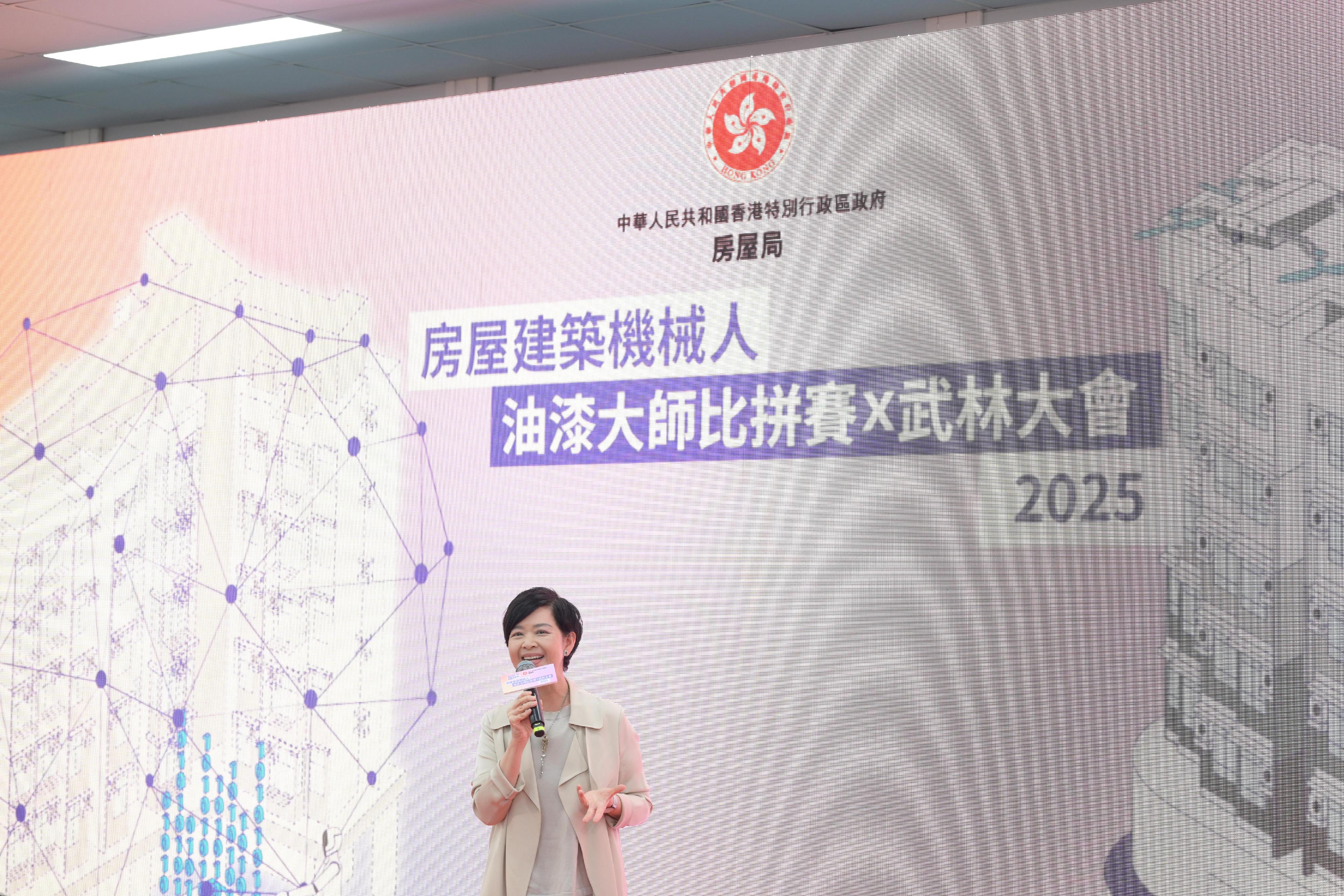
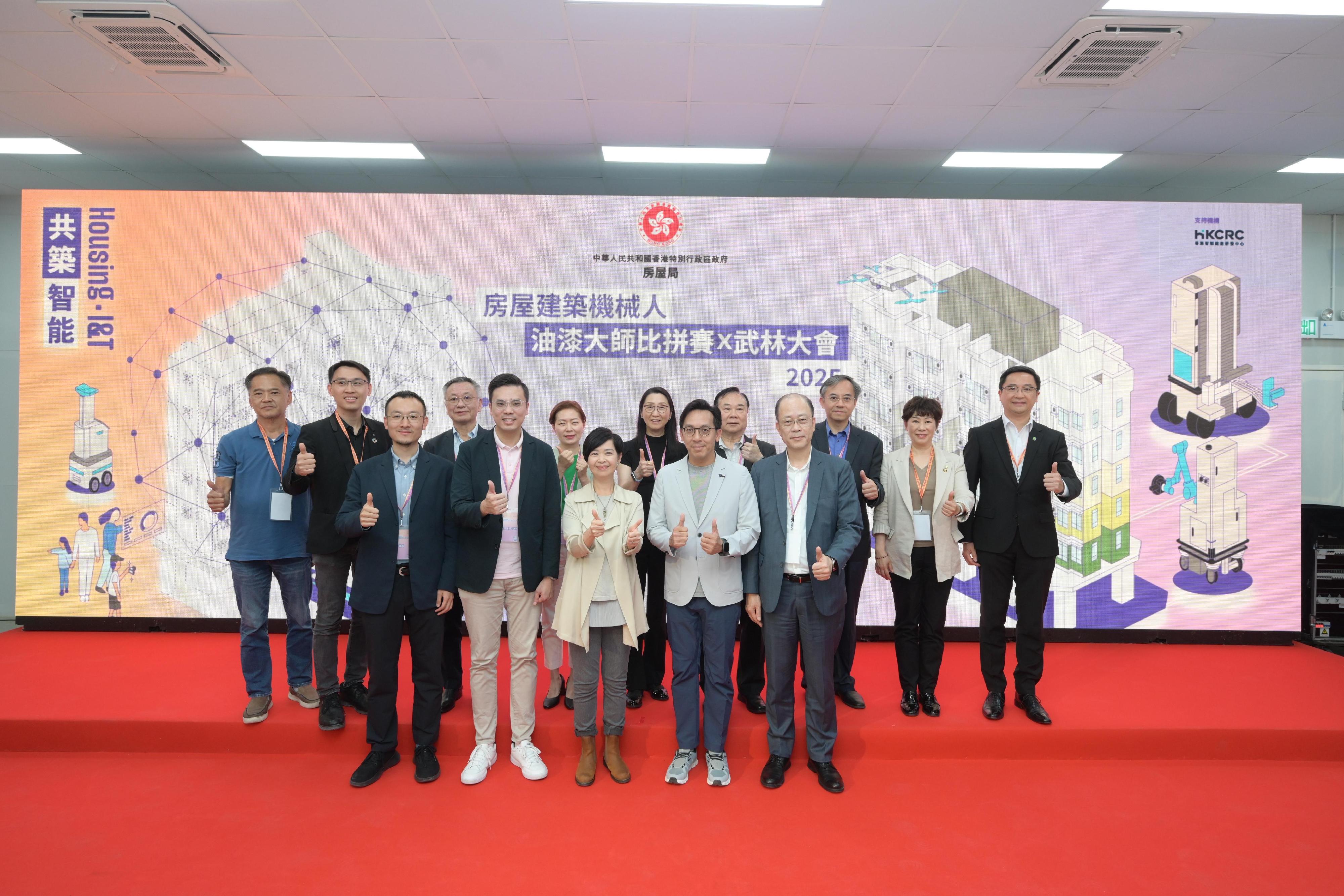
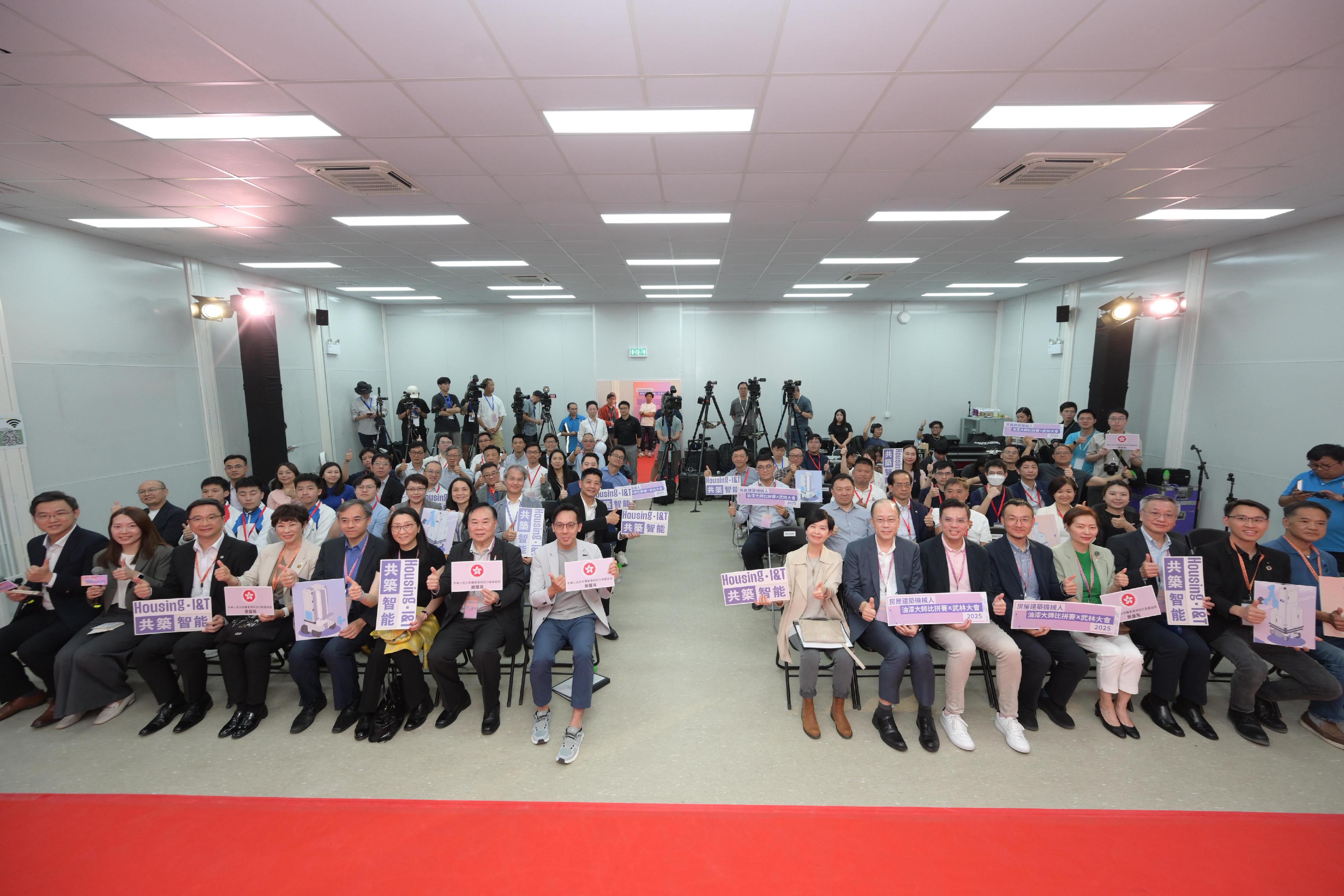
     The Housing Bureau (HB) organised the Construction Robots for Housing – RoboPaint Master Competition x Arena of Construction Robots today (May 12) to promote the adoption of industry technologies and advance public housing developments into a new era of smart construction.
 
     To expedite the speed and efficiency of increasing the public housing supply and address the challenge of an ageing workforce and construction manpower shortages, the HB and the Hong Kong Housing Authority (HKHA) are leveraging innovative construction technologies to boost productivity and improve safety. As part of the Housing•I&T initiative, the HB will host a series of events, including today's robotics competition, a housing construction robot design competition for secondary school students in September, and an international summit in November aimed at fostering the development of a construction technology market. The Construction Robots for Housing – RoboPaint Master Competition x Arena of Construction Robots is the first highlight of this initiative. The event provides the industry with a platform to test and demonstrate their technological products, allowing participants to fully explore and maximise the development potential of innovative construction technologies.
 
     A Mainland robotics company has already partnered with the Hong Kong University of Science and Technology to establish a joint research institute for a few years to promote and strengthen co-operation between the university and industry in the development of robotics technology. The HKHA anticipates that the use of robotics will gradually become more prevalent, and has thus incorporated requirements for such use in its tender documents. By leveraging the stable and substantial volume of public housing projects and diverse application areas, the HKHA aims to attract Mainland robotics companies to progressively deploy their technologies in public housing initiatives. Acting as a "super connector" and a "super value-adder", the HKHA actively seeks and validates tailored robotics solutions that meet industry needs while promoting successful cases to the sector. As a result, several robotics companies subsequently have decided to expand their business operations in Hong Kong, using it as a springboard to enter markets in Singapore, the Middle East and Europe. It is believed that the establishment of more innovation and technology (I&T) enterprises in Hong Kong will further drive the vibrant development of the city's I&T ecosystem.
 
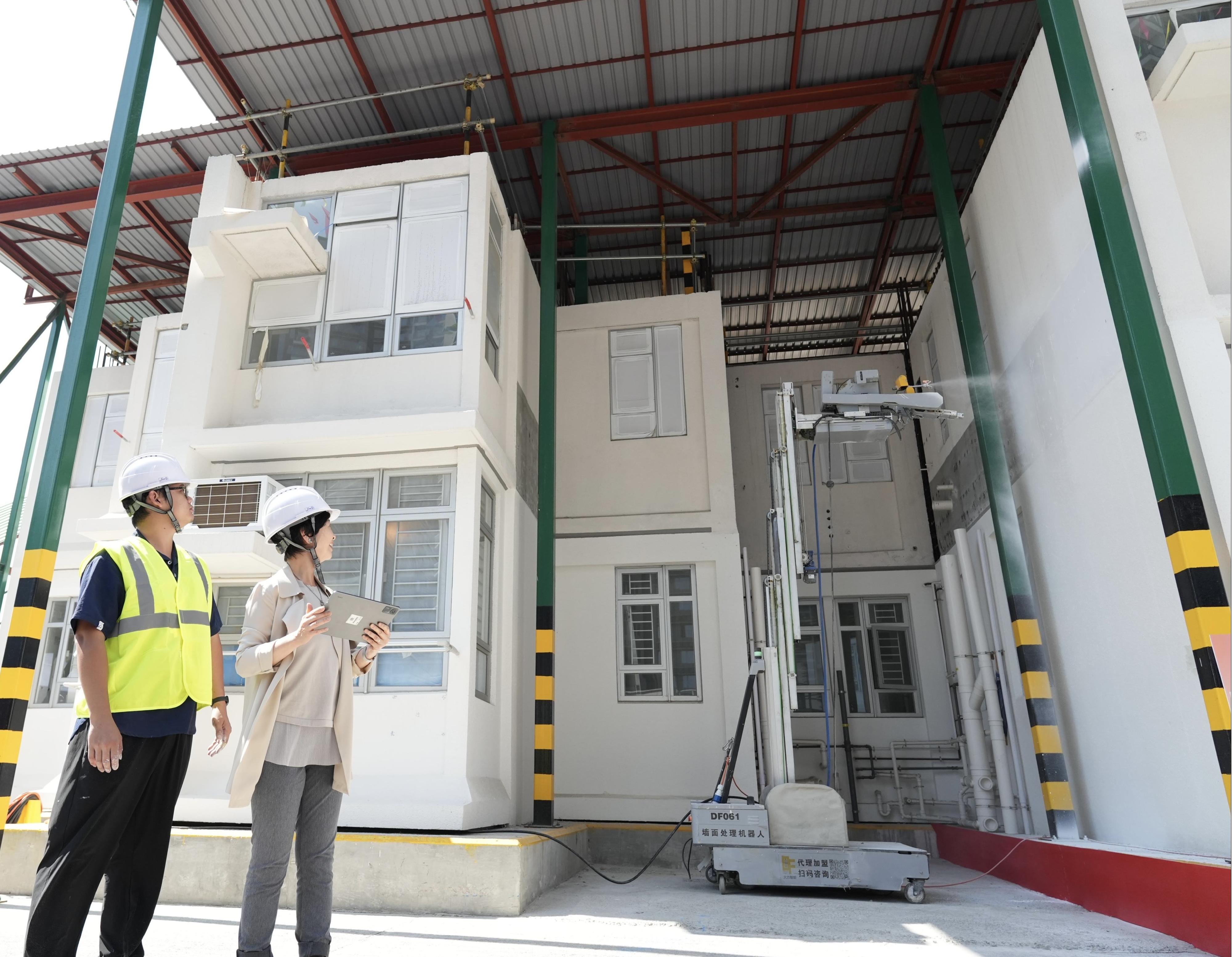
     At the event's opening ceremony, the Secretary for Housing, Ms Winnie Ho, said, "According to the indicators for specific tasks as in the Chief Executive's 2024 Policy Address on construction robots, the HKHA will specify in tender documents the construction processes where robots can be employed to enhance site safety and construction efficiency. The highlight of today's event is the painting robots participating in the Construction Robots for Housing – RoboPaint Master Competition. The application of construction robots not only boosts productivity and quality but also creates a safer and healthier working environment for frontline workers. This advancement elevates the technological standards and professional image of the industry, making it more appealing to young professionals. A recent case of a public housing project demonstrates that collaborative painting robot systems can enhance the efficiency of indoor painting works by over 50 per cent and improve works quality. For instance, in a public housing project with a standard floor comprising 24 units, traditional methods require eight skilled workers for wall finishing, while only two operators are needed when using a robotics system."
 
     In addition to contractual requirements, the HKHA will continue to expand the scope of subsidies available for contractors adopting construction robots through the Government's Construction Innovation and Technology Fund. This two-pronged strategy will encourage the industry to widely adopt innovative technologies and establish a new "human-machine collaborative housing construction model".
 
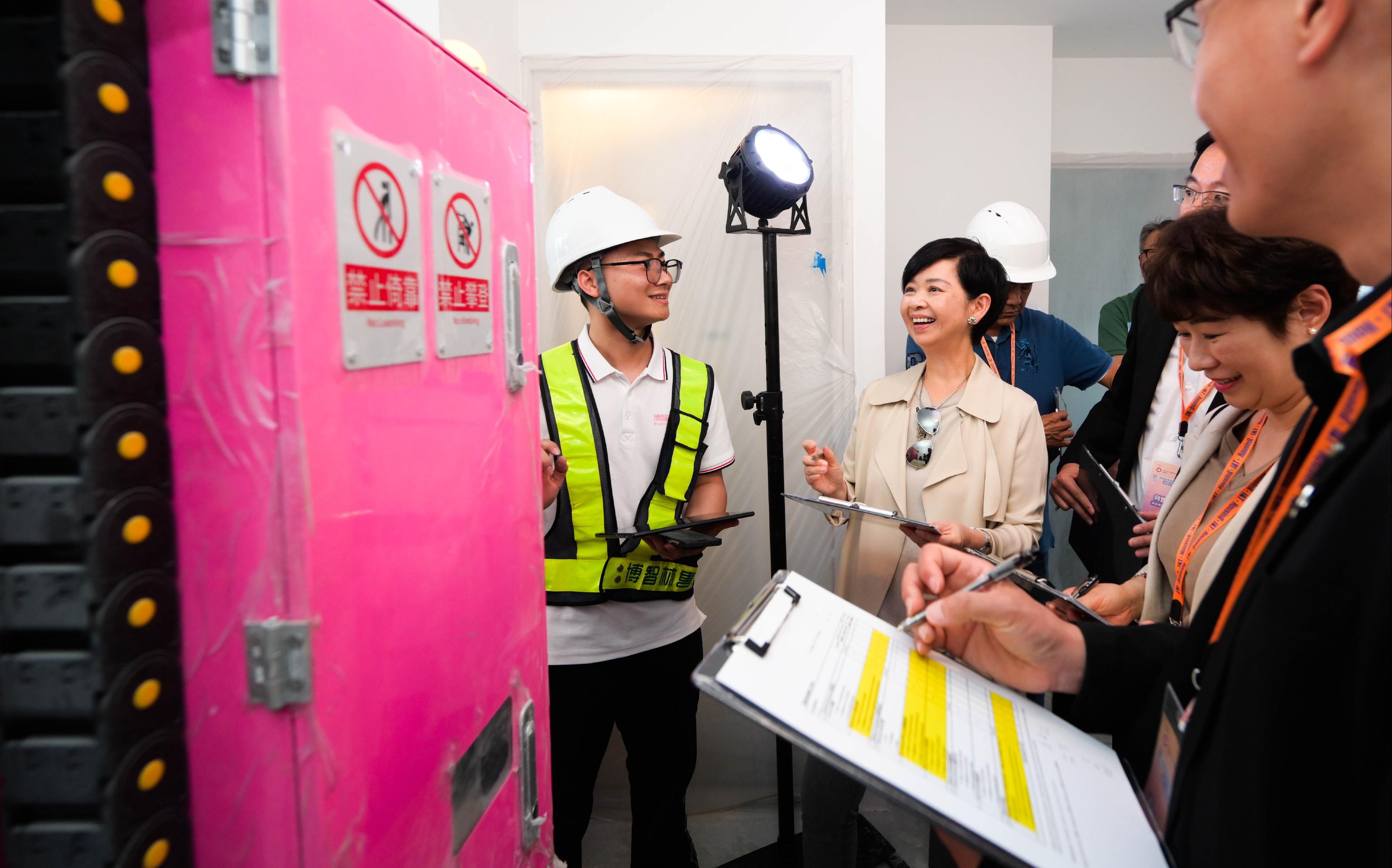
     The robots participating in today's Construction Robots for Housing – RoboPaint Master Competition were evaluated by a jury panel, comprising Ms Ho and representatives from the Hong Kong Institution of Engineers, the Hong Kong Institute of Architects, the Construction Industry Council and industry experts. The judging criteria encompassed technical performance, efficiency and productivity, quality of painting and safety.
 
    The results of the Construction Robots for Housing – RoboPaint Master Competition are as follows:
Grand Award: Bright Dream (HK) Construction Technology Limited, Weibuild Technology HK Limited
1st Runner-up: Fangshi Technology Company Limited, Fulltime Robotics Company Limited
2nd Runner-up: HONGKONG DAFANG AI CO., LIMITED
 
     The Construction Robots for Housing – Arena of Construction Robots showcased six types of robots with potential applications in public housing construction. These included a rebar-tying robot, a floor-tiling robot, a steel frame-cutting robot, a six-metre tall three-in-one wall-painting robot, a concrete internal wall-grinding robot and an autonomous small unmanned aircraft for scanning. Live demonstrations of these robots provided contractors with insights into the latest developments in innovative construction technologies, encouraging broader industry adoption and further advancing the sector's development.
 
     Currently, construction robotics systems have been implemented in over 20 public housing development projects, with an additional 30 projects expected to follow by 2027.

Photo  Photo  Photo  Photo  Photo  


Temporary suspension of “iAM Smart” services during system upgrade

     The Digital Policy Office announced today (May 12) that in order to facilitate the introduction of more new functions, the "iAM Smart" services will be temporarily suspended from 2am on May 14 (Wednesday) to perform a system upgrade. "iAM Smart" services are expected to resume by 5am on the same day. Please visit the "iAM Smart" thematic website (www.iamsmart.gov.hk) for the latest service arrangements.
 
     If necessary, users are advised to make advance arrangements for the online services.