Speech by CS at Reception Celebrating the 2nd Anniversary of Karolinska Institutet Ming Wai Lau Centre for Reparative Medicine (English only)

     Following is the speech by the Chief Secretary for Administration, Mr Matthew Cheung Kin-chung, at the Reception Celebrating the 2nd Anniversary of Karolinska Institutet Ming Wai Lau Centre for Reparative Medicine today (November 20):

Mr Ladeborn (Deputy Consul General of Sweden in Hong Kong, Mr Joakim Ladeborn), Professor Ceccatelli (Director of the Karolinska Institutet Ming Wai Lau Centre for Reparative Medicine, Professor Sandra Ceccatelli), Professor Li (Director of the Hong Kong node of the Karolinska Institutet Ming Wai Lau Centre for Reparative Medicine, Professor Ronald Li), Dr Göritz (Lau Fellow of the Karolinska Institutet Ming Wai Lau Centre for Reparative Medicine, Dr Christian Göritz), distinguished guests, ladies and gentlemen,

     Good evening. It is my pleasure to join all of you here today, celebrating the second anniversary of the Karolinska Institutet Ming Wai Lau Centre for Reparative Medicine in Hong Kong. I would like to extend a warm welcome to our prestigious speakers and professionals who are attending the reception.

     The Karolinska Institutet is one of the most prestigious and renowned medical research universities in the world, a leading university from which its Nobel Assembly has selected Nobel laureates in physiology or medicine since 1901.

     In 2016, the inauguration of the Karolinska Institutet Ming Wai Lau Centre for Reparative Medicine in Hong Kong, focusing on accelerating research in stem cell biology, biomedical engineering, biotechnology and regenerative medicine, marked an important milestone of collaboration between Hong Kong and Sweden in the field of medical sciences.

     More importantly, as the Karolinska Institutet's first overseas branch, the Centre has brought Hong Kong's potential in biotechnology research and development to the international stage. Hong Kong is well positioned to develop into a regional hub of medical research and enjoys a number of advantages that are significant to the successful building up of first-class medical research infrastructure. We have an efficient public healthcare system with a properly maintained centralised system of patient records in electronic form, covering the majority of the population; our universities are well known for producing reliable, accurate and scientifically valid empirical data, translating academic research to clinical applications. 

     In fact, Hong Kong's clinical trial standard and laboratory data are widely accepted by the Mainland, American and European regulatory agencies. Last but not least are our respect for personal and data privacy, simple and transparent tax structure, intellectual property rights protection system and a trusted legal system with an independent judiciary that safeguard the interests of all stakeholders.

     In 2011, the Food and Health Bureau of the HKSAR Government established the HK$1.5 billion Health and Medical Research Fund (HMRF). Through generation and application of evidence-based scientific knowledge derived from local research in health and medicine, it is expected that the fund would help members in healthcare and related fields to strengthen research capacity, facilitate health and medical research, enhance healthcare practices, advance standards and quality of care, and promote clinical excellence. In 2016, the scope of the HMRF was further expanded to incorporate the Health Care and Promotion Fund to support evidence-based health promotion projects. These help people adopt healthier lifestyles by enhancing awareness, changing adverse health behaviour and creating a conducive environment that supports good health practices.

     Apart from supporting research and development, the HKSAR Government recognises that a robust regulatory system is equally important to guarantee treatment safety and efficiency, which in turn supports the growth of the biomedical industry. In this regard, we have already started to conduct a consultation on the regulatory framework of Advanced Therapy Products. Looking forward, we will work closely with stakeholders including academia and the medical industry to iron out the details of a statutory regulatory framework, with a view to introducing the legislative proposal into the Legislative Council in 2019.

     The HKSAR Government will continue to enhance and expand our innovation and technology infrastructure, foster partnerships with world-class academic institutions and renowned enterprises and attract them to set up overseas centres in Hong Kong. To this end, we are pressing ahead with the establishment of two innovation and technology research clusters, one of which focuses on healthcare technologies, at the Hong Kong Science Park.

     On this note, I would like to thank the Consulate General of Sweden and the Karolinska Institutet Ming Wai Lau Centre for Reparative Medicine for giving me the opportunity to share my views with you today. Thank you.


Speech by CS at reception celebrating 20th anniversary of School of Hotel and Tourism Management of Chinese University of Hong Kong (English only)

     Following is the speech by the Chief Secretary for Administration, Mr Matthew Cheung Kin-chung, at a reception celebrating the 20th anniversary of the School of Hotel and Tourism Management of the Chinese University of Hong Kong today (November 20):
 
Professor Lee (Emeritus Professor of Marketing, Chinese University of Hong Kong (CUHK), Professor Lee Kam-hon), Professor Chan (Dean, CUHK Business School, Professor Chan Ka-lok), Professor Chan (Director, School of Hotel and Tourism Management, CUHK Business School, Professor David Chan), Ms Cheng (Chairman, Advisory Committee on Hotel and Tourism Management, CUHK, Ms Sonia Cheng), distinguished guests, ladies and gentlemen,
 
     Good evening. It gives me great pleasure to be here tonight to celebrate the 20th anniversary of the School of Hotel and Tourism Management of the CUHK. 
 
     As part of CUHK's highly acclaimed Business School, the School of Hotel and Tourism Management has leveraged the resourceful support of the Business School and developed itself into a renowned institution in the tourism industry, offering well integrated programmes with tourism, hospitality and business elements. Since its establishment in 1998, the School has nurtured a strong team of talents for the tourism sector in Hong Kong that helps the city maintain its competitiveness with other tourist destinations. I would like to take this opportunity to pay tribute to the great work done by the President, the Dean, the School Director, the Faculty, both past and present, and of course the graduates and students who contributed to the success of the School.
 
     Tourism is one of Hong Kong's pillar industries, contributing nearly 5 per cent to our GDP and employing some 260 000 persons in our economy. It provides impetus to the growth of Hong Kong's economy and creates abundant opportunities for different sectors such as hotel, retail and catering service. Thanks to the concerted efforts of the trade and the Government, Hong Kong's tourism has sustained strong growth momentum in 2018. Visitor arrivals rose by 9.5 per cent in the first nine months of the year, and the relatively higher-spending overnight visitors also increased by 5 per cent year-on-year.
 
     The best is yet to come. There will be ample opportunities brought by the development of the Guangdong-Hong Kong-Macao Greater Bay Area, with its collective population of over 69 million. In addition, the commissioning of the Hong Kong-Zhuhai-Macao Bridge and the Hong Kong section of the Guangzhou-Shenzhen-Hong Kong Express Rail Link have also slashed travelling time between Hong Kong and Guangdong, as well as Macao, facilitating visitors to make multi-destination journeys to experience our diversified tourism offerings.
 
     Ladies and gentlemen, we all know that tourism is an ever-changing industry with new products or ideas being the key to maintaining our attractiveness as a top destination. The Government will continue to work together with the trade and the School to develop more new elements and provide quality service to our visitors. On this, I will count on the School's continued efforts and all your creativity, resourcefulness and enthusiasm.
 
     Once again, my heartfelt congratulations to the School on its 20th anniversary, and I wish it all the best in the many years to come. I also wish you all a very enjoyable evening.
 
     Thank you very much.


CFS urges trade to stop sale of three kinds of imported milk and milk beverage products

     The Centre for Food Safety (CFS) of the Food and Environmental Hygiene Department today (November 20) said that the trade should stop sale of three kinds of milk and milk beverage products imported from Indonesia, regardless of batches, as the CFS suspected that the production plant indicated on the food labels of the products concerned was not their place of manufacture in Indonesia. The CFS also advised the public to stop consuming the products concerned.
 
     Details of the products are as follows:
 
(1) Product name: UHT Full Cream Milk
Brand: Greenfields
Importer: AustAsia Food HK Limited
Net volume: 1 litre per pack
 
(2) Product name: UHT High Calcium Skimmed Milk
Brand: Greenfields
Importer: AustAsia Food HK Limited
Net volume: 1 litre per pack
 
(3) Product name: UHT High Calcium Low Fat Milk Beverage
Brand: Greenfields
Importer: AustAsia Food HK Limited
Net volume: 1 litre per pack
 
     A CFS spokesman said, "Upon receiving intelligence, the CFS initiated an investigation immediately. Preliminary investigation showed that the production plant indicated on the food labels of the above-mentioned products ceased production of those products at the end of March last year. Some of the products were suspected to be manufactured by a production plant which had not been given import permission by the Director of the Food and Environmental Hygiene (DFEH). The CFS has therefore instructed the importer to recall the products concerned. Members of the public can call the importer's hotline at 2132 5500 during office hours to enquire about the recall. Furthermore, the CFS has taken samples of the products concerned for microbiological and chemical tests and the results were all satisfactory."
 
     According to Section 61 of the Public Health and Municipal Services Ordinance (Cap 132), if any person falsely describes food or misleads as to the nature, substance or quality of the food on a label of the food sold by him or her, he or she shall be guilty of an offence and liable to a maximum fine of $50,000 and six months' imprisonment upon conviction. In addition, according to the Milk Regulation (Cap 132AQ), any person who sells any milk or milk beverage imported into Hong Kong from a source of manufacture other than a source of manufacture which has been approved by the DFEH shall commit an offence. The maximum penalty is a fine of $10,000 and imprisonment for three months upon conviction.
 
     The CFS has notified the Indonesian authorities, alerted the trade to the incident and referred the case to law enforcement agencies for follow-up in parallel. The CFS has also revoked the letter of permission for the importer to import the products concerned. The CFS will continue to follow up and take appropriate action. Investigation is ongoing.


Preserved leaf mustard samples detected with excessive preservative and in breach of food labelling regulation

     The Centre for Food Safety (CFS) of the Food and Environmental Hygiene Department announced today (November 20) that two prepackaged preserved leaf mustard samples were found to contain a preservative, sulphur dioxide, at levels exceeding the legal limit, and the preservative was not declared on the food labels. The CFS is following up on the cases.

     Details of the product are as follows:

Product name: Shantou Pickles
Product brand: Not available in English
Place of Origin: China
Manufacturer: Not available in English
Net weight: 250 grams
Best-before date: December 31, 2019
      
     "The CFS collected the above-mentioned preserved leaf mustard samples from two supermarkets located in Mong Kok and Cheung Sha Wan for testing under its routine Food Surveillance Programme. The test results showed that the samples contained sulphur dioxide at respective levels of 339 parts per million (ppm) and 306 ppm, exceeding the legal limit of 100 ppm. The preservative was also not declared on the food labels of the samples," the spokesman said.

     The CFS has informed the vendors concerned of the irregularities and they have stopped sale and removed from shelves the affected batch of the product according to the CFS' instructions. The CFS is also tracing the source of the affected product.

     Sulphur dioxide is a commonly used preservative in a variety of foods including dried vegetables, dried fruits, pickled vegetables and meat products. This preservative is of low toxicity. As it is water soluble, most of it can be removed through washing and cooking. However, susceptible individuals who are allergic to this preservative may experience breathing difficulties, headache and nausea after consumption.

     The spokesman reminded the food trade that the use of preservatives in food must comply with the Preservatives in Food Regulation (Cap 132BD). Furthermore, the Food and Drugs (Composition and Labelling) Regulations (Cap 132W) require that the food ingredients of all prepackaged food for sale in Hong Kong should be listed out on the list of ingredients. Offenders are liable to a maximum fine of $50,000 and six months' imprisonment upon conviction.

     The CFS will alert the trade, continue to follow up on the incidents and take appropriate actions. Investigation is ongoing.


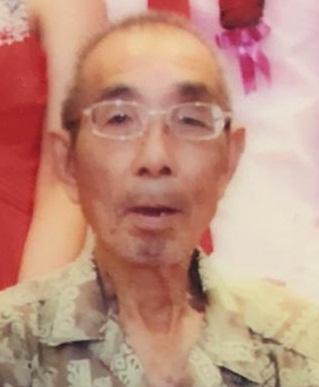
Appeal for information on missing man in Sau Mau Ping (with photo)

     Police today (November 20) appealed to the public for information on a man who went missing in Sau Mau Ping.   

     Cheung Shun-king, aged 77, went missing after he left his residence in Upper Ngau Tau Kok Estate on November 18 afternoon. His family made a report to Police on the same day.

     He is about 1.6 metres tall, 50 kilograms in weight, humpbacked and of thin build. He has a pointed face with yellow complexion and short straight grey hair. He was last seen wearing a pair of black-rimmed glasses, light green long-sleeved jacket, blue trousers and brown slippers.

     Anyone who knows the whereabouts of the missing man or may have seen him is urged to contact the Regional Missing Person Unit of Kowloon East on 3661 0316 or 9886 0060 or email to rmpu-ke-2@police.gov.hk, or contact any police station.

Photo