Appointment of self-recommended youth members to Lantau Development Advisory Committee announced

     The Government announced today (November 26) the appointment of Mr Chan Kai-yip and Ms Liao Shu-hang to the Lantau Development Advisory Committee (LanDAC) through the Member Self-recommendation Scheme for Youth, from today until January 31, 2020, i.e. the end date of the current term of existing members.
 
     Chaired by the Secretary for Development, the LanDAC advises the Government on matters relating to the sustainable development and conservation of Lantau. The membership of the LanDAC is available at
www.devb.gov.hk/en/boards_and_committees/landac/membership_3/index.html.


Public invited to vote in Taxi Driver Commendation Scheme 2018

     The Transport Department (TD) said today (November 26) that the Taxi Driver Commendation Scheme 2018 is now open for public voting. Members of the public are welcome to cast their votes online for quality taxi drivers at www.ctsq.org.hk/votetaxidriver/index.php until December 19.

     To encourage taxi drivers to provide quality services and thereby enhance the image of taxi trade, the TD and the Committee on Taxi Service Quality (CTSQ) launched the Taxi Driver Commendation Scheme to commend taxi drivers for their service excellency.

     This year, over 200 nominations were received, among which 50 were shortlisted for public voting. Ten of the nominees obtaining the highest combined scores from the public voting and a professional assessment panel will be given "quality taxi driver" awards. 
 
     To encourage the public participation, members of the public who vote for awarded taxi drivers may win a "Smart Voters" prize. A total of 100 prize winners will be presented with souvenirs. The lucky draw result will be announced in early March 2019.

     The Prize Presentation Ceremony of the Taxi Driver Commendation Scheme 2018 will be held on January 18, 2019.

     A list of the 50 shortlisted nominees and details of the Taxi Driver Commendation Scheme 2018 are available at www.ctsq.org.hk/votetaxidriver/index.php.


Bromeliads to go on display at Hong Kong Park (with photos)

     Bromeliads are excellent ornamental blossoming, foliage and fruiting plants. With a wide range of species, bromeliads come in various hues and shapes. Members of the public will have a chance to take a closer look at the different species in the Bromeliad Exhibition to be held from December 1 (Saturday) at the Display Plant House of the Forsgate Conservatory in Hong Kong Park under the Leisure and Cultural Services Department (LCSD).
 
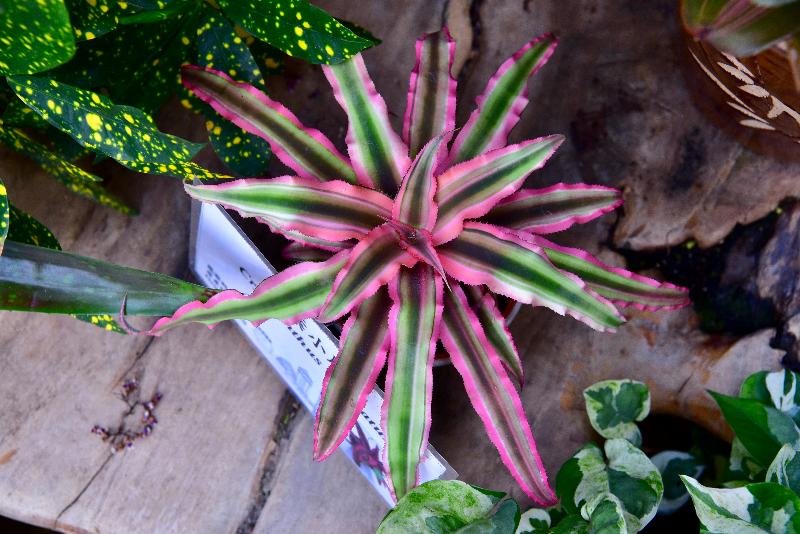
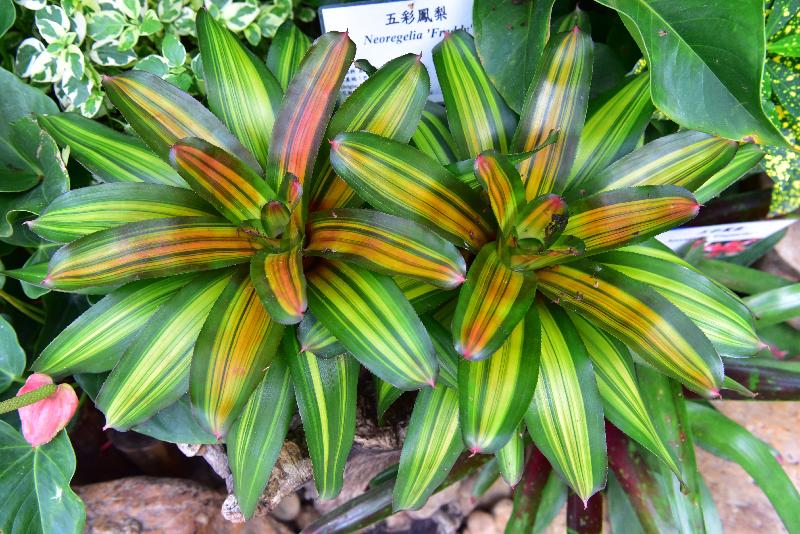
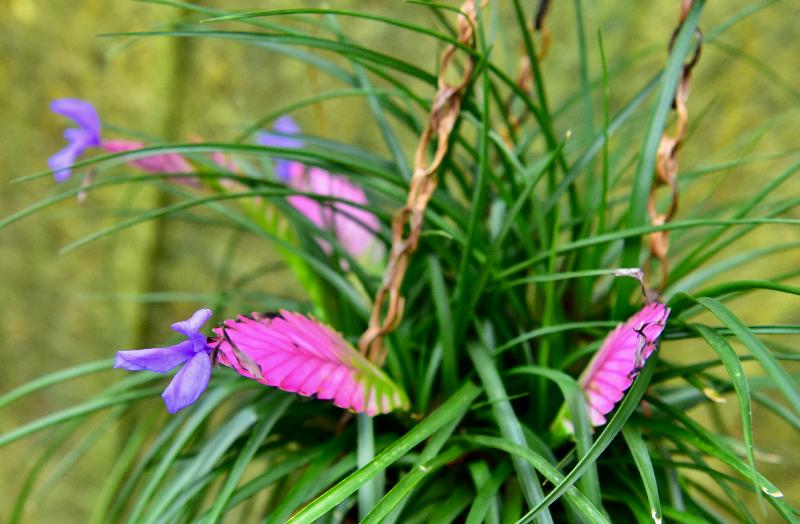
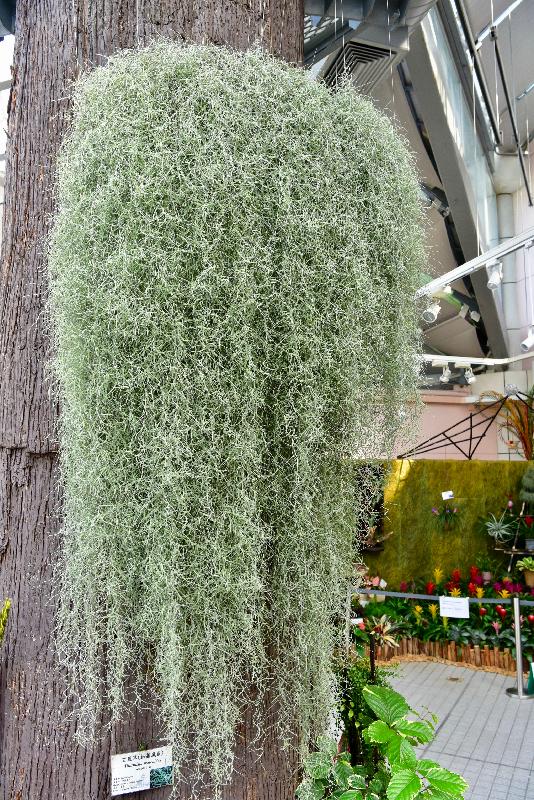
     With about 2 600 species, bromeliads are mainly distributed over tropical and warm temperate America and classified into three categories according to their growth habits – terrestrial bromeliads, tank bromeliads and atmospheric bromeliads. A rich variety of about 500 bromeliads will be showcased at the upcoming thematic exhibition, including Cryptanthus bivittatus, Neoregelia spp, Tillandsia usneoides and Tillandsia cyanea.

     Cryptanthus bivittatus is a terrestrial bromeliad. These plants are commonly known as Earth Stars because of their foliage shape. With undulated margins and silver-grey scales on the underside, their leaves are velvety to the touch.
 
     Neoregelia spp is one of the tank bromeliads, typically with dense foliage that grows in a rosette shape, forming a funnel for retaining water and nutrients.
 
     Atmospheric bromeliads, including Tillandsia usneoides and Tillandsia cyanea, have roots that mainly provide anchorage to trees or other objects. The plants get nutrients and water from the air through their leaf trichomes. Tillandsia usneoides are often found attached to or hanging from tree trunks or rocks in their native habitats. Both stems and leaves are densely covered with silvery-grey scales, which help reflect scorching sunlight and prevent damage to the leaves. Tillandsia cyanea bears linear leaves and is attractive in its violet-blue colour.

     In addition to the presentation of over 50 species of bromeliads, display boards will also be set up to introduce their characteristics and cultivation methods. Park-goers are invited to visit the exhibition, which will be open to the public free of charge from 9am to 5pm daily from December 1 to January 13, 2019 at the Display Plant House of the Forsgate Conservatory of Hong Kong Park, 19 Cotton Tree Drive, Central.
 
     To further enhance public understanding of bromeliads, two sessions of guided tours will be held at 11am and 3pm every Sunday from December 2 to January 13 next year. Each tour will last for an hour.
 
     For details, please browse the LCSD website.

Photo  Photo  Photo  Photo  


Why Noodle in Sai Ying Pun fined for emitting excessive cooking fumes

     â€‹Why Noodle, a restaurant located at Ying Wa Terrace in Sai Ying Pun, did not comply with the requirements of a statutory notice issued by the Environmental Protection Department (EPD) and failed to reduce excessive cooking fume emissions. The restaurant today (November 26) was convicted and fined $10,000 by Eastern Magistrates' Courts for contravening the Air Pollution Control Ordinance (APCO).

     During the investigation of a complaint against cooking fume emissions of a restaurant in October last year, the EPD found that the restaurant had failed to install proper cooking fume control equipment and was emitting excessive cooking fumes. The EPD then issued a statutory notice under the APCO requiring the restaurant to install proper equipment to reduce its emissions by the deadline. However, the restaurant failed to comply with this requirement by the specified date and continued to emit visible cooking fumes, and was thus prosecuted by the EPD. The department is continuing following up on the case to urge the restaurant to comply with the statutory requirements.

     An EPD spokesman reminded food business operators that the responsible persons should properly design and install appropriate and effective air pollution control equipment in the kitchens of food premises. They should also arrange for experienced technicians to clean, check and repair the equipment regularly to ensure no visible fumes are emitted, so as to avoid causing air pollution and nuisance to nearby residents. 

     According to the APCO, restaurant operators should adopt effective remedial measures to abate excessive cooking fume emissions within a specified time limit upon receipt of a statutory notice. First-time offenders are liable to a maximum fine of $100,000. A maximum fine of $200,000 and six months' imprisonment may be imposed on second or subsequent convictions.


Update on cases of Legionnaires’ disease

     The Centre for Health Protection (CHP) of the Department of Health today (November 26) reported the latest number of cases of Legionnaires' disease (LD), and stressed the importance of using and maintaining properly designed man-made water systems, and that susceptible groups should strictly observe relevant precautions.

     From November 18 to 24, two community-acquired LD cases were reported. They are:
 

  1. A male patient, aged 61 with underlying illnesses, who lives in Tower 2A, The Wings IIIA, 19 Tong Yin Street, Tseung Kwan O; and
  2. A female patient, aged 76 with underlying illnesses, who lives in Choi Yuet House, Choi Ha Estate, 18 Choi Ha Road, Kwun Tong District.

     "Epidemiological investigations are ongoing to identify potential sources of infection, high-risk exposure and clusters, if any," a spokesman for the CHP said.

     As of November 24, 98 LD cases had been reported in 2018. In 2017 and 2016, there were 72 and 75 cases respectively.

     "Men, people aged over 50, smokers, alcoholics and persons with weakened immunity are more susceptible to LD. Some situations may also increase the risk of infection, including poor maintenance of water systems leading to stagnant water; living in areas with old water systems, cooling towers or fountains; using electric water heaters, whirlpools and spas or hot water spring spas; and recent stays in hotels or vessels," the spokesman said.

     Legionellae are found in various environmental settings and grow well in warm water (20 to 45 degrees Celsius). They can be found in aqueous environments such as water tanks, hot and cold water systems, cooling towers, whirlpools and spas, water fountains and home apparatus which support breathing. People may get infected when they breathe in contaminated droplets (aerosols) and mist generated by artificial water systems, or when handling garden soil, compost and potting mixes.

     Immunocompromised persons should:
 

  1. Use sterile or boiled water for drinking, tooth brushing and mouth rinsing;
  2. Avoid using humidifiers, or other mist- or aerosol-generating devices. A shower may also generate small aerosols; and
  3. If using humidifiers, or other mist- or aerosol-generating devices, fill the water tank with only sterile or cooled freshly boiled water, and not water directly from the tap. Also, clean and maintain humidifiers/devices regularly according to manufacturers' instructions. Never leave stagnant water in a humidifier/device. Empty the water tank, wipe all surfaces dry, and change the water daily.

     The public should observe the health advice below:
 

  • Observe personal hygiene;
  • Do not smoke and avoid alcohol consumption;
  • Strainers in water taps and shower heads should be inspected, cleaned, descaled and disinfected regularly or at a frequency recommended by the manufacturer;
  • If a fresh water plumbing system is properly maintained, it is not necessary to install domestic water filters. Use of water filters is not encouraged as clogging occurs easily, which can promote growth of micro-organisms. In case water filters are used, the pore size should be 0.2 micrometres (µm) and the filter needs to be changed periodically according to the manufacturer's recommendations;
  • Drain and clean water tanks of buildings at least quarterly;
  • Drain or purge for at least one minute the infrequently used water outlets (e.g. water taps, shower heads and hot water outlets) and stagnant points of the pipework weekly or before use;
  • Seek and follow doctors' professional advice regarding the use and maintenance of home respiratory devices and use only sterile water (not distilled or tap water) to clean and fill the reservoir. Clean and maintain the device regularly according to the manufacturer's instructions. After cleaning/disinfection, rinse the device with sterile water, cooled freshly boiled water or water filtered with 0.2 µm filters. Never leave stagnant water in the device. Empty the water tank, keep all surfaces dry, and change the water daily; and
  • When handling garden soil, compost and potting mixes:

     1. Wear gloves and a face mask;
     2. Water gardens and compost gently using low pressure;
     3. Open composted potting mixes slowly and make sure the opening is directed away from the face;
     4. Wet the soil to reduce dust when potting plants; and
     5. Avoid working in poorly ventilated places such as enclosed greenhouses.

     The public may visit the CHP's LD page, the Code of Practice for Prevention of LD and the Housekeeping Guidelines for Cold and Hot Water Systems for Building Management of the Prevention of LD Committee, and the CHP's risk-based strategy for prevention and control of LD.