CHP investigates outbreak of acute gastroenteritis at kindergarten-cum-child care centre in Tuen Mun

     The Centre for Health Protection (CHP) of the Department of Health is today (January 14) investigating an outbreak of acute gastroenteritis (AGE) at a kindergarten-cum-child care centre in Tuen Mun, and hence reminded the public and management of institutions to maintain personal and environmental hygiene against AGE.

     The outbreak involves 17 boys and 18 girls aged 2 to 5, as well as two female staff members, who developed vomiting, diarrhoea, abdominal pain and fever since January 10. Twenty sought medical attention and three of them required hospitalisation for further management. All patients have been in a stable condition.
 
     Officers of the CHP conducted a site visit and provided health advice to the staff of the school concerning proper and thorough disinfection, proper disposal of vomitus, and personal and environmental hygiene. The school has been put under medical surveillance.
 
     The CHP's investigations are ongoing.
 
     A spokesman for the CHP advised members of the public to take heed of the following preventive measures against gastroenteritis:
 

  • Ensure proper personal hygiene;
  • Wash hands thoroughly before handling food and eating, after using the toilet or after changing diapers;
  • Wear gloves when disposing of vomitus or faecal matter, and wash hands afterwards;
  • Clean and disinfect contaminated areas or items promptly and thoroughly with diluted household bleach (by adding one part of bleach containing 5.25 per cent sodium hypochlorite to 49 parts of water). Wash hands thoroughly afterwards;
  • Maintain good indoor ventilation;
  • Pay attention to food hygiene;
  • Use separate utensils to handle raw and cooked food;
  • Avoid food that is not thoroughly cooked;
  • Drink boiled water; and
  • Do not patronise unlicensed food premises or food stalls.

     
     The public may visit the CHP's website (www.chp.gov.hk) or call the Health Education Hotline (2833 0111) for more information.
DH urges not to buy or use facial mask with controlled substance (with photos)

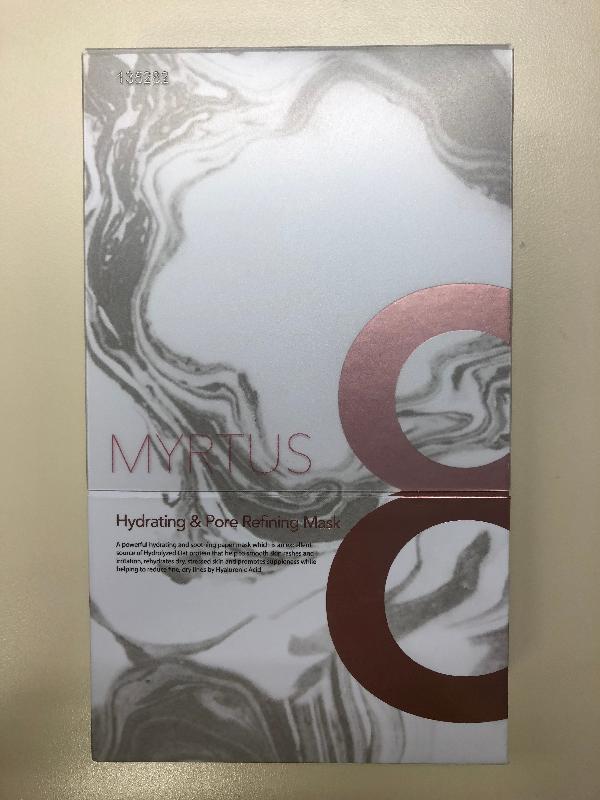
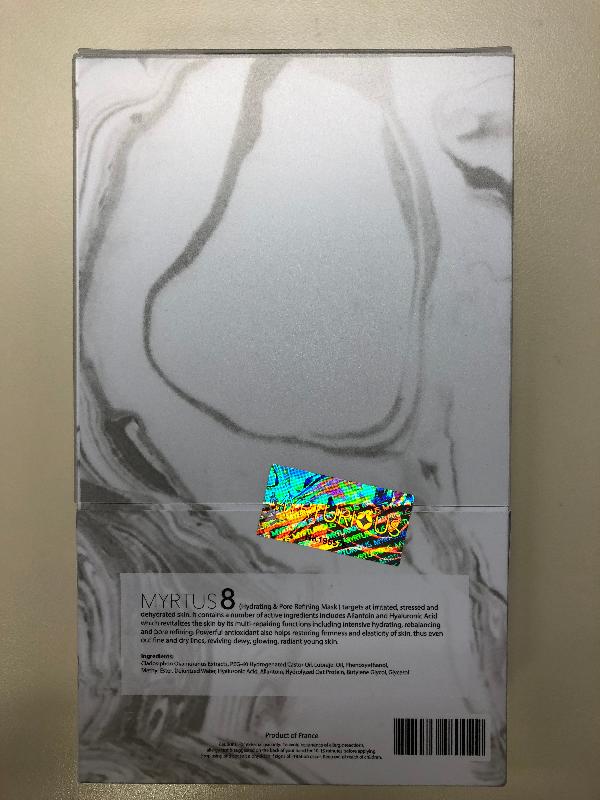
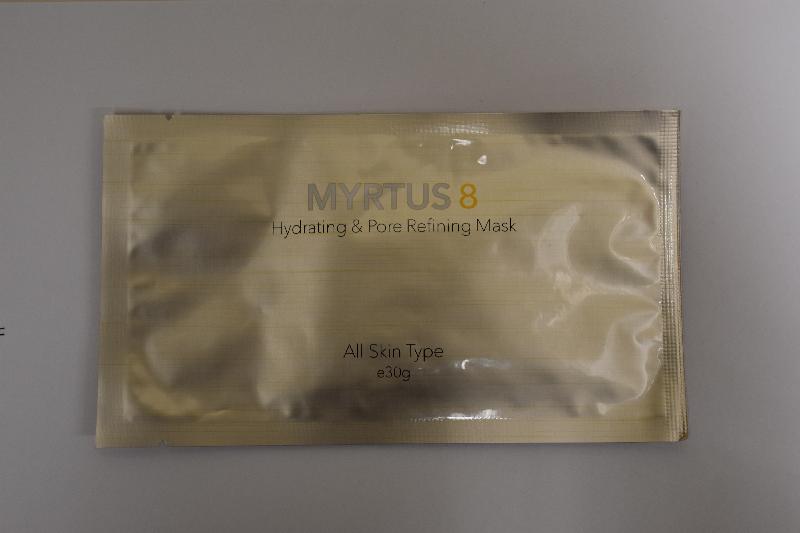
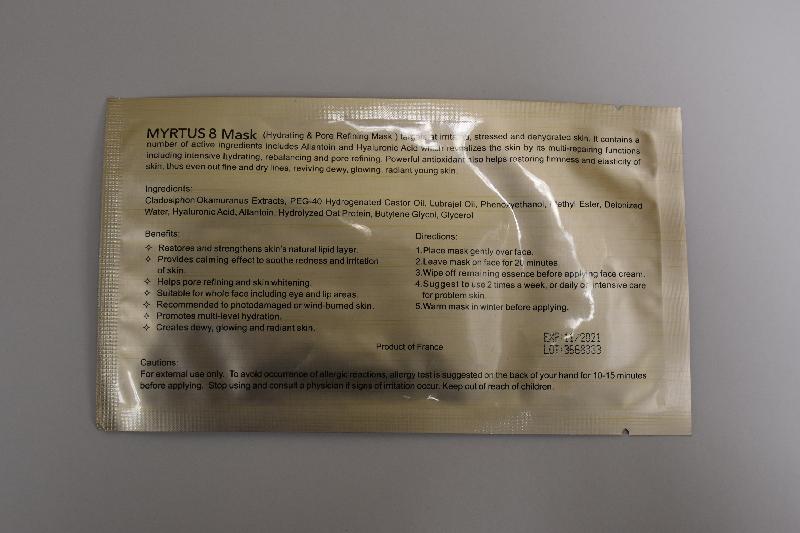
     The Department of Health (DH) today (January 14) appealed to the public not to buy or use a facial mask named MYRTUS 8 MASK, which was found to contain an undeclared and controlled substance.
 
     Acting upon a public enquiry, the DH found that the above facial mask has been offered for sale at two retail shops in Causeway Bay. Samples of the product were collected from the two shops for analysis. The Government Laboratory's test results revealed that the samples contained fluocinolone acetonide, a Part 1 poison under the Pharmacy and Poisons Ordinance (Cap 138).
 
     Fluocinolone acetonide is a steroid substance. Products containing fluocinolone acetonide should only be sold at pharmacies under the supervision of registered pharmacists upon a doctor's prescription. Inappropriate or excessive application of steroids could cause skin problems and body-wide side effects like moon face, high blood pressure, high blood sugar, muscle atrophy, adrenal insufficiency and osteoporosis.    
 
     According to the Ordinance, illegal sale and possession of Part 1 poisons are criminal offences. The maximum penalty for each offence is a fine of $100,000 and two years' imprisonment.    
 
     The DH's investigation is ongoing.
 
     People who have purchased the above product should stop using it and consult healthcare professionals if they are in doubt or feeling unwell after use. They can submit the product to the DH's Drug Office at Room 1856, Wu Chung House, 213 Queen's Road East, Wan Chai, Hong Kong, during office hours for disposal.

Photo  Photo  Photo  Photo  


Cluster of Influenza A cases in Kwai Chung Hospital

The following is issued on behalf of the Hospital Authority:

     The spokesperson of Kwai Chung Hospital made the following announcement today (January 14):
 
     Five patients (aged from 28 to 78) of a female psychiatric acute ward presented with respiratory symptoms since January 11. Appropriate viral tests were arranged for the patients and their test results were positive for Influenza A. The patients concerned are being treated under isolation and are in stable condition.
 
     Admission to the ward and visiting have been suspended. Infection control measures have already been stepped up according to established guidelines. All other patients in the ward are under close surveillance.
 
     The cases have been reported to the Hospital Authority Head Office and the Centre for Health Protection for necessary follow-up.


Latest test results of opening-up investigation in second stage of holistic assessment strategy for Hung Hom Station Extension under Shatin to Central Link Project

     The latest test results of the opening-up investigation in the second stage of the holistic assessment strategy for the Hung Hom Station Extension under the Shatin to Central Link (SCL) project (as at January 14) are now available at the Highways Department's website for the SCL project (www.hyd.gov.hk/en/road_and_railway/railway_projects/scl/index.html) for reference by the public.


Suspected MERS case reported

     The Centre for Health Protection (CHP) of the Department of Health today (January 14) reported a suspected case of Middle East Respiratory Syndrome (MERS), and again urged the public to pay special attention to safety during travel, taking due consideration of the health risks in the places they visit. The case is detailed below:
 

Sex Male
Age 11
Affected area involved Israel
High-risk exposure Nil
Hospital Princess Margaret Hospital
Condition Stable
MERS-Coronavirus preliminary test result Pending

     "Travellers to the Middle East should avoid going to farms, barns or markets with camels; avoid contact with sick persons and animals, especially camels, birds or poultry; and avoid unnecessary visits to healthcare facilities. We strongly advise travel agents organising tours to the Middle East to abstain from arranging camel rides and activities involving direct contact with camels, which are known risk factors for acquiring MERS Coronavirus (MERS-CoV)," a spokesman for the CHP said.

     Locally, the CHP's surveillance with public and private hospitals, with practising doctors and at boundary control points is firmly in place. Inbound travellers and members of the public who recently visited the Middle East and developed fever or lower respiratory symptoms within 14 days will be classified as suspected MERS cases. They will be taken to public hospitals for isolation and management until their specimens test negative for MERS-CoV.

     Travellers to affected areas should maintain vigilance, adopt appropriate health precautions and take heed of personal, food and environmental hygiene. The public may visit the MERS pages of the CHP and its Travel Health Service, MERS statistics in affected areas, the CHP's Facebook Page and YouTube Channel, and the World Health Organization's latest news for more information and health advice. Tour leaders and tour guides operating overseas tours are advised to refer to the CHP's health advice on MERS.