Singapore-based orange juice vending machines provider extends its reach to Greater China region via Hong Kong (with photo)

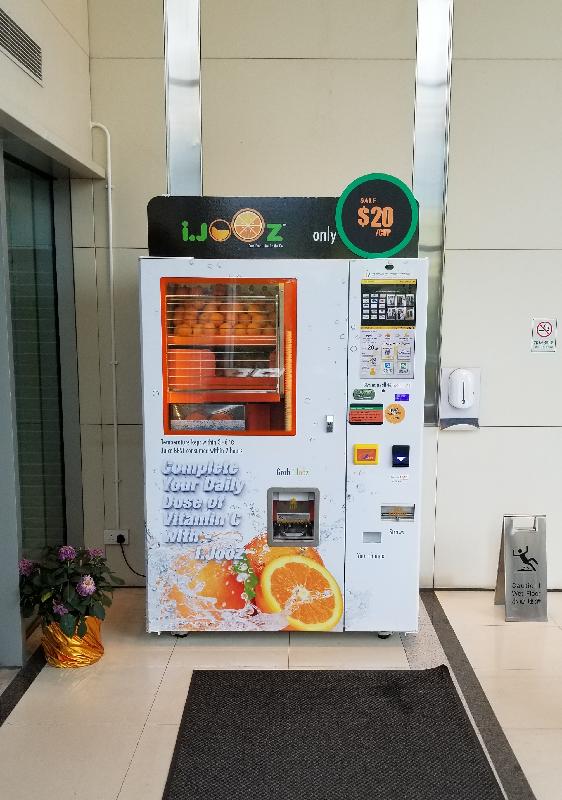
     â€‹Singapore-based orange juice vending machines provider Fruits Vending Pte Ltd announced today (February 14) that it has opened its Hong Kong office, Hong Kong IoT Technology Company Limited, and launched its i.Jooz smart vending machines services, offering automatic and freshly squeezed orange juice in the city.
      
     The vending machine is a smart application of technology and hardware that the oranges directly in front of the customers to get juice straight from the fruit automatically. It also transfers data to the operation centre in Hong Kong via the Internet for refilling, according to the Chief Executive Officer of its Hong Kong office, Mr Jason Wei.
      
     He said that the company has just placed two i.Jooz vending machines at an office building in Kowloon Bay and a residential property in southwest Kowloon to start with and planned to employ more people to run the Hong Kong operation centre and place more vending machines in the city. As in the operating model in Singapore, the company is also responsible for managing the daily operations and providing aftercare and maintenance services for the machines.
      
     Mr Wei said, "There are many similarities between Hong Kong and Singapore. They are both international cities with high population density, high rent and high labour cost. People in both places have similar dietary habits and are becoming more concerned with their health. It is the best place to expand our freshly squeezed orange juice vending machines business following the success in Singapore."
      
     He added, "Hong Kong is close to the Mainland and an important market in the Greater China region. Together with its robust economy and respected legal system, the city is the best window for us to showcase our products and services in the region."
      
     Associate Director-General of Investment Promotion Dr Jimmy Chiang welcomed Fruits Vending Pte Ltd setting a foothold in Hong Kong. He said, "Fruits Vending has added another beverage choice for the customers in Hong Kong. We wish the Hong Kong company every success in leveraging on the city's business advantages to take its business further to the Greater China region."
      
About Fruits Vending Pte Ltd
      
     Fruits Vending Pte Ltd is a vending machines manufacturer and operator in Singapore. It specialises in providing freshly squeezed orange juice vending services to its customers and the machines are certified by the National Environment Agency in Singapore. The company operates over 600 vending machines in Singapore. For more information, please visit www.fruitsvending.com.
      
About Invest Hong Kong

     Invest Hong Kong is the department of the Hong Kong Special Administrative Region Government responsible for attracting foreign direct investment and supporting overseas and Mainland businesses to set up or expand in Hong Kong. It provides free advice and customised services for overseas and Mainland companies. For more information, please visit www.investhk.gov.hk.
      
     For an event photo, please visit www.flickr.com/photos/investhk/albums/72157689681229713.

Photo  


Speech by Commissioner of Correctional Services at annual press conference

     Following is the translation of the speech given by the Commissioner of Correctional Services, Mr Woo Ying-ming, at the Correctional Services Department (CSD)'s annual press conference today (February 14):
 
Role of the CSD
 
     The CSD plays a crucial role in the Hong Kong criminal justice system. We uphold the mission to protect public safety and prevent crime for a better Hong Kong. In 2018, while the CSD encountered various challenges, all correctional officers were professional and impartial in ensuring a secure, safe, humane, decent and healthy custodial environment at all times in pursuance of their responsibilities and powers vested by law. Moreover, the CSD, in collaboration with various community stakeholders, has created rehabilitation opportunities to help persons in custody reintegrate into society upon release. Furthermore, we have been promoting law-abiding and inclusive values through community education with a view to preventing crime and contributing to society.
 
Profile of Persons in Custody and Supervisees
 
     Last year, the average daily penal population at correctional facilities was 8,303 persons, representing a slight decrease of 3 per cent compared with the figure (8,529 persons) in 2017. The average occupancy rate was 74 per cent. Among the penal population:
(i) 77 per cent were sentenced persons and 23 per cent were remands;
(ii) 80 per cent were males and 20 per cent were females;
(iii) 96 per cent were aged 21 or above and 4 per cent were aged under 21; and
(iv) 67 per cent were local, 12 per cent were from the Mainland, Taiwan and Macao, and the remaining 21 per cent were from other countries.
 
     Apart from managing persons in custody, the CSD also helps rehabilitated persons reintegrate into society through statutory supervision. As at the end of 2018, about 1,400 persons were still under the statutory supervision of the CSD.
 
     In 2018, there were 17,340 new admissions of sentenced persons or remands under the CSD, representing a decrease of 6 per cent from 18,531 admissions in 2017. A total of 119 persons in custody with high security risk (i.e. Category A persons in custody) were newly admitted. Among them, 80 per cent had committed drug-related offences and 20 per cent had committed serious offences like murder and manslaughter. For the newly admitted Category A persons in custody, 28 per cent were from other countries. As at the end of 2018, the total number of Category A persons in custody was 527 persons, which was similar to the figure (535 persons) of last year.
 
Safe Custody
 
     It is our utmost duty to provide a safe and secure custodial environment and to help persons in custody rehabilitate and reintegrate into society. In light of the large-scale prison riots or escapes in some countries or places in the world in recent years, we have taken the initiative to review and strengthen preventive measures, contingency plans and staff equipment from time to time to curb all illicit activities proactively.
     
     There has been no successful escape case in Hong Kong for 11 years in a row, from 2008 to 2018. In 2018, the CSD conducted 8,230 joint search/special search/night raid operations in institutions, covering 12,885 locations, representing increases of 7 per cent and 8 per cent respectively compared with the relevant figures in 2017.
 
     While most of the persons in custody conform to order and discipline and show a sense of remorse, some commit acts of indiscipline. These acts adversely affect the order of institutions and the safety of others. In 2018, there were eight cases of concerted acts of indiscipline, an increase of three cases over the year before, with 181 participants involved. These included fighting and inciting other persons in custody to get involved in collective actions, such as refusing to eat or lodging a collective complaint. The case that involved the most participants took place on November 21, 2018, in which a total of 66 persons in custody in Lai Chi Kok Reception Centre lodged a collective complaint. Out of these eight cases, five resulted in 12 persons in custody being injured, while four cases were referred to other law enforcement agencies for follow-up and investigation. Among the 181 participants involved in concerted acts of indiscipline, 96 per cent (173 participants) were 21 years old or above, and the remaining 4 per cent (eight participants) were under 21 years old. Moreover, 62 per cent of the participants had triad backgrounds and were involved in six cases. With the strong support of the Regional Response Teams, institution management restored discipline at the institutions within a short period of time. Since the establishment of the Regional Response Teams in 2016, we have achieved effective results in safeguarding the security of institutions and in the escort of high-security risk persons in custody. We therefore plan to extend the Regional Response Teams to other regions and individual institutions.
 
     In the same year, there were 4,265 disciplinary charges against persons in custody. The number of charges still remained high despite a slight decrease of 6 per cent compared with the year before. Charges of "offending good order and discipline" and "possession of any unauthorised article" ranked first and second respectively, accounting for 33 per cent and 25 per cent of the total number of disciplinary charges. In 2018, there were 2,714 persons of custody subject to disciplinary charges, representing a slight decrease of 2 per cent compared with the figure of 2017. Among them, 320 (12 per cent) committed three or more disciplinary offences, accounting for 34 per cent of the total number of disciplinary charges.
 
     As for cases involving violent acts, a total of 483 cases were recorded in 2018, mainly involving fighting among persons in custody and assaulting others (including correctional officers), representing a decrease of 63 cases from 2017. Among these cases, 26 cases were of a more serious nature and were reported to the Police for follow-up. The number of correctional officers who were injured while stopping violence or other behaviour was 39 in total. Most of these injuries were minor, and there were 16 more persons compared with 23 persons in 2017.

     In 2018, there were seven cases involving correctional officers being assaulted in the course of duty, representing a decrease of one case from eight cases in 2017. The number of correctional officers injured on duty also decreased from six persons to three persons. Most of the injuries were relatively minor.
 
     The CSD is also committed to stopping the smuggling of drugs into correctional institutions. Last year, there were 25 cases of seized drugs, including 16 cases of body-cavity concealment of drugs. The majority of the seized drugs were heroin and other psychotropic drugs, and the cases mainly involved newly admitted persons in custody. We will step up our efforts in drug interception work to ensure a safe and secure custodial environment.

     Apart from combating illicit activities and acts of indiscipline, correctional officers have to stay vigilant at all times to detect and stop persons in custody from harming themselves. In 2018, there were 48 self-harm cases, representing a decrease of 52 per cent from 99 cases in 2017. The majority of these cases were discovered in time and the persons in custody concerned were successfully rescued by correctional officers. Unfortunately, two persons in custody died last year despite our tireless efforts. The incidents were reported to the Police for investigation and subsequent death inquests.
 
     Over the years, the numbers relating to medical escort duties have remained high. The manpower deployed for medical escort duties increased from approximately 37,000 man days in 2015 to around 41,000 man days in 2017, while the number exceeded 38,000 man days in 2018.

     Regarding correctional facilities, the CSD has been carrying out various improvement projects to enhance the security and operational efficiency of the institutions, such as the installation of an electric locks security system in Stanley Prison, as well as the replacement and enhancement of the closed-circuit television systems with new digital systems in seven institutions (Stanley Prison, Pak Sha Wan Correctional Institution, Siu Lam Psychiatric Centre, Tung Tau Correctional Institution, Tong Fuk Correctional Institution, Tai Lam Correctional Institution and Pik Uk Prison). In regard to replacing the core information technology systems with the Integrated Custodial and Rehabilitation Management System, the tendering procedure for the project was completed in May last year. The new system is scheduled to come into operation in phases in 2022.

    In January this year, we consulted the Legislative Council Panel on Security on the proposal to install the electric locks security system, with a facial recognition function to verify the identity of staff, in Pik Uk Correctional Institution, with a view to enhancing the efficiency of prison management and the level of security.
 
     We also plan to construct the Correctional Services Department Headquarters Building at Shing Tai Road, Chai Wan. The offices and other special and general facilities in different districts will be relocated to the same building for better co-ordination and operational efficiency, and to tie in with the future development of the department. This project obtained the support of the Planning, Works and Housing Committee under the Eastern District Council in December 2017. The CSD will follow up with the Architectural Services Department and seek funding approval at an appropriate time.
 
Rehabilitation Work
 
     The CSD has been fostering closer partnerships with different community stakeholders, including the 18 District Fight Crime Committees, charitable organisations, non-governmental organisations (NGOs), the business sector and universities. Through diversified programmes and activities, we seek to enhance community support for rehabilitation work and help persons in custody reintegrate into society after release.
 
     Programmes implemented last year included district-based publicity activities co-organised with the District Fight Crime Committees, the registration programme for Caring Employers, the Thank You NGO Month and the exhibition "Women Who Shine Through the Wall – Therapeutic Drawings by Female Persons in Custody". The CSD has also strengthened collaboration with academic institutions. We co-organised the NGO Forum cum Outstanding NGO Volunteer Award Presentation Ceremony and several research studies, such as the evaluation of the effectiveness of drug treatment programmes and a three-year study on rehabilitated persons, with local universities.
 
     We proactively implement diversified and appropriate rehabilitation programmes, including counselling, education and market-oriented industrial and vocational training, to help persons in custody equip themselves with skills and build up self-confidence, so that they can reintegrate into society and start afresh after release. Last year, Life Gym – the first Positive Living Centre for male persons in custody – was officially launched in Stanley Prison. Through treatment programmes and competition-based activities, a Clinical Psychologist will assist persons in custody in need to resist criminal thinking and prevent violence. They are also encouraged to cultivate a healthy lifestyle in the institution.
 
     The CSD arranges for convicted adult persons in custody to engage in work according to statutory provisions. The introduction of advanced computerised production facilities, such as the computer numerical control routing machine, not only boosts productivity, but also enables them to acquire up-to-date skills and common knowledge, such as understanding of regulations on quality management and occupational safety and health. Such skills and knowledge will enhance their employability in different sectors in future to facilitate reintegration into society.
 
     Twenty vocational training courses are provided for young persons in custody. Forty-one market-oriented courses, with a total of over 1,400 places, are available on a voluntary basis to adult persons in custody who are due for discharge within three to 24 months and legally reside and seek employment in Hong Kong. Last year saw the introduction of new foundation certificate courses in Floor Laying for Interior Renovation and AutoCAD in Renovation Drawings. This year, we will roll out new foundation certificate courses in Virtual Reality Welding, Virtual Reality Visual Merchandising and Retail Management as well as Car Beauty. All these courses are organised by various local training bodies, and have attained Qualifications Framework levels or are accredited by professional bodies. They help rehabilitated persons to work or enrol in bridging or progressive courses in future.

     The overall passing rate of vocational training examinations was 97.9 per cent last year (98.1 per cent and 97.3 per cent for adult and young persons in custody respectively). Their employment rates after six months of employment follow-up period upon release were respectively 83.1 per cent and 93.4 per cent. On education, the overall passing rate in public examinations was 62.9 per cent last year (60.4 per cent and 68 per cent for adult and young persons in custody respectively). One person in custody attained Level 5 in the subject of Economics under the Hong Kong Diploma of Secondary Education Examination. Another one even obtained 21 marks overall in six papers. Moreover, 10 persons in custody were awarded bachelor's degrees and one was awarded a master's degree, the sum of which represented the best result achieved so far. On the education of young persons in custody, the department introduced elements of STEM (science, technology, engineering and mathematics) education last year to strengthen their logical thinking and problem-solving skills.
 
     Over the years, the CSD has been promoting rehabilitation work and seeking public support for and acceptance of rehabilitated persons so as to reduce their re-offending risks. These efforts help make Hong Kong a safer society. Over the past 10 years or so, based on 2000 and 2016 as the respective years of discharge, Hong Kong's recidivism rate (the percentage of re-admission of local persons in custody to correctional institutions following conviction of a new offence within two years after discharge) has seen a substantial decrease from 39.9 per cent to 24.8 per cent. In essence, the reduction reflects the outcome jointly made through the hard work of correctional officers, the determination of persons in custody and rehabilitated persons to turn over a new leaf, and the growing support from stakeholders in the community. In this connection, I would like to take this opportunity to extend my heartfelt appreciation to all stakeholders concerned and our friends from the media.
 
     In particular, the recidivism rate of young persons (those who were under 21 during their previous sentence) dropped from 11.9 per cent in 2015 to 10.2 per cent in 2016, representing a decrease of 1.7 percentage points. In parallel, the recidivism rate of adults dropped from 28.3 per cent in 2015 to 25.7 per cent in 2016, representing a decrease of 2.6 percentage points.
 
Community Education and Effectiveness in Crime Prevention
 
     On community education, the CSD disseminates information to students and young people on the importance of leading a law-abiding and drug-free life as well as supporting rehabilitation through the Rehabilitation Pioneer Project which includes, amongst others, a programme named "The Reflective Path". In 2018, the attendance of various activities under the Project was 48,093, including 44,876 young participants which represented a 23 per cent increase from 36,506 in 2017. The programmes were well received with positive responses.

     To further enhance effectiveness, the CSD established a uniformed group of Rehabilitation Pioneer Leaders last year for young people with leadership potential. Our objective is to help broaden their horizons, develop their potential and discipline and strengthen a sense of social responsibility through diversified training programmes. They are also encouraged to actively contribute to society in future by helping to promote law-abiding and inclusive values for a better Hong Kong. So far, two cohorts of 60 members (three of them being ethnic minority youths) have been recruited. Subject to availability of resources, recruitment will be conducted every year with a view to expanding the membership to cover more areas of Hong Kong.
 
Human Resources
 
     The CSD is still undergoing a peak period of staff wastage. In 2017-18, we recruited 44 Officers and 435 Assistant Officers II. We expect to recruit about 50 Officers and, depending on vacancy situations, about 350 Assistant Officers II for filling of posts in 2018-19. In respect of staff quarters, a project at Tin Wan, Aberdeen, is under construction and expected to provide 70 units within 2019.
 
Smart Prison Development Plan
 
     In 2018, the CSD formulated a Strategic Plan for future development. The objective of the Strategic Plan is, amongst others, to build a sustainable correctional system with an integrated operational protocol through development of a smart prison system. In accordance with the 2018 Policy Address and with the Security Bureau's support, the CSD, in collaboration with the Electrical and Mechanical Services Department, the Architectural Services Department and the Office of the Government Chief Information Officer, plans to introduce smart elements in our major facility improvement proposals in future.
 
     The smart prison concept comprises four elements, namely "development of smart governance", "implementation of process innovation", "cultivating knowledge-based correctional officers and enhancing the capacities of rehabilitated persons to reintegrate into the society" and "application of smart prison designs to operate correctional institutions". The CSD strives to enhance efficiency of custodial operations and security of correctional institutions through the application of innovation and technology, while protecting the safety of correctional officers in the course of law enforcement and ensuring the safety of persons in custody at the same time.
 
     Currently, we are conducting trials in specific areas of individual institutions, using innovation and technology such as video analytics and more to modernise the operations of correctional facilities, with a view to enhancing the efficiency and security of prison management. The trial projects include the installation of the Health Signs Monitoring System in the centre hospital of Lo Wu Correctional Institution (LWCI), the Video Analytic Monitoring System in four dormitories of Pik Uk Prison for monitoring of abnormal behaviours and acts of indiscipline of persons in custody, and the Passage Surveillance System in designated passages of LWCI. In the long term, the smart prison concept should be expanded to cover both the hardware and the software of correctional institutions. The ultimate objective is to combine operational systems and innovation and technology to collect, analyse and apply data in various areas, with a view to enhancing the efficiency of institutional management and operations, strengthening our readiness in emergency response, and facilitating long-term strategic planning.
 
Conclusion
 
     Over the past year, the CSD has risen to different challenges and made solid progress in various areas of work. It would not be possible without the concerted efforts and whole-hearted dedication of our colleagues. Moreover, I would like to extend my special thanks to members of the public, community stakeholders, voluntary organisations, volunteers and friends of the media for their unfailing support and assistance in facilitating our work. I also take this opportunity to call on the public to continue to support and help rehabilitated persons reintegrate into society, and join hands in building a better Hong Kong.
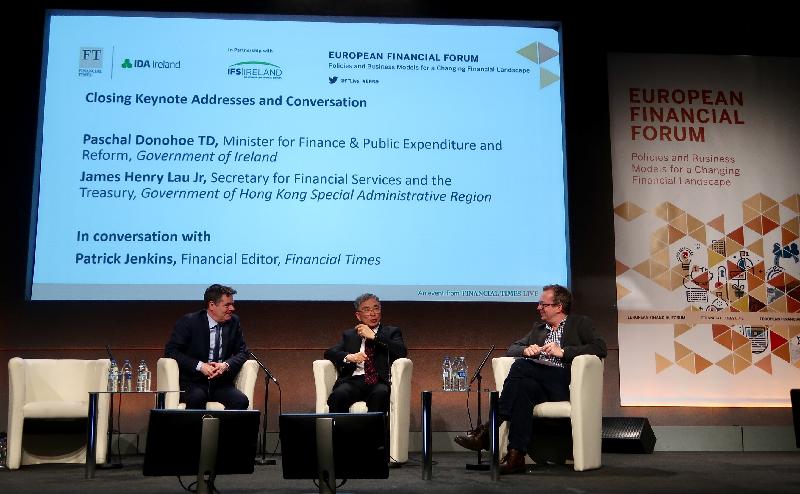

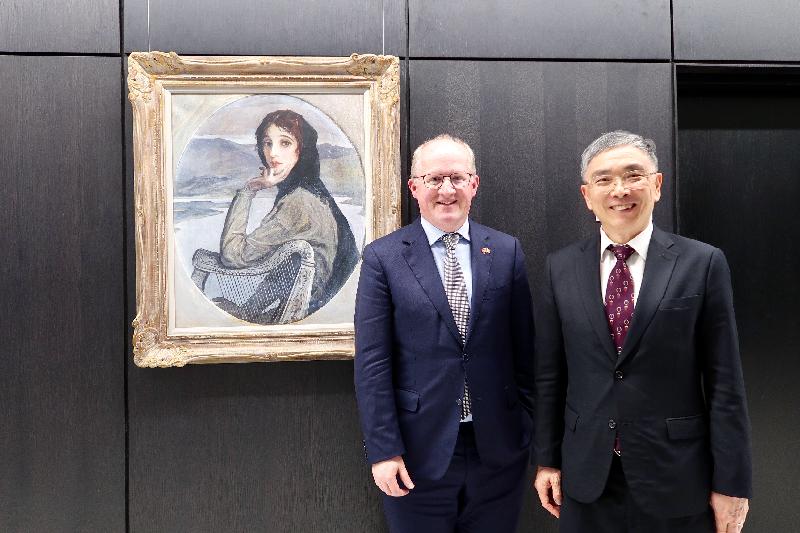
SFST attends European Financial Forum to promote HK’s strengths as IFC (with photos)

     The Secretary for Financial Services and the Treasury, Mr James Lau, attended the 4th European Financial Forum (EFF) in Dublin yesterday (February 13, Dublin time) to promote Hong Kong's strengths as an international financial centre (IFC).

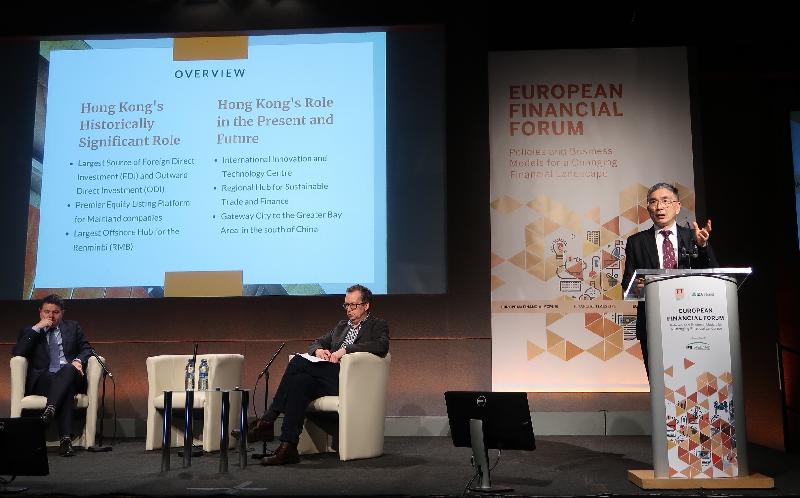
     He attended the opening session in the morning and gave a closing keynote speech on how Hong Kong has evolved, from being a centre for investment flows and financial services to facilitate China's reform and opening up to a broader role that encompasses leadership in innovation and technology, sustainable trade and finance, and regional connectivity and development in the context of the Guangdong-Hong Kong-Macao Greater Bay Area.

     Mr Lau also held an onstage conversation with the Minister for Finance and Public Expenditure and Reform of Ireland, Mr Paschal Donohoe, during the closing session, which included sharing efforts to further financial development in both places.

     Earlier in the morning, Mr Lau attended a Fintech (financial technology) roundtable where he met with representatives from a number of key Fintech companies in Dublin. He said he was pleased to note that these companies are seeking to leverage Hong Kong as a platform to expand their businesses to Hong Kong, the Mainland of China and Asia, and he updated them on the city's latest efforts to support Fintech development.

     He later met with the Governor of the Central Bank of Ireland, Mr Philip Lane. They exchanged views on the impacts of Brexit, trade friction between China and the US as well as Fintech advances in the context of global economic development and financial stability.

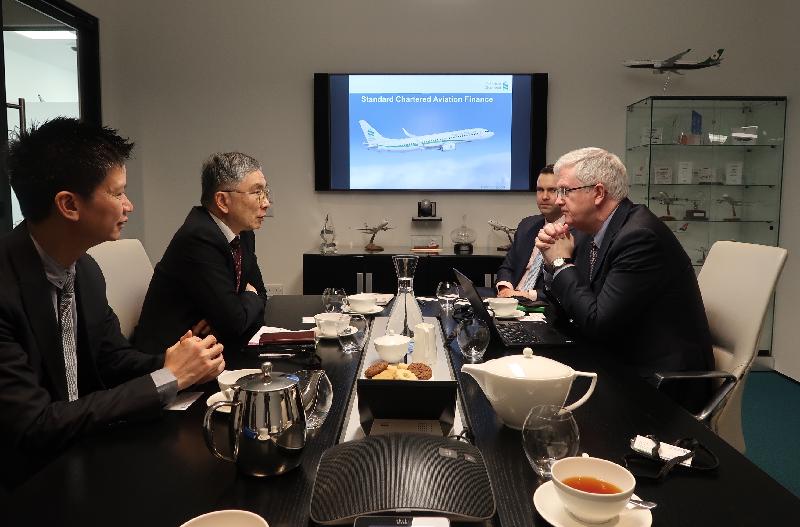
     In addition, Mr Lau held a discussion with aviation financing experts of the Standard Chartered Bank to learn more about their experience in boosting aviation market development in Ireland and beyond.

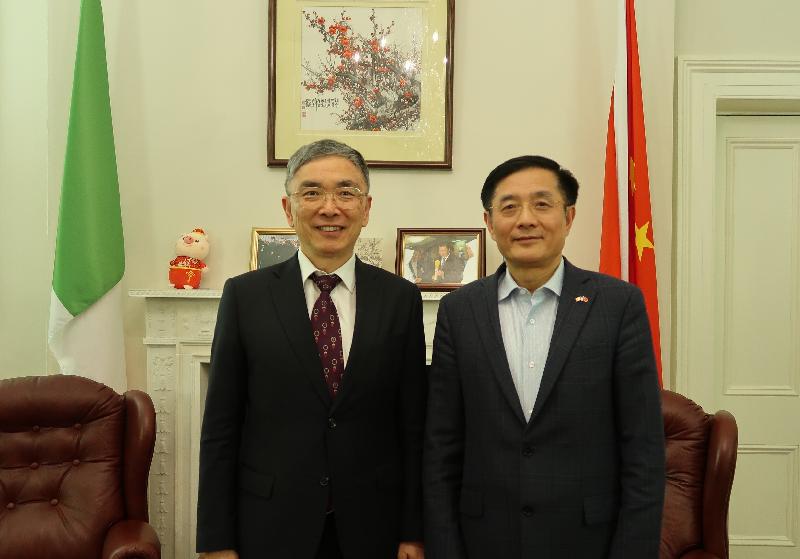
     Mr Lau also paid a courtesy call on the Chinese Ambassador to Ireland, Dr Yue Xiaoyong, in the evening.

     Mr Lau will visit the Irish Stock Exchange in the morning today (February 14, Dublin time) before concluding his visit to Dublin. He will return to Hong Kong in the morning on February 15 (Hong Kong time).

Photo  Photo  Photo  Photo  Photo  Photo  


LD launches exhibition on Employment Ordinance and Minimum Wage Ordinance

     Members of the public are invited to visit an exhibition on the Employment Ordinance and the Minimum Wage Ordinance organised by the Labour Department in Fanling to be held on February 16 and 17.

     The exhibition will feature information on the main provisions of the Employment Ordinance and the Minimum Wage Ordinance, as well as good human resource management measures, employment rights and benefits for foreign domestic helpers. Related publications and souvenirs will be distributed and promotional videos will be shown.

     The exhibition will be held at Atrium, G/F, Regentville Shopping Mall, 8 Wo Mun Street, Luen Wo Hui, Fanling, from 11am to 6pm. Admission is free.


Speech by SFST at European Financial Forum in Dublin (English only)

     Following is the speech by the Secretary for Financial Services and the Treasury, Mr James Lau, at the European Financial Forum in Dublin on February 13 (Dublin time):

Introduction
 
     Good afternoon. I am delighted to join you all at the European Financial Forum here in Dublin. Today I like to talk about Hong Kong's role in China's reform and opening up, a role that is unique, irreplaceable, and of historical significance. Indeed, I will look first at a bit of history before sharing my thoughts on the present and the future.
      
     In particular, I will show how Hong Kong's role has evolved from primarily a centre for investment flows and financial services to a broader role that encompasses leadership in innovation and technology, sustainable trade and finance, as well as regional connectivity and development.
 
China's Reform and Opening Up
 
     On China's reform and opening up, let me begin with some statistics. According to the IMF, China's GDP in 1980 was US$305 billion, amounting to 2.7 per cent of the world's GDP. In 2017, China's GDP was over US$12 trillion, or 15 per cent of the world's GDP. Its annual growth contributed to a third of global economic growth. In 2018, China's GDP grew by 6.6 per cent to around US$13.6 trillion. China's GDP per capita was around US$309 in 1980, and this rose to over US$8,600 in 2017.
      
     China's economic growth took place amidst massive migration toward cities; China's urbanization rate was around 18 per cent of its population of 956 million in 1978, and this rose to around 58 per cent of its population of 1 386 million in 2017. So the increase in the urban population in around forty years is some 632 million, which is impressive by any standard.
      
     Furthermore, China's total trade was a mere US$21 billion in 1978, or 0.8 per cent of the world total. In 2017, the total trade was over US$4 trillion, accounting for 11.5 per cent of the world total, making China the largest trading entity out of 204 economies. In 2018, China's total trade increased further to around US$4.6 trillion.
      
     Having said that, China continues to face a number of economic challenges. Economists point to China's credit intensive growth and rising levels of debt after the global financial crisis. China also faces an ageing population. And while China has lifted hundreds of millions of people out of poverty, China's rural per capita disposable income was about RMB 13,400 in 2017. This means that they had a disposable income of around 1750 euros per year.
      
     Still, it is fair to say that China's growth has been nothing short of spectacular, and Hong Kong is proud to have played a pivotal role in three aspects, in the channeling of investment flows, in the listing of Mainland enterprises, and in the internationalisation of the renminbi.
 
Channeling Investment Flows
 
     First, Hong Kong has consistently been the largest source of Foreign Direct Investment (FDI) into China and the largest destination for Outward Direct Investment (ODI) out of China. 

     In the initial stage of opening up, China focused on attracting foreign investments, and Hong Kong businessmen were the first to move their manufacturing operations to Mainland China. Throughout the past four decades, Hong Kong has consistently accounted for 50 per cent to 60 per cent of all FDI into Mainland China. In 2017, China's total FDI amounted to US$136.3 billion, of which 69 per cent was contributed by Hong Kong.
      
     It is notable that, in the past decade, Mainland enterprises have begun to "go global" to invest and operate overseas. Hong Kong is the natural "springboard" for these companies to expand their overseas businesses. Similar to FDI, Hong Kong has consistently accounted for 50 per cent to 60 per cent of China's ODI. In 2017, China's total ODI reached US$158.3 billion, of which 58 per cent was invested in Hong Kong or channeled through Hong Kong to other regions.
 
Premier Equity Listing Platform
 
     Aside from channeling China's investment flows, Hong Kong is also the premier listing platform for Mainland companies. Tsingtao Brewery entered the history books in 1993 as the first Mainland enterprise to list in Hong Kong. Today, there are over 1 100 Mainland enterprises listed on the Stock Exchange of Hong Kong, representing around 68 per cent of its total market capitalization and around 80 per cent of total equity trading volume.
      
     Hong Kong has hosted the IPOs of China's "Big Four" banks, playing a historic role in the modernisation of China's banking system. These four banks are now among the world's top ten banks by market capitalisation.
 
Internationalisation of the RMB
 
     Hong Kong has also played a critical role in the internationalisation of the renminbi. RMB business in Hong Kong started in 2004 with personal banking business, followed by bond issuance in 2007 and RMB trade settlement in 2009. A restricted window for capital account transactions was begun in 2014 with the Shanghai-Hong Kong Stock Connect, and the Shenzhen-Hong Kong Stock Connect was launched in 2016.
      
     These two schemes allow eligible Mainland investors to trade eligible shares listed on the Stock Exchange of Hong Kong. They also allow Hong Kong and overseas investors to trade in eligible shares listed on the Shanghai Stock Exchange and the Shenzhen Stock Exchange.
      
     Today, Hong Kong accounts for over 70 per cent of global RMB payments. The overall amount of Hong Kong's RMB deposit in November last year was around RMB 660 billion. The RMB liquidity management in Hong Kong's banking system also remains robust. In the first eleven months of 2018, the average transaction volume of Hong Kong's RMB Real Time Gross Settlement system maintained a high level of around RMB 1 trillion per day. Hong Kong also provides over 500 insurance and investment products denominated in RMB.
 
Hong Kong as a Competitive Economy
 
     Ladies and gentlemen, having reviewed the past, let us look at the present and future. Without a doubt, Hong Kong has continued to thrive as one of the most competitive economies in the world.
      
     The "One Country, Two Systems" principle is the bedrock of Hong Kong's stability and prosperity. While Hong Kong is a Special Administrative Region of China, we continue to maintain a capitalist system, free economy and trusted legal system. Hong Kong also continues to actively participate in international organisations as a separate member.
      
     Hong Kong takes pride in our rule of law. Hong Kong's judicial system is based on common law and independent of that of China. If you look at our Basic Law, which is the constitutional document of the Hong Kong Special Administrative Region, the section with the largest number of provisions is about the judicial system.
 
     Notably, in Article 82 of the Basic Law, it says that the judges from other common law jurisdictions may be invited as required to sit on the Court of Final Appeal, which holds the power of final adjudication of Hong Kong. At present, a total of 14 world-renowned judges from other common law jurisdictions sit on Hong Kong's Court of Final Appeal. This is a very strong indicator of Hong Kong's independent judiciary.
      
     On the economic front, we take pride in being the world's freest economy. This is a position we have held for 25 consecutive years as ranked by the Heritage Foundation based in Washington D.C. The Canada-based Fraser Institute has also ranked us first in economic freedom since 1996. In the 2018 World Competitiveness Rankings published by IMD, the International Institute for Management Development based in Switzerland, Hong Kong was ranked second place.
      
     Hong Kong is China's most international financial centre. And we rank third in the world, after New York and London. In banking, we are home to almost 80 of the world's top 100 banks, second only to Japan in Asia. Our asset and wealth management sector manages about US$3.1 trillion, with two-thirds of that coming from non-Hong Kong investors.
 
     Our stock market boasts a market capitalisation of US$3.8 trillion, which is about 11 times our GDP. In 2018, we topped the world in initial public offerings (IPOs), taking in some US$36 billion. In fact, for six out of the past 10 years, Hong Kong ranked first in the world for IPO funds raised.
      
     As much as we are proud of our accomplishments, Hong Kong is reinventing itself beyond traditional financial services to take on a broader role of what I call IFC Plus, or International Financial Centre Plus.
      
International Innovation and Technology Centre
 
     First, Hong Kong the IFC is evolving as an International Innovation and Technology Centre.
      
     Hong Kong's vibrant stock market is an ideal listing platform for new economy firms from Mainland China and across the world. In fact, we introduced a new listing regime on the Stock Exchange of Hong Kong last April that permits the listing of pre-revenue and pre-profit biotech issuers as well as companies from emerging and innovative sectors with weighted voting right structures. We have already seen seven issuers list in Hong Kong under this new regime, and we welcome European companies to consider a listing on our stock exchange to tap the Asian and international investors in Hong Kong.
      
     But Hong Kong is not just a listing platform. We are also seeing amazing momentum in Hong Kong as a centre for research and development. In recent years, the Karolinska Institutet of Sweden, the Institut Pasteur from France, University College London from the U.K., the fintech accelerator The Floor from Israel, and the Fraunhofer Institute and the RWTH Aachen Campus from Germany have all opened research centres or entered partnerships with counterparts in Hong Kong.
 
     From the U.S., Harvard Medical School, Stanford University School of Medicine, the Massachusetts Institute of Technology and the University of Chicago have also set up presence in Hong Kong. Going forward, we would welcome even more European and overseas institutes to join our growing community in innovation and technology.
      
     Hong Kong is one of the 12 founding members of the Global Financial Innovation Network (GFIN) that was launched just last month. The GFIN facilitates cross jurisdiction testing of financial innovation products and can prove very instrumental in promoting regulatory cooperation in financial innovation. There are now 29 members and the IMF and World Bank are observers.
 
Regional Hub for Sustainable Trade and Finance
 
     Let me now turn to my second theme, which is how Hong Kong is firmly establishing itself as a regional hub for sustainable trade and finance.
      
     Hong Kong was ranked first out of 20 economies in the Hinrich Foundation Sustainable Trade Index, which measures the capacity to achieve economic growth, environmental protection and social capital development through international trade. This puts us ahead of South Korea, Singapore, Japan and the United States.
      
     For sustainable finance, the Hong Kong Government has also rolled out measures such as establishing a Government green bond programme with a ceiling of over 11 euro billions, and our Green Bond Grant Scheme to support the use of green finance certification. In 2018, green bonds issued in Hong Kong totalled about US$11 billion.
      
     European banks have acted as lead managers for green bond issuances in Hong Kong. Some have created dedicated teams in green finance, moving specialists from Europe to Hong Kong and providing a variety of green products and solutions. On the investment side, we see Dutch and Swedish asset managers in Hong Kong that are focused on sustainable investing.
 
     Hong Kong is open for business and we would welcome continued European participation in sustainable trade and finance in our city. 
 
Gateway City to the Greater Bay Area
 
     Ladies and gentlemen, now I come to my third theme on regional connectivity and development. Hong Kong is poised to build on its current role as an IFC to become a gateway city to the Greater Bay Area (Guangdong-Hong Kong-Macao Greater Bay Area) in the south of China.
      
     The Greater Bay Area represents a huge market spread over 9 cities in Guangdong Province plus Hong Kong and Macao. In Europe, Germany is the only country that has a population larger than that of almost 70 million in the Greater Bay Area. The GDP of the Greater Bay Area is currently around US$1.5 trillion, comparable to that of South Korea and greater than Australia.
      
     Among the major cities in the Greater Bay Area, Shenzhen is often called "the new Silicon Valley." The city spends over 4 per cent of its GDP on research and development, and the new economy accounts for 38 per cent of its GDP. In fact, companies in Shenzhen file more international patents than those in France or Britain.
 
     Aside from Shenzhen, four other cities in the Greater Bay Area form a high-tech industrial belt, with expertise in artificial intelligence and robotics, software, integrated circuit design, and more.
      
     With the opening of the Hong Kong section of the Guangzhou- Shenzhen-Hong Kong Express Rail Link in September last year, it now takes only 14 minutes to reach Shenzhen from the terminus in Hong Kong.
      
     I should also add that the Hong Kong-Zhuhai-Macao Bridge, which opened in October last year, shortens the travelling time between Hong Kong and the Western part of Guangdong from four hours to only 45 minutes.
      
     Hong Kong is the most international city in the Greater Bay Area and can serve as a gateway for European and international businesses, institutes and professionals. There are currently more than 450 European companies with regional headquarters in Hong Kong, and another 700 European companies that have regional offices in Hong Kong. There are also around 29 000 European nationals residing in Hong Kong. So you will find yourself in good company!
 
Conclusion
     
     Ladies and gentlemen, in conclusion, Hong Kong is China's springboard to the world, as well as the world's gateway to China. We are evolving beyond our traditional role as an International Financial Centre to assume leadership as an international centre for innovation and technology, regional hub for sustainable trade and finance, and gateway city to the Greater Bay Area. I hope to welcome you next time in Hong Kong! Thank you.