Speech by CE at ACI Joint World Governing and Regional Board Dinner (English Only) (with photos/video)

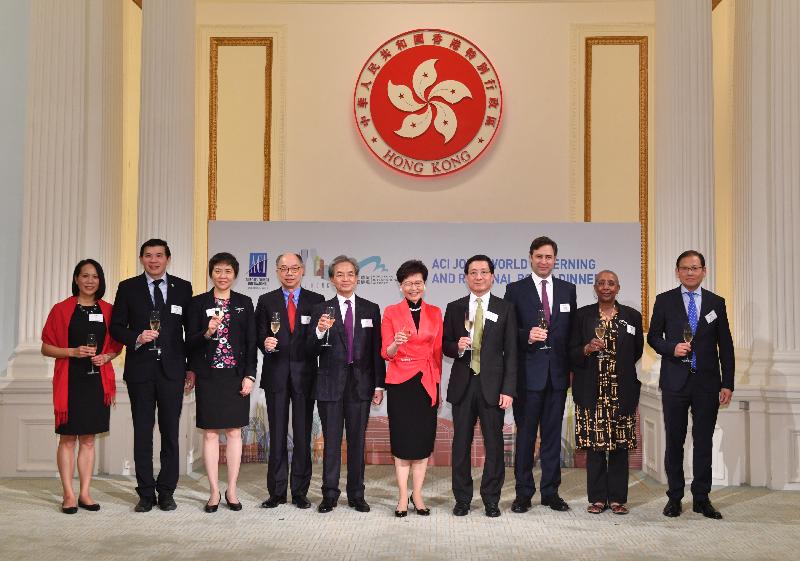
     Following is the speech by the Chief Executive, Mrs Carrie Lam at the Airports Council International (ACI) Joint World Governing and Regional Board Dinner this evening (March 31):
 
Jack (Chairman of the Airport Authority Hong Kong, Mr Jack So), Fred (Chief Executive Officer of the Airport Authority Hong Kong, Mr Fred Lam), Dr Liu (Secretary General of the International Civil Aviation Organization, Dr Liu Fang), Mr Eurnekian (Chair of the ACI World Governing Board, Mr Martin Eurnekian), ladies and gentlemen,

     Good evening. It's a pleasure to join you tonight at the Airports Council International's Joint World Governing and Regional Board Dinner, celebrating excellence in airport management and collaboration. A very warm welcome to Hong Kong, and to Government House.

     Built in the 1850s, Government House was the formal residence for 25 of Hong Kong's 28 colonial Governors. I've been honoured to call it home since I became Chief Executive of the Hong Kong Special Administrative Region in July 2017. Since taking office, I have opened the doors of Government House and this grand ballroom to events celebrating Hong Kong's successes, ranging from receptions for young Hong Kong students winning awards in overseas competitions to the signing of MOUs with distinguished research institutions to further Hong Kong's R&D. Tonight, I am delighted to welcome to Government House one of the most valuable and successful assets of a city or an economy – the airports.

     Airports connect people. They create jobs, enable trade, spur economic growth and stimulate cultural exchanges. No less important, they bring global leaders, such as yourselves, to us. Airports bring people together. They reduce the world to the size of a global village.

     Take Hong Kong International Airport. Now 21 years old, the world-class facility at Chek Lap Kok has helped shape Hong Kong into the global financial services and trade centre it is today. Last year, the airport achieved recording-breaking performance by handling more than 74 million passengers and over five million tonnes of cargo and air mail. More than 120 airlines operate some 1 100 flights a day, connecting Hong Kong to more than 220 destinations around the world. Nowadays, one of my headaches while meeting senior officials in overseas or in the Mainland is to meet their aspirations for more direct flights with Hong Kong, which normally I could not entertain because of the capacity constraints at the Hong Kong International Airport.

     It's therefore no surprise that the Guangdong-Hong Kong-Macao Greater Bay Area's Outline Development Plan, promulgated last month, confirms Hong Kong's role in several key areas, from finance to trade and transport, including serving as the Greater Bay Area's international aviation hub. A cluster of nine prosperous cities in Guangdong Province, together with Hong Kong and Macao, the two Special Administrative Regions, the Greater Bay Area boasts a population of some 70 million and a combined GDP of US$1.6 trillion. It is now an important national strategy to develop the Greater Bay Area into a vibrant world-class city cluster, and a quality living circle for living, working and travelling.

     Hong Kong is committed to taking full advantage of the Greater Bay Area, and our place as its aviation hub. Our third runway is now under construction, with commissioning targeted at 2022. By 2030, we expect our airport to handle 100 million passengers and nine million tonnes of cargo annually.

     In short, the Hong Kong International Airport will play a critical role in carrying Hong Kong to the future, connecting us with the Greater Bay Area and the Mainland, with Asia and the world beyond. It will help us all excel.

     Ladies and gentlemen, it is spring in Hong Kong, our trees, shrubs and plants are full of fragrant blossoms. They colour our gardens, our country parks and waterfront parks. While this historic building, the Government House, is only open to guests and the public on particular occasions, there are indeed many historic buildings throughout Hong Kong and around us in the vicinity, which have been revitalised into interesting public places, such as Tai Kwun, the Police Married Quarters and the news museum, all within a five-minute drive from here. I invite you all to discover them during your stay in Hong Kong, Asia's world city.

     Please enjoy this very special evening. Thank you very much.
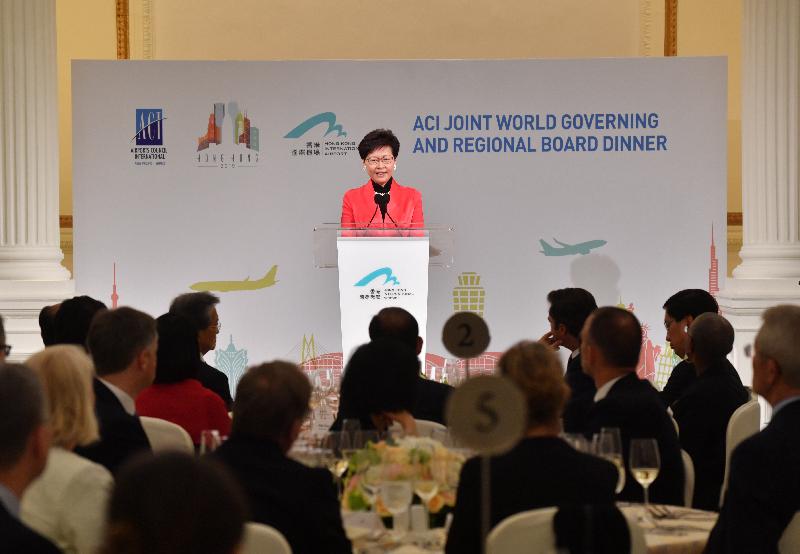
Photo  Photo  


DH announces latest control and prevention arrangement against measles at airport

     The Department of Health (DH) today (March 31) announced the latest arrangement of control and prevention strategy in response to the outbreak of measles infection emerged at the Hong Kong International Airport (HKIA).
 
     The DH launched a pilot programme for people working at the airport last Friday (March 29), under which 100 airport staff were recruited to undergo measles serology test. The aim of the pilot programme is to get an understanding of the immunity against measles among airport staff so as to identify those most in need of vaccination. The testing results revealed that among the participants, 86 per cent, i.e. 86 persons tested positive against measles antibody (IgG), revealing that they are immune to measles and no further vaccination will be required. For the remaining 14 persons, 6 were tested negative and 8 indeterminate. The DH will notify the participants individually of their serology result by phone. Vaccination will also be arranged for those with negative or indeterminate testing results.
 
     A spokesman for the DH explained, "For those who were tested indeterminate or negative, further definitive tests may reveal that they were in fact immune to measles. The testing results are considered comparable with our previous seroprevalence rates from surveillance of the population immunity before the additional definitive tests." 
 
     Further analysis of the testing results indicates that those who were born before 1967 were essentially immune to measles (100 per cent), irrespective of their place of birth. For those who were born in or after 1967, a slightly higher proportion of people who had received one or more doses of measles vaccines were immune (85 per cent) than those with unsure vaccination history or unvaccinated (81 per cent).
 
     "In view of the tight supply of measles vaccines around the globe currently and after taking into account the serology test results, the DH has decided to fine-tune the strategy of measles vaccination at the airport, with a view to reserve vaccines for people who are most in need and arrange vaccination for those who do not have sufficient immunity against measles more effective and timely," the spokesman said.
 
     The measles vaccination stations at the airport will remain open till further notice. From tomorrow (April 1) to April 4, the vaccination quota for the stations will be set at 500 doses daily and the triage system will also be enhanced. Eligible airport staff will be limited to the following target groups:

     (1) Born in or after 1967; and have not received two doses of measles vaccination; and have not been infected with measles before; and with evidence of living with infants under one-year-old or living with pregnant women; or

     (2) Have laboratory evidence of testing not positive against measles antibody (IgG)

     Details of evidence are as follows:

(a) Supporting documents for living with infants under one-year-old: for example birth certificate, discharge summary, vaccination card of the infant
(b) Supporting documents for living with pregnant women: for example, positive pregnancy test or antenatal follow-up card of the pregnant women
(c) Supporting documents for laboratory evidence: for example blood results from the DH’s measles serology test or any laboratory within the past 12 months
 
     The vaccination arrangement at the airport vaccination stations are as follows:
 

Venue: Port Health Office Health Post (South Arrival Apron Passenger Vehicle Lounge, Level 4, Terminal 1)
Multi-function Room, HKIA Tower (Level 5, Terminal 2)
Hours: April 1 to 4
10am to 1pm
2pm to 5pm
6pm to 9pm

 
     The spokesman reiterated that for airport staff who do not belong to the target groups, there is no pressing need for them to receive measles vaccination and resources should be reserved for those in most need.
 
     In addition, the DH will continue with the provision of measles serology test service for airport staff belonging to target group (1) to identify those who need measles vaccination. The DH will provide blood test service to around 100 airport staff daily from April 1 to 4.
 
     The blood test station is located at the south side before Immigration Hall at Level 3 of Terminal 2 (non-restricted area). The station will be opened from 10am to 1pm and 2pm to 4pm. The DH will notify the participants individually of the serology result by phone.

     The DH anticipates that the measles outbreak at the airport will not be concluded in the near future, hence the control measures including vaccination and blood testing services will continue for a period of time till further notice. Detailed arrangement will depend on the latest situations and will be announced in due course.
 
     Meanwhile, the CHP of the DH is today investigating an additional case of measles infection, who is a worker at the airport. The 23-year-old man, without underlying chronic illness, developed fever on March 24, diarrhoea on March 27 and rash on March 28. He consulted private doctors during March 25 to 29. He sought medical attention at the Accident and Emergency Department at Princess Margaret Hospital on March 29 and was admitted for treatment. A laboratory test of his respiratory specimen was positive for measles virus. He is in a stable condition. He reported to have measles vaccination. He travelled to Shenzhen during the incubation period but had no travel history during the communicable period. He did not have contact with measles patients during the incubation period. His home contacts have remained asymptomatic so far and have been put under medical surveillance.
 
​     Upon notification of the case, the CHP immediately commenced epidemiological investigations and conducted relevant contact tracing. Initial investigations revealed that no contact has shown measles-related symptoms so far. The public places the patient visited during the communicable period are listed in the appendix.


Suspected MERS case reported

     The Centre for Health Protection (CHP) of the Department of Health today (March 31) reported a suspected case of Middle East Respiratory Syndrome (MERS), and again urged the public to pay special attention to safety during travel, taking due consideration of the health risks in the places they visit. The case is detailed below:
 

Sex Female
Age 26
Affected area involved Dubai, United Arab Emirates
High-risk exposure Nil
Hospital Tuen Mun Hospital
Condition Stable
MERS-Coronavirus preliminary test result Negative

     "Travellers to the Middle East should avoid going to farms, barns or markets with camels; avoid contact with sick persons and animals, especially camels, birds or poultry; and avoid unnecessary visits to healthcare facilities. We strongly advise travel agents organising tours to the Middle East to abstain from arranging camel rides and activities involving direct contact with camels, which are known risk factors for acquiring MERS Coronavirus (MERS-CoV)," a spokesman for the CHP said.

     Locally, the CHP's surveillance with public and private hospitals, with practising doctors and at boundary control points is firmly in place. Inbound travellers and members of the public who recently visited the Middle East and developed fever or lower respiratory symptoms within 14 days will be classified as suspected MERS cases. They will be taken to public hospitals for isolation and management until their specimens test negative for MERS-CoV.

     Travellers to affected areas should maintain vigilance, adopt appropriate health precautions and take heed of personal, food and environmental hygiene. The public may visit the MERS pages of the CHP and its Travel Health Service, MERS statistics in affected areas, the CHP's Facebook Page and YouTube Channel, and the World Health Organization's latest news for more information and health advice. Tour leaders and tour guides operating overseas tours are advised to refer to the CHP's health advice on MERS.  


CSD video “Try” shows friendly match between young persons in custody and Hong Kong Representative Touch Team (with photos)

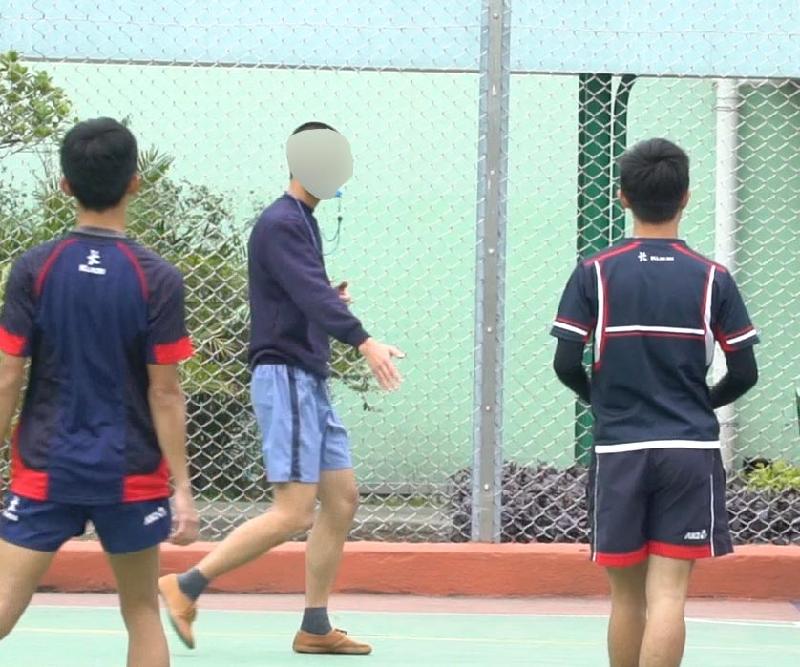
     The Correctional Services Department (CSD) today (March 31) released a video entitled "Try", featuring young persons in custody at Pik Uk Correctional Institution who have completed the Touch Rugby Referee Training elementary course. The course was organised by the CSD and the Hong Kong Rugby Union (HKRU), and aimed to enable young persons in custody to learn to judge right and wrong, build up self-confidence and strengthen their determination for rehabilitation.
      
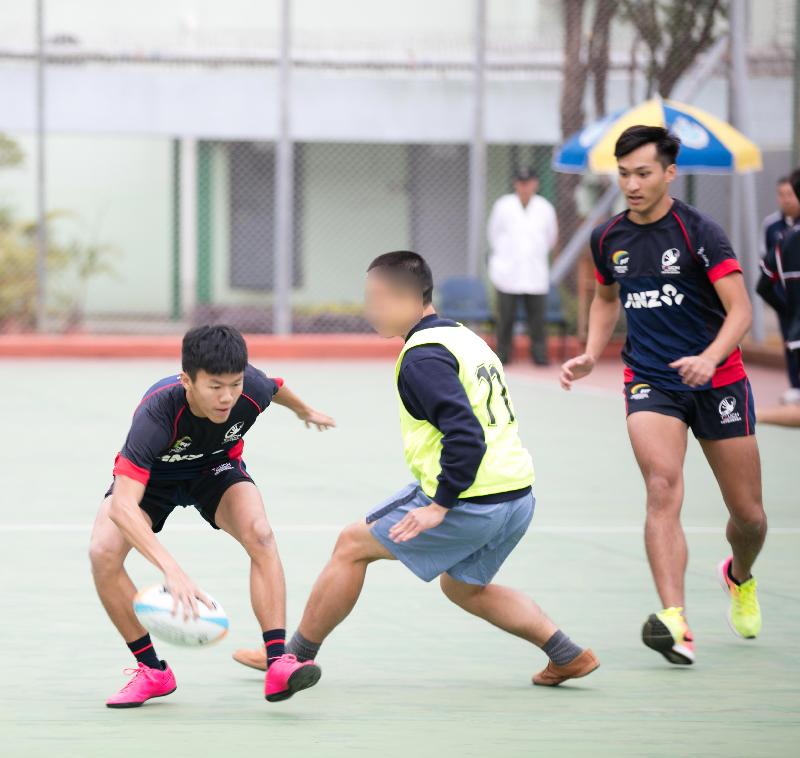
     The video features the young persons in custody discussing their experience and also shows them putting their training into practice by joining a friendly match with the Hong Kong Representative Touch Team and acting as referees in the friendly match.
      
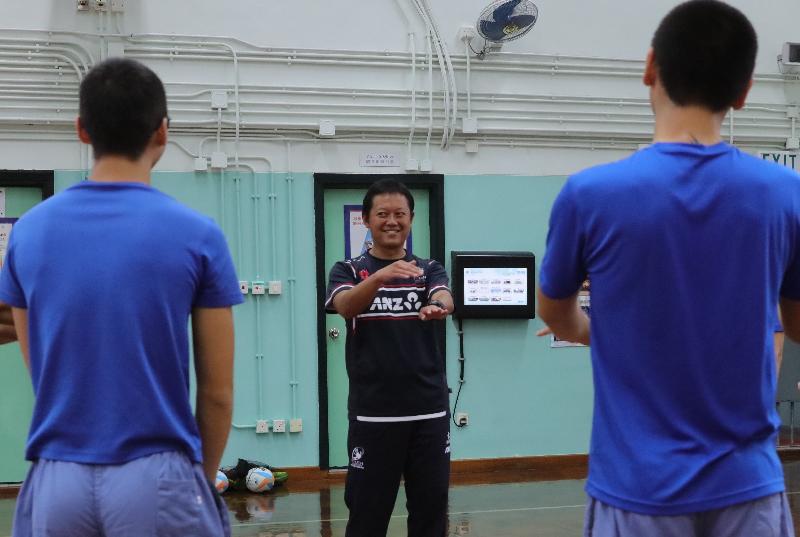
     The Head Coach of the Hong Kong Representative Touch Team, Mr Yong Chi-fung, said in the video that people sometimes fall and even face failures when playing rugby. They have to stand up again on their own. He expressed the hope that young persons in custody will work hard to strive for success and a bright future, just as one must persevere to score a try in matches.
      
     Touch rugby players can score a try when the ball is held to touch the ground in the in-goal area beyond the opponents' goal line. Touch rugby is challenging as it places emphases on speed, response and teamwork. Young persons in custody who participated in the course faced all the challenges with a positive attitude, and finished the friendly match with team spirit.
      
     Members of the public are invited to watch and share the video, which has been uploaded to the CSD YouTube Channel at www.youtube.com/watch?v=v7ML48b3gxc&feature=youtu.be.

Photo  Photo  Photo  


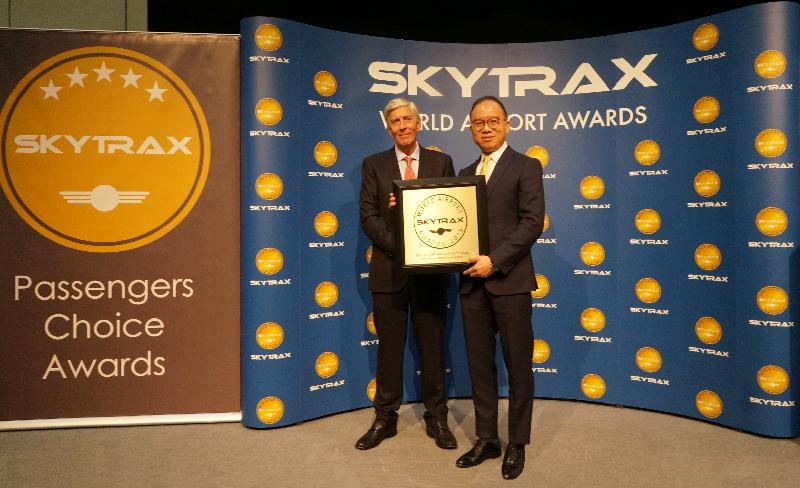
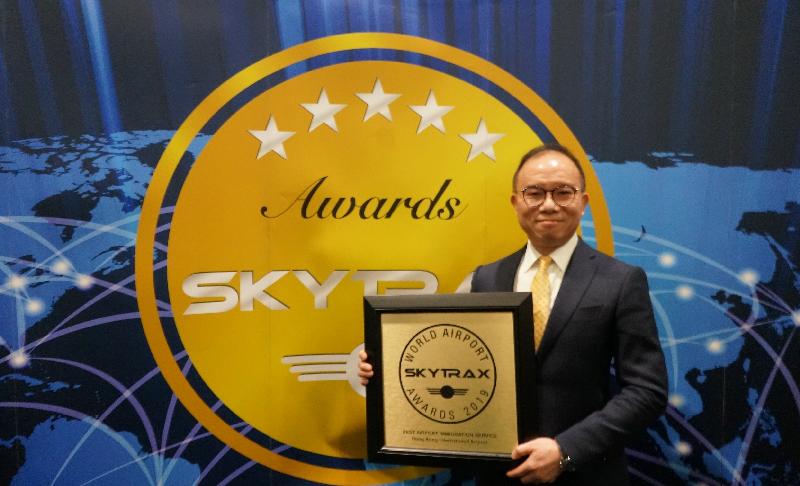
Hong Kong Immigration Department wins 2019 Skytrax Award for Best Airport Immigration Service (with photos)

     The Hong Kong Immigration Department (ImmD) has been voted the winner of the 2019 best airport immigration service award in the World Passenger Survey commissioned by Skytrax, an international specialist research agent of the air transport industry. This is the third time for the ImmD to receive the award after 2015 and 2016. The presentation ceremony was held on March 27 in London.

     Skytrax, a world renowned specialist research agent and advisor of the air transport industry based in the UK, mainly undertakes qualitative audits and research studies for airports and airlines services across the globe. The survey was conducted between August 2018 and February 2019, covering over 550 airports worldwide and the survey questionnaires were collected from over 13 million air passengers of more than 100 nationalities.

     The Director of Immigration, Mr Tsang Kwok-wai, said having received the award in light of the keen competition worldwide, he felt very proud and most encouraged. While he expressed his gratitude to the professionalism and hard work of all immigration staff members, the award is also a recognition to the high morale displayed by all immigration staff, under the staunch support and leadership of the current-term Government, striving to provide excellent services to residents as well as visitors. The services provided by Hong Kong could absolutely meet the world-class standard.

     In the past few years, the ImmD has been striving for excellence and innovation. The department endeavours to provide facilitation to visitors at the Hong Kong International Airport and other immigration control points, including the launch of "Smart Departure" at the end of 2017 that employs face recognition technology for identity verification facilitating self-service departure for eligible visitors without the need of prior enrolment. Such initiative that provides greater travel convenience to passengers has been well received by visitors. By the end of 2018, more than 6.2 million visitors had used the service. To support the long-term development of Hong Kong, the ImmD will continue its close liaison with the immigration authorities worldwide seeking to provide greater travel convenience to passengers.

Photo  Photo