Labour Department highly concerned about fatal work accident that happened yesterday

     The Labour Department (LD) is highly concerned about the work accident that happened in a container terminal at Tuen Mun last night (April 3), in which a female worker, while walking along a vehicle access in the container terminal, was knocked down by a reach stacker and sustained fatal injury. The LD is saddened by the death of the worker and has expressed its deepest sympathy to the victim's family.

     The LD's spokesman said, "We commenced immediate on-site investigation as soon as we were notified of the accident. We have issued suspension notices to the occupier of the premises and the employer involved suspending the use of the vehicle access by workers as foot passageway and use of the reach stacker. The LD will only revoke the suspension notices when we are satisfied that measures to abate the relevant risk have been taken."

     The spokesman added, "We will complete investigation as soon as possible to identify the cause of the accident, ascertain the liability of the duty holders and recommend improvement measures. We will take actions pursuant to the law if there is any violation of the work safety legislation."

     The general duty provisions of the Occupational Safety and Health Ordinance require occupiers of premises/employers to provide safe means of access and egress and safe working environments, plant and systems of work for the employees. Those who contravene the above provisions are liable to a fine of $200,000 and imprisonment for six months.

     In regard to this accident, the LD will issue a Work Safety Alert through its website and email, giving a brief account of the accident concerned to duty holders, workers' unions, professional bodies of safety practitioners and others, and reminding the industry of the importance of following safety precautionary measures to prevent recurrence of similar accidents.

     The LD will also remind the employer concerned of the liability for employees' compensation under the Employees' Compensation Ordinance, assist family members of the deceased to claim employees' compensation and closely follow up on the case. For those with financial difficulties, the LD will assist them to apply for appropriate emergency funds. Subject to the needs and wishes of family members of the deceased, the LD will also liaise with the Social Welfare Department for financial or other assistance.

     For the sake of securing the safety and health of employees at work, the LD appeals to employers to provide plant and systems of work that are safe and without risks to health. Employees should co-operate with their employers, adopt all safety measures and use personal protective equipment provided properly to avoid endangering their own work safety and that of other workers.
Effective Exchange Rate Index

     The effective exchange rate index for the Hong Kong dollar on Thursday, April 4, 2019 is 103.3 (same as yesterday's index).


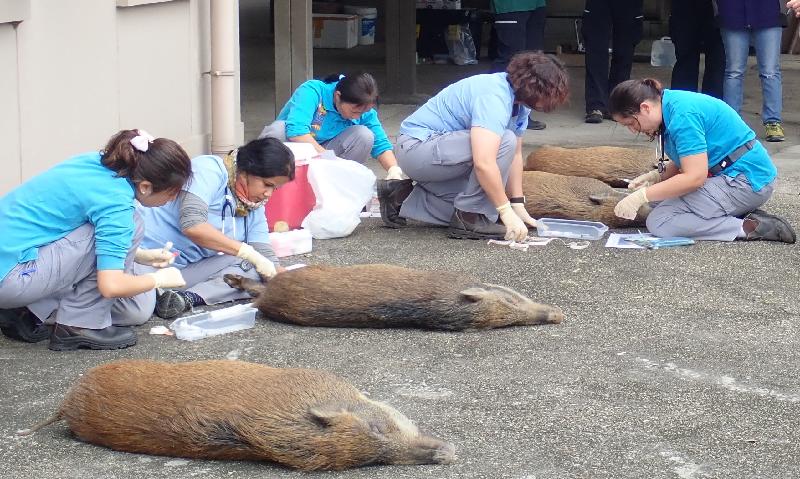
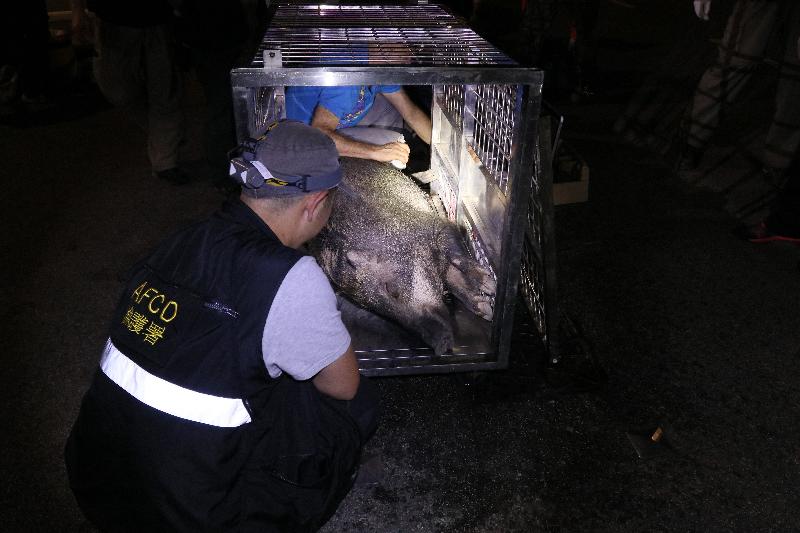
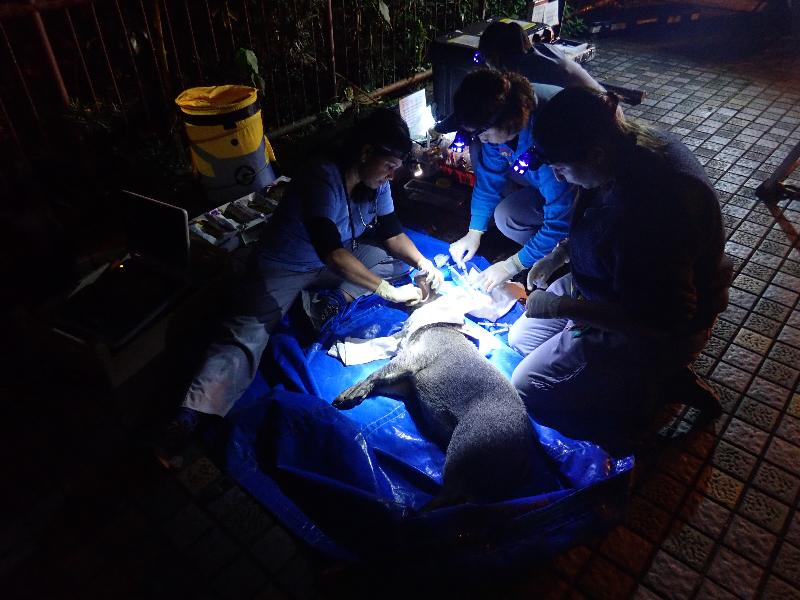
AFCD combats illegal feeding of wild pigs (with photos)

     Under the Wild Animals Protection Ordinance (Cap. 170), Kam Shan, Lion Rock and Shing Mun Country Parks, part of Tai Mo Shan Country Park, Tai Po Kau Nature Reserve and the area of the Caldecott Road and Piper's Hill section of Tai Po Road have been designated as feeding ban areas. Those who feed any wild animal (including wild pigs) in feeding ban areas will be liable to prosecution and a maximum fine of $10,000. In the past month, the Agriculture, Fisheries and Conservation Department (AFCD) conducted a series of special operations in the feeding ban areas to combat illegal feeding of wild animals, including wild pigs, and successfully intercepted 12 cases of illegal feeding of wild animals. The AFCD will continue to take strong measures against illegal feeding of wild pigs and other wild animals.
 
     A spokesperson for the AFCD said, "Feeding wild animals not only leads to the loss of their foraging instincts and changes their behaviour, but also poses nuisance and environmental hygiene problems. Members of the public are urged not to feed wild animals. People feeding wild animals in feeding ban areas may also breach the law." The spokesman stressed that wild animals, including wild pigs, have foraging instincts and food in nature in Hong Kong's countryside can meet their needs, so feeding by humans is unnecessary. The AFCD strives to educate the public not to feed wild animals and learn more about the animals. The AFCD has commissioned Ocean Park Conservation Foundation Hong Kong to offer educational activities and eco-tours in the feeding ban areas during weekends, with a view to enhancing public knowledge and spreading the message of no feeding of wild animals.
 
     Moreover, in order to alleviate the nuisance caused by wild pigs in residential or public areas more effectively, the AFCD has consulted the Legislative Council Panel on Environmental Affairs, other related advisory bodies and the District Councils earlier about the strategies for managing wild pigs. After a comprehensive review of the strategies, the AFCD is adopting a multi-pronged approach, namely managing wild pig nuisance, reducing food attraction for wild pigs, strengthening public education on no feeding of wild animals, and enhancing public understanding of wild pigs.
 
     The AFCD launched the Capture and Contraception/Relocation Programme (CCRP) in 2017 as a pilot scheme to address wild pig nuisance in urban areas. As of March 2019, 45 operations were conducted under the pilot scheme, during which 166 wild pigs were captured. A total of 121 captured wild pigs were relocated to remote countryside areas, while 78 deemed suitable and with good body condition were given contraceptive treatment or sterilised to control the number of wild pigs in the long run. On the other hand, to safeguard public safety, the AFCD will humanely put down individual wild pigs in view of the danger they pose to public safety.
 
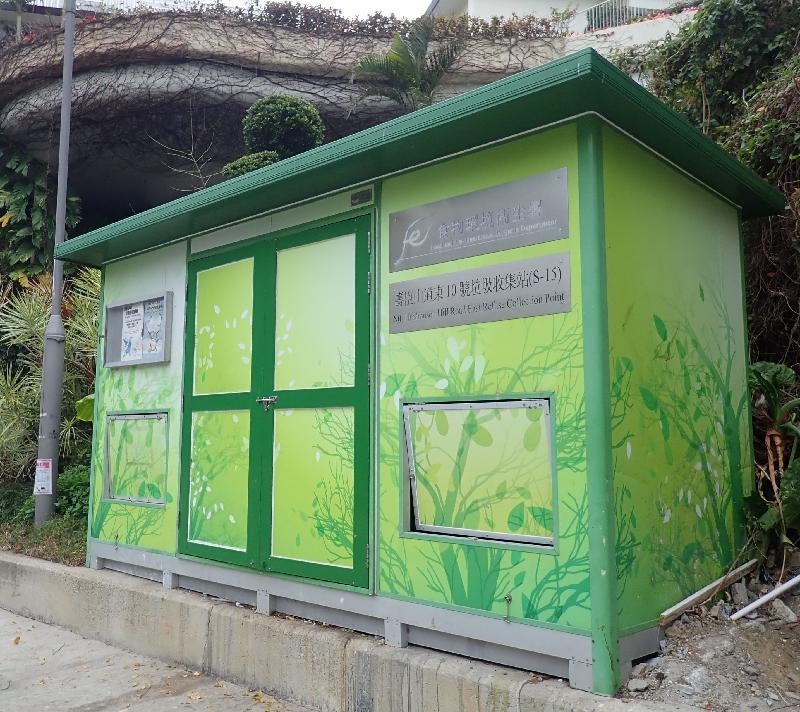
     To reduce nuisance caused by wild pigs and monkeys searching for food at outdoor refuse facilities, the Food and Environmental Hygiene Department (FEHD) has improved a number of affected refuse collection facilities including stabilising rubbish bins, installing doors or walls for refuse collection facilities, and using wildlife-proof litter bins. The AFCD, the FEHD and the Environmental Protection Department are conducting a consultancy study to improve the design of rubbish bins, which will be deployed for field trials in the first half of this year in areas that are wildlife nuisance black spots. If the new designs can effectively minimise the scavenging for food from rubbish bins by wild pigs and monkeys, the FEHD will deploy the newly designed bins to suitable sites when appropriate.
 
     Currently, there is a dedicated team in the AFCD for the management of wild pigs with six members. In order to alleviate the nuisance caused by wild pigs in residential areas more effectively, the AFCD has temporarily deployed eight extra staff from other divisions to assist in wild pig management. In the 2019-20 financial year, the AFCD will increase the manpower responsible to manage wild pig nuisance to 26 staff members, and deploy additional staff during CCRP operations.
 
     Members of the public are also suggested to take heed of the following advice when they encounter wild pigs:
 

  • Keep calm, stay away and leave wild pigs undisturbed;
  • Do not approach any wild pig, including piglets;
  • Do not attempt to drive wild pigs away as it is dangerous to provoke them;
  • Hide behind barriers such as parapets or fences and wait until the wild pigs leave before you proceed; and
  • Do not feed wild pigs.

 
     If a wild pig is found causing nuisance, injured, trapped or wandering in an urban area, members of the public can call 1823 to notify the AFCD for necessary follow-up actions. When a wild pig poses immediate threats to life and property, the public should make a report to the police by calling 999 for urgent assistance.

Photo  Photo  Photo  Photo  


CFS finds Salmonella in rice sample with pig knuckle and BBQ pork

     The Centre for Food Safety (CFS) of the Food and Environmental Hygiene Department announced today (April 4) that a sample of rice with pig knuckle and BBQ pork was found to contain a pathogen, Salmonella. The CFS is following up on the case.
      
     "Following up on a food complaint, the CFS collected the above-mentioned sample from a restaurant in Wan Chai for testing. The test result showed the presence of Salmonella in 25 grams of the sample, exceeding the criterion of the Microbiological Guidelines for Food which states that Salmonella should not be detected in 25 grams of a food sample," a CFS spokesman said.
      
     The spokesman said that the CFS had notified the restaurant concerned of the unsatisfactory test result and instructed it to stop selling the food item concerned immediately. The CFS has also provided health education on food safety and hygiene to the person-in-charge and staff of the restaurant, and requested it to review and improve the food production process and carry out thorough cleaning and disinfection.
      
     "Salmonella infection may cause fever and gastrointestinal upset such as vomiting, abdominal pain and diarrhoea. The effects on infants, young children, the elderly and patients with a weak immune system could be more severe and may even lead to death," the spokesman said.
      
     The CFS will continue to follow up on the incident and take appropriate action to safeguard food safety and public health.


Twenty immigration offenders arrested

     The Immigration Department (ImmD) mounted a territory-wide anti-illegal worker operation codenamed "Twilight" from April 1 to 3. A total of 15 illegal workers and five suspected employers were arrested.
      
     During the operation, ImmD Task Force officers raided 64 target locations including construction sites, a farm, a factory, garbage collection points, massage parlours, a street stall, restaurants and residential buildings. Fifteen illegal workers and five employers were arrested. The illegal workers comprised six men and nine women, aged 27 to 61. Among them, two men were holders of recognisance forms, which prohibit them from taking any employment. Furthermore, one woman was suspected of using and being in possession of a forged Hong Kong identity card. Meanwhile, four men and a woman, aged 47 to 58, were suspected of employing the illegal workers.
      
     "Any person who contravenes a condition of stay in force in respect of him shall be guilty of an offence. Also, visitors are not allowed to take employment in Hong Kong, whether paid or unpaid, without the permission of the Director of Immigration. Offenders are liable to prosecution and upon conviction face a maximum fine of $50,000 and up to two years' imprisonment. Aiders and abettors are also liable to prosecution and penalties," an ImmD spokesman said.
 
     The spokesman warned that, as stipulated in section 38AA of the Immigration Ordinance, illegal immigrants or people who are the subject of a removal order or a deportation order are prohibited from taking any employment, whether paid or unpaid, or establishing or joining in any business. Offenders are liable upon conviction to a maximum fine of $50,000 and up to three years' imprisonment. The Court of Appeal has issued a guideline ruling that a sentence of 15 months' imprisonment should be applied in such cases. It is an offence to use or possess a forged Hong Kong identity card or a Hong Kong identity card related to another person. Offenders are liable to prosecution and a maximum penalty of a $100,000 fine and up to 10 years' imprisonment.

     The spokesman reiterated that it is a serious offence to employ people who are not lawfully employable. The maximum penalty is imprisonment for three years and a fine of $350,000. The High Court has laid down sentencing guidelines that the employer of an illegal worker should be given an immediate custodial sentence. According to the court sentencing, employers must take all practicable steps to determine whether a person is lawfully employable prior to employment. Apart from inspecting a prospective employee's identity card, the employer has the explicit duty to make enquiries regarding the person and ensure that the answers would not cast any reasonable doubt concerning the lawful employability of the person. The court will not accept failure to do so as a defence in proceedings. It is also an offence if an employer fails to inspect the job seeker's valid travel document if the job seeker does not have a Hong Kong permanent identity card. The maximum penalty for failing to inspect such a document is imprisonment for one year and a fine of $150,000.
      
     Under the existing mechanism, the ImmD will, as a standard procedure, conduct initial screening of vulnerable persons, including illegal workers, illegal immigrants, sex workers and foreign domestic helpers, who are arrested during any operation with a view to ascertaining whether they are trafficking in persons (TIP) victims. When any TIP indicator is revealed in the initial screening, the officers will conduct a full debriefing and identification by using a standardised checklist to ascertain the presence of TIP elements, such as threat and coercion in the recruitment phase and the nature of exploitation. Identified TIP victims will be provided with various forms of support and assistance, including urgent interference, medical services, counselling, shelter, temporary accommodation and other supporting services. The ImmD calls on TIP victims to report crimes to the relevant departments.