Transcript of remarks by SFH at media session (with photos)

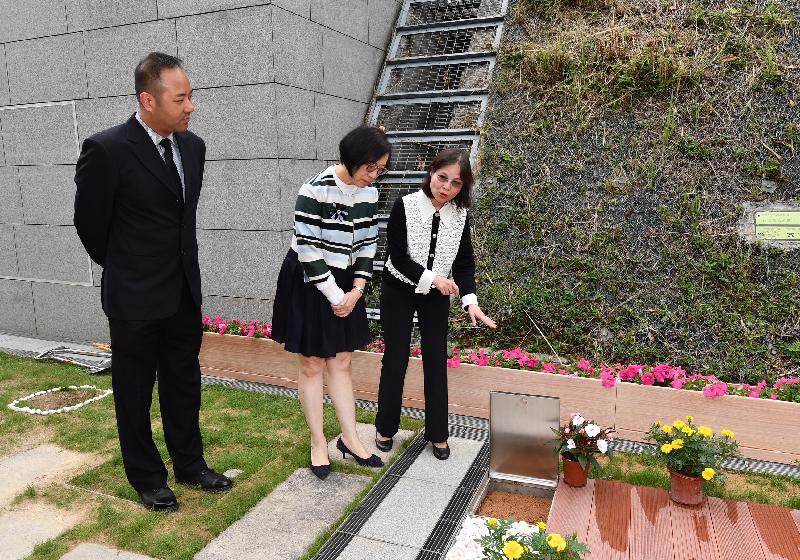
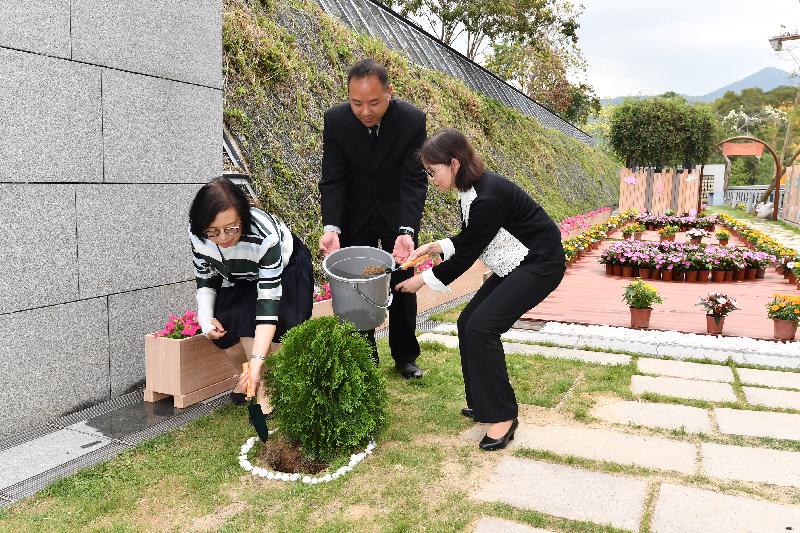
      Following is the transcript of remarks made by the Secretary for Food and Health, Professor Sophia Chan, after inspecting the new facility for keeping abortuses, the Garden of Forever Love, at the Wo Hop Shek Columbarium Phase V today (April 10):

Reporter: Why do you take years to set up this public burial ground since the discussions over the burial of miscarried babies first came about? My second question is: does the Government have any plan to step up the prevention of measles, particularly we have more cases involving people working in the airport. 

Secretary for Food and Health: First of all, we open this facility today. This is the first facility operated by the Government through the Food and Environmental Hygiene Department (FEHD) for burying abortuses of less than 24 weeks. As you can see, the environment is very quiet and we have different facilities for these parents to memorialise their babies or abortuses. We will start receiving applications tomorrow. We have plans to further increase the number of this type of facility in other columbaria – some new columbaria or new facilities within the existing columbaria.

     As far as measles is concerned, the Government's strategy is first to protect our children, that is to ensure there are enough vaccines for our children in Hong Kong under the Childhood Immunisation Programme. Secondly, as the airport is having some outbreaks, people working in the airport are also the target. The Centre for Health Protection has already laid out the criteria of vaccination for airport staff. So far, it is running quite smoothly. The third target group is people who are working with patients, for example, the Hospital Authority's healthcare professionals, in particular, those who are working in high-risk areas. We will monitor the situation and look into whether the existing strategy would need to be changed or further strengthened. Of course, personal hygiene and personal protection are most important for every individual. So we appeal to the public that they should wear a mask if in doubt. They should maintain hand hygiene, wash hands, not go to crowded places and to ensure good air circulation. Finally, they should seek medical advice when they are not feeling well or when they have signs of fever, sneezing or coughing. These are our existing strategies and we will continue to monitor the situation.

(Please also refer to the Chinese portion of the transcript.)
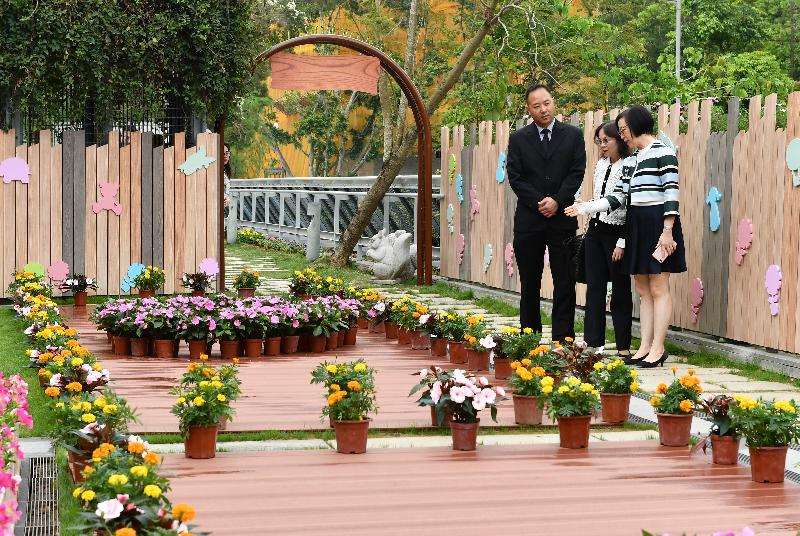
Photo  Photo  Photo  


Tender results of re-opening of 5-year Government Bonds under Institutional Bond Issuance Programme

The following is issued on behalf of the Hong Kong Monetary Authority: 
 
     The Hong Kong Monetary Authority (HKMA), as representative of the Hong Kong Special Administrative Region Government (HKSAR Government), announces that a tender of 3-year Government Bonds through the re-opening of existing 5-year Government Bond issue 05GB2205 under the Institutional Bond Issuance Programme was held today (April 10).
 
     A total of HK$4.0 billion 3-year Government Bonds were offered today.  A total of HK$14.213 billion tender applications were received.  The bid-to-cover ratio, i.e. the ratio of bonds applied for to bonds issued, is 3.55.  The average price accepted is 98.03, implying an annualised yield of 1.822 per cent. 
 

HKSAR Government Institutional Bond Issuance Programme Government Bond tender results
——————————————————————————————————–

     Tender results of the re-opening of 5-year Government Bonds under the Institutional Bond Issuance Programme:
 

Tender Date
 
: April 10, 2019
Issue Number
 
: 05GB2205 (Re-open)
Stock Code
 
: 4234 (HKGB 1.16 2205)
Issue and Settlement Date
 
: April 11, 2019
Tenor
 
: 3-year
Maturity Date
 
: May 18, 2022
Coupon Rate
 
: 1.16%
     
Amount Applied
 
: HK$14.213 billion
Amount Allotted
 
: HK$4.0 billion
Bid-to-Cover Ratio*
 
: 3.55
Average Price Accepted (Yield)
 
: 98.03 (1.822%)
Lowest Price Accepted (Yield)
 
: 97.80 (1.902%)
Pro-rata Ratio : About 18%
 
Average Tender Price (Yield)
 
: 97.59 (1.974%)

 
* Calculated as the amount of bonds applied for over the amount of bonds issued.


CFS announces risk assessment study results on organotin compounds in aquatic products available in local markets

     The Centre for Food Safety (CFS) of the Food and Environmental Hygiene Department announced today (April 10) the results of a recently completed risk assessment study on organotin compounds (OTC) in aquatic products in local markets. About 340 samples of aquatic products were taken at retail level for testing of levels of four OTC with the aim of estimating the exposure of the local adult population to these chemicals through consumption of aquatic products, and to assess the associated health risks. The study results showed that adverse health effects due to dietary exposure to OTC from aquatic products is unlikely. 

     A spokesman for the CFS said, "OTC are a large class of compounds composed of tin (Sn) directly bound to different organic groups. For the four OTC covered in the study, tributyltin (TBT) and triphenyltin (TPT) are widely used as biocides in wood preservatives, algicides and molluscicides in antifouling products on ships, while dibutyltin (DBT) and di-n-octyltin (DOT) are generally used as polyvinyl chlorides (PVC) stabilisers. OTC are relatively persistent in the environment and have a tendency to bioaccumulate in the food chain. The general public is exposed to OTC mostly through intake of fish and seafood."

     The CFS collected a total of 341 samples of aquatic products of three food groups from local markets, i.e. fish (e.g. grass carp, salmon, bigeye and mangrove snapper); crustaceans (e.g. crabs, shrimp and lobsters); and molluscs (e.g. cuttlefish, squid and clams), for testing of the levels of the four OTC. The study results showed that 205 samples (60 per cent) were found to contain at least one OTC, with TPT as the most predominant compound, followed by TBT, DBT and DOT.

     As regards the mean total OTC levels in the three aquatic product groups, fish contained the highest level (24 mcg/kg as Sn), followed by molluscs (15 mcg/kg as Sn) and crustaceans (14 mcg/kg as Sn). This study found that even for the same type of aquatic product, OTC levels varied quite widely among samples.

     For dietary exposure, the study found that the food group "fish" was the major contributor to OTC dietary exposure. The total OTC exposure of average and high consumers of the adult population were 0.02 mcg per kg of body weight (bw) per day as Sn and 0.057 mcg/kg bw per day as Sn respectively. Both levels are below the health-based guidance value (HBGV) for the group of TBT, TPT, DBT and DOT compounds set by the European Food Safety Authority (equivalent to 0.1 mcg/kg bw per day when expressed as Sn) and accounting for about 20 per cent and 57 per cent of the HBGV. It showed that adverse health effects due to OTC exposure in the local adult population from aquatic products available in the local market is unlikely.

     The spokesman noted that although OTC had been found to affect the immune system, cause endocrine disruption and reproductive and developmental effects in animal studies, there is currently not sufficient data to prove that OTC will cause health concerns in humans. The Codex Alimentarius Commission (Codex) has not established any standard for OTC in food.

     He advised the public to maintain a balanced and varied diet which includes a wide variety of meat, vegetables and fruits so as to avoid excessive exposure to any contaminants from a small range of food items. As fish contain many essential nutrients, such as omega-3 fatty acids and high quality proteins, moderate consumption of a variety of fish is recommended.

     The CFS will continue to keep in view the relevant scientific research, risk assessments, regulatory controls and latest development in other countries. The study report is available on the CFS website at www.cfs.gov.hk.


End of winter influenza season 2019

     The Centre for Health Protection (CHP) of the Department of Health today (April 10) announced the end of the winter influenza season. Members of the public are, however, advised to continue to maintain personal, hand and environmental hygiene against respiratory diseases.
 
     "Hong Kong entered the winter influenza season in early January this year. The influenza activity peaked around mid to late January and started to decrease continuously and returned to the baseline level in early April. This season lasted for about 14 weeks from the week of December 30, 2018, to the week ending April 6.
 
     "The predominating virus of this influenza season has been influenza A(H1). Epidemiological experience shows that children are relatively more affected in seasons with a predominance of influenza A(H1) and this was reflected by the large number of outbreaks of influenza-like illness (ILI) in kindergartens/child care centres this season and the high influenza-associated hospitalisation rate among children aged below six this season," a spokesman for the CHP said.
 
     According to the latest surveillance data, the percentage of respiratory specimens that tested positive for seasonal influenza viruses received by the CHP's Public Health Laboratory Services Branch peaked at 30.10 per cent in the week ending January 19 and declined to 6.32 per cent in the week ending April 6.
 
     Meanwhile, the number of institutional ILI outbreaks dropped from 209 cases (affecting 1 575 persons) in the week ending January 19 to 12 cases (69 persons) in the week ending April 6. As of yesterday (April 9) nine ILI outbreaks had been recorded this week affecting 34 persons.
 
     The weekly average rate of the ILI syndrome group in the accident and emergency departments decreased from the peak of 254 cases per 1 000 coded cases in the week ending January 19 to 188.2 in that ending April 6. In the same period, the overall admission rate in public hospitals with a principal diagnosis of influenza also decreased from the peak of 1.59 per 10 000 population to 0.22.
     
     For adults, 601 cases of influenza-associated admission to the Intensive Care Unit or death (356 deaths) were recorded this influenza season (from the week of December 30, 2018, to the week ending April 6). As for children (aged under 18), 24 severe cases (one death) were reported in the same period. About 73 per cent had not received seasonal influenza vaccination for the current season.
 
     As of April 7, about 487 000 and 580 000 doses of seasonal influenza vaccine (SIV) had been administered via the Government Vaccination Programme of free vaccinations and the Vaccination Subsidy Scheme (VSS) of subsidised vaccinations (including Enhanced VSS Outreach Vaccination) respectively, increasing by 2.2 per cent and 73.3 per cent from the same period last season. Including the 121 000 doses administered through the School Outreach Vaccination Pilot Programme, the total number of doses administered via various vaccination programmes was about 1 188 000, representing a 46.5 per cent increase from the same period in the 2017/18 year.
 
     "Although the winter influenza season has ended, members of the public aged six months or above who have not yet received any SIV in the 2018/19 season can still receive it for personal protection against seasonal influenza. However, persons who have already completed seasonal influenza vaccination in the 2018/19 season are not recommended to receive any further dose of SIV within the same season.
 
      "Meanwhile, the public should continue to adopt strict personal, hand and environmental hygiene practices against respiratory illnesses and other infectious diseases," the spokesman added.
 
     The public may visit the CHP's influenza page and weekly Flu Express for more information.


Effective Exchange Rate Index

     The effective exchange rate index for the Hong Kong dollar on Wednesday, April 10, 2019 is 103.5 (same as yesterday's index).