Two fresh beef samples found to contain sulphur dioxide

     The Centre for Food Safety (CFS) of the Food and Environmental Hygiene Department announced today (April 15) that two fresh beef samples were found to contain sulphur dioxide, a preservative which is not permitted to be used in fresh meat. The CFS is following up on the cases.

     A spokesman for the CFS said, "The CFS took the above-mentioned fresh beef samples from two stalls in Quarry Bay Market and Lai Wan Market for testing under its routine Food Surveillance Programme. The test results showed that the samples contained sulphur dioxide at respective levels of 145 parts per million (ppm) and 1 020 ppm."

     According to the Preservatives in Food Regulation (Cap 132BD), it is an offence to add sulphur dioxide to fresh or chilled meat. The maximum penalty is a $50,000 fine and six months' imprisonment.

     Sulphur dioxide is a commonly used preservative in a variety of foods including dried fruits, pickled vegetables and meat products such as sausages and grilled burgers, but under the Regulation it is not permitted in fresh or chilled meat. Nonetheless, individual meat traders have been found illegally using sulphur dioxide to make meat look fresher. This preservative is of low toxicity. As it is water soluble, most of it can be removed through washing and cooking. However, susceptible individuals who are allergic to this preservative may experience breathing difficulties, headache and nausea.

     The spokesman reminded the food trade to comply with the law and not to sell fresh or chilled meat adulterated with sulphur dioxide. Members of the public should purchase meat from reliable market stalls or fresh provision shops. They should avoid buying or consuming meat which is unnaturally red and maintain a balanced diet to avoid malnutrition or excessive exposure to chemicals from a small range of food items.

     The CFS will continue to follow up on the cases and take appropriate action. Investigation is ongoing.
CHP investigates two outbreaks of upper respiratory tract infection

     The Centre for Health Protection (CHP) of the Department of Health is today (April 15) investigating two outbreaks of upper respiratory tract infection (URI) at a kindergarten-cum-child care centre (KG/CCC) in Kowloon City and a residential child care centre in Causeway Bay, and appealed to members of the public and staff of institutions to stay alert and maintain strict personal and environmental hygiene.

     The outbreak at the KG/CCC involved eight boys and 12 girls aged 3 to 6 who have developed URI symptoms including runny nose, cough and sore throat since March 18. All of them sought medical attention. Among them, three required hospitalisation and two have been discharged upon treatment. All patients are now in stable condition.
 
     The respiratory specimens of the three children admitted to hospital tested positive for human metapneumovirus upon laboratory testing.
 
     The outbreak at the residential child care centre affected 15 boys and 16 girls, aged 2 months to 21 months, who have developed similar URI symptoms since April 5. All of them sought medical attention. Among them, 13 required hospitalisation and five of them were discharged following treatment. All patients have been in a stable condition. The respiratory specimens of 11 children admitted to hospital tested positive for respiratory syncytial virus upon laboratory testing.

     Officers of the CHP have conducted site visits and advised the centres to adopt necessary infection control measures against respiratory tract infections. The centres have been placed under medical surveillance.
 
     The public should maintain good personal and environmental hygiene against influenza and other respiratory illnesses:
 

  • Receive seasonal influenza vaccination for personal protection;
  • Wash hands with liquid soap and water properly whenever possibly contaminated;
  • When hands are not visibly soiled, clean them with 70 to 80 per cent alcohol-based handrub;
  • Cover the nose and mouth when sneezing or coughing, and wash hands thoroughly afterwards;
  • Dispose of soiled tissue paper properly in a lidded rubbish bin;
  • Put on a surgical mask when respiratory symptoms develop;
  • Maintain good indoor ventilation;
  • Avoid going to crowded or poorly ventilated public places; high-risk individuals may consider putting on surgical masks when staying in such places; and
  • Maintain a balanced diet, exercise regularly, take adequate rest, do not smoke and avoid overstress.

     Members of the public, particularly children, the elderly and those with chronic diseases, should wear a face mask and consult a doctor promptly if they develop symptoms of respiratory tract infection.


Hong Kong Customs steps up enforcement action at boundary control points against illicit heat-not-burn products (with photos)

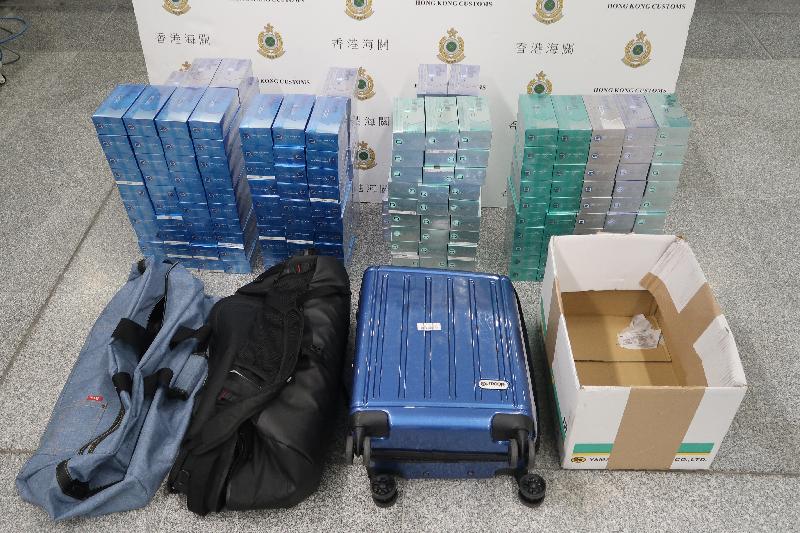
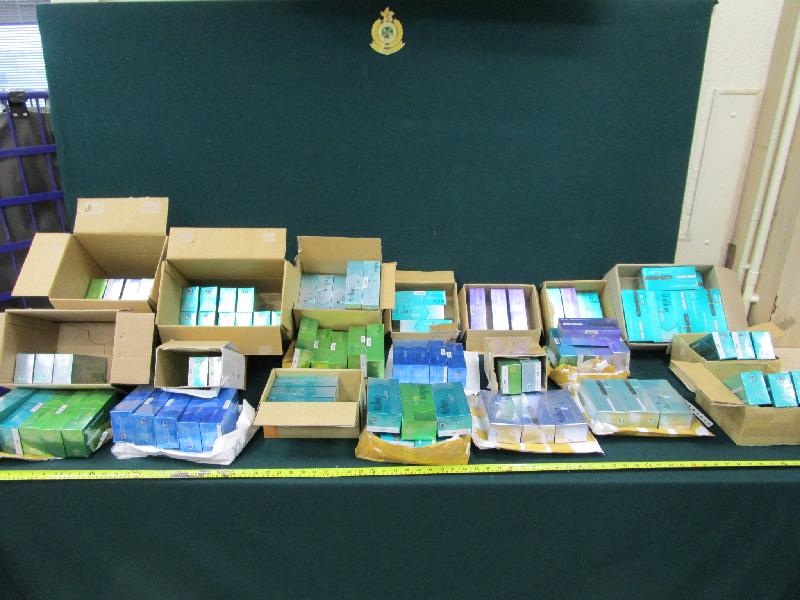
     Hong Kong Customs has mounted a special operation code-named "Tidal Wave", focusing on illicit heat-not-burn (HNB) products smuggled into Hong Kong, at the airport, seaport, land boundary and railway control points since January 1 this year. Until yesterday (April 14), Customs detected a total of 225 cases, arrested 195 persons and seized about 1.26 million suspected illicit HNB products with an estimated market value of about $3.6 million and a duty potential of about $2.4 million.

     The "Tidal Wave" operation is ongoing.

     On February 15 this year, the Government published in the Gazette the Smoking (Public Health) (Amendment) Bill 2019, which aims to ban the import, manufacture, sale, distribution and advertisement of alternative smoking products, including HNB products.

     A Customs spokesman said that the department has been concerned about the smuggling trend of HNB products and will continue its risk assessment and intelligence analysis strategy to step up enforcement against smuggling activities of such products through passenger and cargo channels.

     With the imminent arrival of festive holidays, Customs will step up deployment for stringent enforcement.

     Under the Dutiable Commodities Ordinance (DCO), tobacco products are dutiable goods to which the DCO applies. All HNB products containing tobacco in content are also dutiable goods subject to the control of the DCO. Any person who imports, possesses, sells or buys dutiable commodities without a valid licence commits an offence. The maximum penalty upon conviction is a fine of $1 million and imprisonment for two years.

     Members of the public may call Customs' hotline 2815 7711 to enquire whether a specific tobacco or smoking product is regulated by the DCO. They may also report any suspected violation of the DCO to Customs' 24-hour hotline 2545 6182 or its dedicated crime-reporting email account (crimereport@customs.gov.hk).

Photo  Photo  


Hong Kong Customs teams up with Mainland Customs to combat cross-boundary counterfeit goods activities (with photos)

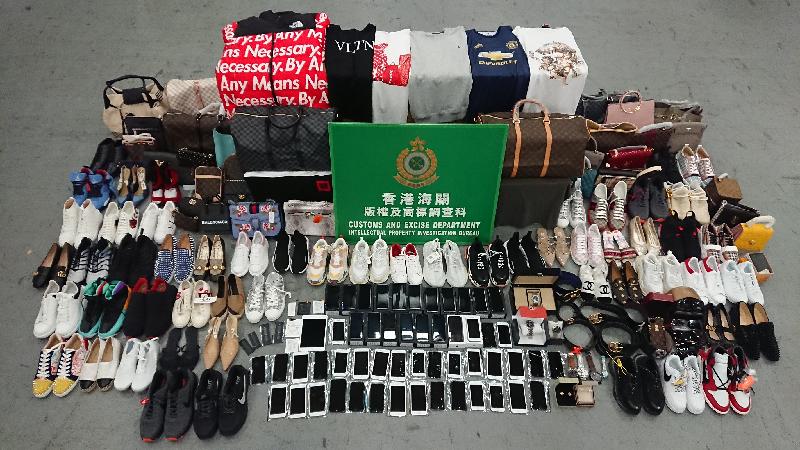
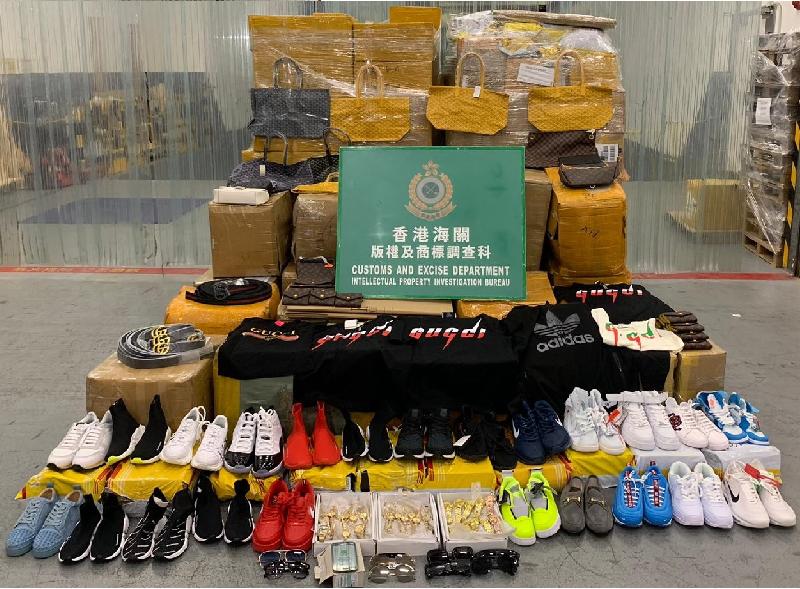
     â€‹Hong Kong Customs and the Mainland Customs conducted a joint operation from April 1 to yesterday (April 14) to combat cross-boundary counterfeit goods activities with goods destined for European countries. During the operation, Hong Kong Customs seized about 4 200 items of suspected counterfeit goods with an estimated market value of about $1 million.

     Hong Kong Customs and the Mainland Customs stepped up inspection of goods destined for European countries during the operation and Hong Kong Customs seized about 4 200 items of suspected counterfeit goods, including mobile phones, watches, footwear and clothes, effectively curbing cross-boundary counterfeit goods activities.

     Hong Kong Customs and the Mainland Customs have been working closely to combat cross-boundary counterfeiting activities through intelligence exchanges and joint enforcement actions. Hong Kong Customs will continue to collaborate closely with the Mainland and overseas law enforcement agencies targeting cross-boundary counterfeiting activities.

     Under the Trade Descriptions Ordinance, any person who imports or exports counterfeit goods commits an offence. The maximum penalty upon conviction is a fine of $500,000 and imprisonment for five years.

     Members of the public may report any suspected counterfeiting activities to Customs' 24-hour hotline 2545 6182 or its dedicated crime-reporting email account (crimereport@customs.gov.hk).

Photo  Photo  


Latest test results of opening-up investigation in second stage of holistic assessment strategy for Hung Hom Station Extension under Shatin to Central Link Project

     The latest test results of the opening-up investigation in the second stage of the holistic assessment strategy for the Hung Hom Station Extension under the Shatin to Central Link (SCL) project (as at April 15) are now available at the Highways Department's website for the SCL project (www.hyd.gov.hk/en/road_and_railway/railway_projects/scl/index.html) for reference by the public.