Update on measles cases

     The Centre for Health Protection of the Department of Health (DH) said today (April 16) that no additional case of measles infection has been recorded as at 4pm today.

     Regarding measles control measures implemented at Hong Kong International Airport (HKIA), a total of 26 persons received measles vaccination at the airport vaccination station as at 6pm today, bringing the cumulative number of vaccinations given to 8 186.

     From tomorrow (April 17) to April 28, the vaccination quota for the measles vaccination station at the airport remains at 500 doses daily. Vaccination for eligible airport staff will be provided to the following target groups who:

(1) Were born in or after 1967, and have not received two doses of measles vaccination, and have not been infected with measles before, and with evidence of living with infants under 1 year old or living with pregnant women; or

(2) Have laboratory evidence of testing not positive against measles antibody (IgG).

     Details of evidence are as follows:

(a) Supporting documents for living with infants under 1 year old: for example, birth certificate, discharge summary or vaccination card of the infant

(b) Supporting documents for living with pregnant women: for example, positive pregnancy tests or antenatal follow-up cards of the pregnant women

(c) Supporting documents for laboratory evidence: for example, blood results from the DH's measles serology test or any laboratory within the past 12 months

     The venue and operation hours of the airport vaccination station are as follows:
 

Venue: Multi-function Room, HKIA Tower (Level 5, Terminal 2)  
Hours: April 17 to 28
10am to 1pm
2pm to 6pm


     As for the blood test service, the DH will continue to arrange the provision of a measles serology test service for airport staff to identify those who need the measles vaccination. A DH contractor will provide the blood test service for about 200 airport staff who were born in or after 1967 daily from Tuesdays to Thursdays (April 16 to 18 and 23 to 25). Twenty-six blood samples have been collected today. The DH will notify the participants individually of the serology results.

     The venue and operation hours of the airport blood test station are as follows:
 

Venue: South side before the Immigration Hall at Level 3 of Terminal 2 (non-restricted area)  
Hours: April 16 to 18 and 23 to 25
9am to 1pm


     A hotline (2125 1122) has been set up for public enquiries and operates during office hours from Mondays to Fridays. A total of 3 185 enquiries have been received so far.

     "The incubation period (the period from infection to appearance of illness) of measles ranges from seven days to 21 days. Symptoms of measles include fever, skin rash, cough, runny nose and red eyes. If symptoms arise, members of the public should wear surgical masks, stop going to work or school and avoid going to crowded places. They should also avoid contact with non-immune persons, especially persons with weakened immunity, pregnant women and children aged below 1. Those suspected to have been infected are advised to seek medical attention as early as possible and reveal relevant contact history of measles to healthcare professionals," the spokesman advised.
CE meets Secretary of CPC Hunan Provincial Committee (with photos)

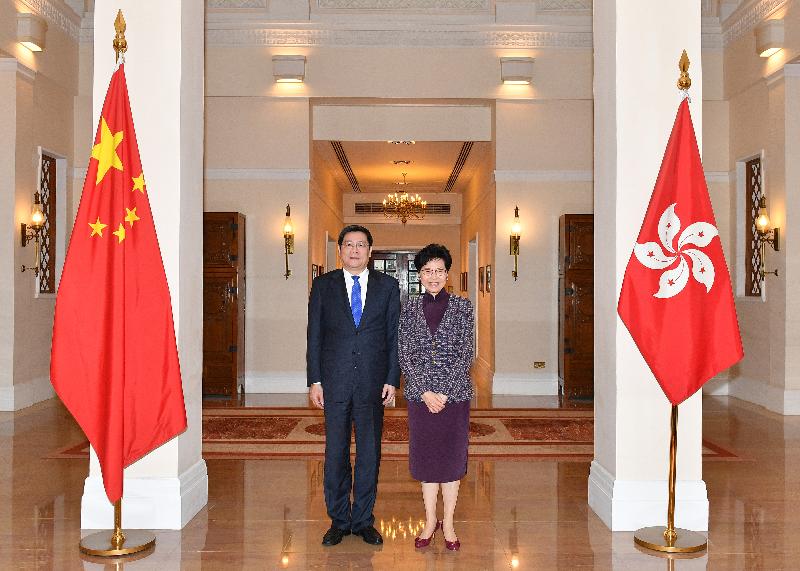
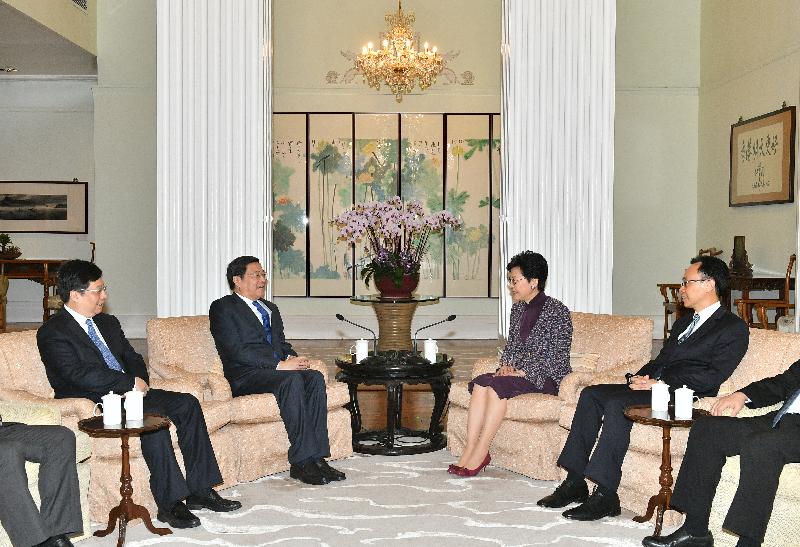
     The Chief Executive, Mrs Carrie Lam, met the Secretary of the CPC Hunan Provincial Committee, Mr Du Jiahao, at Government House this afternoon (April 16). The Secretary for Constitutional and Mainland Affairs, Mr Patrick Nip, also attended the meeting.
 
     Welcoming Mr Du's first visit to Hong Kong in his capacity as the Secretary of the CPC Hunan Provincial Committee with a delegation, Mrs Lam said she was particularly pleased to know that Mr Du had chosen to take the high-speed rail for the round trip and will be able to go back to Changsha on a direct train from West Kowloon Station. She congratulated Hunan Province for the successful hosting of the 2019 Hunan-Guangdong-Hong Kong-Macao Greater Bay Area Conference yesterday (April 15) and the signing of many investment projects for Hunan. She said that the Guangdong-Hong Kong-Macao Greater Bay Area is a key national development strategy covering not only enterprises in Guangdong, Hong Kong and Macao, but also those further afield. She welcomed Hunan Province to host promotion week events with the theme of connecting Hunan Province and the Greater Bay Area to deepen economic and trade co-operation between them, seizing together the opportunities brought about by the development of the Greater Bay Area. She encouraged Hunan enterprises to leverage Hong Kong's advantages as a highly open and international city with an open and facilitating business environment as well as quality professional services to develop businesses and "go global".
 
     She said that Hong Kong and Hunan Province have all along held close trade and economic ties, in particular with the Hunan Liaison Unit set up by the Hong Kong Special Administrative Region Government in 2016, and thanked Hunan Province for its staunch support for the work of the unit. She added that Hong Kong has strong complementarity with Hunan in a number of industries and looks forward to enhancing co-operation in areas including modern services industries, financial services, innovation and technology and tourism between the two places.

Photo  Photo  


CE meets Chairman of People First Party (with photos)

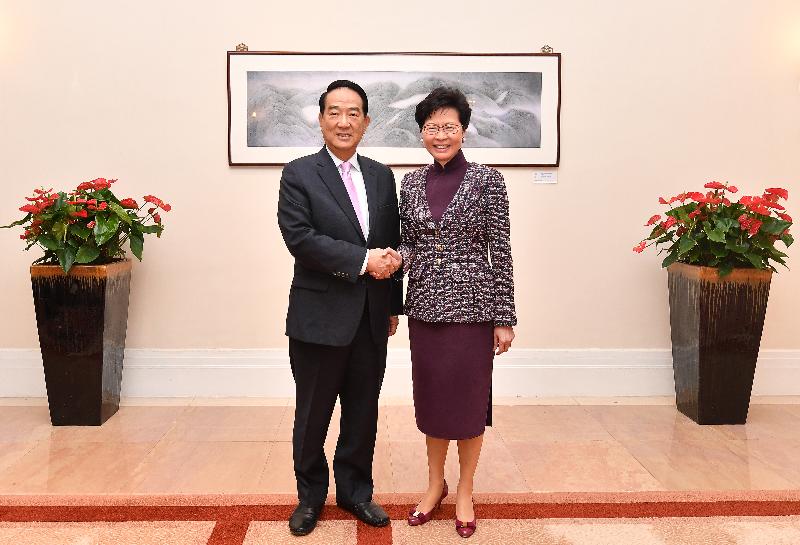
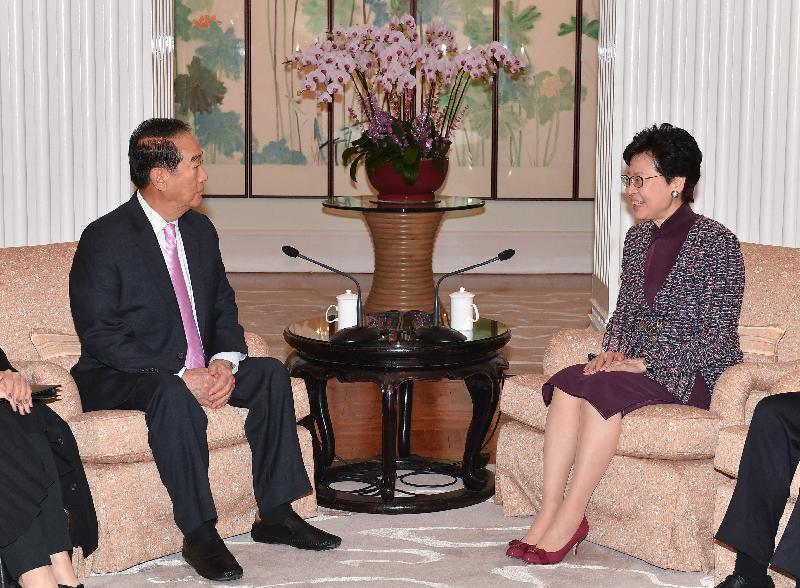
      The Chief Executive, Mrs Carrie Lam, met with the visiting Chairman of the People First Party, Mr James Soong, this afternoon (April 16) at Government House. The Secretary for Constitutional and Mainland Affairs, Mr Patrick Nip, was also present.
 
     Mrs Lam welcomed Mr Soong's visit to Hong Kong, which is the first stop of his trip to cities of the Guangdong-Hong Kong-Macao Greater Bay Area, and wished his visit every success. She said the Greater Bay Area is one of the most open and economically vibrant regions of China with great development potential and will bring about immense opportunities. Pointing out that Hong Kong is one of the core cities of the Greater Bay Area and will play an active role in its development, she said the Hong Kong Special Administrative Region Government is committed to promoting the development of high-end and high value-added financial, commercial and trading, logistics and professional services as well as advancing innovation and technology and establishing Hong Kong as the centre for international legal and dispute resolution services in the Asia-Pacific region. She encouraged Taiwan enterprises to use Hong Kong as a platform to explore the business opportunities in the Greater Bay Area.

Photo  Photo  


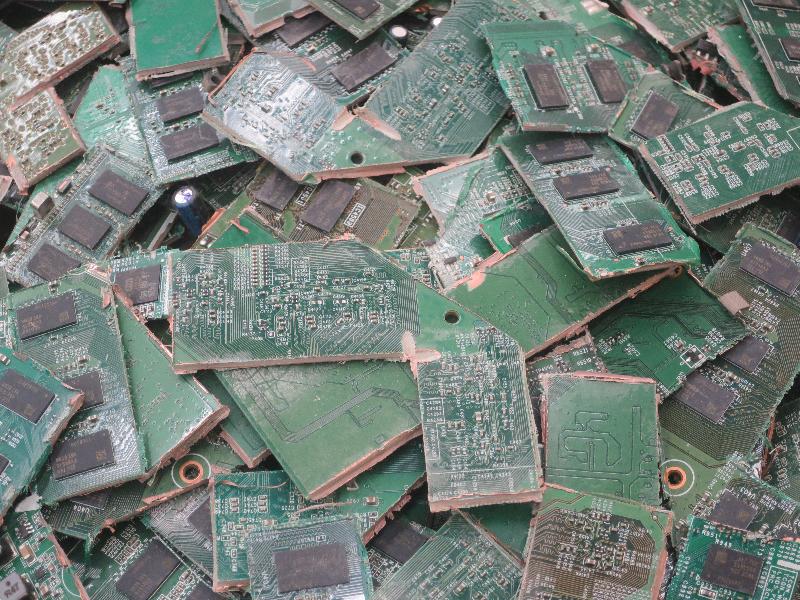
EPD successfully intercepts import of hazardous electronic waste from United States by air (with photo)

     The Environmental Protection Department (EPD) successfully intercepted a case of illegal import of hazardous electronic waste (e-waste) from the United States at Hong Kong International Airport. The importer concerned, Tung Way Company, was convicted at the Fanling Magistrates' Courts today (April 16) for contravening the Waste Disposal Ordinance (WDO) and fined $16,500.

     The EPD has all along been taking strict enforcement action to combat illegal import of hazardous e-waste through different channels. With the assistance of the Customs and Excise Department, the EPD intercepted a batch of air cargo at Hong Kong International Airport in November last year. It was claimed to contain used electronic parts. After inspection, it was found to be loaded with hazardous e-waste comprising waste printed circuit boards (PCBs), with a market value of about $100,000. The EPD immediately returned the intercepted hazardous e-waste to its place of origin and notified the local enforcement authority concerned about the return shipment. The department also instigated prosecution against the importer concerned in accordance with the WDO.

     An EPD spokesman stressed that waste PCBs are hazardous e-waste containing various heavy metals and other toxic chemical substances. They are classified as chemical waste and are regulated by the existing laws on chemical waste disposal. The EPD will continue to rigorously combat the illegal import and export activities of hazardous waste to protect the environment.

     The spokesman reminded importers of the waste recycling trade not to illegally import (including import into or transshipment through Hong Kong) or export hazardous waste. According to the WDO, it is an offence for anyone to import or export hazardous waste without obtaining a valid permit beforehand. First-time offenders are liable to a maximum fine of $200,000 and six months' imprisonment. For subsequent offences, offenders are liable to a maximum fine of $500,000 and two years' imprisonment.

     Members of the public may visit the EPD's website for more information about the control of chemical waste: www.epd.gov.hk/epd/english/environmentinhk/waste/guide_ref/guide_cwc.html.

Photo  


Monetary Authority announces countercyclical capital buffer for Hong Kong

The following is issued on behalf of the Hong Kong Monetary Authority:
 
     The Monetary Authority announced today (April 16) that the countercyclical capital buffer (CCyB) for Hong Kong will remain at 2.5 per cent.
 
     "System-wide risks in Hong Kong associated with a period of excessive credit growth have not subsided. Housing affordability remains highly stretched, and there have been signs that the residential property prices have been recovering," the Monetary Authority, Mr Norman Chan, said. "It is therefore appropriate to maintain the CCyB at 2.5 per cent at this juncture, providing additional buffer to shock should systemic risks crystallise."
 
     Further details of the decision may be found in the Announcement of the CCyB to authorised institutions on the Hong Kong Monetary Authority's website.
 
Background
 
     In setting the CCyB rate the Monetary Authority considered a series of quantitative indicators and qualitative information including an "indicative buffer guide" (which is a metric providing a guide for CCyB rates based on the gap between the ratio of credit to GDP and its long term trend, and between the ratio of residential property prices to rentals and its long term trend). The latest indicative buffer guide, calculated based on 2018 Q4 data, signals a lower CCyB of 0.75 per cent mostly due to the recent narrowing of the property price to rental gap from more than 10 per cent in the previous quarter to slightly below 3 per cent, partly reflecting the correction in the residential property prices after mid-2018. The credit to GDP gap, however, remains at significantly elevated level of over 12 per cent.
 
     Whilst the indicative buffer guide, as its name suggests, provides only a "guide" for CCyB decisions, the determination of a CCyB ratio is not a mechanical exercise and, in addition to the indicative buffer guide, the Monetary Authority also reviewed a range of other reference indicators. These included measures of: bank, corporate and household leverage; debt servicing capacity; profitability and funding conditions within the banking sector and macroeconomic imbalances. The information drawn from these sources suggests that a CCyB of 2.5 per cent would be more appropriate at this stage.
 
     The CCyB is an integral part of the Basel 3 regulatory capital framework and is being implemented in parallel by Basel Committee member jurisdictions worldwide. The CCyB has been designed by the Basel Committee to increase the resilience of the banking sector in periods of excess credit growth. The banking sector can then act as a "shock absorber" in times of stress, rather than as an amplifier of risk to the broader economy.
 
     The specific CCyB requirement applicable to a given authorised institution (AI) is expressed as a percentage of its Common Equity Tier 1 capital to its total risk-weighted assets. Each AI's CCyB requirement may vary depending on the geographic mix of its private sector credit exposures and the CCyB rate applicable in each jurisdiction where it has such exposures.
 
     The power to implement the CCyB in Hong Kong is provided by the Banking (Capital) Rules, which enable the Monetary Authority to announce a CCyB rate for Hong Kong if the Monetary Authority considers that a period of excessive credit growth in Hong Kong is leading to a build-up of system-wide risks in the financial system of Hong Kong.