Building Safety Symposium concludes Building Safety Week 2019 (with photos)

     Some 500 participants including building professionals, members of the building management sector, government officials and academics attended the Building Safety Symposium 2019 held at the Hong Kong Convention and Exhibition Centre today (May 3) to exchange views on building safety issues.

     Addressing the symposium's opening ceremony, the Under Secretary for Development, Mr Liu Chun-san, said that the Government attaches great importance to the problem of ageing buildings. However, it is difficult to thoroughly improve the repair and maintenance of private buildings if one relies solely on enforcement work. Hence, the Government has introduced a number of policy initiatives over the past years to raise the awareness of property owners about building repair and maintenance. Together with co-operation from the industry, recent years have seen rising public awareness of building safety.

     Mr Liu noted that the Mandatory Building Inspection Scheme and the Mandatory Window Inspection Scheme, which were implemented in 2012, tackle problems on building safety and maintenance at root by upholding the concept of "prevention is better than cure". Operation Building Bright 2.0 (OBB 2.0), which was jointly launched in mid-2018 by the Buildings Department and the Urban Renewal Authority, offers technical and financial assistance to owners of old buildings in need, and assists them in co-ordinating necessary building inspection and repair works. Moreover, the Buildings Department conducts risk assessment on buildings whose owners are unable to comply with mandatory building inspection notices by themselves, and arranges for government contractors to carry out inspection and repair works on selected target buildings. Mr Liu said he hoped that with OBB 2.0, some 2,500 old buildings will have repair works underway by 2023.

     The Director of Buildings, Mr Cheung Tin-cheung, in his welcoming speech, said that the symposium, as the closing event of Building Safety Week 2019, provided a good opportunity for the industry to add value and exchange ideas. He said he hoped that the experience shared by the speakers would lead to further reflection and discussion of building safety issues among participants.

     Mr Cheung said that under the theme of this year's symposium, "Holistic approach on building safety", various speakers had shared their views and experience on innovative technologies applicable to the construction industry. As science and technology are ever-changing, he called on the construction sector to make use of better technologies and search for more effective, quality-assured construction methods, and to continuously update their knowledge to cope with the impact and challenges brought by new technologies.

     A number of local and overseas experts from Singapore and Italy were invited to give speeches and share their experience on the following topics:
 

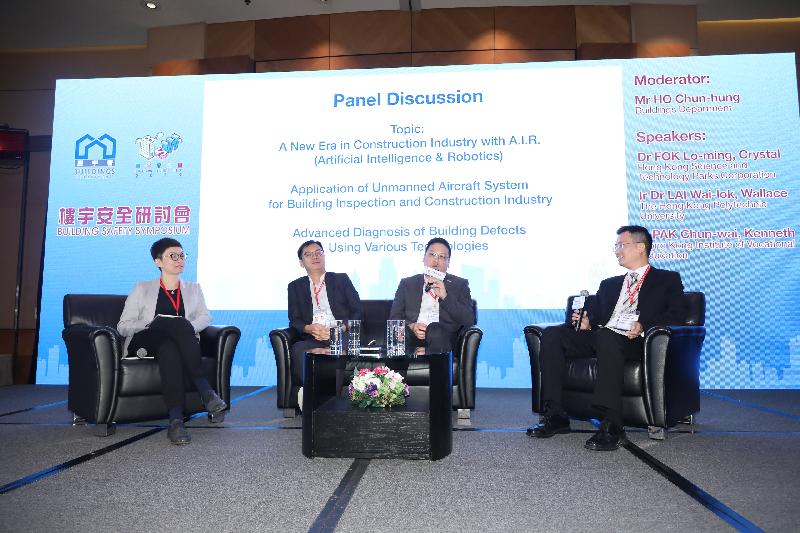
  • A New Era in Construction Industry with A.I.R. (Artificial Intelligence & Robotics);
  • Application of Unmanned Aircraft System for Building Inspection and Construction Industry;
  • Advanced Diagnosis of Building Defects Using Various Technologies;
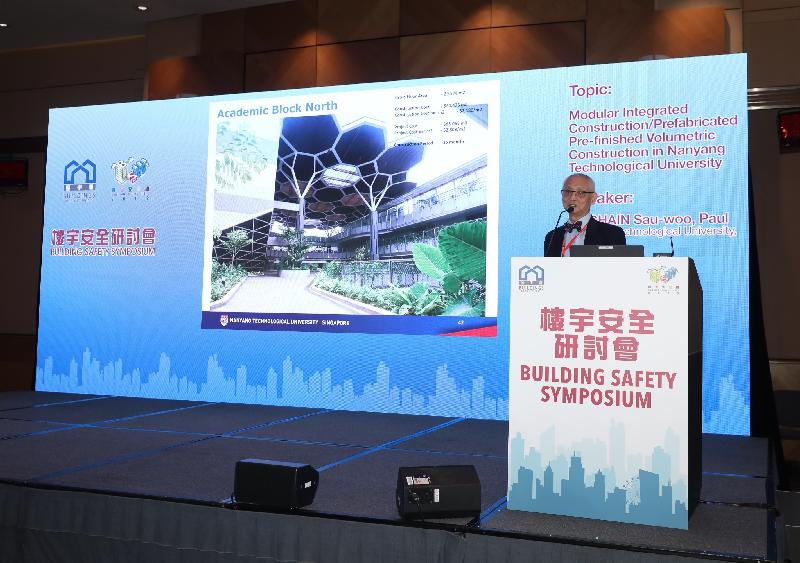
  • Modular Integrated Construction/Prefabricated Pre-finished Volumetric Construction in Nanyang Technological University;
  • Legislation for Fire Safety Improvement Works to Existing Buildings in Hong Kong; and
  • Cyclone-resistant Facade Systems: Design, Post-Event Inspection and Repair.

     In addition to the speeches mentioned above, the symposium also featured two panel discussion sessions.

     The Building Safety Symposium 2019 was the finale of the six-day Building Safety Week 2019. Over the past few days, the Buildings Department staged a series of activities to help members of the public better understand building safety messages and foster a buildings care culture. Programme highlights included the opening ceremony at Tai Kwun, public talks, Building Information Centre Open Day, and the Registered Inspectors Briefing Session.
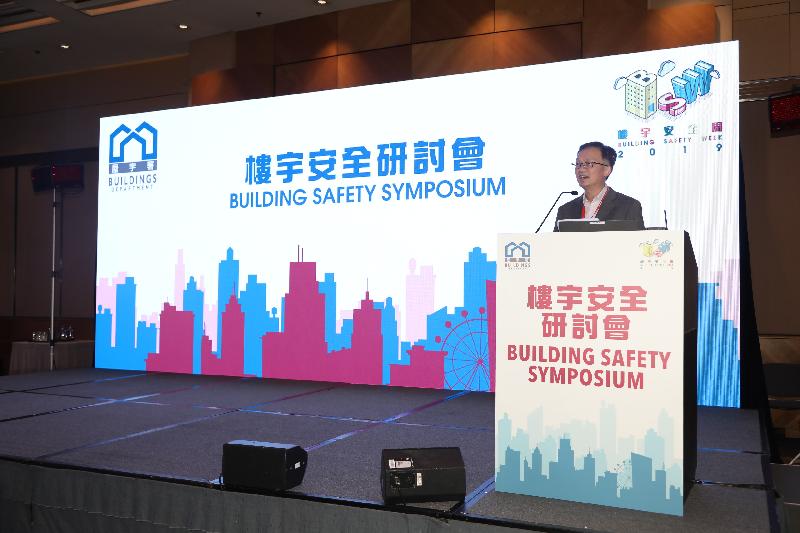
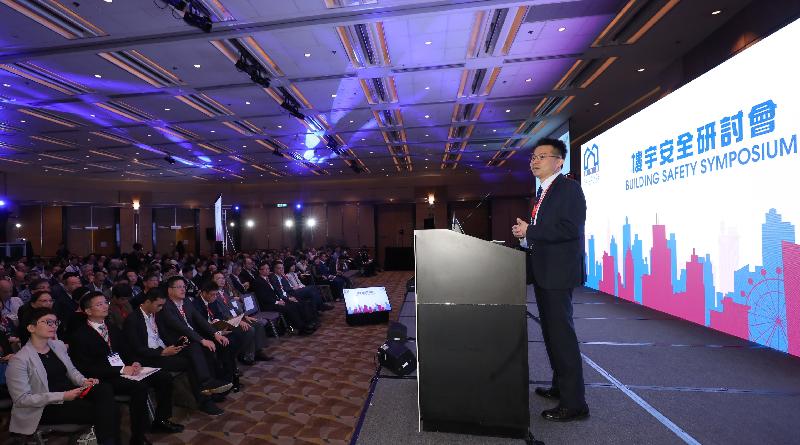
Photo  Photo  Photo  Photo  


Provisional statistics of retail sales for March 2019

     The Census and Statistics Department (C&SD) released the latest figures on retail sales today (May 3).

     The value of total retail sales in March 2019, provisionally estimated at $39.7 billion, edged down by 0.2% compared with the same month in 2018. The revised estimate of the combined value of total retail sales in January and February 2019 decreased by 1.6% compared with the same period a year earlier. For the first quarter of 2019, it was provisionally estimated that the value of total retail sales decreased by 1.2% compared with the same period in 2018.

     After netting out the effect of price changes over the same period, the provisional estimate of the volume of total retail sales in March 2019 decreased by 0.8% compared with a year earlier. The revised estimate of the combined volume of total retail sales in January and February 2019 decreased by 1.9% compared with the same period a year earlier. For the first quarter of 2019, the provisional estimate of the total retail sales decreased by 1.6% in volume compared with the same period in 2018.

     Analysed by broad type of retail outlet in descending order of the provisional estimate of the value of sales and comparing March 2019 with March 2018, the value of sales of jewellery, watches and clocks, and valuable gifts decreased by 2.6%. This was followed by sales of wearing apparel (-2.3% in value); electrical goods and other consumer durable goods, not elsewhere classified (-15.6%); books, newspapers, stationery and gifts (-2.5%); and optical shops (-5.7%).

     On the other hand, the value of sales of commodities in supermarkets increased by 3.3% in March 2019 over a year earlier. This was followed by sales of medicines and cosmetics (+2.5% in value); commodities in department stores (+5.0%); food, alcoholic drinks and tobacco (+3.6%); other consumer goods, not elsewhere classified (+7.2%); motor vehicles and parts (+0.2%); fuels (+6.4%); footwear, allied products and other clothing accessories (+7.1%); furniture and fixtures (+4.3%); and Chinese drugs and herbs (+1.0%).

     Based on the seasonally adjusted series, the provisional estimate of the value of total retail sales increased by 1.0% in the first quarter of 2019 over the preceding quarter, while the provisional estimate of the volume of total retail sales increased by 0.2%.

     These retail sales statistics measure the sales receipts in respect of goods sold by local retail establishments and are primarily intended for gauging the short-term business performance of the local retail sector. They cover consumer spending on goods but not on services (such as those on housing, catering, medical care and health services, transport and communication, financial services, education and entertainment) which account for over 50% of the overall consumer spending. Moreover, they include spending on goods in Hong Kong by visitors but exclude spending outside Hong Kong by Hong Kong residents. Hence they should not be regarded as indicators for measuring overall consumer spending.

     Users interested in the trend of overall consumer spending should refer to the data series of private consumption expenditure (PCE), which is a major component of the Gross Domestic Product published at quarterly intervals. Compiled from a wide range of data sources, PCE covers consumer spending on both goods (including goods purchased from all channels) and services by Hong Kong residents whether locally or abroad. Please refer to the C&SD publication "Gross Domestic Product (Quarterly)" for more details.

Commentary

     A government spokesman said that retail sales declined slightly on a year-on-year basis in March and in the first quarter as a whole, reflecting the cautious consumption sentiment amid various external uncertainties. Nevertheless, the decline in March narrowed somewhat from that in January and February combined.

     The spokesman pointed out further that, looking forward, retail sales business should continue to be affected by various external uncertainties in the near term, but the largely stable labour market and the sustained growth in inbound tourism should provide some support. The Government will closely monitor the situation.

Further information

     Table 1 presents the revised figures on value index and value of retail sales for all retail outlets and by broad type of retail outlet for February 2019 as well as the provisional figures for March 2019. The provisional figures on the value of retail sales for all retail outlets and by broad type of retail outlet as well as the corresponding year-on-year changes for the first quarter of 2019 are also shown.

     Table 2 presents the revised figures on volume index of retail sales for all retail outlets and by broad type of retail outlet for February 2019 as well as the provisional figures for March 2019. The provisional figures on year-on-year changes for the first quarter of 2019 are also shown.

     Table 3 shows the movements of the value and volume of total retail sales in terms of the year-on-year rate of change for a month compared with the same month in the preceding year based on the original series, and in terms of the rate of change for a three-month period compared with the preceding three-month period based on the seasonally adjusted series.

     The classification of retail establishments follows the Hong Kong Standard Industrial Classification (HSIC) Version 2.0, which is used in various economic surveys for classifying economic units into different industry classes.

     More detailed statistics are given in the "Report on Monthly Survey of Retail Sales". Users can download this publication free of charge at the website of the C&SD (www.censtatd.gov.hk/hkstat/sub/sp320.jsp?productCode=B1080003). Alternatively, the historical series of retail sales statistics can be downloaded in the form of a statistical table at the website of the C&SD (www.censtatd.gov.hk/hkstat/sub/sp320.jsp?productCode=D5600089).

     Users who have enquiries about the survey results may contact the Distribution Services Statistics Section of C&SD (Tel: 3903 7400; email: mrs@censtatd.gov.hk).


Hong Kong residents born in 1968 or 1969 should apply for new smart identity cards on or before June 1

      The Immigration Department (ImmD) today (May 3) reminded Hong Kong residents born in 1968 or 1969 to apply for a new smart identity card in person at a Smart Identity Card Replacement Centre (SIDCC) on or before June 1. The SIDCCs will be open from Mondays to Saturdays, from 8am to 10pm (except public holidays).
 
      To avoid a last-minute rush, eligible applicants are advised to apply for the new smart identity card as early as possible. They may make an appointment booking via the Internet (www.gov.hk/newicbooking), the ImmD mobile application or the 24-hour telephone booking hotline 2121 1234. The ImmD appeals to applicants to pre-fill the application form when making an appointment booking through the Internet or mobile application in order to enjoy a faster service.
 
      Eligible applicants may also bring along up to two family members or friends aged 65 or above to replace their smart identity cards together during the same visit to an SIDCC. Applicants should bring along their existing smart identity cards when they proceed to SIDCCs to apply for the new smart identity card.
 
      If eligible applicants are absent from Hong Kong during their call-up period, they can apply within 30 days of their return to Hong Kong.
 
      For details of the Territory-wide Identity Card Replacement Exercise, please visit the website www.smartid.gov.hk or call the enquiry hotline 2824 6111.


Phishing email related to The Hongkong and Shanghai Banking Corporation Limited

The following is issued on behalf of the Hong Kong Monetary Authority:

     The Hong Kong Monetary Authority (HKMA) wishes to alert members of the public to a press release issued by The Hongkong and Shanghai Banking Corporation Limited on phishing email, which has been reported to the HKMA. Hyperlink to the press release is available on the HKMA website for ease of reference by members of the public.
      
     Anyone who has provided his or her personal information to the email concerned or has conducted any financial transactions through the email should contact the bank concerned using the contact information provided in the press release, and report to the Police or contact the Cyber Security and Technology Crime Bureau of the Hong Kong Police Force at 2860 5012.


Effective Exchange Rate Index

     The effective exchange rate index for the Hong Kong dollar on Friday, May 3, 2019 is 103.9  (same as yesterday's index).