Hong Kong Customs seizes suspected dangerous drugs (with photos)

     Hong Kong Customs seized about 970 grams of suspected ketamine, 88 grams of suspected ecstasy and 1.85 kilograms of suspected cocaine with an estimated market value of about $2.3 million at Hong Kong International Airport on May 15 and yesterday (May 17) respectively.
      
     Customs officers inspected an air mail parcel arriving in Hong Kong from the Netherlands on May 15 and found the batch of suspected ketamine and suspected ecstasy in the parcel.
      
     After follow-up investigation, Customs officers yesterday arrested a 25-year-old man suspected to be in connection with the case in Shatin.
      
     Also, a male passenger arrived in Hong Kong from Sao Paulo, Brazil via Dubai, United Arab Emirates yesterday. During Customs clearance, four pieces of clothing were found soaked with suspected cocaine. The 23-year-old man was then arrested.
      
     The two arrested men have each been charged with one count of trafficking in a dangerous drug. They will appear at West Kowloon Magistrates' Courts on May 20.
      
     Customs will maintain close contact with Hongkong Post and the logistics industries to step up action against drug trafficking through postal parcels or express courier channels.
      
     Under the Dangerous Drugs Ordinance, trafficking in a dangerous drug is a serious offence. The maximum penalty upon conviction is a fine of $5 million and life imprisonment.
      
     Members of the public may report any suspected drug trafficking activities to the Customs' 24-hour hotline 2545 6182 or its dedicated crime-reporting email account (crimereport@customs.gov.hk).
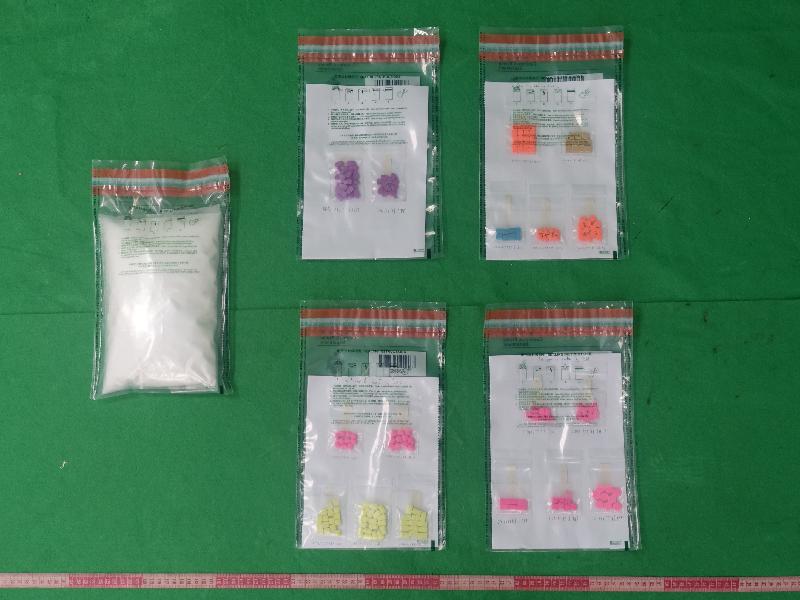
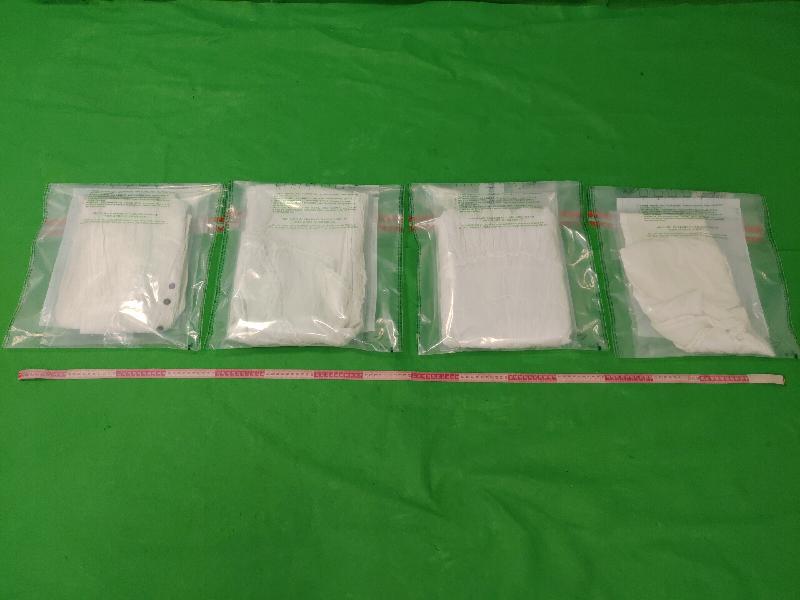
Photo  Photo  


CE continues Jiangmen visit (with photos/videos)

     The Chief Executive, Mrs Carrie Lam, accompanied by the Secretary for Constitutional and Mainland Affairs, Mr Patrick Nip, continued her visit to the Guangdong-Hong Kong-Macao Greater Bay Area cities in Jiangmen today (May 18).

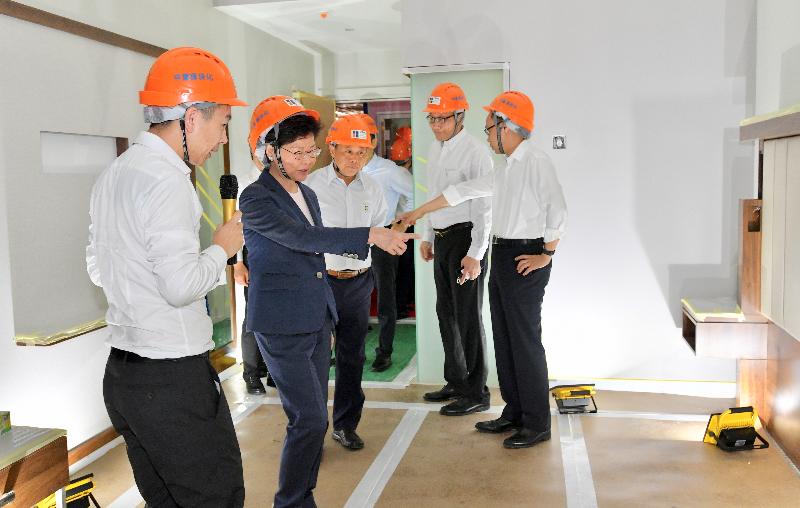
     In the morning, Mrs Lam and Mr Nip visited China International Marine Containers (Group) Ltd (CIMC) to learn about the business of its subsidiary, CIMC Modular Building Systems, which supplies construction components for the Construction Industry Council’s Modular Integrated Construction (MiC) Display Centre in Kowloon Bay. MiC allows most of the labour-intensive and time-consuming processes to be accomplished in an off-site prefabrication yard, minimising the duration of work on construction sites and the demand for construction workers, thus enhancing productivity. The technique also enhances on-site safety and project quality control and reduces adverse impacts on the environment.

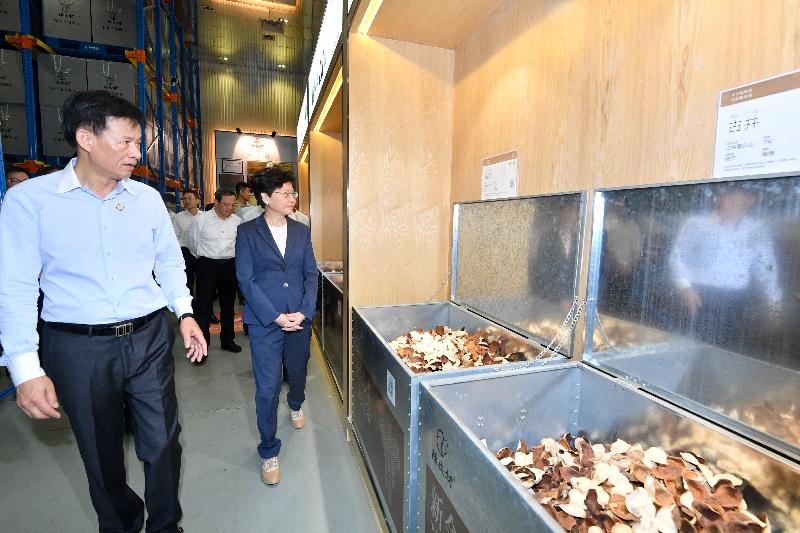
     Afterwards, Mrs Lam and Mr Nip visited Xinhui tangerine peel village to find out the development of the trade. The production of aged tangerine peels in the city has a history of hundreds of years and is known across the country for the quality. Following years of evolvement, it has become a trade with an annual production worth billions of dollars.

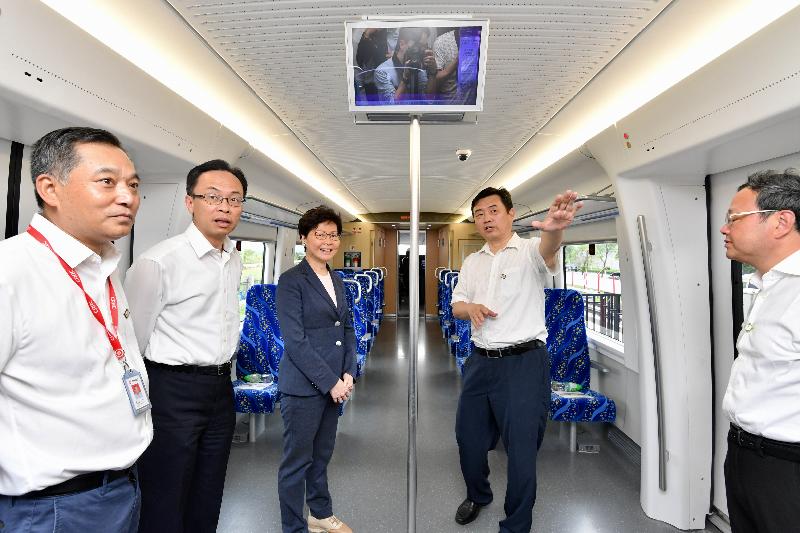
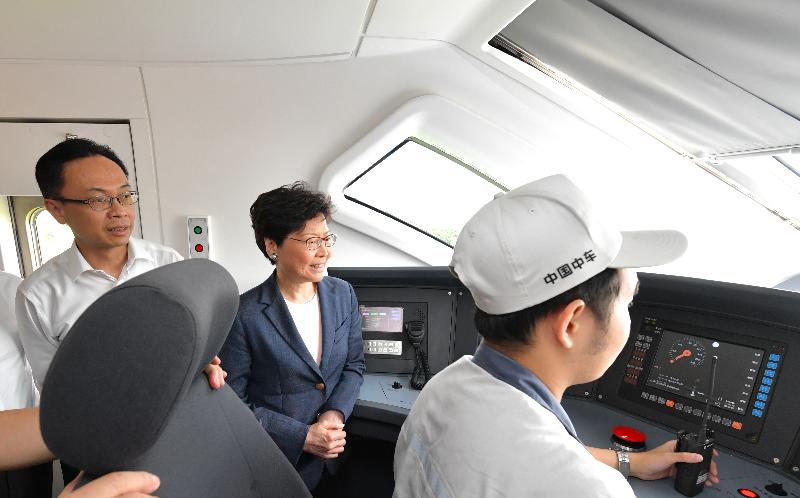
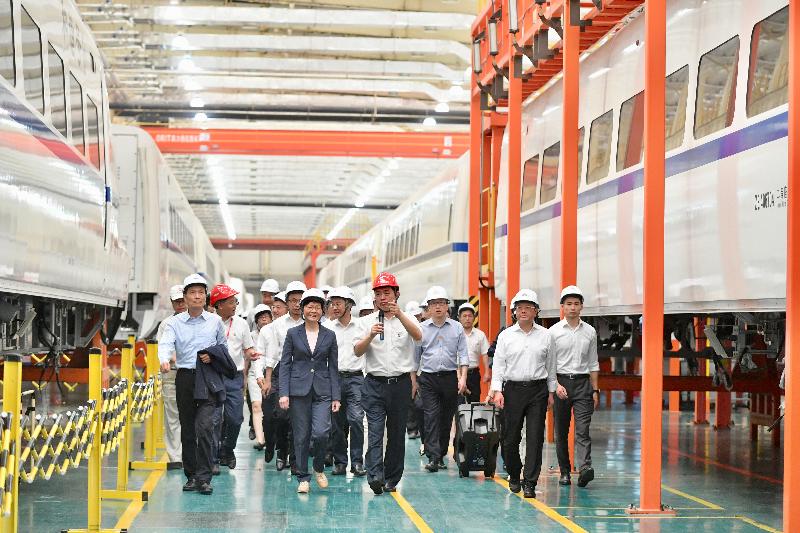
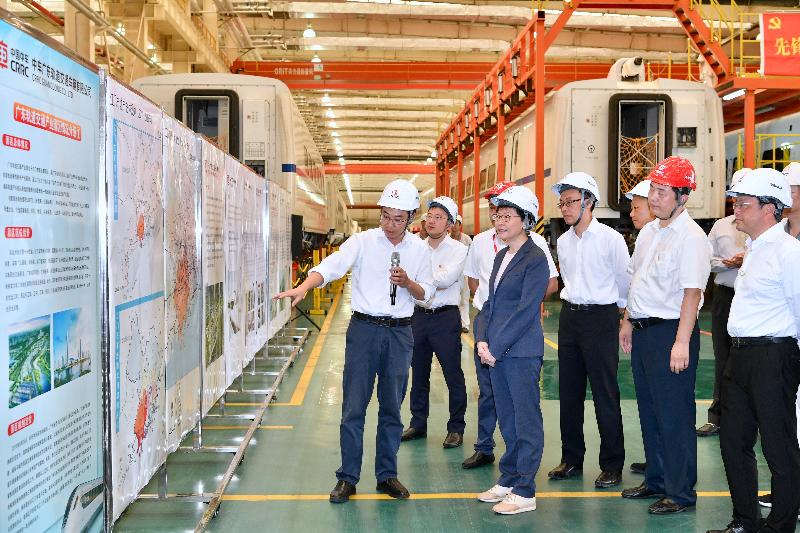
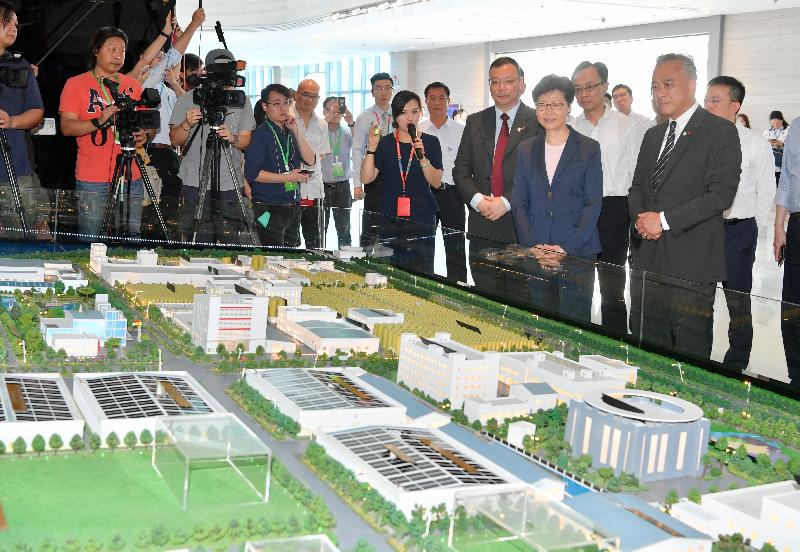
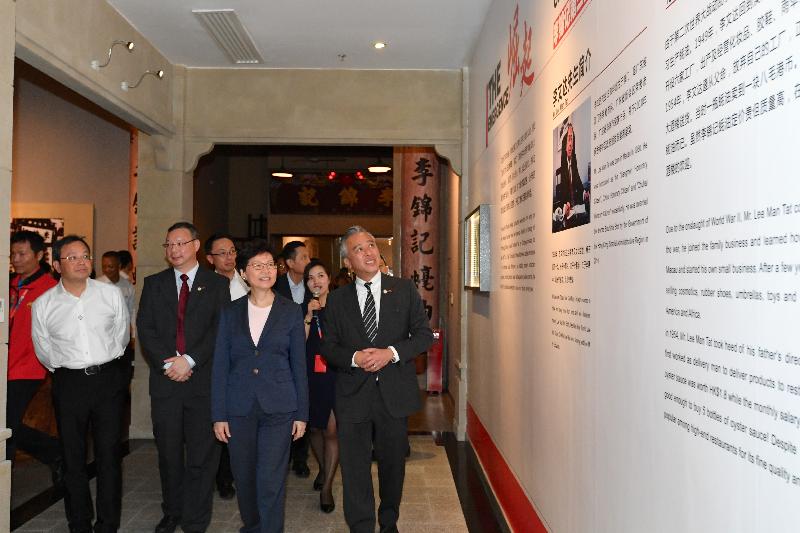
     They then visited CRRC Guangdong Co Ltd to learn about the company's manufacture and maintenance of rolling stock as well as the services of related industries. They also toured the production base of the Lee Kum Kee Group in Xinhui, Jiangmen, to know its automated production technique and quality control measures.

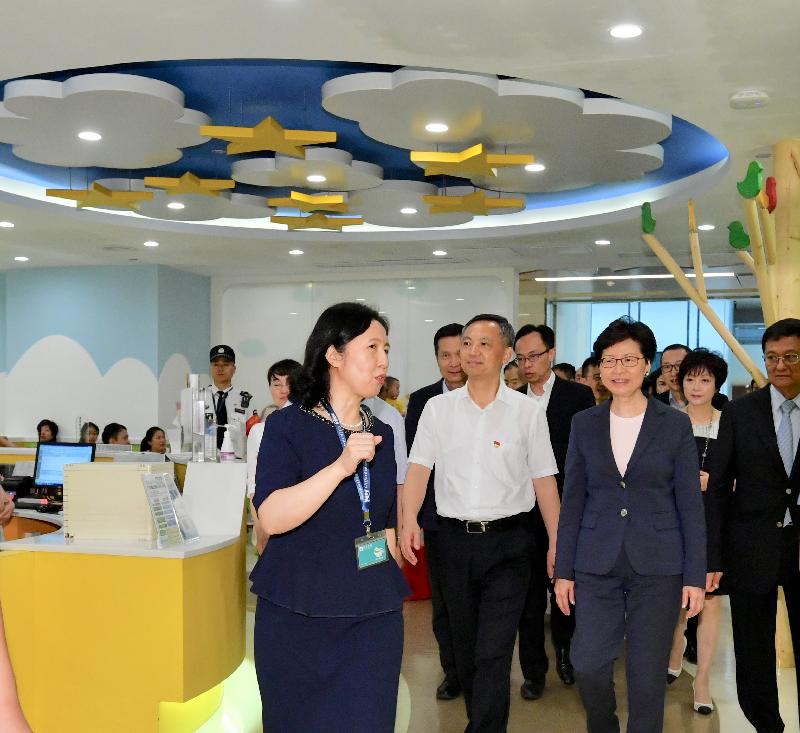
     In the afternoon, Mrs Lam and Mr Nip departed for Panyu, Guangzhou, to visit Clifford Hospital, which was founded by a Hong Kong merchant. Launched in 2001, Clifford Hospital was the first hospital in China to be accredited by Joint Commission International, and provides medical services for many Hong Kong people living nearby.

     Mrs Lam said that after the assumption of office, she has already visited Macao and nine Mainland cities in the Greater Bay Area, enhancing her knowledge of the characteristics and advantages of various cities. She added that Hong Kong will, in accordance with the Outline Development Plan for the Guangdong-Hong Kong-Macao Greater Bay Area promulgated by the Central Government in February this year, proactively strengthen collaboration with the cities to complement each other to develop together an international first-class bay area.

     In the evening, Mrs Lam attended the welcome dinner of the first Guangdong-Hong Kong-Macao Greater Bay Area media summit in Guangzhou. She will attend the summit's opening ceremony tomorrow (May 19), where she will deliver a speech, and then conclude her visit and return to Hong Kong.

Photo  Photo  Photo  Photo  Photo  Photo  Photo  Photo  Photo  Photo  Photo  Photo  Photo  Photo  Photo  


Cluster of Methicillin-resistant Staphylococcus Aureus cases in Tuen Mun Hospital

The following is issued on behalf of the Hospital Authority:
 
     The spokesperson for Tuen Mun Hospital (TMH) made the following announcement today (May 18):

     A 22-day-old female baby in the Neonatal Intensive Care Unit (NICU) of TMH was confirmed to be Methicillin-resistant Staphylococcus Aureus (MRSA) carrier on May 6. She is hospitalised under medical surveillance and isolation. In accordance with the prevailing infection control guidelines, the hospital performed screening and two more babies (35-day old male and 9-day old female) in the Unit were confirmed to have MRSA. They are hospitalised under medical surveillance and isolation. One of them was in critical condition and the other two were serious, due to their underlying diseases.
 
     The following enhanced infection and cleansing measures have already been adopted in the concerned ward:
 
1. Isolate the confirmed and carrier MRSA cases at designated area in the same ward and to be taken care by dedicated healthcare staff so as to prevent cross-contamination
2. Enhance disinfection and cleansing of the ward concerned;
3. Reinforce contact precautions and hand hygiene;
4. Enhance attention to contamination-prone procedures; and
5. Continue to closely monitor the conditions of concerned patients.

     The cases have been reported to the Hospital Authority Head Office and the Centre for Health Protection for necessary follow up. The hospital will continue to closely monitor the situation of the ward.


Sheung Shui Slaughterhouse to resume operation tomorrow

     Sheung Shui Slaughterhouse (SSSH) will resume operation tomorrow (May 19) to provide slaughtering services.

    Meanwhile, the Government has been notified by the General Administration of Customs (GAC) that the importers may resume importing Mainland live pigs into Hong Kong. 

     The Agriculture, Fisheries and Conservation Department (AFCD) declared SSSH as an infected place upon detection of African Swine Fever (ASF) virus in a pig sample collected therein on May 10, and, in accordance with the Public Health (Animals and Birds) Regulations (Cap. 139A), ordered culling of all pigs in the slaughterhouse to minimise the risk of spread of the virus. Supply of live pigs from the Mainland has since been suspended. 

     The Food and Environmental Hygiene Department (FEHD) has carried out comprehensive cleansing and disinfection in the slaughterhouse and finished the work today (May 18).

     To prevent ASF, control and surveillance at source are of utmost importance. As a result of the detection of ASF, preventive measures against ASF have been further strengthened. 

     The GAC has been exercising stringent inspection and quarantine measures with respect to Mainland live pig supply to Hong Kong. All pigs must come from registered pig farms supplying Hong Kong and be segregated for 15 days to ensure the pigs are free of ASF symptoms before they are discharged from the farms. Monitoring and inspection will be conducted at all checkpoints during transportation as well as in and out of the Qingshuihe transfer house located in Shenzhen. Pigs showing abnormality at any stage will not be supplied to Hong Kong. 

     The FEHD at Man Kam To Control Point will also ensure that all Mainland live pigs arriving in Hong Kong are accompanied with valid health certificates issued by the Mainland Customs. The FEHD will closely monitor the health conditions of live pigs entering Hong Kong. For pigs with ASF symptoms, ASF-test will be immediately performed by the AFCD.

    It is an internationally recognised practice to carry out ASF screening among live pigs through inspection of clinical symptoms. On top of the current inspection mechanism, the Government will strengthen the inspection on pigs before they are admitted into the slaughterhouse. ASF-test will be conducted on any dead pigs found. 

     Regarding local supply of live pigs, the AFCD has been implementing various preventive measures against ASF. Pig farmers are required to adopt proper biosecurity measures; strictly control the vehicles and personnel entering pig farms; enhance cleansing and disinfection of vehicles and personnel entering and leaving pig farms as well as carefully handle excrement.

     ASF will not infect humans and pose food safety risk. Well-cooked pork is safe for consumption.


Hong Kong Customs seizes suspected illicit cigarettes (with photo)

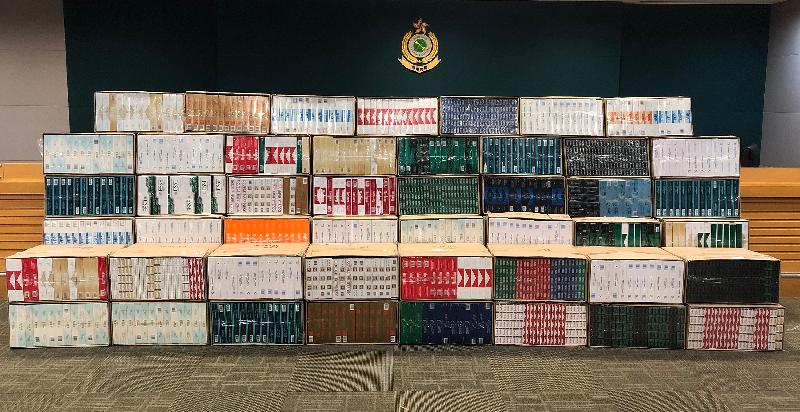
     Hong Kong Customs yesterday (May 17) seized about 1.3 million suspected illicit cigarettes in Kwai Chung with an estimated market value of about $3.6 million and a duty potential of about $2.6 million. 

     During an anti-illicit cigarette operation yesterday, Customs officers found about 900 000 suspected illicit cigarettes at a logistics site in Kwai Chung. Later, Customs officers further found about 400 000 suspected illicit cigarettes at another logistics site nearby.

     Investigation is ongoing.

     Smuggling is a serious offence. Under the Import and Export Ordinance, any person found guilty of importing or exporting unmanifested cargo is liable to a maximum fine of $2 million and imprisonment for seven years.

     Under the Dutiable Commodities Ordinance, anyone involved in dealing with, possession of, selling or buying illicit cigarettes commits an offence. The maximum penalty upon conviction is a fine of $1 million and imprisonment for two years.

     Members of the public may report any suspected illicit cigarette activities to the Customs' 24-hour hotline 2545 6182 or its dedicated crime-reporting email account (crimereport@customs.gov.hk).
 

Photo