LCQ10: Quality of coastal waters of Victoria Harbour

     Following is a question by Dr Hon Priscilla Leung and a written reply by the Acting Secretary for the Environment, Mr Tse Chin-wan, in the Legislative Council today (May 22):

Question:

    Some members of the public have complained to me that coastal waters (particularly in the vicinity of the Hung Hom Promenade) of the Victoria Harbour (the Harbour) give off unbearable stenches, causing serious nuisance to members of the public. It is learnt that one of the sources of the stenches is the sewage discharged from some private buildings in Hung Hom as their foul water pipes have been wrongly connected to the storm drain systems (misconnections of foul water pipes). On the other hand, a consultancy study on further enhancing the quality of coastal waters of the Harbour (the consultancy study) commissioned by the Environmental Protection Department in 2016 has been substantially completed. In this connection, will the Government inform this Council:

(1) of the annual and monthly compliance rates of the Water Quality Objectives (WQOs) of the Harbour water control zone (WCZ) in each of the past five years (set out in the table below);
 

Month Compliance rate of WQOs
2014 2015 2016 2017 2018
January          
……          
December          
Whole Year          

(2) of the number of cases of misconnections of foul water pipes causing discharge of sewage into the Harbour WCZ which were followed up by the Government in each of the past five years and, among such cases, the number of those which have now been rectified, with a breakdown by District Council district;

(3) among the cases mentioned in (2) of the respective numbers of those in which (i) rectifications were made after the owners had been given warnings/advice, (ii) rectifications were made after the owners had received statutory repair/removal orders or had been prosecuted, (iii) rectifications were yet to be made despite that law enforcement actions had been taken by the Government, and (iv) rectification works were carried out by government contractors; whether it has reviewed the effectiveness of the relevant law enforcement actions; if so, of the outcome; and
 
(4) when it will publish the report of the consultancy study; of the measures to be taken to follow up the recommendations put forward in the report for improving the quality of the coastal waters of the Harbour, as well as the implementation timetable and estimated expenditure for such measures?

Reply:

President,

    The Government has all along been attaching great importance to improving the water quality of Victoria Harbour and has devoted significant resources to improve the sewage collection and treatment system through implementing the Harbour Area Treatment Scheme and works for enhancing the quality of coastal waters of Victoria Harbour, stepping up enforcement on misconnections of sewage pipes, and clearing sediment from the stormwater drainage systems. These efforts have brought noticeable improvement in the water quality of Victoria Harbour.

     My reply to the question raised by Dr Hon Priscilla Leung is as follows:

(1) The overall Water Quality Objectives (WQOs) compliance rate of marine water in the Victoria Harbour Water Control Zone (WCZ) in the past five years are tabulated below:
 

Year Overall WQOs compliance rate of
marine water in the Victoria Harbour WCZ
2014 77%
2015 90%
2016 93%
2017 83%
2018 97%

 
    As the overall WQOs compliance rate is based on evaluation of the annual average level of relevant water quality parameters, there is no monthly compliance rate.  While the compliance rate of individual years would vary due to influence by weather conditions such as sunshine, temperature and rainfall, the water quality as a whole shows trend of recognisable improvement from the past.

(2) The Environmental Protection Department (EPD), Buildings Department (BD), Drainage Services Department (DSD) and relevant government departments have been jointly following up on each case of sewage pipe misconnection, and urge the respective owners to rectify the problem in the earliest opportunity and reduce its impact on near-shore water quality. In the past five years, the EPD found a total of 348 cases of misconnections of sewage pipes in the Victoria Harbour WCZ. Among them, 267 cases (about 77 per cent) have been rectified and the remaining 81 cases are being processed. Please refer to the Annex for a breakdown of these cases by district.

(3) Among the 348 cases mentioned above, about 80 per cent or 267 cases were rectified after issue of warnings or advice. Among cases of pipe misconnection or stormwater drain pollution in private buildings in the territory followed up by the BD in the past five years, a total of 27 cases were rectified by premises owners after the statutory repair or removal orders were served and, up to 2018, 51 cases have not been rectified after the statutory repair and removal orders were served. There is no rectification works carried out by government contractors in the same period. The BD will continue to follow up on the remaining cases, urge or order the respective owners to fulfil their responsibility to rectify the pipe misconnection problems. For the cases of non-compliance with the orders, the BD will take appropriate enforcement actions according to the circumstances, including consideration to initiate prosecution under the Buildings Ordinance.
 
(4) The consultancy study on further enhancement of the near-shore water quality and the general environment of Victoria Harbour has been substantially completed.  The consultants will submit the study report within this year. The Government is gradually pursuing and implementing some measures in advance based on the survey results and study recommendations in order to speed up the improvement of near-shore water quality of Victoria Harbour.
 
     The findings of field surveys on pollution sources show that the near-shore pollution problems of Victoria Harbour are mainly caused by pollutants discharged from stormwater outfalls. This is probably due to misconnection of sewage pipes to stormwater drains and non-point source pollution (e.g. leakage from ageing sewers, street activities and cleansing of public places). The study recommendations for improvement include rectification of the misconnections, enhancing collaboration between departments, raising public awareness on reducing discharge of pollutants to stormwater drains at source, and providing dry weather flow interceptors (DWFIs) near the stormwater outfalls or at other strategic locations.

     The information on sewer misconnections collected in the consultancy study has been passed to the relevant government departments for follow-up. Having regard to the survey findings of the consultancy study, the Government has begun to progressively implement targeted pollution control measures and works, including construction and modification of DWFIs, rehabilitation of ageing sewers, upgrading of sewage treatment works and provision of public sewers, etc. New pollutant removal technology is also being tried.

     Regarding the situation along the Hung Hom Promenade, the study team recommended to construct a newly designed DWFI near the outfall of the Kin Wan Street box culvert at Hung Hom. The EPD and the DSD are planning to include this project in the Public Works Programme this year in order to carry out further study on the works. From planning to commissioning, the entire project is anticipated to take about seven to eight years and the initial cost estimate is about several hundred million dollars. Other than the DWFI, the DSD is also conducting trial application of Hydrogel at the outlet of Kin Wan Street box culvert to reduce the odour from the drain.

     The Government is also progressively planning similar DWFIs at other near-shore areas along Victoria Harbour (for example at Wan Chai East and Causeway Bay Typhoon Shelter). The estimated construction time and cost of these projects will be similar to the newly designed DWFI at Kin Wan Street. The Government will continue to take enforcement actions and implement projects for reducing the discharge of pollutants from either side of Victoria Harbour to improve the near-shore environmental and odour problems.


SHA begins visit to Japan (with photos)

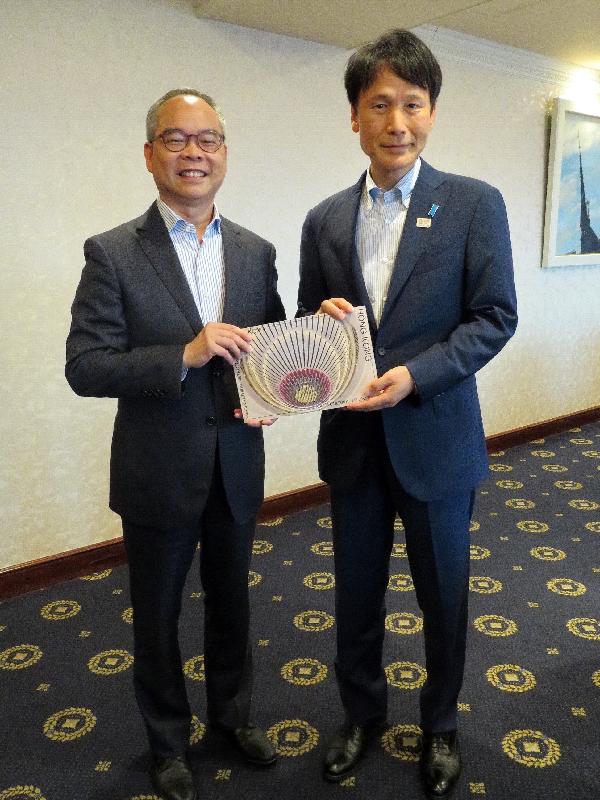
     â€‹The Secretary for Home Affairs, Mr Lau Kong-wah, arrived in Kagoshima Prefecture, Japan, last night (May 21) to begin his visit. Mr Lau first met with the Governor of Kagoshima Prefecture, Mr Satoshi Mitazono, to brief him on Hong Kong's latest developments and explore opportunities for further bilateral collaboration in culture, sports and youth development.
 
     A bilateral youth exchange programme between Hong Kong and Kagoshima had been in operation under the International Youth Exchange Programme of the former Commission on Youth since 1999. The Hong Kong Special Administrative Region (HKSAR) Government included this programme in the Youth Ambassadors in Celebration of the Establishment of the HKSAR Programme in 2017, and the Youth Development Commission has continued this youth exchange programme between Hong Kong and Kagoshima with the regularisation of the YDC Youth Ambassadors Programme since last year. Since 1980, the Hong Kong-Kagoshima Conference has been held biennially in Hong Kong and Kagoshima to foster bilateral exchanges, collaboration and liaison in youth development, culture and sports between the two places. 
 
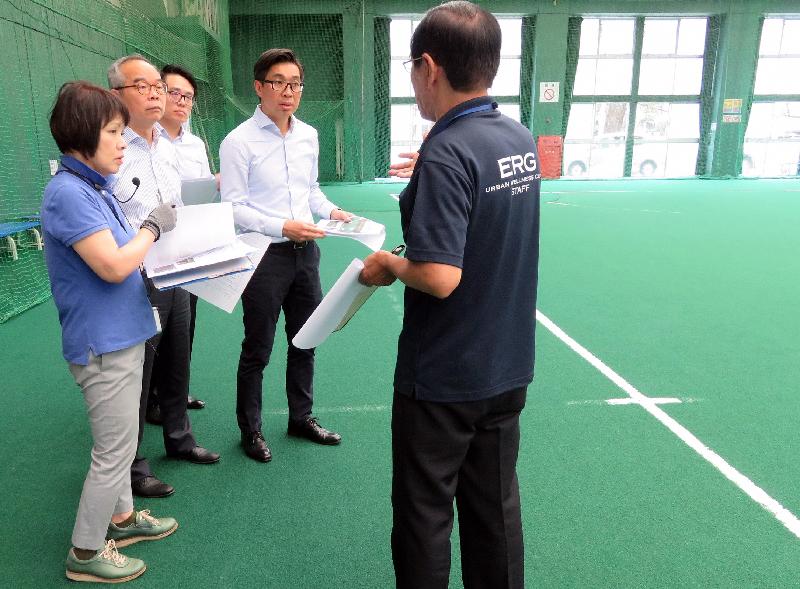
     Today (May 22), Mr Lau visited some community sports facilities in Kagoshima. He will proceed to Takamatsu this afternoon to continue the visit.

Photo  Photo  Photo  


LCQ9: Hung Hom Station Extension under Shatin to Central Link project

     Following is a question by Hon Tanya Chan and a written reply by the Secretary for Transport and Housing, Mr Frank Chan Fan, in the Legislative Council today (May 22):

Question:

     According to the holistic assessment strategy regarding the platform slabs and diaphragm walls of the Hung Hom Station Extension works under the Shatin to Central Link project (the assessment strategy) proposed by the MTR Corporation Limited (MTRCL) and accepted by the Government, the assessment should be conducted in three stages. The concrete opening-up work conducted under the second stage serves two purposes: (A) to carry out physical investigations by opening up the concrete at locations without complete documentations, so as to verify the as-constructed conditions of the connections between the platform slabs and diaphragm walls of the Hung Hom Station Extension, and the relevant work involves opening-up of the concrete for investigations at 24 locations of the platform slabs of the East West Corridor (EWC); (B) in view that some reinforcement bars (rebars) are suspected to have been cut short, MTRCL needs to open up some of the connections between the platform slabs and diaphragm walls for detailed inspection and use non-destructive tests to verify the workmanship of the coupler connections. MTRCL will, based on random sampling results, open up 28 locations respectively of the platform slabs of the EWC and those of the North South Corridor (NSC), i.e. 56 locations in total, to expose at least 168 rebars or couplers for inspection. MTRCL had since December 10 of last year conducted tests on the couplers (the first-round tests) but suspended the tests due to deviations between the test results and the actual conditions. MTRCL subsequently used the enhanced test procedures to re-do the tests (the second-round tests). The Highways Department uploaded all the test results involving a total of 225 locations to the relevant website on the 29th of last month. In this connection, will the Government inform this Council: 

(1) whether it knows the following details of each of the aforesaid 225 testing locations (set out by (i) and (ii)): 
(i) whether it was located at EWC or NSC;
(ii) the purpose(s) of the opening-up investigation is/are (A), (B), or both (A) and (B);
(iii) the specific location;
(iv) the result of the first-round tests (if conducted); and 
(v) the result of the second-round tests;

(2) whether it knows, for purpose A of the opening-up investigation, the minimum number of rebars or couplers that MTRCL was required to test under the assessment strategy, and the actual number tested; if the latter is smaller than the former, the reasons for that and the impact of such situation on the relevant conclusions; for purpose B of the opening-up investigation, the number of rebars or couplers tested by MTRCL; if the number is smaller than 168 as originally planned, the reasons for that; 

(3) given that out of the 191 samples for which the tests on the embedded length of the threaded rebars inside the couplers had been completed, 39 were regarded as not meeting the requirements, of the maximum percentages of the coupler population with improper connections (estimated under a 95 per cent confidence level) inferred on the basis of the statistical method used in Table 6.3 of the assessment strategy; 

(4) given that the tests were not successfully completed at 34 of the 225 testing locations due to various reasons, of the follow-up actions that the Government will request MTRCL to take, e.g. whether MTRCL will cut and remove the rebars with couplers connected for measuring the actual embedded length of the threaded rebars inside the couplers; and 

(5) as paragraph 6.4.22 of the assessment strategy has pointed out that if defective coupler connections are found in the tests, a greater sample size, in terms of the number of testing locations, may be considered, whether the Government will request MTRCL to do so; if so, of the details; if not, the reasons for that? 

Reply:

President,

     My reply to the five parts of the Hon Tanya Chan's question is as follow:

(1) The MTR Corporation Limited (MTRCL) completed on April 29, 2019 the Phased Array Ultrasonic Test (PAUT) and the opening-up investigation in the second stage of the holistic assessment strategy for the Hung Hom Station (HUH) Extension under the Shatin to Central Link (SCL) project (the assessment strategy). The layout plan of the platform slabs of East West Line (EWL) and North South Line (NSL) for HUH Extension, the locations of couplers tested, and all the past and latest test results are available at the Highways Department (HyD)'s website for the SCL project (www.hyd.gov.hk/en/road_and_railway/railway_projects/scl/index.html) for reference by the public. A total of 225 test locations are involved in Tables 1 to 3 on the HyD's website, which correspond to 152 test locations involving couplers with embedded length not less than 37 millimeters; 39 test locations involving couplers with embedded length less than 37mm; and 34 locations where completion of test is unsuccessful, which include seven locations with improper connection to couplers or connection of rebars by lapping that could be determined by mere visual inspection and therefore without any need to carry out measurement by device.

     In response to the request by the Hon Chan, the details of the test results are attached at Annex. 

(2), (3) and (5) The first purpose of the opening up in the second stage of the assessment strategy is to carry out physical investigations by opening up the concrete at connections between the platform slabs and diaphragm walls of the HUH Extension with gaps in construction documentation, so as to verify the as-constructed conditions of these areas. This involves at least 24 locations at the platform slabs of the EWL. Eighteen out of 24 locations had been inspected on site. Due to obstruction of existing structures, the remaining six locations could not be verified by the opening-up. Upon further review of records, the MTRCL managed to retrieve the concerned site photos and verify the as-constructed conditions of these six locations.

     The second purpose of the opening up in the second stage of the assessment strategy is that, in view of the allegations on the cutting-short of steel bars, the MTRCL needs to open up certain connections between the platform slabs and diaphragm walls for detailed inspection, and to conduct non-destructive tests for verification of the conditions of the coupler connections, the locations of which are randomly sampled by statistical methods. Based on the advice from the expert team from the Department of Statistics and Actuarial Science of the University of Hong Kong, the MTRCL opened up 28 random locations each at connections between the platform slabs and diaphragm walls of the EWL and the NSL, i.e. 56 locations in total with at least 168 rebars/couplers exposed; and made use of PAUT for measurement of the embedded length. There are currently 169 samples with successful test results.
 
     Table 6.3 of the assessment strategy of the MTRCL is to illustrate the relationship between the number of failures in the samples and the maximum failure rate in the population based on statistical inference (estimated under a 95 per cent confidence level). "Failure" means that individual couplers and rebars are not installed according to the technical specification. The overall integrity of the platform slabs and diaphragm walls has to be ascertained based on the result of detailed structural analysis in the third stage of the assessment strategy.

     As the number of samples obtained in the second stage of the assessment strategy has already exceeded the original target of 168, the MTRCL can proceed with the assessment in third stage and the MTRCL does not need to further increase the number of PAUT samples. 

     In the third stage, the MTRCL will consolidate the test results of the first two stages, including the as-constructed details of the platforms, works quality information, and the technical data provided by the coupler supplier; and conduct a detailed structural assessment of the HUH Extension to determine the overall structural integrity of the works, and whether remedial works is required. The MTRCL launched the third stage of the assessment strategy and planned to complete it by the end of June this year.

(4) The signals or readings of the PAUT could be unclear under some situations making the tests and measurement unsuccessful. These situations include uneven end face or damage of the threaded steel bars, insufficient area for the operation of the device due to site constraints, etc. In addition, the MTRCL does not need to take measurement and test if upon opening up of concrete, improper connection to couplers or connection of rebars by lapping can be determined by mere visual inspection. Of the 225 test locations under the second stage, 34 locations are under the above situations that render completion of the tests unsuccessful. As the number of PAUT samples has already exceeded the number originally planned, MTRCL will determine the overall structural integrity of the platform slabs and diaphragm walls of the EWL and NSL in the third stage of the assessment strategy. 


LCQ5: Community care services for the elderly

     Following is a question by the Hon Leung Yiu-chung and a reply by the Secretary for Labour and Welfare, Dr Law Chi-kwong, in the Legislative Council today (May 22):

Question:

     Community care services for the elderly include: "Integrated Home Care Services (Frail Cases)" and "Enhanced Home and Community Care Services" (EHCCS) which target at the frail elderly, as well as "Integrated Home Care Services (Ordinary Cases)" (Ordinary Case Services) which target at the elderly who have no or mild level of impairment. In December last year, the Government amended the Hong Kong Planning Standards and Guidelines (HKPSG) by reinstating population-based planning standards for elderly services and facilities, but such planning standards do not cover Ordinary Case Services. In this connection, will the Government inform this Council:

(1) Whether the amended HKPSG is applicable to those public housing development projects the planning of which was made before December last year; in respect of those public housing development projects for which elderly services and facilities were planned in accordance with the pre-amended HKPSG, of the measures put in place by the Government to alleviate the shortfalls in such services and facilities;

(2) As the aforesaid amendments to HKPSG do not cover Ordinary Case Services, whether the Government will set out in HKPSG a population-based planning standard for such services; if so, of the details; if not, the reasons for that; and

(3) As the Secretary for Labour and Welfare advised last month that the Government planned to restructure the scope of Integrated Home Care Services and EHCCS, as well as to provide the additional resources needed without increasing the number of service teams, of the details of the restructuring work (including the restructuring approach, implementation timetable, and whether this will also cover the Ordinary Case Services) and the provision of additional resources (including manpower, offices and kitchens)?

Reply:

President,

     I will give a consolidated reply to sub-questions 1 and 2 regarding the arrangements of the Hong Kong Planning Standards and Guidelines (HKPSG).

     The HKPSG stipulates general guidelines on the scale and location of various types of land use, community facilities and basic facilities. It will facilitate the Government in reserving land for the provision of appropriate and sufficient facilities during the planning process. The Government promulgated the amended HKPSG on December 28, 2018, which stipulates the population-based planning standards in respect of subsidised residential care services (RCS), subsidised community care services (CCS), District Elderly Community Centres (DECCs) and Neighbourhood Elderly Centres (NECs). This will assist government departments in reserving appropriate land for the provision of these elderly services and facilities in the planning process of residential development projects (including public housing).

     It is worth noting that the previous version of HKPSG, before the incorporation of the above amendments, had already stated that demographic characteristics, geographical environment, actual demand and supply of the services, etc. should be suitably considered during the planning of DECCs, NECs and Day Care Centres/Units for the Elderly. As regards subsidised RCS, the previous version of HKPSG also stipulated that demand and supply, resources, availability of suitable premises, etc. are factors that should be taken into account. Indeed, relevant departments have all along been reserving suitable premises in public housing development projects for elderly services and facilities.

     The Government will proactively implement the various planned elderly services and facilities. With reference to the amended HKPSG and the demand and supply of various services and facilities, the Government will continue to adopt a multi-pronged approach to increase supply. Among other things, the Social Welfare Department has earmarked sites in a number of development projects for the construction of welfare facilities required, including elderly service facilities, which are in acute demand. These development projects include public housing development projects, private land development projects, development projects of the Urban Renewal Authority, redevelopment/conversion projects of vacant school premises, development projects on "Government, Institution or Community" sites, etc. The Government will also incorporate land sale conditions for suitable land sale sites, requiring private developers to construct welfare facilities specified by the Government.

     The Ordinary Case Services mentioned in the Member's question should be referring to the Integrated Home Care Services (Ordinary Cases) (IHCS(OC)). This type of services provides community support services, such as household duties, escort, meal services, etc., to elderly persons with no impairment or mild impairment. According to the recommendation of the Elderly Services Programme Plan (ESPP), when stipulating population-based planning standards to meet the projected demand for long-term care (LTC) services, the planning standard in respect of CCS places should take into account the LTC services demand for elderly persons who are assessed to be in the state of moderate or severe level of impairment by the Standardised Care Need Assessment Mechanism for Elderly Services. Since IHCS(OC) is not a type of LTC services, the planning standard in respect of CCS places does not cover IHCS(OC).

     Regarding sub-question 3, as recommended in the ESPP, we should significantly strengthen community-based services in order to achieve "ageing-in-place" and reduce premature or long-term institutionalisation into residential care homes for the elderly. To support elderly persons who are living in the community but require care and support services, it is necessary for the Government to provide them with timely and comprehensive CCS. At present, the IHCS (Frail Cases) and the Enhanced Home and Community Care Services (EHCCS) specifically provide necessary home care services for elderly persons assessed to be in the state of moderate or severe level of impairment. While recommending that these CCS should be enhanced, the ESPP also suggested the Government to review these two types of services. On the premise that a degree of choice would be maintained for users, the funding modes and service arrangements for these two types of services should be reviewed in order to increase efficiency. We would follow up the recommendations of the ESPP at an appropriate juncture, with a view to strengthening the relevant community care and support.

     In addition, it was announced in the 2018 Policy Address that the Government would provide 2 000 extra service quotas under EHCCS within 2019.


LCQ17: First-hand residential units offered for sale by way of tender

     Following is a question by the Hon Jeremy Tam and a written reply by the Secretary for Transport and Housing, Mr Frank Chan Fan, in the Legislative Council today (May 22):

Question:

     On June 29 last year, the Government announced amendments to the Consent Scheme for the pre-sale of uncompleted flats, requiring developers to offer for sale, at each turn of sale, no less than 20 per cent of the total number of residential units subject to the relevant pre-sale consent, regardless of the sales method (including public sale, tender and auction) used. However, it has been reported that developers can achieve offering for sale less than 20 per cent of the units and yet satisfying the aforesaid requirement, just by announcing that certain pre-sale flats, which they have no intention to sell, are offered for sale by way of tender (and they can simply announce after the completion of the sales activities that the units offered for sale by way of tender have not been sold as the bids of prospective buyers were lower than the reserve prices). On the other hand, the Real Estate Developers Association of Hong Kong (REDA) announced on April 4 this year the introduction of three measures, including that the first sale of units in non-luxury residential developments will be conducted by way of public sale. There are views that the relevant price lists and registers of transactions can increase the transparency of the selling prices of units and provide reference for prospective buyers participating in future biddings for the units in the developments concerned. In this connection, will the Government inform this Council:
 
(1) whether it has studied if the developers' adoption of the aforesaid practice in coping with the requirement on the ratio of units offered for sale runs contrary to the policy intent of the requirement and indicates that there are loopholes in the requirement;
 
(2) as developers have reached a consensus on the three measures introduced by REDA although they are merely self-regulatory in nature, whether the Government will consider codifying such measures to ensure that developers will not contravene the requirements concerned; if so, of the details; if not, the reasons for that;
 
(3) while the measures introduced by REDA have increased the transparency of the prices of the units offered for sale by way of tender, prospective buyers participating in the biddings are still subject to unfavourable conditions (e.g. their bids must be higher than the developer's reserve prices as well as other bids in order for them to successfully purchase the units), whether the Government has measures in place to protect the rights and interests of such prospective buyers; if so, of the details; if not, the reasons for that; and
 
(4) as the Government indicated in reply to a question raised by a Member of this Council on March 27 this year that, at the current stage, it had no intention to stipulate under the Consent Scheme the number or ratio of units to be offered, or the number of times for which the units might be offered, for sale by way of tender by the developers, of the justifications for this stance?

Reply:
 
President,
 
     The consolidated reply to various part of the question raised by Hon Jeremy Tam is as follows:
 
     The Government has all along been closely monitoring the movement of the private residential property market, and will introduce appropriate measures as and when necessary to ensure the healthy development of the property market. With a view to encouraging more timely supply of first-hand private residential units and improving sales practices, the Chief Executive announced the amendment of the Consent Scheme on June 29, 2018. Developers are required to offer for sale no less than 20 per cent of the total number of residential units subject to the relevant pre-sale consent at each turn of sale. If the remaining unsold residential units are less than 20 per cent, the developer has to offer for sale all remaining units in one go. Having considered the varying circumstances of different developments, the Consent Scheme does not specify what sales method should be adopted by the developers. Regardless of the sale methods, developers have to follow the above requirement. 

     The Chief Executive announced on the same day another measure, that is the proposal to amend the Rating Ordinance for the introduction of "Special Rates" on vacant first-hand private residential units. "Special Rates" will be collected by the Rating and Valuation Department annually at two times (i.e. 200 per cent) the rateable value of the units concerned. The Government has consulted the stakeholders and the Housing Panel of the Legislative Council (LegCo) on the proposed legislative amendments, and is now preparing the Rating (Amendment) Bill for introduction into LegCo as soon as practicable. The above two measures complement one another and help achieve the policy objective of encouraging more timely supply of first-hand residential units.

     On regulation of the sales of first-hand residential properties, the Government has been taking a three-pronged approach by seriously enforcing the relevant Ordinance, continuously improving the trade's compliance with the Ordinance and fostering public awareness with a view to ensuring consumer protection in the purchase of first-hand residential properties.
 
     According to section 67 of the Residential Properties (First-hand Sales) Ordinance (the Ordinance), provisions in Division 3 of Part 2 of the Ordinance on price list do not apply if a developer offers a first-hand residential property to be sold by way of tender, but other provisions of the Ordinance still apply, such as the requirements of making available sales brochure, documents containing sales arrangements and the Register of Transactions.
 
     In respect of law enforcement, the Government has earlier pointed out that there were some individual first-hand residential properties offered to be sold by way of tender where the sales process was undesirable and not transparent enough. In this connection, the Sales of First-hand Residential Properties Authority (SRPA) has proactively monitored the sales process of developments on the market and has spotted cases with insufficient transparency in the sales process and the transaction information, which might have contravened the Ordinance. The SRPA has been investigating the cases and would strictly enforce the Ordinance based on evidence. The SRPA does not rule out the possibility of taking prosecution action. Meanwhile, the Estate Agents Authority (EAA) is looking into cases to ensure that estate agents are strictly observing the Estate Agents Ordinance and EAA's guidelines when participating in the sales of residential properties by tender.

     In respect of a case of insufficient transparency in the transaction information, the SRPA has initiated prosecution action against the relevant vendor. The case will be heard on July 9, 2019.
 
     On enhancing the trade's compliance with the Ordinance, section 61 of the Ordinance states that the purpose of Register of Transactions of a development is to provide a member of the public with the transaction information relating to the development for understanding the market conditions. Prospective purchasers can thus get accurate market information and make an informed decision when purchasing first-hand residential properties. The SRPA has issued a Reminder to the Trade and a Frequently Asked Question and Answer requiring vendors to set out full details of the terms of payment in the Registers of Transactions of first-hand residential developments, and has reminded vendors that in the sales of first-hand residential properties, if they have offered any discount, gift, financial advantage or benefit (no matter in terms of cash or not) to the purchasers, they should set out the full details of the terms of payment as agreed between the vendor and the purchaser for the purchase of each specified residential property. Moreover, the Register of Transactions should be self-contained so that prospective purchasers do not have to refer to other documents or materials for details of the terms of payment.
 
     Meanwhile, the EAA has also issued a Letter to Licensees to remind all licensees participating in the sales of first-hand residential properties to comply with the Estate Agents Ordinance and the relevant guidelines set out in the Practice Circular issued by the EAA, regardless of the method of sales adopted by developers for selling their properties.  In particular, the EAA reminds licensees that without obtaining a vendor's written endorsement, they must not issue any materials promoting the sales of any first-hand residential properties by tender, including the materials containing information on the suggested bidding price.
 
     On promoting public awareness of the Ordinance, the SRPA launched a new radio Announcement in the Public Interest on May 17, 2019, named "Bidding First-hand Residential Properties", to remind prospective purchasers the points to note before bidding first-hand residential properties.
 
     The Government will continue to monitor closely the effectiveness of the above measures and the sales of first-hand residential properties by tender. It will take any possible measures when necessary to ensure the level of transparency of the sales of first-hand residential properties by tender is the same as that for open sales with price lists.