Correctional Services Department publishes 2018 Annual Review Electronic Version

     The Correctional Services Department (CSD) launched its 2018 Annual Review Electronic Version today (May 24). The review showcases the department's custodial and rehabilitation work, which is aimed at protecting public safety and preventing crime. In addition to photographs and videos, an interactive game called "Canine Detectives" is included for the first time. The mini-game aims to inform members of public about the work of the Correctional Services Dog Unit.
 
     The CSD is currently developing a smart prison system. The smart prison concept comprises four elements, namely "development of smart governance", "implementation of process innovation", "cultivating knowledge-based correctional officers and enhancing the capacities of rehabilitated persons to reintegrate into society" and "application of smart prison designs to operate correctional institutions". The CSD aims to enhance the efficiency of its custodial operations and the security of correctional institutions through the application of innovation and technology, while also protecting the safety of correctional officers in the course of law enforcement and ensuring the safety of persons in custody. The CSD will continue to strive to help maintain the stability of Hong Kong.
 
     Members of the public are welcome to view the annual review or video clips on mobile phones or tablets by scanning the attached QR codes or browsing the CSD's website at www.csd.gov.hk/annualreview/2018/web/en/.


CE strongly objects to German asylum for two bail jumpers

     The Chief Executive, Mrs Carrie Lam, today (May 24) told Germany's Acting Consul General in Hong Kong, Mr David Schmidt, that she strongly objects to, and deeply regrets, the reported granting of asylum to two Hong Kong residents who jumped bail to flee Hong Kong while awaiting trial on serious charges.
 
     Mrs Lam had requested the meeting with Mr Schmidt at the Chief Executive's Office this afternoon. The Director of Chief Executive's Office, Mr Chan Kwok-ki, also attended the meeting.
 
     Mrs Lam stressed that the Hong Kong Special Administrative Region (HKSAR)'s rule of law, law enforcement agencies and judicial independence have long been held in high regard by local and international communities. In particular, independent judicial power, including that of final adjudication is guaranteed under the Basic Law. Relevant provisions in the Basic Law also provide for the invitation of judges from other common law jurisdictions to sit on the Court of Final Appeal. She said that 14 eminent overseas judges from the United Kingdom, Australia and Canada currently sit on our Court of Final Appeal as non-permanent judges, which in itself is a testimony to the integrity of Hong Kong's rule of law and independent judiciary. That judicial system is fully practised and has been well respected for over 20 years since the establishment of the HKSAR. For example, she noted, the World Economic Forum’s Global Competitiveness Report ranks Hong Kong first in Asia for judicial independence.
 
     Mrs Lam said anyone accused of breaching the law in Hong Kong would face an open and fair trial. She expressed deep regret and strong objection to the reported granting of asylum to the two bail jumpers by Germany, which had unjustifiably undermined Hong Kong’s international reputation in the rule of law and judicial independence. 
 
     Mrs Lam expressed doubts as to whether the German authorities' decision had been based on the facts. She said the two men are facing serious charges including riot and assaulting police in relation to the Mong Kok riot in February 2016. The riot involved the hurling of bricks and wooden pallets, burning cars, attacking police, surrounding police vehicles, wounding others and destroying public property. She said the violent actions of the rioters had seriously jeopardised public order and safety, resulted in injuries to more than 80 Police officers and unsettled many people in Hong Kong. Given Germany's long-standing diplomatic presence in Hong Kong, such facts, which were on the public record and easily available, should have been duly taken into account by German authorities in determining the truth and voracity of any asylum claim. She said she was dismayed that apparently such a basic assessment of facts had not been made.
 
     She asked Mr Schmidt to convey her deep regrets and strong objections to the relevant German authorities.


CHP investigates case of invasive meningococcal infection

     The Centre for Health Protection (CHP) of the Department of Health is today (May 24) investigating a case of invasive meningococcal infection, a communicable disease transmitted by direct contact with droplets from carriers or infected persons.

     The case involves a 54-year-old man, with underlying illnesses, who had presented with fever since May 20 and convulsion on May 21. He attended the Accident and Emergency Department at Pamela Youde Nethersole Eastern Hospital on May 21 and was transferred to the intensive care unit of the hospital for further management on the same day. He was later transferred to a general ward. His cerebrospinal fluid sample tested positive for Neisseria meningitidis upon laboratory testing. The clinical diagnosis was meningococcal meningitis. The patient is now in a stable condition.    

     Initial enquiries revealed that the patient had no travel history during the incubation period. His home contacts have remained asymptomatic so far. The CHP's investigation is continuing.

     "Meningococcal infection is caused by a bacterium known as meningococcus. It is mainly transmitted by direct contact through respiratory secretions, including droplets from the nose and throat, from infected persons. The incubation period varies from two to 10 days, and is commonly three or four days," a spokesman for the CHP said.

     The clinical picture may vary. Severe illness may result when the bacteria invade the bloodstream (meningococcaemia) or the membranes that envelop the brain and spinal cord (meningococcal meningitis).

     Meningococcaemia is characterised by sudden onset of fever, intense headache, purpura, shock and even death in severe cases. Meningococcal meningitis is characterised by high fever, severe headache and stiff neck followed by drowsiness, vomiting, fear of bright light, or a rash. It can cause brain damage or even death. The brain damage may lead to intellectual impairment, mental retardation, hearing loss and electrolyte imbalance. Invasive meningococcal infections can be complicated by arthritis, inflammation of the heart muscle, inflammation of the posterior chamber of the eye or chest infection.

     Meningococcal infection is a serious illness. Patients should be treated promptly with antibiotics.

     To prevent meningococcal infection, members of the public are advised to take heed of the following measures:
 

  • Wash hands with liquid soap and water properly, especially when they are dirtied by respiratory secretions, e.g. after sneezing, and clean hands with alcohol-based handrub when they are not visibly soiled;
  • Cover the nose and mouth while sneezing or coughing, hold the spit with a tissue, dispose of nasal and mouth discharges in a lidded rubbish bin, and wash hands immediately;
  • Avoid crowded places;
  • Avoid close contact with patients who have fever or severe headache;
  • Travellers to high-risk areas may consult doctors for meningococcal vaccination; and
  • Travellers returning from high-risk areas should seek medical advice if they become ill and should discuss their recent travel history with their doctor.

     The public may visit the CHP's website for more information on meningococcal infection.


Meetings of Legislative Council and its Committees

The following is issued on behalf of the Legislative Council Secretariat:

     The Legislative Council (LegCo) and its Committees will hold 17 open meetings and a public hearing during the week from May 27 to June 1 in the LegCo Complex.  Details of the meetings are available in the meeting schedule attached.
 
     The information in the meeting schedule is subject to change.  Please refer to the "LegCo Calendar" on the LegCo Website (www.legco.gov.hk) for the latest details of meetings.
 
     Members of the public are welcome to observe open meetings of LegCo and its Committees.  Interested individuals and groups are advised to make advance booking of seats by calling the LegCo Secretariat at 3919 3399 during office hours.  Members of the public can also listen to or watch all open meetings via the "Webcast" system on the LegCo Website.


LegCo members meet with members of Kwun Tong and Sai Kung District Councils (with photos)

The following is issued on behalf of the Legislative Council Secretariat:
 
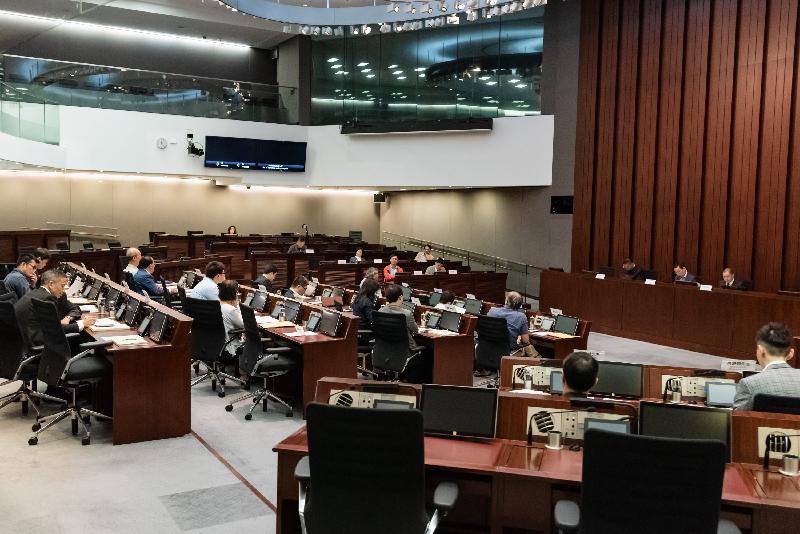
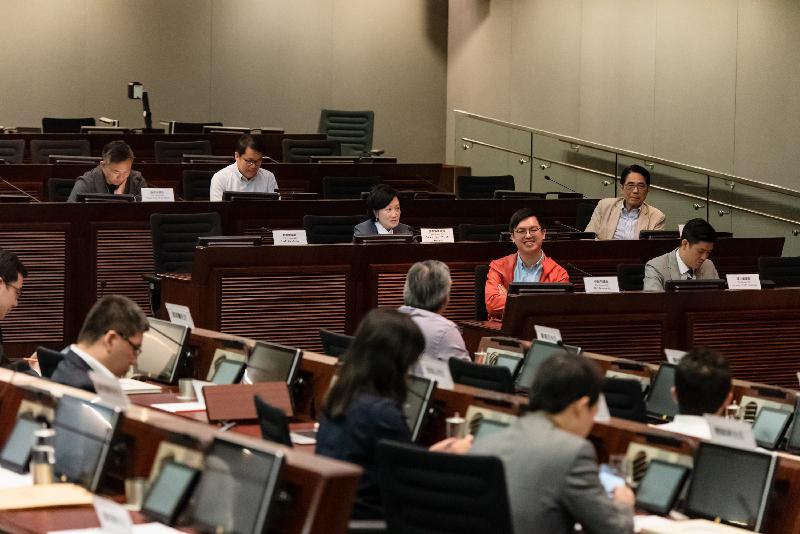
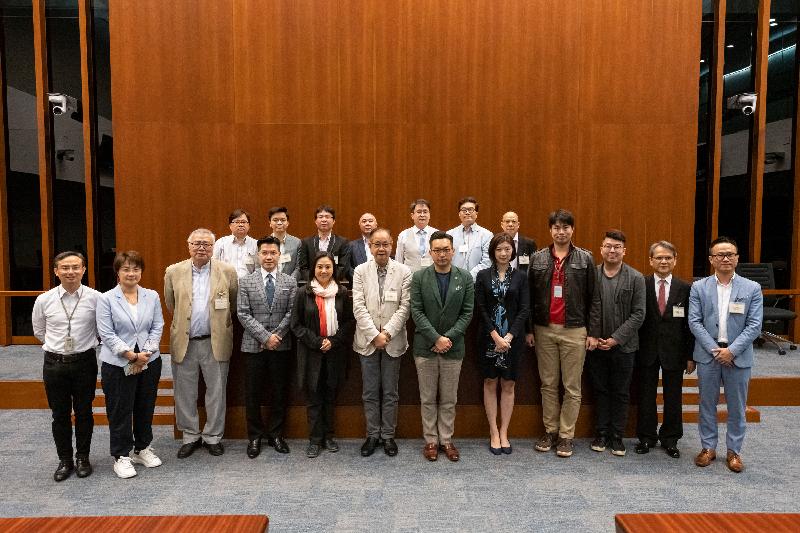
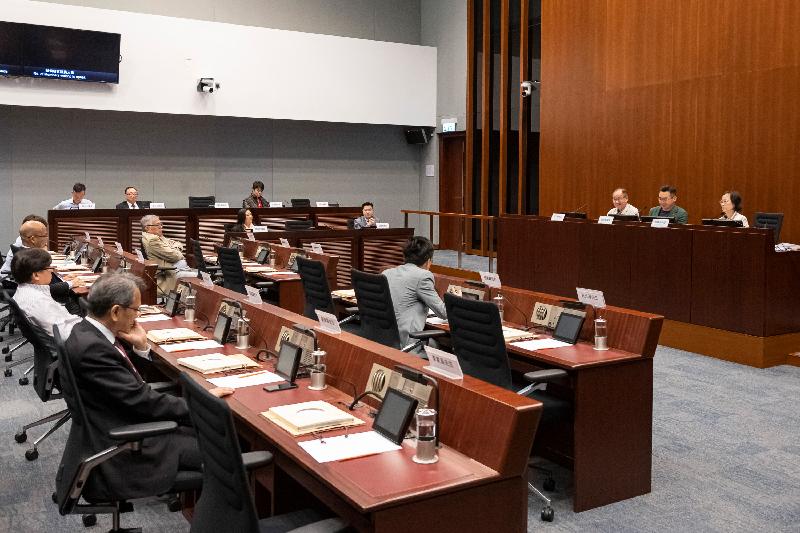
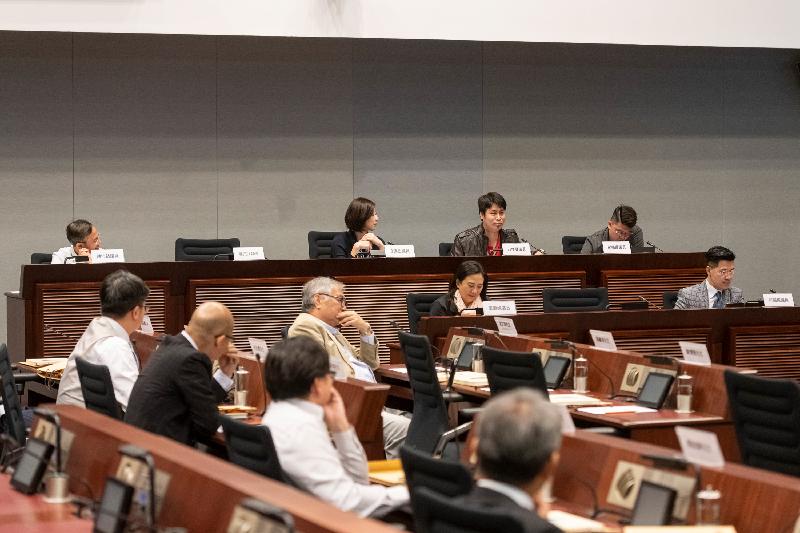
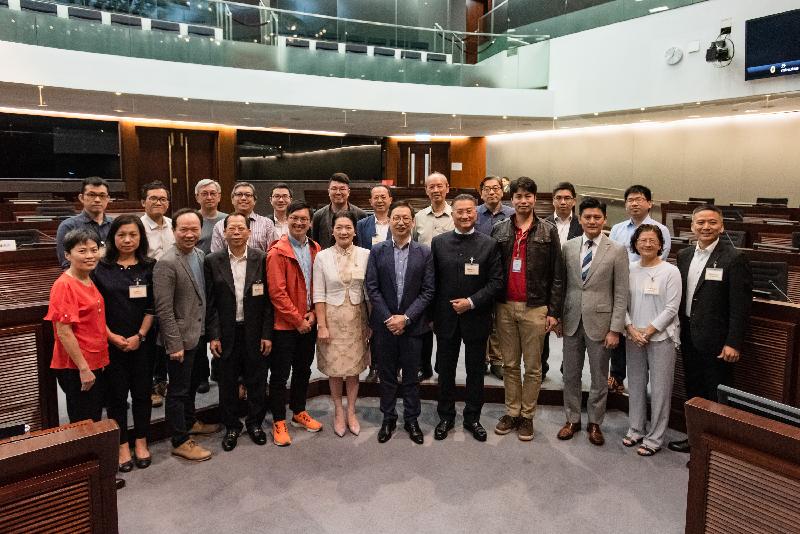
     Members of the Legislative Council (LegCo) held separate meetings today (May 24) with members of the Kwun Tong District Council (DC) and the Sai Kung DC at the LegCo Complex to discuss and exchange views on matters of mutual interest.
 
     During the meeting with the Kwun Tong DC, LegCo members discussed and exchanged views with DC members on retrofitting barrier-free pedestrian facilities in Kwun Tong District; the effectiveness of the work of the Joint Offices for Investigation of Water Seepage Complaints; mass transit transport system and pedestrian accessibility issues in Kowloon Bay; relocation of concrete batching factories in Yau Tong area; development of Sai Tso Wan park; and studying the repositioning of green minibus services. The meeting was convened by Mr Wilson Or and attended by Mr Chan Hak-kan, Mr Wong Kwok-kin, Mrs Regina Ip, Mr Paul Tse, Mr Steven Ho, Mr Wu Chi-wai, Mr Ho Kai-ming, Mr Lau Kwok-fan and Mr Jeremy Tam.
 
     As for the meeting with the Sai Kung DC, LegCo members discussed and exchanged views with DC members on requesting the Hong Kong Design Institute to open its cultural and recreational facilities for public use; expediting the implementation of plans on cultural and recreational facilities already made for Tseung Kwan O and Sai Kung; speeding up the implementation of the East Kowloon Line railway project; relieving the vehicular congestion at Clear Water Bay Road and New Clear Water Bay Road; requesting the construction of additional typhoon shelters and the expansion of anchorage areas in Sai Kung; expediting the implementation of the development plan for the ex-Sai Kung Central Primary School site; and the nuisance caused by wild pigeons and wild pigs. The meeting was convened by Mr Alvin Yeung and attended by Mr Chan Hak-kan, Mr Steven Ho, Mr Chan Chi-chuen, Dr Elizabeth Quat, Mr Martin Liao, Ms Yung Hoi-yan, Dr Pierre Chan, Mr Lau Kwok-fan and Mr Gary Fan.

Photo  Photo  Photo  Photo  Photo  Photo