Muse Fest HK 2019 to feature about 100 delightful programmes and activities

     The Leisure and Cultural Services Department (LCSD) will launch Muse Fest HK 2019 on June 22 and the event will continue until July 7. About 100 programmes and activities covering culture, history, art, film, astronomy, science and conservation to be held by 20 museums and related offices under the LCSD will be rolled out. In addition, museums from Singapore, Guangdong, Macao and Hong Kong will join the festival as partners to promote the vibrant museum culture.
           
     With "Curating the New" as the theme, the festival this year aims to lead visitors on a journey exploring how the museums have experienced and displayed transformation. The journey will offer visitors a range of new experiences as well.
      
     The festival comprises four categories of programmes, namely the Muse Fest Special Activity Series, the Museum Inside Out Activity Series, the Exhibition and Film Show Series and the Educational and Extension Activity Series.
           
     The opening event, "Summer Tea Party – Tea in the Garden", will be held on June 22 at the Flagstaff House Museum of Tea Ware, the oldest surviving Western building in Hong Kong. Through brewing and savouring tea with students and tea artists, participants will be able to experience the special Chinese tea culture and find out more interesting stories about the history of the museum.
      
     The Assistant Director (Heritage and Museums) of the LCSD, Mr Chan Shing-wai, and the Assistant Curator (Prints and Photographs) of the Conservation Office, Ms Carol Tang, will be invited to host a discussion session on conservation for the "Junk! Woodworking – Adopt a Log Brainstorming Session" at Oi! on June 23. A wood craft workshop to be led by local artists will also be held to show how to turn junk wood pieces into useful artefacts.
      
     For the "Urban Walk with Curators" activities to be held on June 29 and 30 and July 7, three curators will lead three special tours in the city to explore unexpected stories in Tai O, the University of Hong Kong and the Hong Kong Zoological and Botanical Gardens, from the perspectives of art, history and science respectively.
      
     The "Phobia Party" to be hosted on July 6 at the Hong Kong Science Museum will provide visitors with an opportunity to explore the scientific principles and causes behind phobias through a series of sensory tests and discussion sessions to be led by educators of the Science Centre Singapore and the Hong Kong Science Museum.
      
     In the finale programme "Breathe inï½¥Breathe out" to be launched on July 7 at the Hong Kong Visual Arts Centre, visitors will follow a journey to reach their inner selves and appreciate the art of tranquillity through a set of interactive media art installations created by media artist Ng Tze-kwan, as well as joint performances by the Venerable Chang Zhan, choreographer and dancer Mui Cheuk-yin and singing bowl player Tsang Man-tung. 
      
     Other fabulous programmes will include various thematic exhibitions, film shows, stargazing activities, workshops, talks and science shows.
           
     Advance enrolment is required for some of the programmes. For details, please visit the website of the festival at www.museums.gov.hk/mf2019, or call 2601 7324 for enquiries.


LCQ9: Promoting popularisation of electric vehicles

     Following is a question by the Hon Dennis Kwok and a written reply by the Secretary for the Environment, Mr Wong Kam-sing, in the Legislative Council today (May 29):

Question:

     On promoting the popularisation of electric vehicles (EVs), will the Government inform this Council:

(1) of the respective numbers of (i) parking spaces and (ii) standard, medium and quick chargers for EVs (chargers), at each of the car parks managed by the Hong Kong Housing Authority (HA) and the Hong Kong Housing Society (HKHS);

(2) whether the HA and the HKHS have plans to (i) install more chargers and (ii) replace all the existing standard chargers with medium or quick chargers, at their car parks; if so, of the details; if not, the reasons for that;

(3) whether it knows the respective numbers of (i) parking spaces and (ii) standard, medium and quick chargers, at each of the car parks managed by the Hospital Authority, the Urban Renewal Authority, the Airport Authority Hong Kong, the MTR Corporation Limited, the Hong Kong Science and Technology Parks Corporation and the Hong Kong Cyberport Management Company Limited;
 
(4) whether it will issue guidelines or provide subsidies to the organisations mentioned in (3) to encourage them to install more chargers at their car parks; if so, of the details; if not, the reasons for that;

(5) whether it will incorporate provisions into the new leases of petrol filling station (PFS) sites or adopt other measures to make oil companies retrofit quick chargers at their PFSs; if so, of the details; if not, the reasons for that;

(6) given that currently quite a number of car parks in aged private buildings, due to deficiency in power supply capacity and other infrastructure facilities, have difficulties in installing medium chargers, thus deterring vehicle owners from switching to the use of EVs, whether the Government will take the initiative to assist the owners' organisations of those buildings in overcoming the difficulties; if so, of the details; if not, the reasons for that;

(7) of the details of the seminars/workshops on installation of charging facilities at private car parks organised in the past three years by the relevant government departments, including the (i) dates, (ii) venues, (iii) target participants and (iv) numbers of participants; whether the Government will set a target on the number of such activities to be held each year; if so, of the details; if not, the reasons for that; and

(8) whether it will carry out, in collaboration with the 18 District Councils, more promotional work relating to the popularisation of EVs; if so, of the details; if not, the reasons for that?

Reply:

President,

     My reply to the question raised by the Hon Dennis Kwok is as follows:

(1) The respective figures on existing parking spaces and electric vehicle (EV) chargers at car parks in public housing estates and malls under the Hong Kong Housing Authority (HA) and the Hong Kong Housing Society (HKHS) are tabulated at Annex I.

(2) To tie in with the Government's efforts to further promote the use of EVs, the HA will gradually add EV medium charging facilities to the existing car parks as required and when technically feasible. The number of chargers that the HKHS plans to add in 2020 is shown at Annex II.

(3) and (4) The respective figures on existing parking spaces and EV chargers at car parks under the Hospital Authority, the Urban Renewal Authority (URA), the Airport Authority Hong Kong (AA), the MTR Corporation Limited (MTRCL), the Hong Kong Science and Technology Parks Corporation and the Hong Kong Cyberport Management Company Limited are tabulated at Annex III.

     Since 2010, the Government has expounded to various bodies and organisations (including the Hospital Authority, URA, AA and MTRCL) its policy and measures on promoting EVs and has written to encourage them to install more EV charging facilities at their car parks. The Government has also issued guidelines on installation of EV charging facilities for reference by those organisations interested in installing such facilities at their car parks.

(5) Apart from the need to overcome fire and gas safety issues, the petrol filling stations (PFS) in Hong Kong are in general relatively small and the potential for adding quick chargers is not high. Vehicles waiting for charging will also affect nearby traffic, therefore PFS is not considered as suitable location. However, as a quick charger can provide 50 to 100 kilometres of driving range for electric private cars (e-PCs) in 15 to 30 minutes, we are looking for other suitable locations to set up public quick charging stations for e-PCs for trial. Should the trial of quick charging stations be successful, we will explore the feasibility of expanding the quick charging stations across the territory.
 
(6) In view of the constraints on installing charging facilities at car parks of existing private premises, the Environmental Protection Department (EPD) established in 2011 a dedicated team and a hotline to provide information and technical support. Currently, the two power companies not only provide technical advice for EV owners but also render power connection services to these owners' residential parking spaces. The two power companies have also indicated to the Government that they would endeavour to accept requests for additional power load from existing private premises to meet the needs of EV charging. Moreover, in recent years several private companies have been providing EV owners, housing estates or business establishments with one-stop EV installation and charging services, including the installation of charging facilities at EV owners' parking spaces and the provision of charging services at other specified locations outside the housing estates where these owners reside. As far as we know, these companies have installed charging facilities in over 34 housing estates.
 
     The EPD will continue to step up its communication, publicity, educational efforts as well as technical assistance to be provided to building owners, property management companies and owners’ corporations with a view to facilitating their installation of EV charging facilities.

(7) and (8) By organising seminars and workshops, the EPD has appealed to owners' corporations and property managers for their support in installing EV charging facilities at their premises. Over the past three years, we held a total of four seminars/workshops on EV charging facilities to not only brief owners' corporations and property managers on the benefits of switching to EVs but also encourage the installation of EV charging facilities at car parks in existing private premises. The dates, venues, target participants and numbers of participants of these seminars/workshops are tabulated at Annex IV. The EPD is preparing to continue to run similar seminars/workshops in various districts in this year.

     Should any District Council be interested in hosting related publicity and educational activities, the EPD stands ready to collaborate with it to make promotional efforts.
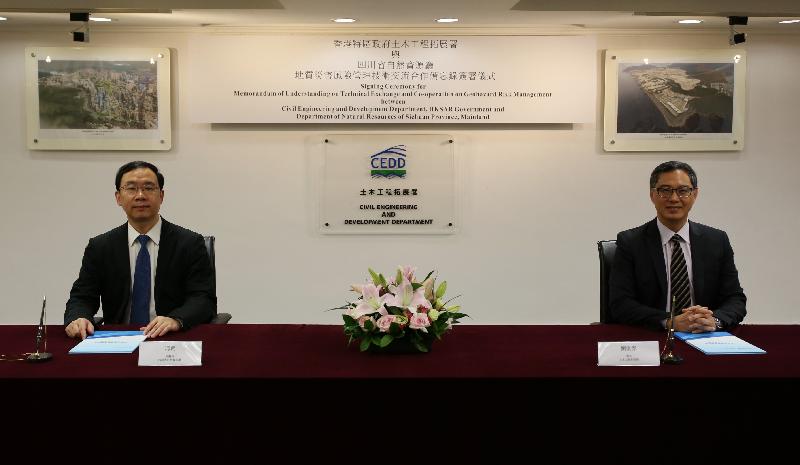
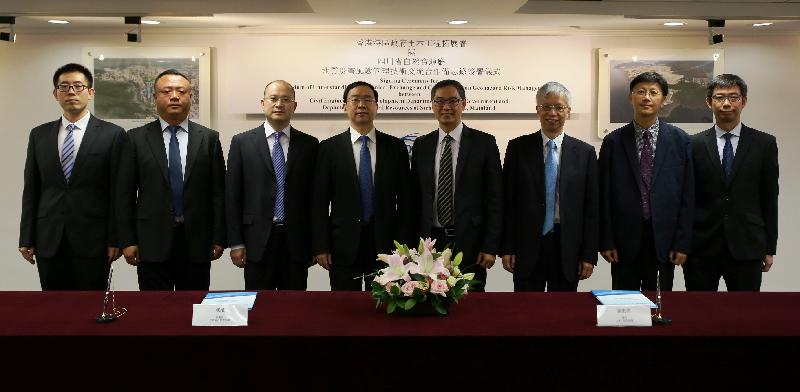


Hong Kong and Sichuan sign MOU on geo-hazard risk management (with photos)

     The Civil Engineering and Development Department (CEDD) and the Department of Natural Resources of Sichuan Province signed a Memorandum of Understanding (MOU) today (May 29) to strengthen collaboration on technical exchange and co-operation on geo-hazard risk management. 
 
     The MOU was signed by the Director of Civil Engineering and Development, Mr Ricky Lau, and the Deputy Director of the Department of Natural Resources of Sichuan Province, Mr Feng Bin. Under the MOU, Hong Kong and Sichuan agree to facilitate technical exchange on geo-hazard risk management, explore opportunities for research co-operation in geo-hazard mitigation, and enhance co-operation in staff training in pertinent areas.
 
     Speaking after the signing ceremony, Mr Lau said that both Hong Kong and Sichuan face the threat of landslide hazards, and hence the two places have been in close co-operation in areas of geo-hazard risk assessment, early warning for geo-hazards, hazard mitigation and public education. The CEDD set up a permanent exhibition hall, the first of its kind in the Mainland, in Sichuan last year to present Hong Kong's experience and achievements in geo-hazard mitigation.
 
     Mr Lau added that the MOU could provide ample opportunities in further enhancing the geo-hazard risk management systems in the two places through technical exchange, research co-operation and staff training. This allows Hong Kong and Sichuan to better prepare for the challenges of climate change, with a view to jointly building a safer and more liveable environment.

Photo  Photo  


Effective Exchange Rate Index

     The effective exchange rate index for the Hong Kong dollar on Wednesday, May 29, 2019 is 105.6 (up 0.2 against yesterday's index).


LCQ6: Terminally ill patients

     Following is a question by Dr the Hon Fernando Cheung and a reply by the Secretary for Food and Health, Professor Sophia Chan, in the Legislative Council today (May 29):
 
Question:
 
     Regarding the provision of palliative care to terminally ill patients, as well as their giving advance directives and seeking euthanasia, will the Government inform this Council if it knows:
 
(1) the details of the palliative care provided by public hospitals in each of the past five years, including the number of hospital beds, the attendance of the service, the manpower of healthcare workers and social workers involved, as well as the support received by the patients and their family members; whether the Hospital Authority conducted last year any study on improving this type of service;
 
(2) the number of public hospital patients making enquiries about advance directives in each of the past five years; whether the Government has drawn up a legislative timetable in respect of advance directives; and
 
(3) the number of public hospital patients seeking euthanasia in each of the past five years, with a breakdown by the disease suffered by the patients and the age group to which they belonged; whether the Government will study enacting legislation to permit the administration of euthanasia?
 
Reply:
 
President,
 
     Hong Kong is facing an ageing population and rising prevalence of chronic and complicated diseases. A holistic approach in the provision of healthcare services, therefore, should become more and more important. Such an approach gives terminally ill patients a greater degree of autonomy to manage their own health as well as the full respect they deserve. In this context, the Government recognises the need to promote the development of services for the elderly, particularly to strengthen palliative care services for persons facing terminal illness.
 
     Currently, palliative care services in Hong Kong are mainly provided by the Hospital Authority (HA) led by palliative care specialists, under the specialties of Medicine and Oncology. In the past, palliative care services of the HA focused mainly on the care of advanced cancer patients. In the last decade, palliative care services have been gradually extended to cover patients with other diseases, such as patients suffering from end-stage organ failure.

     To allow terminally ill patients more options of their own treatment and care arrangements, the Government will consult the public in the second half of 2019 on arrangements of advance directives (ADs) and relevant end-of-life care.

     My reply to the various parts of the question raised by Dr the Hon Fernando Cheung is as follows:
 
(1) With the aim to provide holistic care for patients, the HA has been providing palliative care services with a comprehensive service model for terminally ill patients and their families through a multi-disciplinary team of professionals, including doctors, nurses, medical social workers, clinical psychologists, physiotherapists and occupational therapists, etc. Palliative care services provided by the HA include inpatient, outpatient, day care and home care services and bereavement services, etc.
 
     Currently, palliative care services are provided by the HA in all seven clusters to support terminally ill patients and their families. At present, more than 40 doctors, 300 nurses and 60 allied health professionals (calculated on a full-time equivalent basis) provide the relevant services.
 
     Palliative care inpatient services are mainly for terminally ill patients with severe or complex symptoms and needs. As at December 31, 2018, the HA has over 360 palliative care beds. Besides, if necessary, some terminally ill patients admitted to other specialties who are in need of palliative care services can also receive treatment from the palliative care teams.

     Statistics on utilisation of palliative care services in the past five years are at Annex.

     To plan and further improve the quality and sustainability of HA's palliative care services as well as to cope with increasing demand, the HA has developed the "Strategic Service Framework for Palliative Care" in 2017 to guide the development of palliative care services in the coming five to 10 years and formulate strategic directions for improving adult and paediatric palliative care.

     In fact, since 2018-19, the HA has further enhanced palliative care services provided by the multi-disciplinary team, including strengthening palliative care consultative service in hospitals, enhancing palliative care home care service and strengthening end-of-life care for elderly patients in residential care homes for the elderly as well as strengthening the competency of nursing staff supporting terminally ill patients beyond palliative care setting through training. The HA will regularly review the demand for various medical services (including palliative care services) and plan for the development of its services according to factors such as population growth and changes, advancement of medical technology and healthcare manpower, and collaborate with community partners to better meet the needs of patients.
 
(2) The Government consulted the public on matters relating to the introduction of the concept of ADs in Hong Kong in 2009. Most of the submissions showed no objection to introducing the concept of ADs by non-legislative means in Hong Kong. The HA formulated a guideline together with standardised form on ADs in July 2010. Since August 2012, the Clinical Management System has marked the ADs witnessed by HA's doctors as a reminder to assist clinical communication. A total of 5 561 ADs have been signed by HA's patients since August 2012. However, the HA does not maintain statistics regarding patients making enquiries on ADs in public hospital.
 
     As mentioned above, the Government will consult the public in the second half of 2019 on arrangements of ADs and relevant end-of-life care. We will study the way forward for ADs in accordance with the results of the consultation.
 
(3) ADs and euthanasia are not the same. The purpose of ADs is to state explicitly the specific situation where patients can refuse life-sustaining treatment when they are no longer capable to make decision during end-of-life, whereas under the Code of Professional Conduct of the Medical Council of Hong Kong, euthanasia is defined as "direct intentional killing of a person as part of the medical care being offered".
 
     Euthanasia involves a third party's acts of intentional killing, manslaughter, or aiding, abetting, counselling or procuring the suicide of another, or an attempt by another to commit suicide, which are unlawful acts according to the laws of Hong Kong, possibly liable to criminal offence(s) under Offences against the Person Ordinance (Cap. 212).

     Euthanasia is a highly complex and controversial issue involving implications on various dimensions, such as medical, social, moral, ethical and legal aspects. Any subject matters concerning life must be treated with care and caution. The Code has made it clear that euthanasia is "illegal and unethical". The Government currently has no plans to carry out any studies or consultations on the issue of legalising euthanasia. The HA also does not maintain statistics regarding patients in public hospital wishing for euthanasia.