TID, Small and Medium Enterprises Committee and ICPWG under Basic Law Promotion Steering Committee visit Guangzhou (with photos)

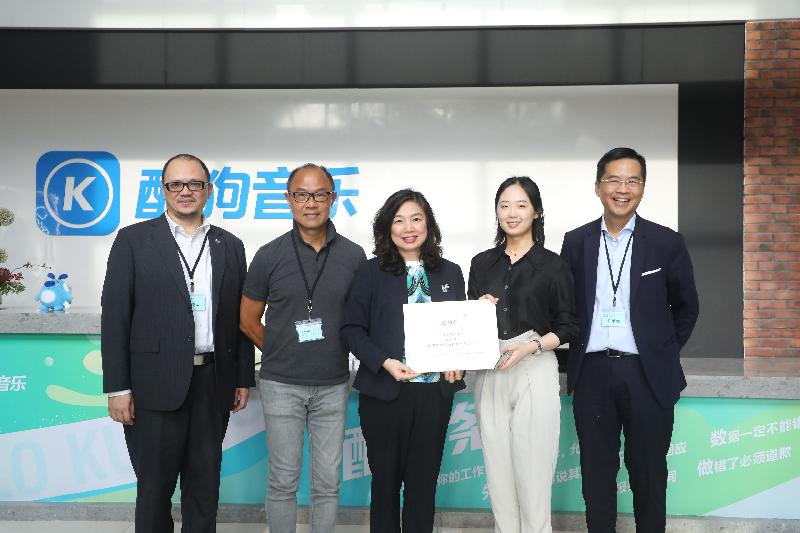
     The Trade and Industry Department (TID), the Small and Medium Enterprises Committee (SMEC) and the Working Group on Industrial, Commercial and Professional Sectors (ICPWG) under the Basic Law Promotion Steering Committee (BLPSC) led a delegation to Guangzhou today (June 13) to help Hong Kong small and medium enterprises (SMEs) and professionals learn about the latest developments and investment opportunities in the Guangdong-Hong Kong-Macao Greater Bay Area, especially Guangzhou.

     The delegation visited the Guangzhou Baiyun Electric Equipment Company Limited to understand the operations of Mainland enterprises in the Greater Bay Area, and was briefed on the latest developments of the Baiyun District in Guangzhou.

     To gain a deeper understanding about the business environment in the Mainland, the delegation had a discussion session with local young entrepreneurs to learn about their experiences in starting businesses in Guangzhou. 

     The delegation also visited the Yangcheng Creative Industry Zone and the enterprises there to understand the operation of creative enterprises and the latest developments of creative industries there. 

     The delegation was led by the Director-General of Trade and Industry, Ms Salina Yan; the SMEC Chairman, Mr Michael Hui; and the ICPWG Convenor, Mrs Clarie Lo. Over 60 participants, including SMEC members, ICPWG members and representatives of Hong Kong's major trade and industrial organisations, professional bodies and SME associations, joined the visit.

     The SMEC is an advisory body set up by the Hong Kong Special Administrative Region Government to advise the Government on issues affecting the development of SMEs in Hong Kong and suggest measures to support and facilitate their development and growth. The ICPWG under the BLPSC is responsible for formulating and implementing action plans for the promotion of the Basic Law among the industrial, commercial and professional sectors.
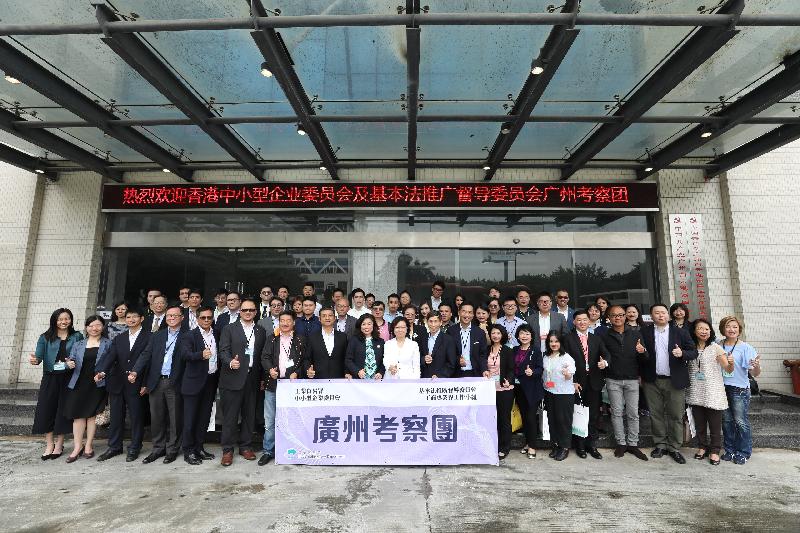
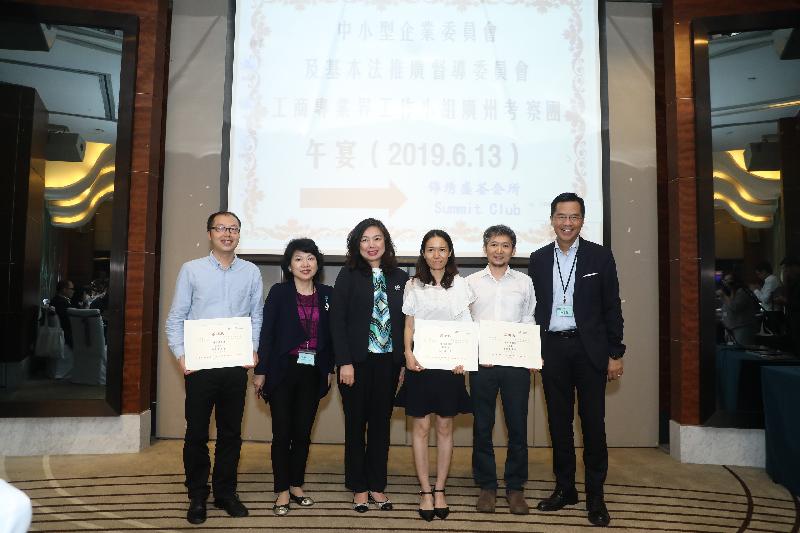
Photo  Photo  Photo  Photo  


Speech by SLW at Hong Kong Myanmar Chamber of Commerce 6th Anniversary Dinner Banquet “Light Up Love” (English only)

     Following is the speech by the Secretary for Labour and Welfare, Dr Law Chi-kwong, at Hong Kong Myanmar Chamber of Commerce 6th Anniversary Dinner Banquet "Light Up Love" today (June 13):
      
Mr Albert Oung (Founding President of the Hong Kong Myanmar Chamber of Commerce), distinguished guests, ladies and gentlemen, 
        
     Good evening everyone. May I begin by saying how pleased I am to be here, to celebrate the sixth anniversary of the Hong Kong Myanmar Chamber of Commerce, and have the privilege of addressing a remarkable audience like your good selves – outstanding and successful businessmen and professionals.
      
     Hong Kong is truly a cosmopolitan city and one of Asia's leading financial hubs. Despite our lack of natural resources, we are blessed with a diligent and productive workforce, both domestic and from abroad. Together they serve as the engine and powerhouse for our booming economy.
      
     I have mentioned on many previous occasions, Hong Kong will soon face a major manpower shortage. In anticipation of a rapid surge in our ageing population within the next three to four decades, we expect to have a big proportion of workers nearing or reaching retirement age. With the acute shortage beginning to surface within the next 10 years, labour shortage presents a real and imminent challenge to us in the very near future.
      
     Currently, we have around 393 000 foreign domestic helpers (FDHs) (Note 1) working in Hong Kong, representing some 10 per cent of the SAR's (Special Administrative Region's) total work force. I cannot emphasise more how FDHs are benefitting our local families, with services ranging from household chores, to the care of young children and elderly family members. Such much-needed service effectively relieves the burdens of many stay-at-home-moms, unleashing their work potential, to the benefit of Hong Kong's labour market and with it, our economic development. 
      
     With the soon-to-peak manpower supply and ageing population, it comes as no surprise that the demand for FDHs will continue to surge (Note 2).  We could only hope that more domestic helpers could be coming our way from FDH-sending countries, Myanmar being one of them.
      
     To make the SAR an attractive work destination, our Government is committed to safeguarding and protecting the rights and interests of FDHs. Hong Kong is one of the few places that grant FDHs statutory labour protection that is on par with local workers. Among others, these include weekly rest days, statutory holidays, paid annual leave, sickness allowance, maternity protection, long service payment and severance payment. Additional protection and benefits are stipulated under the Government-prescribed Standard Employment Contract.  
      
     We were most delighted to learn from the Myanmarese Consulate-General in Hong Kong that their Government is contemplating plans to lift the export ban on domestic helpers working overseas, including Hong Kong. To expedite the process, the HKSAR Government is proactively following this up with the Consulate-General. And for this purpose, any advice and input the Hong Kong Myanmar Chamber of Commerce may have on this subject will be much appreciated.
      
     On this note, I would like to wish the Hong Kong Myanmar Chamber of Commerce every success in the coming years. With concerted efforts of the local community, international business organisations, private sector and the Government, we can most certainly make Hong Kong a harmonious and inclusive society for all, and a better place to live and work.
      
     Thank you very much.
      
Note 1: As at May 2019, there were 393 587 FDHs in Hong Kong.  85 were from Myanmar.
      
Note 2: According to the Hong Kong Population Projections 2015-2064 published by the Census and Statistics Department in September 2015, the number of FDHs was estimated to rise from 328 300 in 2014 to 629 300 in 2064.


CFS finds Salmonella in sample of tossed noodles with shredded chicken

     The Centre for Food Safety (CFS) of the Food and Environmental Hygiene Department announced today (June 13) that a sample of tossed noodles with shredded chicken was found to contain a pathogen, Salmonella. The CFS is following up on the case.

     "Following up on a food complaint, the CFS collected the above-mentioned sample from a food premises in Kwai Chung for testing. The test result showed the presence of Salmonella in 25 grams of the sample, exceeding the criterion of the Microbiological Guidelines for Food which states that Salmonella should not be detected in 25 grams of a ready-to-eat food sample," a CFS spokesman said.

     The spokesman said that the CFS had notified the premises concerned of the unsatisfactory test result and instructed it to stop selling the food item concerned immediately. The CFS has also provided health education on food safety and hygiene to the person-in-charge and staff of the premises, and requested it to review and improve the food production process and carry out thorough cleaning and disinfection.

     "Salmonella infection may cause fever and gastrointestinal upset such as vomiting, abdominal pain and diarrhoea. The effects on infants, young children, the elderly and patients with a weak immune system could be more severe and may even lead to death," the spokesman said.

     The CFS will continue to follow up on the incident and take appropriate action to safeguard food safety and public health.


Sample of Shanghai noodles detected with excessive preservative

     The Centre for Food Safety (CFS) of the Food and Environmental Hygiene Department announced today (June 13) that a sample of loose-packed Shanghai noodles was found to contain a preservative, benzoic acid, at a level exceeding the legal limit. The CFS is following up on the case.

     A spokesman for the CFS said, "The CFS collected the abovementioned sample from a shop in Tin Shui Wai for testing under its routine Food Surveillance Programme. The test result showed that the sample contained benzoic acid at a level of 1640 parts per million (ppm), exceeding the legal limit of 1000 ppm."

     The CFS has informed the vendor concerned of the irregularity and instructed it to stop sale of the affected product. The CFS is tracing the source of the affected product.

     Benzoic acid is a preservative of low toxicity. Based on the level detected in the sample, adverse health effects will not be caused under usual consumption.

     The spokesman reminded the food trade that the use of preservatives in food must comply with the Preservatives in Food Regulation (Cap 132BD). Offenders are liable to a maximum fine of $50,000 and six months' imprisonment upon conviction.

     The CFS will continue to follow up on the incident and take appropriate action. Investigation is ongoing.


CFS finds traces of malachite green in grass carp sample

     The Centre for Food Safety (CFS) of the Food and Environmental Hygiene Department today (June 13) announced that a trace amount of malachite green was found in a grass carp sample. Follow-up is in progress.

     A CFS spokesman said, "The CFS collected the above-mentioned grass carp sample from a stall at the Cheung Sha Wan Wholesale Food Market for testing under its routine Food Surveillance Programme. The test result showed that the sample contained a trace amount of malachite green at a level of 0.8 parts per billion.

     "The CFS has informed the vendor concerned of the irregularity and instructed it to stop sale of the affected product," the spokesman added.

     Malachite green is a type of industrial dye and has been used for treating infections in fish. Malachite green is possibly both genotoxic and carcinogenic. According to the Joint FAO/WHO Expert Committee on Food Additives (JECFA), there is no safe level of residues of malachite green or its metabolites in food that represents an acceptable risk to consumers. Currently, malachite green has been prohibited for use in food producing animals in many countries. According to the Harmful Substances in Food Regulations (Cap 132AF), no food sold in Hong Kong is allowed to contain malachite green. Offenders will be prosecuted and will be liable to a fine of $50,000 and to imprisonment for six months upon conviction.

     The CFS will continue to follow up on the incident and take appropriate action, including tracing the source of the affected product. Investigation is ongoing.