Land Registry releases statistics for June

     The Land Registry today (July 3) released its statistics for June 2019.

Land registration
——————-

* The number of sale and purchase agreements for all building units received for registration in June was 6 211 (-40.0 per cent compared with May and -32.9 per cent compared with June 2018)

* The 12-month moving average for June was 6 317 (3.9 per cent below the 12-month moving average for May and 13.7 per cent below that for June 2018)

* The total consideration for sale and purchase agreements in June was $53.8 billion (-40.4 per cent compared with May and -33.4 per cent compared with June 2018)

* Among the sale and purchase agreements, 4 627 were for residential units (-43.6 per cent compared with May and -31.1 per cent compared with June 2018)

* The total consideration for sale and purchase agreements in respect of residential units was $45.3 billion (-42.2 per cent compared with May and -33.4 per cent compared with June 2018)

     Statistics on sales of residential units do not include sale and purchase agreements relating to sales of units under the Home Ownership Scheme, the Private Sector Participation Scheme and the Tenants Purchase Scheme unless the premium of the unit concerned has been paid after the sale restriction period.

     Figures on sale and purchase agreements received for the past 12 months, the year-on-year rate of change and breakdown figures on residential sales have also been released.

     As deeds may not be lodged with the Land Registry until up to 30 days after the transaction, these statistics generally relate to land transactions in the previous month.
 
Land search
————-                                                                       
 
* The number of searches of land registers made by the public in June was 432 182 (-13.1 per cent compared with May and -5.9 per cent compared with June 2018)

     The statistics cover searches made at the counter, through the self-service terminals and via the Integrated Registration Information System Online Services.

Results of targeted surveillance on Vibrio parahaemolyticus in ready-to-eat food all satisfactory

     â€‹The Centre for Food Safety (CFS) of the Food and Environmental Hygiene Department today (July 3) announced the results of a recently completed targeted food surveillance project on Vibrio parahaemolyticus in ready-to-eat food. All samples passed the test.

     A total of 300 samples of ready-to-eat food, including cooked seafood such as fish, crustaceans and shellfish and raw foods such as raw oysters, sashimi and sushi, were collected from different retailers, including online retailers and food factories, for testing for Vibrio parahaemolyticus this year.

     A spokesman for the CFS said, "Vibrio parahaemolyticus, a common bacterium that can cause food poisoning, is naturally present in seawater and often found in seafood. Food poisoning caused by this pathogenic bacterium is usually associated with consumption of undercooked or raw seafood, in particular shellfish, or improperly handled food that is contaminated with bacteria."

     Common symptoms of food poisoning caused by Vibrio parahaemolyticus, including diarrhoea, vomiting, mild fever and abdominal pain, usually occur within one or two days after consumption of contaminated food. Recovery is usually within a few days. Nonetheless, children, the elderly, pregnant women and those with a weaker immune system are more likely to develop severe symptoms.

     The spokesman said, "Despite the fact that the test results of the samples were all satisfactory, the trade and the public should not take the risk lightly. To prevent food poisoning caused by Vibrio parahaemolyticus, the food trade should be reminded that raw oysters, sashimi and sushi sold on the premises should be separated from other food and kept in a refrigerator at a temperature between 0 and 4 degrees Celsius. To avoid cross contamination, raw food should be prepared only at specified areas in a food preparation room. Exclusive cutting boards and knives should be used and the utensils should be cleaned and disinfected thoroughly before handling different types of raw food. Cooking aquatic products thoroughly is the only way to prevent diseases caused by harmful microorganisms and parasites. Overproduction should also be avoided as the quality of food may be affected when the production capacity is overlooked."

     The spokesman reminded consumers to patronise hygienic and reliable licensed food premises and consume ready-to-eat food as soon as possible after purchase. The elderly, children, pregnant women and those with a weaker immune system should avoid consuming high-risk food, including inadequately cooked food.


Hong Kong Customs seizes suspected smuggled bird’s nest (with photos)

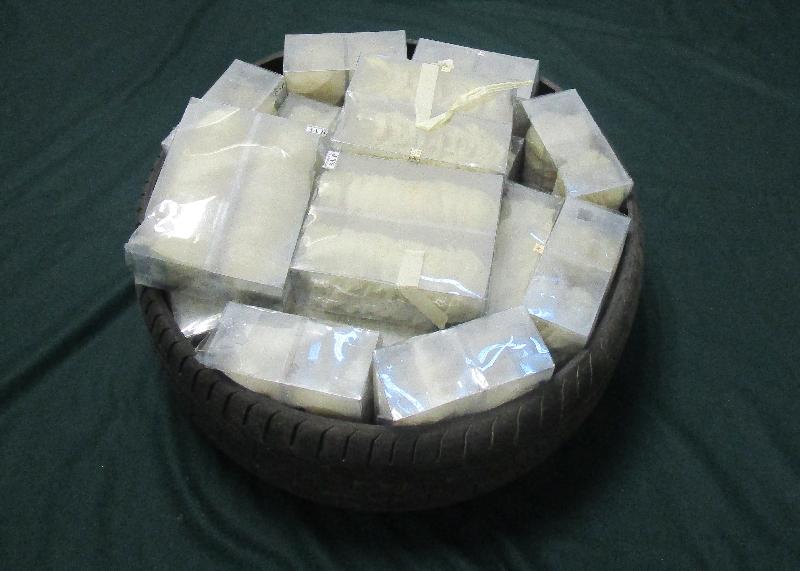
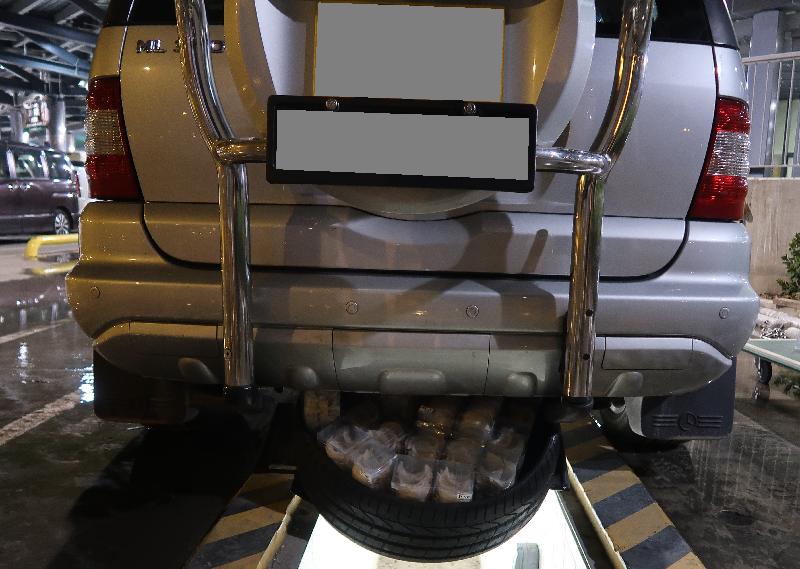
     Hong Kong Customs yesterday (July 2) seized about 10 kilograms of suspected smuggled bird's nest at the Hong Kong Port of the Hong Kong-Zhuhai-Macao Bridge (HZMB) with an estimated market value of about $400,000. This is the first ever outbound private car smuggling case at the HZMB Hong Kong Port.

     Customs officers intercepted an outgoing private car at the HZMB Hong Kong Port for inspection yesterday and seized the batch of bird's nest contained in a spare tyre which was concealed in an altered structure underneath the rear of the vehicle.

     The 23-year-old male driver was arrested. Investigation is ongoing.

     Smuggling is a serious offence. Under the Import and Export Ordinance, any person found guilty of importing or exporting unmanifested cargo is liable to a maximum fine of $2 million and imprisonment for seven years.

     Members of the public may report any suspected smuggling activities to Customs' 24-hour hotline 2545 6182 or its dedicated crime-reporting email account (crimereport@customs.gov.hk).

Photo  Photo  


Hong Kong Customs seizes suspected nicotine oil without import licence (with photo)

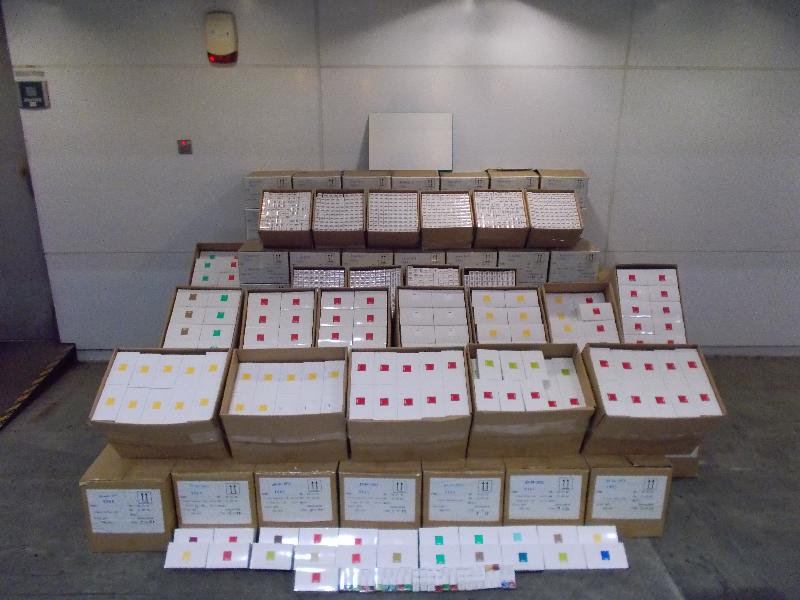
     Hong Kong Customs seized about 228 litres and 16 000 cartridges of suspected nicotine oil without an import licence with an estimated market value of about $1.5 million at Lok Ma Chau Control Point on July 1.

     Customs officers intercepted an incoming container truck at Lok Ma Chau Control Point for inspection in the afternoon on July 1 and seized the batch of suspected nicotine oil without an import licence.

     The 66-year-old male driver was arrested. Investigation is ongoing.

     Under the Import and Export Ordinance, any person who imports pharmaceutical products without a valid import licence commits an offence. The maximum penalty upon conviction is a fine of $500,000 and imprisonment for two years.

     Members of the public may report any suspected smuggling activities to Customs' 24-hour hotline 2545 6182 or its dedicated crime-reporting email account (crimereport@customs.gov.hk).

Photo  


Lifesaving services at Cafeteria New Beach and Cafeteria Old Beach resume

Attention TV/radio announcers:

Please broadcast the following as soon as possible and repeat it at regular intervals:

     Here is an item of interest to swimmers.

     The Leisure and Cultural Services Department has announced that the lifesaving services at Cafeteria New Beach and Cafeteria Old Beach in Tuen Mun District resumed today (July 3). The lifesaving services at these beaches were suspended earlier due to an insufficient number of lifeguards on duty.