Suspected MERS case reported

     The Centre for Health Protection (CHP) of the Department of Health today (August 9) reported a suspected case of Middle East Respiratory Syndrome (MERS), and again urged the public to pay special attention to safety during travel, taking due consideration of the health risks in the places they visit. The case is detailed below:
 

Sex Male
Age 47
Affected area involved Dubai, United Arab Emirates
High-risk exposure Camel ride
Hospital Queen Elizabeth Hospital
Condition Stable
MERS-Coronavirus preliminary test result Pending

     "Travellers to the Middle East should avoid going to farms, barns or markets with camels; avoid contact with sick persons and animals, especially camels, birds or poultry; and avoid unnecessary visits to healthcare facilities. We strongly advise travel agents organising tours to the Middle East to abstain from arranging camel rides and activities involving direct contact with camels, which are known risk factors for acquiring MERS Coronavirus (MERS-CoV)," a spokesman for the CHP said.
 
     "As the Hajj pilgrimage will begin soon, pilgrims visiting Mecca in Saudi Arabia should be vigilant against MERS. Those with pre-existing medical conditions, such as diabetes, chronic lung disease, chronic renal disease and immunodeficiency, are more likely to develop severe infections if they are exposed to MERS-CoV. Pilgrims should hence consult healthcare providers before travel to review the risk and assess whether a pilgrimage is advisable. Pilgrims visiting Mecca may refer to the DH's advice. If pilgrims feel unwell during the two weeks after returning to Hong Kong, they should wear a surgical mask and seek medical attention immediately and inform a doctor of their recent travel history," the spokesman added.

     Locally, the CHP's surveillance with public and private hospitals, with practising doctors and at boundary control points is firmly in place. Inbound travellers and members of the public who recently visited the Middle East and developed fever or lower respiratory symptoms within 14 days will be classified as suspected MERS cases. They will be taken to public hospitals for isolation and management until their specimens test negative for MERS-CoV.
 
    Travellers to affected areas should maintain vigilance, adopt appropriate health precautions and take heed of personal, food and environmental hygiene. The public may visit the MERS pages of the CHP and its Travel Health Service, MERS statistics in affected areas, the CHP's Facebook Page and YouTube Channel, and the World Health Organization's latest news for more information and health advice. Tour leaders and tour guides operating overseas tours are advised to refer to the CHP's health advice on MERS.


Durian sample detected with colouring matter curcumin

     The Centre for Food Safety (CFS) of the Food and Environmental Hygiene Department today (August 9) announced that a durian sample was detected with curcumin, a colouring matter which should not be added to fruit and vegetables in a raw and unprocessed state. The CFS is following up on the case.

     "Following up on a food complaint, the CFS collected the above-mentioned sample from a supermarket in Ma On Shan for testing. The test result showed that curcumin was detected in the husk of the sample," a CFS spokesman said. 

     The CFS has informed the vendor concerned of the irregularity and has requested it to stop sale and remove from shelves the affected batch of the product. The Centre is tracing the source of the product concerned.

     The spokesman said, "Turmeric is a rhizomatour herbaceous perennial plant and curcumin is a natural food colouring extracted from turmeric. According to the Colouring Matter in Food Regulations (Cap 132H), although colouring matter can be added to processed food, it should not be added to meat, game, poultry, fish, fruit or vegetables in a raw and unprocessed state. Upon conviction, offenders shall be liable to a fine of $50,000 and imprisonment for six months.

     "Although curcumin is a food colouring of low toxicity, the law has a stringent requirement on its use. The trade should observe the relevant laws and regulations, follow Good Manufacturing Practice and use food additives in an appropriate manner."

     The spokesman noted that generally speaking, removing the shells of hard-shelled fruits upon consumption can reduce the intake of colouring matter.

     The CFS will continue to follow up on the case and take appropriate action. Investigation is ongoing.


Appeal for information on missing man in Kwai Chung (with photo)

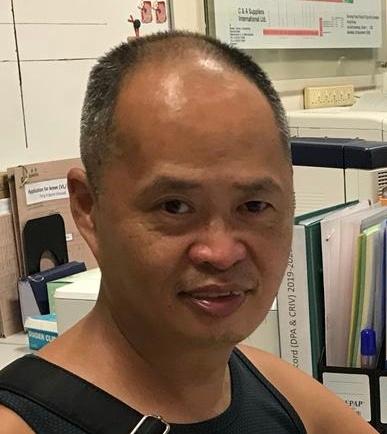
     Police today (August 9) appealed to the public for information on a man who went missing in Kwai Chung.

     Chan Wai-cheong, aged 53, went missing after he left his residence in Kwai Fong Estate on August 6 morning. His colleague made a report to Police yesterday (August 8).  

     He is about 1.7 metres tall, 82 kilograms in weight and of medium build. He has a round face with yellow complexion and short black hair. He was last seen wearing a blue short-sleeved T-shirt, camouflage-patterned shorts and grey flip flops.

     Anyone who knows the whereabouts of the missing man or may have seen him is urged to contact the Regional Missing Person Unit of New Territories South on 3661 1174 or 9143 9685 or email to rmpu-nts-2@police.gov.hk, or contact any police station.


Photo  


Hong Kong Customs seizes suspected liquid cocaine (with photo)

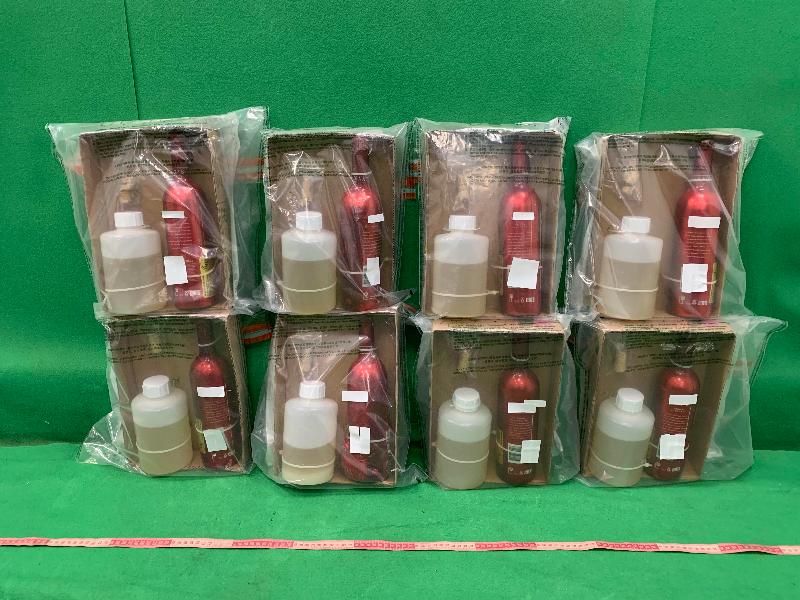
     â€‹Hong Kong Customs seized about 6.8 kilograms of suspected liquid cocaine with an estimated market value of about $6.7 million at Hong Kong International Airport yesterday (August 8).

     Four male passengers, aged between 19 and 41, arrived in Hong Kong from Kuala Lumpur, Malaysia, at noon yesterday. During Customs clearance, eight liquor bottles containing suspected liquid cocaine were found inside the baggage carried by them. They were then arrested.

     Investigation is ongoing.

     Under the Dangerous Drugs Ordinance, trafficking in a dangerous drug is a serious offence. The maximum penalty upon conviction is a fine of $5 million and life imprisonment.

     Members of the public may report any suspected drug trafficking activities to Customs' 24-hour hotline 2545 6182 or its dedicated crime-reporting email account (crimereport@customs.gov.hk).

Photo  


Swordfish sashimi sample detected with mercury exceeding legal limit

     â€‹The Centre for Food Safety (CFS) of the Food and Environmental Hygiene Department announced today (August 9) that a sample of swordfish sashimi was found to contain a metal contaminant, mercury, at a level exceeding the legal limit. The CFS is following up on the case.

     A spokesman for the CFS said, "The CFS collected the above-mentioned sample from a restaurant in Yuen Long for testing under its routine Food Surveillance Programme. The test result showed that it contained mercury at a level of 2.28 parts per million (ppm), exceeding the legal limit of 0.5 ppm."

     The spokesman said that the CFS had informed the restaurant concerned of the irregularity and had requested it to stop sale of the affected batch of the product. The Centre is tracing the source of the product concerned.
          
     "Mercury may affect the nervous system, particularly the developing brain. At high levels, mercury can affect foetal brain development, and affect vision, hearing, muscle co-ordination and memory in adults. Furthermore, as some international organisations such as the World Health Organization have pointed out, consuming predatory fish species is the main source of mercury intake for human beings. The report of the CFS' Total Diet Study has also pointed out that large fish or predatory fish species may contain high mercury levels (for example, tuna, alfonsino, shark, swordfish, marlin, orange roughy and king mackerel). Hence, groups particularly susceptible to the adverse effects of mercury, such as pregnant women, women planning pregnancy and young children, should opt for fish that are smaller in size for consumption and avoid consumption of the above-mentioned types of fish which may contain high mercury levels to minimise the health risk posed to the foetus, infants and young children by excessive exposure to metal contaminants in food," he added.

     According to the Food Adulteration (Metallic Contamination) Regulations (Cap 132V), any person who sells food with metallic contamination above the legal limit may be prosecuted and is liable upon conviction to a fine of $50,000 and imprisonment for six months.

     "People are advised to maintain a balanced and varied diet. To avoid health risks posed by excessive intake of metallic contaminants, pregnant women, women planning pregnancy and young children should avoid eating large or predatory fish," the spokesman said.

     The CFS will continue to follow up on the case and take appropriate action. Investigation is ongoing.