25 years of Customer Service Excellence: how we do it

We recently retained our Customer Service Excellence (CSE) accreditation for the 10th successive year. Before this we held the Charter Mark, part of the Citizen’s Charter Programme, since 1993. This is 25 years of awards for our focus on customer service.

Run by Cabinet Office, CSE recognises organisations that are “efficient, effective, excellent, equitable and empowering”.

It’s tough to achieve accreditation; we’re rigorously tested against multiple criteria in 5 service areas: delivery, timeliness, information, professionalism and staff attitude. These are areas that our customers have said are a priority for them. CSE also places emphasis on developing customer insight, understanding customer experience and measuring service satisfaction.

How we meet the standard

We understand the differences in our varied customer base. This allows us to design our services by focusing on them. We cover a wide range of customers, commercial and public, by carrying out research across the country.

We work closely with trade associations, motoring organisations, the police, other agencies and relevant medical charities, as well as other government departments. This allows us to share best practice and knowledge. Our user experience (UX) laboratory also allows us to test and evaluate our users’ end to end experience, across various channels and devices. On a monthly basis we conduct satisfaction survey research. We analyse our customer satisfaction scores and the comments made.

Using customer journey mapping helps us to understand and improve how our customers interact with us. For example, understanding what customers feel when telling us about a medical condition. We step into their shoes from the moment they know they need to tell us, through to the final outcome. Seeing DVLA from their perspective gives us valuable insight into how our customers feel at different stages of the process.

Senior managers at DVLA have created an environment to encourage people at all levels to see our customers as individuals and understand their needs. This is highlighted in our business plan, where our Non-Executive Chair Lesley Cowley emphasises ‘how good customer service is central to our success and what people expect when they deal with us’.

Achieving the standard is a reflection of how DVLA as a whole provides great service to our customers.

We’re continually improving our services

While it’s great for us to get an independent view on the service we provide our customers, the assessment is also a valuable tool to help us improve. Every year, we’ve used the assessor’s advice on areas where we can improve our services.

This is in line with our aim to make sure the design of our services are led by customer feedback. This will hopefully lead us to continue to retain the CSE standard for years to come.

Would you like to help us keep improving our services?

Follow DVLA on Twitterfollow us on Facebook and connect with us on LinkedIn. You can also subscribe to the DVLA digital services blog.

Let’s block ads! (Why?)


BA @ DVLA: our Business Analysis Development Programme goes live

3 DVLA staff in meeting

Today marks the launch of DVLA’s Information Systems Business Analysis Development Programme. It is a great opportunity to grow in-house talent that allows us to progress with our digital transformation.

We are at the forefront of public digital services. Last year alone we reached a record-breaking one billion interactions with our customers with over 90% online. Our IT Strategy outlines how we will transform our services to the public over the coming years. We will respond to new technologies (such as cloud computing) and also once in a lifetime changes in transport technology such as the move to self-driving vehicles. Business Analysis will be crucial in ensuring we make these goals a reality.

We use Business Analysts (BAs) in all our digital projects, working closely with software engineers to put in place award-winning services for our customers. BAs also have an important role in talking to our stakeholders. They make sure we understand the outcomes stakeholders want to achieve and advise how we can provide it in the most efficient way. Business analysis is a great introduction to a career in the IT sector, with plenty of opportunities to become professionally recognised and to have continuous professional development.

Our BAs have a community that shares best practice and offers a strong support network. They have become a reference point for other government departments who are looking to match the development structure we have put in place.

So, if you have an interest in IT, enjoy solving problems, can stay calm under pressure and are committed to your development we would definitely like to talk to you.

What would the programme give you?

Firstly, it would give you the chance to study for a recognised qualification – the BCS International Diploma in Business Analysis. To get this you would spend:

  • 70% of your time in the role, gaining experience and putting in to practice the formal learning
  • 20% of your time mentoring
  • 10% of your time in formal classroom training, self-study or online learning

You would also be given a personal mentor to help you through your time. But perhaps more importantly, it would give you the chance to gain experience working on some of the most important digital services within government, putting into practice your learning in a real world environment.

The offer and how to apply

We have 10 positions available on our Programme. They run for 24 months with a salary of £25k, giving you the opportunity to earn while you learn. It offers a real alternative to some of the more traditional routes, such as university.

To find out more about the roles, entry requirements and application process follow the link on our current vacancies page.

Follow DVLA on Twitterfollow us on Facebook and connect with us on LinkedIn. You can also subscribe to the DVLA digital services blog.

Let’s block ads! (Why?)


What DVLA has been doing to clamp down on vehicle tax evasion

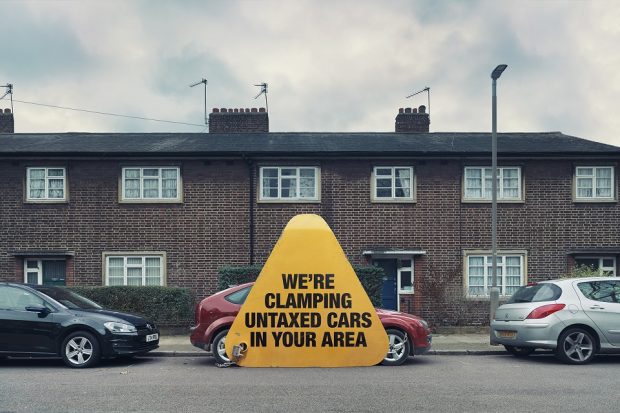
Since the start of 2019, DVLA wheelclamping teams have been busy up and down the country targeting untaxed vehicles. Bethan Beasley, DVLA’s Senior Leader of Enforcement Partnerships, tells us more.

Image of car parked in a street with a giant clamp on it which says "We're clamping untaxed cars in your area"

It’s been a very busy start to the year for all of us on the DVLA enforcement team. We’ve been all across the country in various locations looking for vehicles that haven’t been taxed – and we are not done yet.

Why we’re doing it

It’s all part of a wider campaign targeting the 11 locations of the UK where vehicle tax evasion is highest. In 2018, we took enforcement action – ranging from fines to clamping – on over 464,000 vehicles in these areas.

As well as the hard work we’re doing out on the roads every day, we’re running local advertising in each of the regions including radio, printed publications, poster sites, websites and on social media. All of these activities together are designed to make the driving public think again if they’re considering not taxing their vehicle.

There really is no excuse not to tax. It’s never been easier for motorists – on GOV.UK you can tax your vehicle 24 hours a day and if you are not sure when your tax is due, you can check your vehicle tax is up to date. You can even check on Amazon’s Alexa or Google Home if you want. All you need is your vehicle registration.

Driving the message home

One of our highlights of the campaign has been taking our giant clamp to some of the locations and putting it in city or town centres to see what reaction it gets from the general public. A stark physical image like this has really attracted people’s attention and made them think, as you can see from this video of our giant clamp:

Other comments we received from the public after seeing the giant clamp included:

“A lot of people are reluctant to do their car tax because they think it’s difficult – this campaign will show them how easy it is.”

“Pay your tax – it’s as simple as that. There’s no excuse is there, really.”

What’s next

We’ve clamped nearly 9,000 vehicles so far during this campaign, but we’re not stopping there. Our enforcement teams work across the country on the look-out for untaxed vehicles, and our message is the same wherever we go: tax it or lose it.

Follow DVLA on TwitterFacebook and LinkedIn and subscribe to our DVLA digital services blog.

Let’s block ads! (Why?)


Why apprenticeships matter at DVLA

Richard Saunders is DVLA’s Talent and Learning Consultant. To celebrate National Apprenticeship week, Richard tells us more about the how, what and why of apprenticeships at DVLA.

Richard Saunders

A little background

What is a talent and learning consultant? I advise DVLA teams of opportunities that will develop the skills and nurture the talent that we need to reach our objectives. Part of this is helping to shape apprenticeship opportunities at DVLA.

I’ve been involved in apprenticeship programmes for many years and I was excited to bring this experience to my role when I started at DVLA just 3 months ago. There’s quite a lot of myth busting to do when talking about apprenticeships. Many still think that these are mainly for school leavers who want to earn while they learn – a trade for example. In reality, apprenticeships are great opportunities to develop new skills whilst already in a role. DVLA offers the perfect platform for this.

Different professions and roles

The career opportunities in DVLA are endless. There are so many different occupations,  professions and skill sets. These include roles in customer service, IT, finance, communications, commercial, drivers medical, policy and more.

Why do we have apprenticeships at DVLA? They support our staff with their personal development and meet the needs of our work, both now and in the future.

With so many roles and skills, it’s really important that my team and I understand the specific skills needed for each one and decide how to plug any gaps.  An apprenticeship helps to do just that. It requires commitment from the business area and the apprentice.

Contrary to popular belief, our apprentices include experienced professionals who are committed to their development. As a new starter, it’s been really interesting discussing apprenticeship opportunities with a range of teams and departments, and finding out what might be the best fit for them. At the same time trying to find my way around an organisation housing almost 6,000 staff!

What the future looks like

I’m currently working with some of our senior managers to improve apprenticeships even further by aligning them closer to all our professions. The idea is to make the overall experience more relevant and beneficial to all parties – both the apprentices themselves, and DVLA. We’ll roll it out, have a look how it works and refine it as we go along to make it the very best it can be.

It’s certainly an exciting time. We’re looking forward to launching these new opportunities and continuing our commitment to develop our staff. DVLA is already enjoying great success with apprenticeships so my challenge is to make sure we maintain and exceed this!

To find out more  

You can read more about what it’s like to work at DVLA. You can also take a look at our latest vacancies on Civil Service jobs.

Follow DVLA on TwitterFacebook and LinkedIn and subscribe to our Inside DVLA blog.

Let’s block ads! (Why?)


Driving abroad after Brexit – things are changing

If you’re planning to drive abroad over the coming weeks and months, the driving documents you’ll need may change – here’s what you need to know.

Car driving on a country road

International Driving Permits

Before the UK leaves the EU on 29 March 2019, holders of UK licences can drive in all EU countries and the European Economic Area (EEA) without the need for any additional documentation.

If the UK leaves the EU on 29 March without a deal, UK licence holders may also need to obtain an International Driving Permit (IDP) to drive in EU/EEA countries.

There’s more than one type of IDP available and the type of IDP you may need in some countries will change on 28 March.

So, before you travel, make sure you check:

  • whether the country or countries you’ll be driving in require an IDP
  • which type of IDP you need – if you are travelling through two or more countries, you may need more than one IDP

You can obtain an IDP for £5.50 from 2,500 Post Offices across the UK.

Find out how to obtain an IDP by visiting the Post Office website.

Driving licences

If you’re a UK licence holder living in the UK, there’s no need to change your driving licence after 29 March.

UK residents in the EU

If you are resident in an EU country after the UK leaves the EU, you may not automatically have the right to exchange your UK licence for a driving licence from the country you’re living in and you may need to take a new driving test.

If you are already resident in an EU/EEA country, you can avoid this by exchanging your UK driving licence in the member state you live in before 29 March. UK licence holders who do this will be able to exchange that licence back to a UK licence if they return to live in the UK at a later date.

EU licence holders

Arrangements for EU licence holders who are visiting or living in the UK will not change after 29 March.

The UK does not require visiting motorists to hold a separate IDP to guarantee the recognition of their driving licence. This covers EU licence holders coming to the UK on holiday or driving on business.

EU licence holders visiting the UK can drive here as long as their licence remains valid. EU licence holders who are or become a UK resident can drive here with a valid licence until they reach the age of 70, or until three years after coming to live in the UK, whichever is later.

There are different restrictions in place for those who have a licence to drive lorries and buses.

For EU licence holders who passed their test in the EU or EEA, the UK will continue to exchange their licence as we do currently.

EU licence holders who passed their test outside the EU or EEA may have restrictions on licence exchange. As such, they may need to take a driving test to obtain a UK licence.

Find out more about exchanging a foreign driving licence.

Trailer Registration

Regardless of the outcome of EU negotiations, there are new requirements for the separate registration of commercial trailers from 28 March 2019.

All trailers weighing over 3,500kg will need to be registered. However, if your trailer is used for commercial purposes you’ll need to register it if it weighs over 750kg. This requirement will apply trailer used for journeys to, or through, all EU countries, with the exception of Ireland, Spain, Cyprus and Malta.

Trailers used solely domestically will not need to be registered.

More information on how to register your trailer is available here. The fee for registration is £26 per trailer.

Once a trailer is registered, it will be allocated a unique registration number which must be displayed on the trailer in addition to the existing registration number of the pulling vehicle.

You’ll also be sent a trailer registration certificate in the post which you must show foreign authorities upon request

Motor Insurance Green Cards

Green Cards are an international certificate of motor insurance. The EU is part of a Green Card-free circulation area. Currently, you do not need a motor insurance Green Card (to drive a UK registered vehicle in these countries).

In the event that there is no EU Exit deal and the UK and EU reach no separate agreement, drivers of UK registered vehicles will need to carry a motor insurance Green Card when driving in the EU, Iceland, Liechtenstein, Norway, Andorra, Serbia and Switzerland.

You can contact your vehicle insurance provider to obtain a motor insurance Green Card.

Need to know more?

Keep track of the latest UK government information and advice on everything to do the UK’s exit from the EU.

Follow DVLA on TwitterFacebook and LinkedIn and subscribe to our Inside DVLA blog.

Let’s block ads! (Why?)